
How to Fish Door County, Wisconsin: A Two-Water Guide to Smallmouth Bass, King Salmon, Walleye, and the Best Peninsula Fishing in the Midwest
Door County's 70-mile peninsula splits Lake Michigan from Green Bay, creating two completely different fisheries on opposite sides of the same landmass. Smallmouth bass in Sturgeon Bay, king salmon trolling on the deep side, walleye jigging on the calm side, and whitefish through the ice in winter.
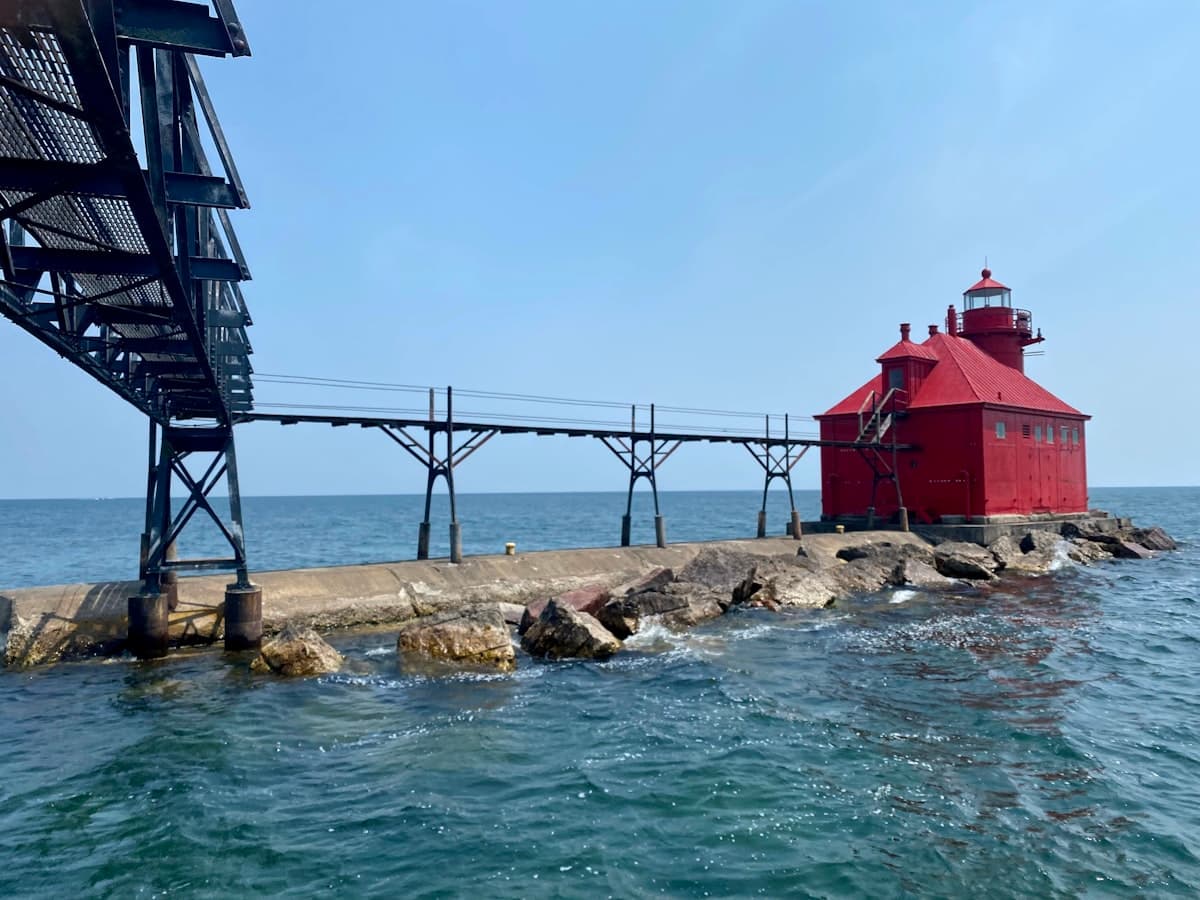
Door County is a 70-mile limestone peninsula that juts into Lake Michigan like a crooked finger, separating the open lake on the east from the calmer Bay of Green Bay on the west. That geography creates one of the most diverse freshwater fisheries in North America. The east side drops into deep, cold Lake Michigan water holding king salmon, coho, lake trout, and steelhead. The west side faces Green Bay's warmer, more fertile basin stacked with walleye, perch, whitefish, and northern pike. And right at the base of the peninsula, the Sturgeon Bay Ship Canal cuts through the middle, connecting both bodies of water and creating a corridor that Bassmaster has ranked among the best smallmouth bass fisheries on the planet.
Unlike a lot of Great Lakes destinations where you pick one species and commit, Door County lets you chase entirely different fish on opposite sides of the same landmass in the same day. Morning walleye jig bite out of Chaudoir's Dock on the Green Bay side, afternoon smallmouth session in the Sturgeon Bay Canal, evening shore-cast for brown trout at Baileys Harbor. That variety, packed into a county you can drive end-to-end in 90 minutes, is what sets this place apart.
If you have fished Traverse City or Duluth, you already understand cold-water trolling and seasonal migrations. Door County adds the Green Bay dimension — a warmer, shallower fishery that behaves more like an inland sea than the open Great Lakes.
The Sturgeon Bay Smallmouth: Why the Pros Come Here
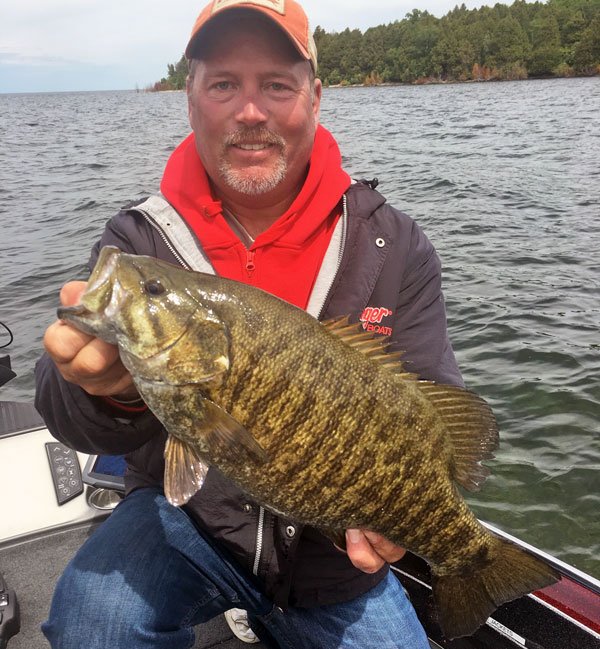
Sturgeon Bay is the reason Door County appears in national fishing media. The Bassmaster Elite Series, Major League Fishing, and multiple professional tournaments have held events here, and the results are consistently staggering — winning weights that rival anywhere in the country for smallmouth bass.
The fish live on rocky substrate, boulder fields, and gravel flats in 6 to 25 feet of water. They feed heavily on invasive round gobies, which have become the primary forage and fundamentally shaped how anglers target these fish. If your lure looks like a goby, you are halfway there.
Where to Find Them
The Sturgeon Bay Ship Canal is ground zero — a man-made channel connecting Lake Michigan to Green Bay that concentrates baitfish and bass. Rock piles on both sides of the canal in 8 to 18 feet hold fish from May through October. Outside the canal, the rocky shorelines running north toward Egg Harbor on the Green Bay side and south toward Whitefish Dunes on the Lake Michigan side extend the fishable water for miles.
During the spawn (late May through mid-June), smallmouth move onto shallow gravel flats in 3 to 8 feet. Post-spawn, they shift to mid-depth rock piles in 10 to 20 feet. By midsummer, the fish spread along deeper rock structure in 15 to 25 feet. Fall (September and October) brings them back to shallower feeding areas as they fatten up before winter.
Techniques That Produce
The pros who fish Sturgeon Bay tournaments are almost unanimous: bottom-based presentations outperform moving baits. Fish them as slowly as you can stand.
Tube jigs are the Great Lakes smallmouth standard and the single most effective lure for Sturgeon Bay. A 3.5-inch tube in green pumpkin, smoke, or a goby-imitating brown pattern, rigged on a 1/4-ounce internal tube head, dragged along the rocks with long pauses. The tube mimics a goby hugging the bottom — exactly what these fish eat all day.
Drop-shot rigs are the second pillar. A 1/2-ounce tungsten drop-shot weight with a size 1 hook, 10 to 14 inches above the weight, holding a flat worm or small finesse swimbait in the strike zone over rocky bottom without snagging constantly. Green pumpkin and goby-pattern colors dominate.
Ned rigs — a Z-Man TRD or similar compact stick bait on a 1/4-ounce mushroom jighead — have become the third essential presentation. Cast it out, let it sink, and use a slow drag-and-shake retrieve. The Ned rig's small profile and upright posture on the bottom trigger bites when the fish are pressured.
Keitech Swing Impact paddle tail swimbaits in 3.3-inch size, rigged on a 1/4-ounce jighead, work when fish are active and chasing. Retrieve with a slow, steady swim just above the rocks.
Gear for Sturgeon Bay Smallmouth
A 7-foot medium-action spinning rod paired with a 2500- or 3000-size reel is the workhorse. Spool with 8-pound braided line (PowerPro Super 8 Slick or Berkley X5) and tie a 6- to 8-pound Seaguar InvizX fluorocarbon leader via a double uni knot. The clear water demands light, invisible line — these fish see everything.
For a budget setup, the Pflueger President 2500 spinning combo handles the job at around $80. Step up to a Shimano Stradic FL 2500 if you want the smoothest drag for battling 5-pound smallmouth that fight like they have somewhere important to be.
Sturgeon Bay Smallmouth Techniques — Location and Lures Fish Wisconsinbly: Smallmouth Bass in Door CountyThe Lake Michigan Side: Salmon, Lake Trout, and Browns
Launch from Baileys Harbor, Sturgeon Bay's east side, or any of the Lake Michigan access points, and you enter a different world — deep, cold, open water that holds Pacific salmon, lake trout, rainbow trout (steelhead), and brown trout. This is the same Lake Michigan fishery that feeds the Great Lakes salmon reputation, but Door County's location at the narrowing of the lake puts you closer to deep water faster than most ports.
King Salmon (Chinook)
Kings begin staging off Door County in mid-June and build through summer. July and August are peak months — on a good day, limiting out on kings in a couple hours of trolling is not uncommon. Fish average 15 to 25 pounds, with 30-pound-plus fish caught every season. When a king hits the trolling spread, the rod slams down and the reel screams — a 20-pounder can strip 150 yards of line in a sustained, drag-squealing run.
Trolling setup: Downriggers, Dipsy Divers, and lead-core or copper line to reach target depths of 40 to 100 feet. Spoons — Moonshine, Michigan Stinger, and Northern King — in chrome, blue/silver, and green/chartreuse behind dodgers are standard. Rapala and Bandit plugs on Dipsy Divers cover the wider spread. Trolling speed: 2.2 to 2.8 mph.
If you have fished Pacific salmon off the Oregon coast, the trolling techniques translate directly — same species, similar gear, equally violent fight. The difference is Door County puts you on fish without a bar crossing.
Lake Trout
Lake trout hold in 60 to 150 feet year-round on the deep side. Spring (April through May) and fall (October) bring them shallower and more accessible. Trolling with Rapala Husky Jerks, Smithwick Rogues, and flutter spoons on downriggers at 1.5 to 2.0 mph is the standard approach. Vertical jigging with a 3/4-ounce Swedish Pimple or Northland Buckshot Rattle Spoon over structure produces well when fish are stacked.
Brown Trout
Browns cruise near-shore waters on both sides of the peninsula, especially in spring (March through May) and fall (September through November). Baileys Harbor and the shoreline between Fish Creek and Ephraim are consistent producers. They hold closer to shore and in shallower water than kings or lakers — trolling stickbaits and spoons in 15 to 40 feet, often within a half-mile of shore. A Rapala Husky Jerk in rainbow trout or gold pattern behind a planer board at 2.0 mph covers the prime water.
Charter Fishing
For first-timers, a charter is the way to go. Door County charter captains run fully equipped boats with downriggers, Dipsy Divers, planer boards, and electronics. Half-day trips run $400 to $650 for up to six anglers. Full-day trips go $650 to $1,000. The captain provides all tackle, lures, and bait. Book July and August trips well in advance — peak salmon season fills up months ahead.
Charter operators based out of Sturgeon Bay, Baileys Harbor, and Gill's Rock cover different sections of the Lake Michigan shoreline. Sturgeon Bay gives the shortest run to deep water. Baileys Harbor sits in the heart of the brown trout and salmon staging area. Gill's Rock, at the tip of the peninsula, accesses the waters around Washington Island and Death's Door passage.
The Green Bay Side: Walleye, Perch, and Pike
The Bay of Green Bay — locals just call it "the bay" — is warmer, shallower, and more nutrient-rich than the Lake Michigan side. The walleye, yellow perch, and northern pike fishing here is why ice houses line the shoreline every winter and why spring jigging trips are a Door County tradition going back generations.
Spring Walleye (March Through May)
This is Door County's sleeper fishery. While the bass anglers wait for the water to warm, walleye are already biting on the Green Bay side. They stage in 15 to 35 feet of water near spawning reefs and river mouths, responding to active jigging presentations.
Where: Chaudoir's Dock County Park, just south of Brussels, is the most popular walleye launch on the Door County side of Green Bay. Deep water close to shore and a spawning reef about a mile out make it a spring walleye magnet. Little Sturgeon Bay, Riley's Bay, and the waters off Egg Harbor also produce consistently.
Technique: Vertical jigging with a 1/4- to 3/8-ounce jig tipped with a live minnow or a 3-inch paddle tail swimbait in white, chartreuse, or perch pattern. Lift it 12 inches off the bottom, let it fall on a semi-slack line, and watch for the line to jump or feel the subtle tick of a walleye inhaling the bait. A Northland Fire-Ball jig or VMC Moon Eye jig in 1/4-ounce is the standard.
As the water warms into May and June, switch to trolling nightcrawler harnesses (Northland Baitfish Spinner Harness) along emerging weed growth in 8 to 15 feet. Slow-trolling at 0.8 to 1.2 mph with bottom bouncers keeps the harness in the strike zone.
Gear: A 6'6" to 7-foot medium-light spinning rod with a 2500-size reel, 10-pound braid, and 8-pound fluorocarbon leader. Sensitivity matters — walleye bites are often so subtle you feel nothing more than the weight of the jig going slightly soft. A Fenwick HMG or St. Croix Premier in medium-light action gives the tip sensitivity without sacrificing hookset backbone.
Rip Jigging Clear Water Walleyes of Sturgeon BayYellow Perch
Door County perch fishing runs year-round, but the best action comes through the ice (January through March) and during the fall feed (September through November). Perch hold over sand and mud bottom in 20 to 45 feet on the Green Bay side, often in large schools that produce fast action once located.
Small jigs (1/16- to 1/8-ounce) tipped with minnows or waxworms, fished vertically while drifting. A Clam Drop Kick or Northland Tungsten Fireball in glow chartreuse works well. Cover water until you find the school — perch move, and yesterday's hot spot may be dead today.
Northern Pike
Northern pike inhabit the weed beds and shallow bays on the Green Bay side, regularly exceeding 30 inches. Best fishing runs May through July and again in fall. Cast large spinnerbaits (Mepps Aglia Bucktail #5 in white or chartreuse), spoons (Dardevle in red-and-white or five-of-diamonds), or jerkbaits along weed edges in 4 to 12 feet. Use a wire or heavy fluorocarbon leader — pike teeth shred standard line.
Casting and Trolling — Green Bay Walleye FishingInland Lakes: The Calm-Water Option
When the big water is rough — and Lake Michigan and Green Bay can get nasty fast — Door County's inland lakes provide a reliable backup with their own quality fishing.
Kangaroo Lake near Baileys Harbor is the largest inland lake in Door County. It holds largemouth and smallmouth bass, northern pike, panfish, and some walleye. Shallow enough to fish effectively from a canoe or kayak, with a public launch. Wacky-rigged Yamamoto Senko 5-inch worms in green pumpkin cast to weed edges produce largemouth. Small tubes and drop-shots along rocky areas catch smallmouth.
Clark Lake near Whitefish Dunes State Park holds bass, pike, and panfish in a scenic setting surrounded by state park land. No gas motors allowed — ideal for kayak anglers who want solitude.
Europe Lake inside Newport State Park at the tip of the peninsula is a hike-in lake with no road access. Carry your kayak in and you will likely have the lake to yourself. Smallmouth bass and panfish in crystal-clear water.
Ice Fishing: Door County's Other Season
Ice fishing on Green Bay is not just a way to pass winter — it is a legitimate destination fishery that draws anglers from across the Midwest. From late December through March, the bay freezes and ice shanty villages appear along the western shoreline from Sturgeon Bay north to Egg Harbor, Fish Creek, Sister Bay, and Ephraim.
Whitefish Through the Ice
Lake whitefish are the ice fishing prize on Green Bay. They run 2 to 5 pounds and fight hard on light tackle, holding in 30 to 50 feet over sand and gravel bottom.
Technique: Small jigging spoons — Swedish Pimple, Hali Jig, or Bay de Noc Do-Jigger — in gold, glow, or orange, tipped with a waxworm or small piece of cut bait. Sharp snap-and-flutter cadence: lift 12 to 18 inches, let it flutter back down, pause, repeat. Whitefish often hit on the fall or during the pause.
Where: Sugar Creek County Park and Chaudoir's Dock County Park are popular walk-on access points. The waters off Egg Harbor, Fish Creek, and Sister Bay consistently produce whitefish. Larson's Reef off Little Sturgeon Bay is proven structure.
Walleye hold over the same reefs and transitions they use in open water — 15 to 35 feet. Jigging Rapala (size 5 or 7) in glow perch or gold tipped with a minnow head, worked with aggressive snaps during low-light periods. Perch school over sand and mud in 20 to 40 feet — small tungsten jigs tipped with waxworms produce numbers when you find the school.
Several Door County operations run fully guided ice fishing trips with heated shanties, all equipment provided, holes drilled, and electronics set up. If you have never ice-fished Green Bay, a guided trip is the way to start.
Access Points and Launches
Door County has seven county-maintained public boat launches plus additional DNR and municipal sites. A county launch permit ($8 daily, $35 annual) is required at county parks.
Sturgeon Bay (Sawyer Park): Direct access to the canal — the epicenter of smallmouth fishing. Multiple launches on both the Green Bay and Lake Michigan sides.
Chaudoir's Dock County Park: Paved launch with long piers and deep-water access to Green Bay. Busiest launch in the county — near prime walleye, perch, and whitefish water with a spawning reef a mile out.
Baileys Harbor Marina: Access to Lake Michigan for salmon, lake trout, and brown trout. The harbor provides protection from big lake weather, and the salmon staging grounds are a short run out.
Frank E. Murphy County Park: Green Bay access near Egg Harbor. Good walleye and perch water.
Gill's Rock: The northernmost launch, providing access to Death's Door passage and Washington Island waters. Lake trout, smallmouth, whitefish, and northern pike. Experienced boaters only — the currents through Death's Door are powerful and unpredictable.
Shore fishing: The Sturgeon Bay Canal has accessible shoreline for casting to smallmouth and walleye. Several parks offer pier fishing with deep water close to shore. Baileys Harbor has public shoreline access for brown trout casting in spring and fall. No boat needed for ice fishing either — walk-on access at multiple Green Bay points.
Fishing License and Regulations
Wisconsin requires a fishing license for anyone 16 and older. The license year runs April 1 through March 31.
| License Type | Cost |
|---|---|
| Resident annual | $20 |
| Nonresident annual | $55 |
| Nonresident 15-day | $33 |
| Nonresident 2-day Great Lakes | $14 (includes Salmon/Trout Stamp) |
| Great Lakes Salmon/Trout Stamp | $10 resident, $14 nonresident |
| Inland Trout Stamp | $10 |
The 2-day Great Lakes license is an excellent deal for a weekend visit — it includes the Salmon/Trout Stamp that's normally a separate purchase.
Buy licenses online at the Wisconsin DNR's Go Wild website (gowild.wi.gov), at registered retailers, or at DNR Service Centers.
Key regulations: Hook-and-line fishing is open year-round on the Great Lakes for many species, but bass have a catch-and-release season from early March through late June. Lake trout season runs March 1 through October 31. Inland lakes follow the general inland season opening the first Saturday in May. Bag limits vary by species and water body — always check the DNR's searchable regulation guide for the specific water you plan to fish.
When to Come
March-April: Spring walleye jigging on Green Bay. Brown trout trolling near shore on Lake Michigan. Smallmouth catch-and-release season opens. Ice fishing may extend into March in cold years.
May-June: Smallmouth bass spawn — the biggest fish of the year on the shallowest water. Walleye trolling with crawler harnesses as weeds emerge. Brown trout remain active on the Lake Michigan side.
July-August: Peak salmon season. King and coho trolling on Lake Michigan is the marquee summer fishery. Smallmouth bass fishing excellent on deeper rock structure. This is the busiest tourist season — book charters and lodging early.
September-October: Fall smallmouth feed on shallow rocks. Walleye jigging picks back up on Green Bay. Brown trout move shallow on the Lake Michigan side. Many anglers consider this the best all-around fishing month — multiple species active, tourist crowds thin, fall colors on the peninsula.
November-December: Late-fall lake trout and brown trout on Lake Michigan. Green Bay begins to freeze. Transition to ice fishing.
January-March: Full ice fishing season on Green Bay. Whitefish, walleye, perch, and pike. Heated shanty rentals and guided trips available.
Practical Details
Layers. Door County weather is unpredictable on the water. Summer mornings can be 55 degrees on the lake even when the afternoon hits 80. Windproof jacket, moisture-wicking base layers, rain gear. Polarized sunglasses are essential for sight-fishing smallmouth over the clear, rocky bottom.
Getting around. Door County is rural — small towns, two-lane roads, launches spread across 70 miles. A vehicle is essential. Sturgeon Bay to Gill's Rock is about an hour's drive.
Washington Island. Accessible by ferry from Gill's Rock (30-minute crossing, runs year-round). Solitude and excellent fishing for lake trout, smallmouth bass, whitefish, and northern pike in waters that see far less pressure than the mainland.
Food and lodging. Door County is a tourist destination with abundant restaurants, resorts, and vacation rentals. Sturgeon Bay has the most options and is centrally located for fishing both sides. Fish Creek and Ephraim are charming but book fast in summer. Off-season rates (October through April) are significantly cheaper and coincide with excellent fishing.
Recommended Gear
Pflueger President 2500 Spinning Combo 7' M
Budget smallmouth workhorse — tube jigs, drop-shot, Ned rig ($80)
Shimano Stradic FL 2500
Premium smallmouth reel — smooth drag for clear-water bass ($230)
Z-Man TRD (The Real Deal) 2.75" Green Pumpkin
Ned rig staple — Sturgeon Bay smallmouth magnet ($5)
Seaguar InvizX Fluorocarbon Leader 8lb
Clear-water essential — invisible to pressured smallmouth ($10)
Northland Fire-Ball Jig 1/4 oz
Spring walleye standard — tip with minnow or plastic ($4)
Swedish Pimple 1/4 oz Gold
Ice fishing whitefish and walleye — the Door County classic ($6)
Mepps Aglia Bucktail #5 White
Northern pike along Green Bay weed edges ($8)
Top Fishing Guides in Door County
Door County's two-water peninsula means local guides specialize in radically different fisheries — open-water salmon trolling on Lake Michigan, walleye jigging on Green Bay, trophy smallmouth in the Sturgeon Bay Canal, and guided ice fishing in heated shanties all winter. A Door County captain puts you on the right side of the peninsula, at the right depth, with the right presentation for whatever is biting that week.
Cast N Catch Charters
Door County, WI, US
5.0 (24 reviews)
Cast N Catch Charters is a premier smallmouth bass fishing guide service operating year-round throughout Door County, Wisconsin. Led by Captain Jimmy Doering, a U.S. Coast Guard-licensed captain and certified paramedic, the service specializes in guided trips across the exceptional waters of Sturgeon Bay, Lake Michigan, Green Bay, and Washington Island. With a commitment to catch-and-release practices, Captain Doering creates experiences that balance adventure with education, ensuring every angler—regardless of skill level—develops deeper fishing knowledge. From summer open-water expeditions to winter ice fishing adventures, Cast N Catch Charters delivers consistent access to trophy smallmouth bass in one of America's premier fishing destinations. Safety and enjoyment are paramount, with every trip designed to maximize success while fostering a genuine appreciation for the region's world-class fishery.
Late Eyes Sport Fishing
Door County, WI, US
4.8 (43 reviews)
Late Eyes Sport Fishing brings over 15 years of expertise to the waters of Door County, Wisconsin. Captain Paul Delaney specializes in charter and trophy fishing across Green Bay, Lake Michigan, and regional rivers, pursuing walleye, smallmouth bass, northern pike, and salmon. Whether targeting seasonal opportunities or planning year-round adventures including ice fishing, the service welcomes families and anglers of all skill levels. The operation is built on quality and precision. A fully equipped 2017 Ranger 621 boat features advanced navigation and fishing technology, allowing Captain Delaney to locate fish effectively and adapt to changing conditions. This commitment to both expertise and equipment ensures every outing delivers a professional, rewarding experience on the water.

Wacky Walleye
Door County, WI, US
4.3 (16 reviews)
Wacky Walleye Guide Service has been delivering exceptional fishing experiences in Door County and Green Bay since 1985, when Captain Dale Stroschein founded the operation. The guide service specializes in trophy walleye, smallmouth bass, muskie, and seasonal salmon, catering to anglers of all skill levels with personalized trips tailored to individual preferences and expertise. With decades of regional knowledge and a seasoned team, Wacky Walleye offers both open water and ice fishing adventures throughout the year. Known for attentive customer service and a genuine commitment to helping anglers succeed, the guide service creates memorable outings designed to connect clients with the fish of a lifetime in Wisconsin's premier waters.

Big Bite Adventures
Door County, WI, US
Big Bite Adventures Big Bite Adventures offers premier fishing charters on the pristine waters of Lake Michigan and Green Bay in Door County, Wisconsin. The service specializes in pursuing king salmon, rainbow trout, brown trout, walleye, smallmouth bass, and muskies, providing diverse fishing opportunities throughout the spring through fall seasons. With the owner actively guiding trips, anglers benefit from personalized attention and deep local expertise. The team welcomes fishing enthusiasts of all skill levels—from families and friends seeking a memorable outing to dedicated anglers pursuing trophy catches. Big Bite Adventures is committed to creating unforgettable experiences on the water, combining professional guidance with a genuine passion for the sport and the Door County fishery.
Frequently Asked Questions
What fish can I catch in Door County, Wisconsin?
Door County offers exceptional variety. Sturgeon Bay holds world-class smallmouth bass (3-6 lbs). The Lake Michigan side produces king salmon (15-30 lbs, July-September), coho salmon, lake trout, brown trout, and steelhead. The Green Bay side has walleye, yellow perch, northern pike, and whitefish. Inland lakes hold largemouth bass, panfish, and pike. Ice fishing (January-March) targets whitefish, walleye, perch, and pike on Green Bay.
When is the best time to fish Door County?
July and August are peak for king salmon trolling on Lake Michigan. Late May through June is prime for smallmouth bass during the spawn. March through May is spring walleye season on Green Bay. September and October offer the best all-around fishing with multiple species active and fewer crowds. January through March is ice fishing season for whitefish, walleye, and perch.
How much does a Door County fishing charter cost?
Salmon and lake trout trolling charters run $400-$650 for a half-day and $650-$1,000 for a full day, accommodating up to 6 anglers. Smallmouth bass guided trips run $350-$500. Ice fishing guides with heated shanties charge $200-$400. All charters provide tackle, lures, and bait. Book summer salmon trips months in advance.
Do I need a fishing license for Door County?
Yes — Wisconsin requires a license for anyone 16 and older. Nonresidents pay $55 annually, $33 for 15 days, or $14 for a 2-day Great Lakes license that includes the Salmon/Trout Stamp. Buy online at gowild.wi.gov or at local retailers.
Can I fish from shore in Door County without a boat?
Absolutely. The Sturgeon Bay Ship Canal has accessible shoreline for casting to smallmouth bass and walleye. Chaudoir's Dock County Park has long piers with deep water access to Green Bay. Baileys Harbor offers shore access for brown trout in spring and fall. No boat needed for ice fishing either — walk-on access at multiple Green Bay points.
Related Articles
How to Fish Traverse City, Michigan: A Beginner's Guide to Salmon, Lake Trout, Smallmouth Bass, and Grand Traverse Bay
Monday, January 19, 2026
How to Fish Duluth, Minnesota: A Beginner's Guide to Steelhead, Lake Trout, Salmon, and the North Shore
Wednesday, January 14, 2026

How to Fish Portland, Oregon: A Beginner's Guide to Salmon, Steelhead, Sturgeon, and the City's Three Rivers
Tuesday, January 27, 2026
 ™
™