
The Zebra Midge: Four Materials, Five Minutes, and the Fly That Saves the Slowest Days
The Zebra Midge uses four materials and takes five minutes to tie. It imitates the most abundant insect in every trout stream on Earth — the chironomid midge — and it catches fish when nothing else will. Here's the recipe and where it matters most.

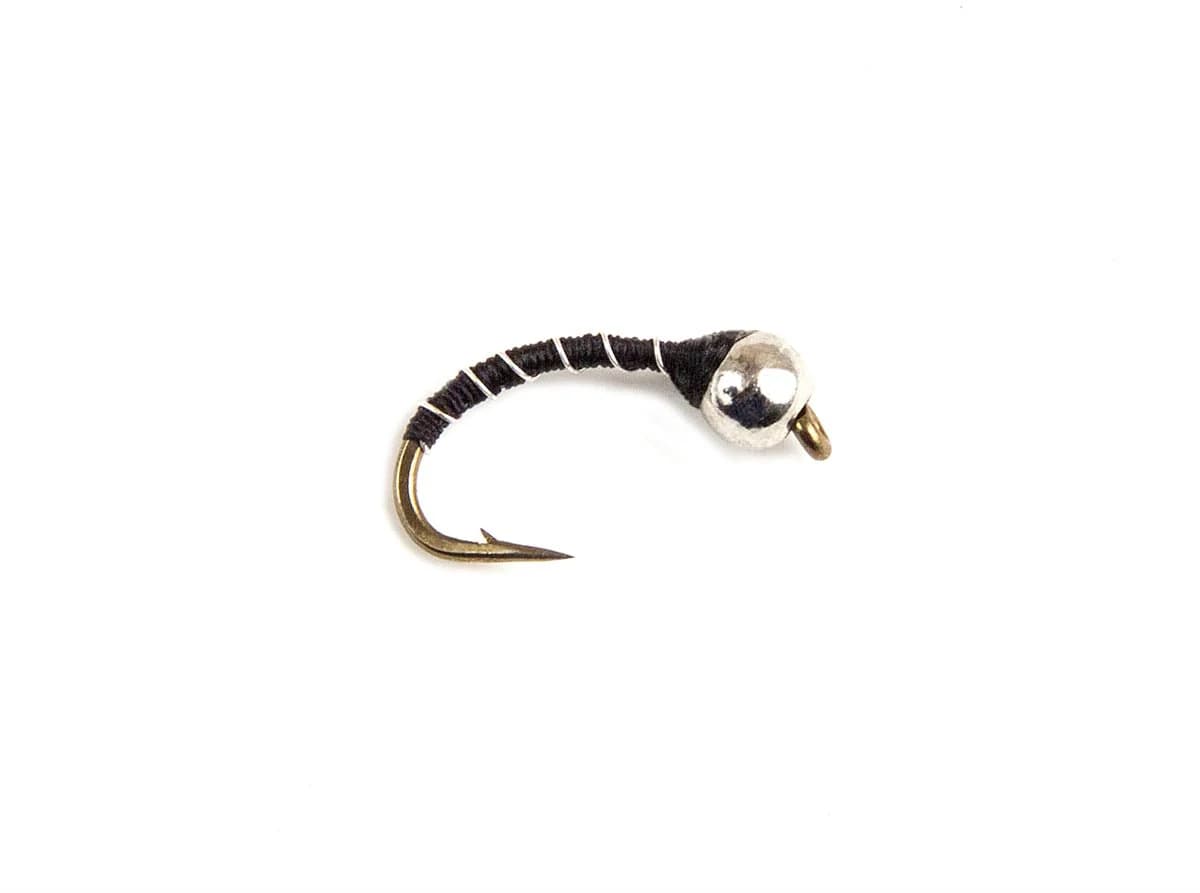
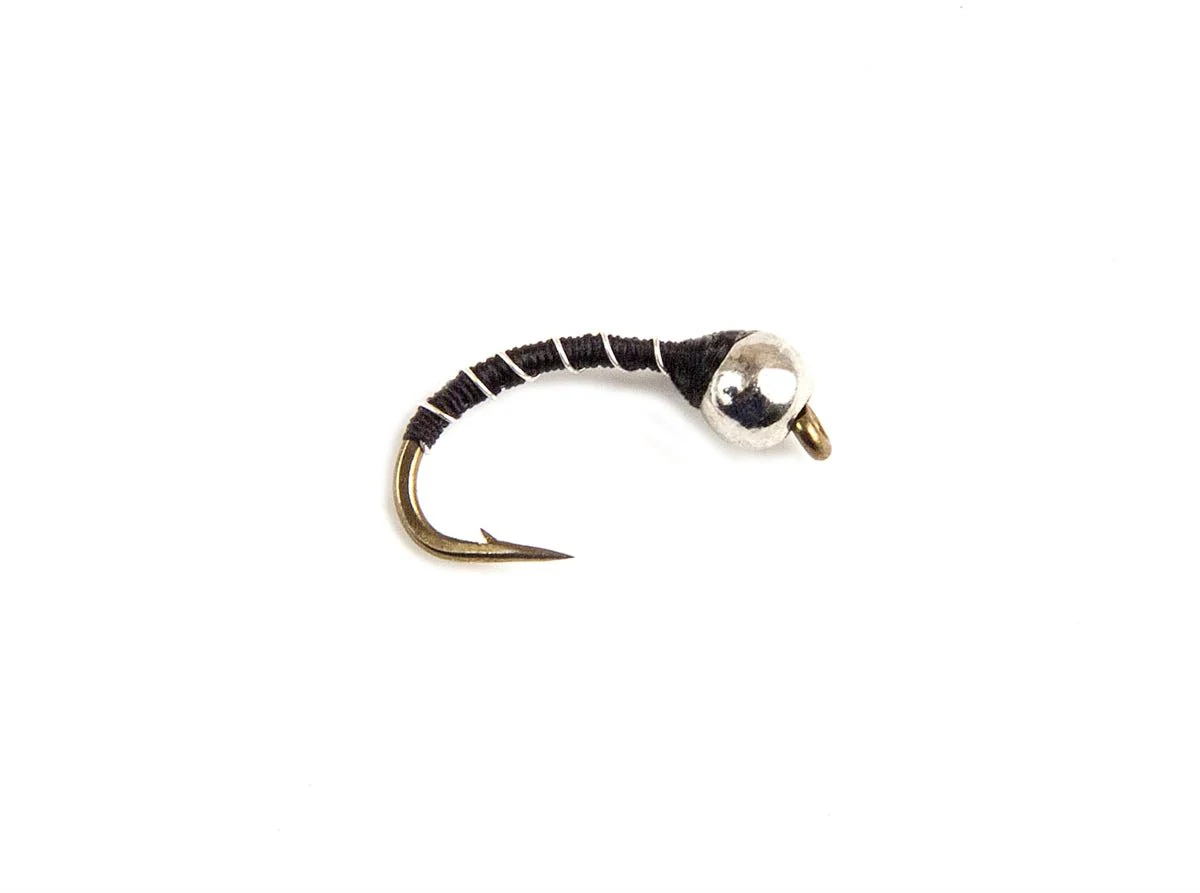 The Zebra Midge — wire body, bead head, thread collar. Photo: Fly Fish Food.
There are days when trout won't eat anything. The hatches are over, the streamers get ignored, the dries go untouched, and the nymphs drift through run after run without a twitch. On those days — the slow days, the cold days, the days in January when you question why you're standing in a river — the Zebra Midge is the fly that saves the trip.
Ted Welling created the pattern in 1996 while guiding at Lee's Ferry on the Colorado River below Glen Canyon Dam — one of the most technically demanding tailwaters in the American West. The Lee's Ferry trout eat midges almost exclusively for several months of the year, and Welling needed a pattern that was simple enough to tie in bulk, small enough to match the naturals, and effective enough to fool fish that had seen every midge pattern in every fly shop in Arizona.
What he came up with was almost absurdly simple: a thread body wrapped on a scud hook, ribbed with fine wire, finished with a bead. Four materials. Five minutes at the vise. And it worked — immediately and consistently, on Lee's Ferry and on every other tailwater and spring creek in the country where midges are the primary food source.
The name comes from the appearance — the wire rib wrapped over the dark thread body creates a striped, "zebra" pattern that mimics the segmented body of a midge larva or pupa. The bead provides weight and imitates the air bubble trapped in the thorax of a pupa preparing to emerge. Together, these two elements — the segmented body and the bright head — are all a trout needs to see to trigger a take.
What It Imitates
Midges (Chironomidae) are the most abundant insect in virtually every trout stream on Earth. They're present year-round, they hatch in every month (including January), and they constitute the largest single food source for trout in most tailwaters and spring creeks. When you see trout rising to "nothing" in the dead of winter, they're eating midges.
The Zebra Midge imitates the pupal stage of the midge — the transitional form between the bottom-dwelling larva and the surface-hatching adult. Midge pupae are small (size 18-24 in most waters), segmented, and have a slightly enlarged thorax where gas collects before the insect breaks through the surface film. The bead head on the Zebra Midge imitates that gas bubble — the bright spot that trout key on when feeding on midge pupae drifting in the current.
In practice, trout eat the Zebra Midge as:
- A midge pupa (the primary imitation) — drifting subsurface in the film or mid-column
- A midge larva — bounced along the bottom in sizes 18-22
- A general "small thing that looks like food" — which covers a huge percentage of what trout eat
The Recipe — Standard Zebra Midge
| Component | Material |
|---|---|
| Hook | Scud/emerger hook, #16-24 (TMC 2457, Dai-Riki 125) |
| Bead | Silver or black tungsten, 1/16" to 5/64" (sized to hook) |
| Thread | 8/0, black (the body is the thread — no dubbing) |
| Rib | Fine silver wire (Ultra Wire, small) |
That's it. Four materials. The thread IS the body — wrap it in smooth, even layers from the bead to the bend, then rib with the wire forward in evenly spaced spirals. Whip finish behind the bead. Done.
The Variations — Color Matters
The original Zebra Midge is black thread with silver wire and a silver bead. But midges come in many colors, and each tailwater has its own preferences:
Black/Silver (#18-22) — The original. The workhorse. If you only tie one color, tie black. It works on every tailwater from the Green River to Livingston's spring creeks to Lee's Ferry. The black body suggests the most common midge species, and the silver rib catches light underwater.
Red/Silver (#18-22) — The second-most-popular color. Red thread (or red wire over dark thread) imitates bloodworm-colored midge larvae and the reddish pupae of some chironomid species. Deadly on the Green River Section A during winter midge fishing, and on any water where blood midges are present. Some anglers say the red is more visible to trout in deep or off-color water.
Chartreuse/Copper (#18-22) — The hot-spot version. Bright chartreuse thread creates a fly that stands out in the drift — similar logic to the Pink Squirrel's pink collar. Effective on tailwaters where the trout see a lot of black and red Zebras and need something different to trigger a take.
Olive/Gold (#18-22) — Olive thread with gold wire. Imitates olive-colored midge species and blends more naturally with the subsurface color palette. A good choice on spring creeks like DePuy's and Armstrong's where the fish are looking closely.
Copper/Copper (#18-24) — Sometimes called a Tiger Midge. Copper wire over brown or rust thread, finished with a copper bead. Subtler than the silver versions — less flash, more natural. Works well on pressured water and clear spring creeks.
Rainbow Warrior (#16-20) — Not technically a Zebra Midge, but a closely related midge/attractor pattern designed by Lance Egan. Pearl tinsel body with a rainbow thread collar and a silver bead. It's flashier than the standard Zebra and works when the fish want more visibility. Included here because it ties the same way and fills the same role in the box.
Where to Fish It
The Zebra Midge is essential on any water where midges are a significant food source — which is most tailwaters, spring creeks, and stillwaters:
-
The Green River, Utah — The Zebra Midge in black, red, and chartreuse (#18-24) is the foundation of Green River winter fishing (January through March). When the BWOs and PMDs aren't hatching, the midges are — always. Section A anglers fish tandem Zebra Midge rigs (two Zebras 18 inches apart) under a small indicator, and the technique produces fish all winter.
-
Livingston, Montana — Winter midge fishing on DePuy's and Armstrong's spring creeks. The constant 52°F water supports midge activity year-round, and the Zebra Midge in #20-22 is the standard winter fly. Fish it in the film or just below — the spring creek trout eat midge pupae with a subtle sip that barely dimples the surface.
-
Henry's Fork, Idaho — Early-season midge fishing on the Ranch before the PMD hatch begins. The Zebra Midge gets fish started in April and May when the bigger hatches haven't kicked in yet.
-
The Driftless Area, Wisconsin — January and February catch-and-release season. The spring creeks don't freeze, the midges are hatching, and the Zebra Midge in #20-22 is one of the only patterns that produces during the Wisconsin winter. Solitary, technical fishing for anglers who can't wait for April.
How to Tie It — Video Tutorials
The Zebra Midge is widely recommended as the very first fly a beginner should tie. It teaches thread control, wire ribbing, and bead-head technique in a pattern that takes five minutes and catches fish immediately.
The best beginner tutorial: The BEST Fly Pattern to Start Tying Flies — Zebra Midge — Cheech from Fly Fish Food makes a strong case that this should be your first-ever fly at the vise.
Step-by-step with materials: Beginner Friendly Zebra Midge Tutorial — Detailed walkthrough with materials linked. Clear enough for a total beginner.
Clean technique: How to Tie a Zebra Midge — A clean, efficient tutorial that shows how to make the thread body smooth and the wire rib even.
Tips From the Vise
Smooth thread body is everything. The Zebra Midge's effectiveness depends on a slim, smooth body that imitates the segmented profile of a midge pupa. Wrap the thread in flat, overlapping layers — don't let it bunch or twist into a rope. Each layer should sit flat against the previous one, building a gradually tapered body from the bend to the bead.
Even wire spacing. The rib should spiral forward in evenly spaced wraps — five to seven turns on a size 20. Uneven spacing creates a lumpy pattern that looks wrong. Count your wraps and keep them consistent from fly to fly.
Bead size matters more on small flies. On a size 20 hook, the difference between a 1/16" bead and a 5/64" bead is enormous — it changes the fly's proportions, its sink rate, and its appearance. Use the smallest bead that fits over the hook point. When in doubt, go smaller.
Tie them in bulk. Zebra Midges are small, cheap, and consumable. You'll lose them to rocks, trees, and trout. Tie 50 at a time — 10 each in black, red, chartreuse, olive, and copper — and restock the box every few weeks. At five minutes per fly, 50 Zebras takes a single evening.
Use a scud hook, not a standard dry-fly hook. The curved shank of a scud hook (#16-24) gives the Zebra Midge a natural curve that matches the posture of a midge pupa hanging in the water column. A straight-shank hook creates a less realistic profile.
Build Your Box
Tie 10 each of black/silver, red/silver, chartreuse/copper, olive/gold, and copper/copper in sizes 20 and 22. Add a half-dozen of each color in size 18 (for less selective fish and bigger midge species) and a half-dozen in size 24 (for technical spring creek midging). Total: about 130 flies. Sounds like a lot — but these are the flies you'll use more than any other pattern in winter, and each one takes five minutes. One evening at the vise.
Frequently Asked Questions
Who created the Zebra Midge?
Ted Welling created the Zebra Midge in 1996 while guiding at Lee's Ferry on the Colorado River below Glen Canyon Dam. He needed a simple, effective midge pattern for the tailwater's technically demanding trout, and the four-material design he came up with has become the most popular midge pattern in fly fishing.
What color Zebra Midge is best?
Black with silver wire is the universal standard — it works everywhere. Red is the second most popular, especially for tailwaters with bloodworm populations. Chartreuse is the hot-spot variation for pressured fish. Carry all three colors in sizes 20 and 22 to cover most midge fishing.
Is the Zebra Midge good for beginners?
The Zebra Midge is widely recommended as the very first fly a beginner should tie. It uses only four materials (hook, bead, thread, wire), teaches core skills (thread control, wire ribbing, bead heads), takes five minutes, and catches fish immediately. There's no simpler productive pattern.
When should I fish a Zebra Midge?
Anytime midges are hatching — which is year-round on most tailwaters and spring creeks. The Zebra Midge is most critical in winter (January through March) when midges are often the only insect hatching. It's also effective as a dropper pattern year-round under a dry fly or indicator.
What size Zebra Midge should I use?
Sizes 20 and 22 cover most situations. Use 18 for larger midge species or less selective fish. Use 24 for technical spring creek and tailwater fishing where the naturals are tiny. Match the size to the midges you see on the water — smaller than you think.
Related Articles

Fly Fishing the Green River: 14,000 Trout Per Mile in a Red-Rock Desert Canyon
Saturday, April 25, 2026
Fly Fishing Livingston, Montana: Spring Creeks, the Yellowstone, and the Town That Takes Trout Seriously
Monday, May 18, 2026
The Pink Squirrel: The Driftless Area's Secret Weapon and the Nymph That Shouldn't Work But Does
Monday, April 6, 2026
 ™
™