
How to Fish New Orleans: A Beginner's Guide to Marsh Redfish, Bayou Bass, and the Delta
Everything a first-timer needs to fish New Orleans — sight-casting for redfish in the marsh, speckled trout on the bayou, bass in City Park, bank fishing without a boat, and inshore charters. Gear, rigs, bait, and what to expect.

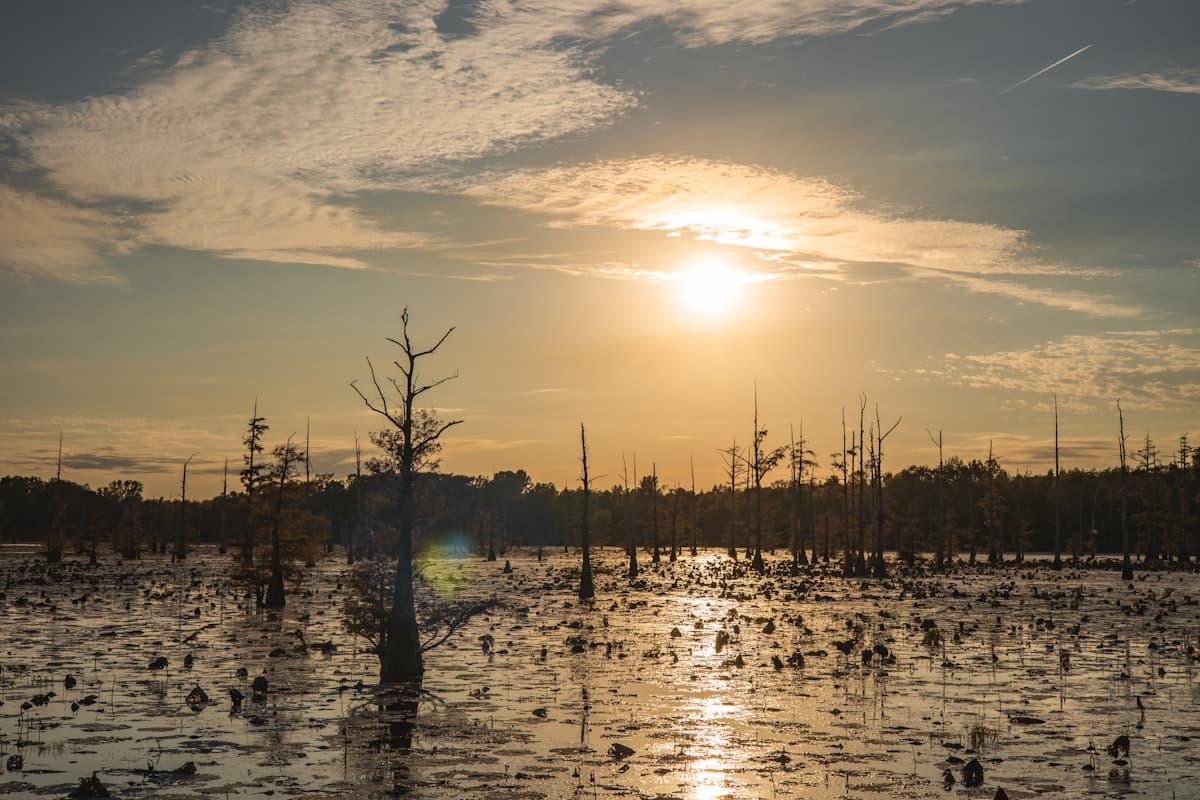
New Orleans is a fishing city disguised as a food-and-music town. The Louisiana marsh — the largest wetland system in the lower 48 states — starts at the eastern city limits and sprawls for thousands of square miles toward the Gulf of Mexico. Within an hour of Bourbon Street, you can sight-cast to redfish tailing on a grass flat, drift a live shrimp under a cork for speckled trout in a sheltered bayou, or bottom-fish for sheepshead and black drum against oyster reefs that stretch to the horizon. You can fish a bass pond in City Park during your lunch break. And if you want offshore, the Venice marina at the bottom of the delta runs boats to blue-water tuna and marlin grounds that the rest of the Gulf Coast can only reach by running all day.
No other major American city puts you this close to this much fishable water. The culture here wraps around it — the bait shops open before the coffee shops, the charter captains grew up poling pirogues through the same marsh their grandfathers fished, and a cooler full of speckled trout fillets is a standard souvenir alongside beignets and hot sauce.
This guide covers the practical how-to for each fishery. For the full destination overview — seasons, species, charter options, and trip planning — read our complete New Orleans fishing guide. For the offshore capital of the Gulf, see our Venice guide.
Marsh Fishing: Redfish Country
The Louisiana marsh is redfish water. Red drum — called redfish here, always — live in the shallow brackish ponds, canals, and grass flats of the delta in numbers that make every other redfish fishery in the country look sparse. They feed in water so shallow their tails break the surface, they eat aggressively, they fight hard, and they are beautiful bronze-and-copper fish with a signature black spot on the tail. Catching one on a calm morning in the marsh, with egrets lifting off the grass and no sound except your reel, is one of the best experiences in American fishing.
Where to Fish
Delacroix/Shell Beach — about 45 minutes southeast of downtown — is the gateway to the St. Bernard Parish marsh, one of Louisiana's most legendary inshore fisheries. Miles of sheltered bayous, ponds, and grass flats loaded with redfish and speckled trout. This is where most New Orleans inshore charters run.
Hopedale — adjacent to Delacroix — offers the same marsh system with slightly less pressure. The Biloxi Marsh stretching east toward Mississippi Sound is enormous and productive.
Irish Bayou — just minutes from downtown via I-10 East — is the closest marsh access to the city. Calm water, bank-fishable in spots, and home to redfish, black drum, and trout. Perfect for a quick morning trip without a long drive.
Bayou Bienvenue flows through the eastern marsh of New Orleans and connects to Lake Borgne. Productive corridor for redfish, trout, and sheepshead. Accessible by kayak or small boat from multiple launch points.
Gear and Rigs
Rod and reel: A 7-foot medium or medium-heavy spinning rod with a 3000 to 3500 reel is the marsh standard. A Penn Battle III 3000 combo, Shimano Nasci 3000, or Daiwa BG 3500 are all proven in the Louisiana marsh. Spool with 20- to 30-pound braid (PowerPro Spectra or Sufix 832) and a 20- to 25-pound Seaguar Red Label fluorocarbon leader, 2 to 3 feet long. The braid handles long casts in open water; the fluorocarbon resists abrasion from oyster shells that line every bank and reef in the marsh.
Popping cork rig — the signature Louisiana inshore rig. Thread a live shrimp onto a 1/0 to 3/0 circle hook through the horn, suspend it 18 to 24 inches below a popping cork (Cajun Thunder or Four Horsemen are the local favorites), and cast it near grass edges, oyster reefs, or points where current flows between ponds. Pop the cork with short rod twitches — the rattling, splashing sound imitates feeding fish and drives redfish and trout crazy. This rig catches more fish in Louisiana than everything else combined.
Popping Corks for Beginners: The Complete SetupGold spoon — a Johnson Silver Minnow or Cajun Spoon in gold is the go-to artificial for redfish in the marsh. Cast it over grass flats and retrieve with a steady wobble. When a redfish eats a gold spoon in skinny water, you see the whole thing — the wake, the turn, the explosion. Weedless design means it slides over grass without snagging.
Soft plastics — a 3- to 4-inch paddle tail swimbait (Matrix Shad, Berkley Gulp Shrimp, or Z-Man DieZel MinnowZ) in chartreuse/white, root beer, or morning glory color on a 1/4-ounce VMC or Owner jighead. Retrieve slow — let the jig sink, twitch, pause, repeat. Effective for trout over shell bottom and redfish along channel edges.
Species and Seasons
Redfish are year-round in the marsh, but the best months are March through May (spring) and September through November (fall). Bull reds — 30 to 45 inches — move into the marsh passes and nearshore waters in late summer. Slot reds (16 to 27 inches) are the keepers and they are everywhere.
Speckled trout peak in spring (March through May) and fall (October through December). They hold over oyster reefs, in deeper bayou channels, and along grass edges. The popping cork rig with live shrimp is the standard approach.
Black drum are excellent winter targets (December through March) when other species slow down. They hold on oyster reefs and eat shrimp, crabs, and cut bait on the bottom. Use a Carolina rig with a 1-ounce weight and a chunk of fresh shrimp.
Sheepshead stack up on any structure with barnacles — bridge pilings, dock pilings, rock jetties, oyster reefs. Fiddler crabs or small pieces of shrimp on a small circle hook with a split shot, fished tight to the structure. Same technique as Charleston.
Sight Fishing: The Local Way
When the wind lays down and the water clears — which happens most often on calm spring and fall mornings — you can sight-fish for redfish in the marsh. This is the most exciting way to catch them. You stand on the bow of a shallow-draft boat (or wade if you are bank fishing), scan the flat for tailing fish, wakes, or the bronze flash of a redfish's back, and cast ahead of the fish. The gold spoon is the standard tool for this — cast it 5 to 10 feet ahead of the wake, start your retrieve as the fish approaches, and hold on when the line goes tight.
Sight fishing is visual, tactical, and addictive. It is also why polarized sunglasses are not optional in the marsh — they cut the surface glare and let you see fish that would be invisible without them. Copper or amber lenses work best in the tea-colored marsh water.
Fishing for Redfish in the Louisiana Salt Marsh with Popping Corks Catching Redfish with a Popping Cork — LouisianaTides and Current
The Louisiana marsh does not have dramatic tidal swings like the East Coast — typical range is 1 to 2 feet. But that small movement matters enormously. Incoming tides push clean water and bait into the marsh ponds, activating redfish and trout. Outgoing tides funnel bait through cuts and passes, creating ambush points where predators stack up. Wind tide — water pushed by sustained south or southeast wind — often matters more than astronomical tide in the delta. A strong south wind can flood the marsh by a foot even on a falling tide chart.
Check wind direction and speed alongside the tide chart when planning a trip. Southeast wind 10 to 15 mph with incoming tide is the ideal setup.
With or Without a Boat
An inshore charter is the best way to experience the marsh for the first time. Half-day trips (4 to 5 hours) run $400 to $600 for a private boat (2 to 3 anglers). The captain knows the maze of bayous and ponds, provides all gear and bait, and puts you on fish. Full-day trips ($600 to $900) go deeper into the marsh and target more species.
Without a boat: Irish Bayou, Bayou Bienvenue, and sections of the Delacroix canal system are bank-fishable. Bring the popping cork rig and live shrimp. Kayak fishing is also excellent — launch from the Bayou Bienvenue ramp or Shell Beach marina and paddle to nearby flats. The marsh is shallow enough that a kayak accesses most of the same water a bass boat does.
City Fishing: Bass in Your Backyard
You do not need to leave New Orleans to catch fish. The city itself has productive freshwater fishing.
City Park — the 1,300-acre park in Mid-City has several lagoons stocked with largemouth bass, catfish, and bluegill. Bring a spinning rod with a 1/4-ounce Texas-rigged soft plastic (watermelon red or green pumpkin Senko) and fish the edges around cypress trees and structure. This is legitimate bass fishing in the middle of a major city, and it is free.
Bayou St. John runs through the Gentilly neighborhood and holds bass, catfish, and the occasional redfish that push in from Lake Pontchartrain. Fish from the banks or the bridges that cross it.
Lake Pontchartrain — the massive shallow lake north of the city — produces speckled trout, redfish, and flounder along the seawall, the Causeway bridge pilings, and the concrete piers along Lakeshore Drive. Fish a live shrimp under a cork along the seawall on incoming tide for trout. Free access from multiple points along the lakefront.
Lake Cataouatche — about 30 minutes west of downtown via the Huey P. Long Bridge — is considered one of the best bass lakes in Louisiana. Cypress-lined, shallow, and loaded with largemouth. Bring a shallow-running crankbait or a Texas-rigged creature bait and fish the cypress knees. Best in spring when bass are spawning in the shallows — sight-fishing for bedding bass around cypress roots is a real possibility.
Bayou Segnette State Park — on the West Bank, 20 minutes from downtown — has a boat launch and bank-fishing access to productive bass and panfish water. The park charges a small entry fee and has picnic areas, making it a good family option. Catfish, bluegill, and bass are the primary catches.
Offshore: Venice and the Delta
Venice, Louisiana — about 75 miles south of New Orleans at the end of Highway 23 — is where the Mississippi River meets the Gulf of Mexico. The nutrient-rich discharge from the river creates one of the most productive offshore fisheries in the world. Yellowfin tuna, red snapper, mahi-mahi, wahoo, cobia, and blue marlin are all within reach on a day trip. Venice is covered in detail in our Venice fishing guide, but here is the overview.
Charter costs from Venice: half-day inshore ($500 to $700), full-day offshore ($1,500 to $2,500 for tuna/snapper), full-day blue-water ($2,500 to $4,000 for marlin/wahoo). Everything included.
For beginners who want an affordable taste of offshore, red snapper trips during the open season (June through August, specific dates set by NOAA each year) are the best option. Party boats and split charters run half-day bottom-fishing trips to the rigs and platforms for $100 to $200 per person. Red snapper bite aggressively, fight hard, and are some of the best-eating fish in the Gulf.
Knots You Need
Uni Knot — all-purpose for tying hooks, swivels, and lures. The standard in Louisiana inshore fishing.
Double Uni — for connecting braid to fluorocarbon leader. You need this for every marsh setup.
Improved Clinch — fast alternative for light-line applications.
Loop Knot — gives your gold spoon or swimbait more action. Use it anytime you want maximum lure movement.
Double Uni Knot: How to Tie Braid to FluorocarbonPractical Details
Fishing License: Louisiana residents pay $9.50 for a basic freshwater license, $13 for saltwater. Non-residents pay $5 for a 1-day license (fresh or salt) or $60 for an annual. A 3-day charter passenger saltwater license is $20. Available online at wlf.louisiana.gov or at Walmart, Academy Sports, and local tackle shops. Charter boats include your license.
Where to Buy Tackle and Bait: Bayou Adventure (Chalmette) carries live bait, frozen bait, and marsh fishing essentials. Captain Hook's Bait & Tackle near Shell Beach is the gateway shop for the Delacroix marsh. Academy Sports (multiple locations) has general tackle at good prices. For live shrimp, most marinas and bait shops along Highway 46 (toward Delacroix) and Highway 300 (toward Hopedale) stock them.
What to Wear: Light, breathable clothing — the marsh is hot and humid from April through October. Long sleeves and pants protect from sun and mosquitoes (both are aggressive). Bug spray is essential, especially at dawn and dusk. Waterproof boots or old sneakers for bank fishing. Sunscreen, polarized sunglasses, and a hat.
Mosquitoes: This cannot be overstated. Louisiana marsh mosquitoes are relentless from April through October, especially at dawn, dusk, and on calm days. Bring serious bug spray (DEET or picaridin) and consider a Thermacell unit. Your guide will have one on the boat — ask if you are booking a charter.
Best Times: Early morning (first light to 9 AM) is prime for marsh fishing. Moving tides are important — fish the last two hours of incoming and first two hours of outgoing for the best action. Winter fishing (December through February) is surprisingly good for black drum and sheepshead, and the mosquitoes are gone.
Looking for a guide in New Orleans?
We don't have specific guides listed in New Orleansyet, but we're growing fast.
Browse All GuidesFor the full rundown of New Orleans fishing seasons, charter options, and trip planning, read our complete New Orleans fishing guide. For the offshore fishing capital of the Gulf, see our Venice guide.
Frequently Asked Questions
What is the best beginner fishing spot in New Orleans?
Irish Bayou is the closest marsh access to downtown — calm water, bank-fishable, and home to redfish, black drum, and trout. For freshwater, City Park's lagoons hold bass and catfish and are free to fish. For a guided experience, an inshore charter to the Delacroix marsh ($400-$600 half day) is the best introduction to Louisiana redfish.
Do I need a fishing license to fish in New Orleans?
Yes — Louisiana requires a fishing license for both freshwater and saltwater. Non-residents can buy a 1-day license for just $5 (fresh or salt) at wlf.louisiana.gov or at Walmart/Academy Sports. Charter boats include your license in the trip cost.
What is the best bait for redfish in the Louisiana marsh?
Live shrimp under a popping cork is the #1 rig — it catches more fish in Louisiana than everything else combined. For artificials, a gold weedless spoon (Johnson Silver Minnow) is the classic redfish lure. Soft plastic swimbaits in chartreuse/white on 1/4oz jigheads are also effective.
When is the best time to fish in New Orleans?
Spring (March-May) and fall (September-November) are peak for redfish and speckled trout. Winter (December-February) is excellent for black drum and sheepshead. Summer is hot but productive, especially for bull reds near the passes. Red snapper offshore season runs June-August.
Can I fish in New Orleans without a boat?
Yes — Irish Bayou and Bayou Bienvenue offer bank fishing for redfish and trout. City Park and Bayou St. John have bass and catfish from the bank. Lake Pontchartrain's seawall produces trout on live shrimp. Kayak fishing is also excellent in the marsh — launch from Shell Beach or Bayou Bienvenue.
Related Articles
New Orleans Fishing: A City Surrounded by Marsh, and Everything It Holds
Sunday, March 8, 2026
Venice, Louisiana: Where the Mississippi Meets the Gulf and the Fishing Defies Logic
Wednesday, March 4, 2026
How to Fish Destin, Florida: A First-Timer's Guide to Gear, Rigs, and Technique
Saturday, May 30, 2026
 ™
™