
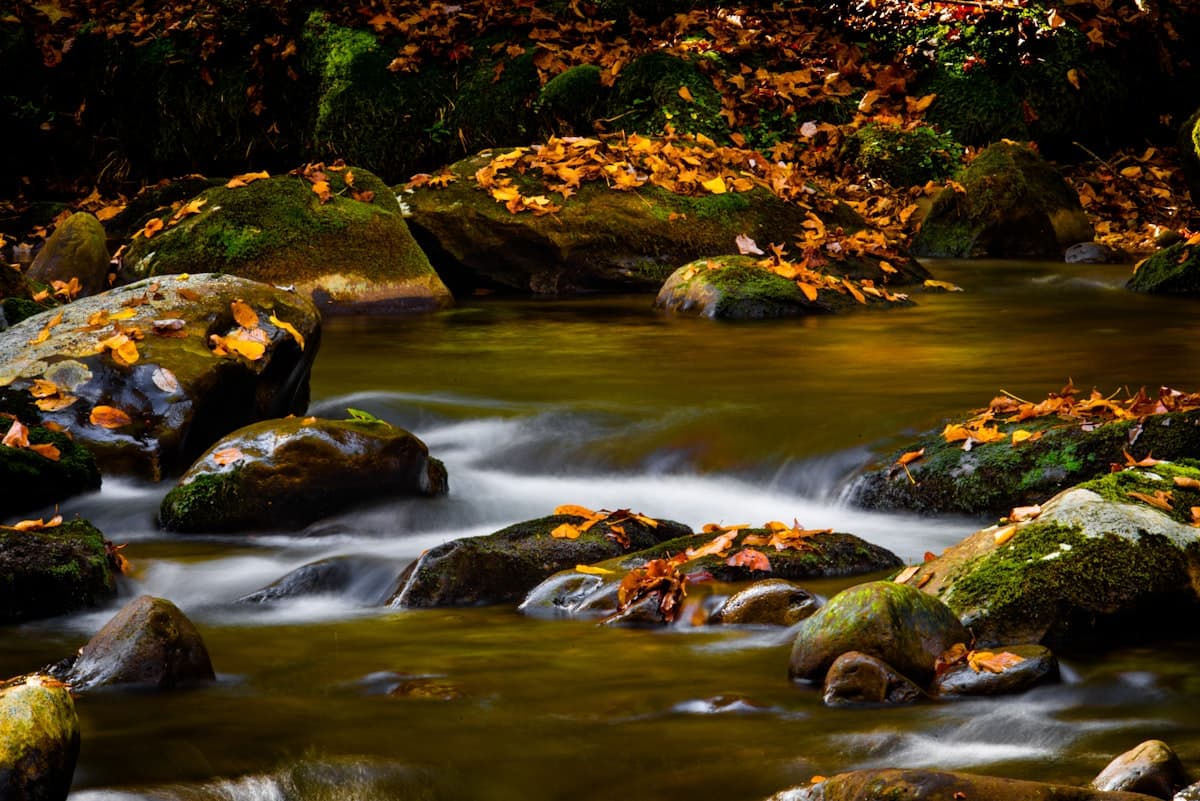
Tying the Foam Beetle: The Terrestrial That Makes Trout Lose Their Minds
Beetles comprise 25% of a trout's terrestrial diet, they're available all summer long, and trout eat them with shark-like aggression. A strip of black foam, some peacock herl, and a pink indicator dot — that's all it takes to trigger the most violent surface strikes of the season.

Tying the Foam Beetle: The Terrestrial That Makes Trout Lose Their Minds
There's a moment in every beetle take that separates it from every other dry fly eat. A trout rising to a Parachute Adams sips. A trout rising to a Stimulator slashes. A trout rising to a foam beetle detonates. The water erupts. The fly disappears. And you set the hook into a fish that hit your pattern like it owed money.
This aggression isn't random — it's caloric math. A beetle is a chunky, protein-dense package of food, and trout know it. A single beetle delivers more calories than a dozen mayfly duns. When one lands on the water — helpless, clumsy, going nowhere — a trout doesn't hesitate. It doesn't inspect. It eats. Hard.
Beetles are arguably the most underrated fly in the trout box. They're available all summer when aquatic hatches wane. They work on every trout stream on the continent. They're unsinkable, visible (with an indicator spot), and take five minutes to tie. And study after study shows they make up roughly 25% of a trout's terrestrial diet — as much as ants, more than grasshoppers, and available from June through November.
The Terrestrial Revolution
The idea of fishing terrestrial insects — land-bred bugs that fall into the water — was formalized on Pennsylvania's limestone spring creeks in the 1940s and 1950s. Vince Marinaro, fishing the Letort Spring Run in the Cumberland Valley, developed what he called "terrestrials" as a class of artificials in his 1950 book A Modern Dry-Fly Code. His Jassid pattern — a beetle and leafhopper imitation — was revolutionary but required jungle cock nails, exotic feathers that were expensive and hard to source.
John Crowe of Johnstown, Pennsylvania, solved the accessibility problem in 1947 with the Crowe Beetle — a deer hair pattern tied at the bend, pulled forward over the back, and secured at the head. It was practical, effective, and affordable. But deer hair absorbs water. After one or two fish, the Crowe Beetle sat lower, got waterlogged, and eventually fell apart.
The solution arrived in the 1990s with closed-cell foam. Unlike deer hair, foam is waterproof, unsinkable, and virtually indestructible. A foam beetle can take a dozen fish without losing its float or its shape. The material also produces a satisfying "plop" on landing — a sound that real beetles make when they tumble off a branch, and a sound that trout recognize and respond to.
Ed Shenk, another Letort legend who fished those waters from the 1940s until his passing in 2020, lived long enough to see foam transform the terrestrial game he'd helped pioneer. The progression from Marinaro's fragile Jassid to Crowe's waterlogged deer hair to modern foam was a sixty-year journey toward a pattern that finally matched the durability of the trout that eat it.
Why Trout Go Crazy for Beetles
Beetles are different from aquatic insects in ways that matter to both fish and fishermen.
They're always available. Unlike mayflies that hatch for a few hours on specific dates, beetles are present in the environment from late spring through fall. Any sunny afternoon with a breeze, beetles are falling into the water from overhanging vegetation. There's no "beetle hatch" to time — just a constant, low-grade supply of protein.
They're helpless. A beetle on the water is done. It can't swim. It can't fly with wet wings. It just sits there, legs kicking occasionally, going nowhere. Trout don't need to rush — but they do anyway, because other trout want that beetle too.
They're calorie-dense. A Tennessee Tech study conducted in the Great Smoky Mountains found that nearly 100% of terrestrial insect biomass entering the watershed was consumed by resident trout. Beetles, along with ants, are the primary terrestrial food source. One beetle equals many mayflies in caloric value.
They make noise. A real beetle hitting the water makes a distinct "plop" — not a splash, not a whisper, but a solid impact that trout hear and recognize. This is why presenting a foam beetle with a deliberate splat, rather than a delicate touchdown, often produces more strikes.
Materials
The Standard Foam Beetle (#12-16)
| Material | Specification |
|---|---|
| Hook | Dry fly or scud, #12-16 (TMC 100SPBL, Dai-Riki 300, or equivalent) |
| Thread | Black 8/0 (UNI-Thread) |
| Underbody | 2-3 strands peacock herl |
| Shellback | Black closed-cell foam, 2mm thick, cut to hook-gape width |
| Indicator | Pink or orange razor foam, small strip on top |
| Legs | Black rubber legs, Sili Legs, or Krystal Flash |
Size 14 is the universal all-purpose size. Go to 12 for fast water or wind, 16 for slow clear water.
Materials Notes
Foam: 2mm sheet foam for sizes 14-16; 3mm for sizes 10-12. Black is the standard and most productive color. Brown is second. Cut strips slightly wider than the hook gape — you can always trim, but you can't add.
Peacock herl creates an iridescent underbody that shimmers below the surface — mimicking the metallic sheen of real beetle shells. It's not just decoration; it's a trigger.
The indicator spot is critical. A black foam beetle on the water is nearly invisible to the angler. A small strip of pink or orange foam tied on top of the shellback gives you a visible target without affecting the fly's profile from below. Fish don't see it. You do. That's the entire point.
Tying the Foam Beetle: Step by Step
Step 1: Thread base. Start thread mid-shank, wrap a smooth base back to the bend.
Step 2: Tie in the foam strip. Cut a strip of black foam about hook-gape width. Tie it in at the bend with the bulk extending backward past the hook. Use firm wraps — foam compresses, so you need thread tension to hold it, but don't cut through the foam.
Step 3: Peacock herl underbody. Tie in 2-3 strands of peacock herl at the bend. Wrap forward to build a full, buggy underbody, stopping about two eye-widths behind the hook eye. Tie off and trim.
Step 4: Rear legs. At mid-shank, tie in a pair of rubber legs or Krystal Flash strands, one on each side. Legs should extend roughly one hook-length on each side. Splay them at a slight angle.
Step 5: Fold the foam forward. Pull the foam strip forward over the top of the peacock herl body to form the shellback. Keep it snug but don't crush the herl. Tie down with several firm thread wraps at the leg tie-in point.
Step 6: Indicator spot. Tie in a small strip of pink or orange foam on top of the black foam at the tie-down point. Just a small dot — enough to see on the water.
Step 7: Front legs. Tie in another pair of rubber legs at the same tie-down point, extending forward and to the sides.
Step 8: Form the head. Pull the foam forward again toward the eye, creating a second segment (the head). Tie off behind the eye, leaving a small overhang of foam past the eye.
Step 9: Finish. Whip finish behind the eye. Trim the foam overhang into a rounded beetle-head shape. Trim the indicator to your preferred height. Apply a small drop of head cement to the thread wraps.
Total time: about 5 minutes. The fly is effectively indestructible.
Color and Size
Black, size 14 is the answer to the question you didn't ask. This combination works everywhere, always, for every species of trout. If you could only carry one terrestrial pattern in one size and one color, this is it.
Beyond the standard:
- Brown (#14) for streams with brown beetles (many Eastern waters)
- Green (#14-16) for Japanese beetle imitations (June-August, especially in the East)
- Purple or chartreuse for stained water where black disappears
- Size 10-12 for fast water, wind, or when fish are eating larger terrestrials
- Size 16-18 for slow, clear water where big foam patterns spook fish
Where to Fish It
Mountain streams and Appalachian creeks: The foam beetle might be the single best fly in the Great Smoky Mountains. Tennessee Tech's study showing near-complete consumption of terrestrial biomass by Smokies trout explains why — beetles are simply the most abundant protein available in these ecosystems. Fish it tight to rhododendron overhangs, under hemlock branches, along mossy banks.
Pennsylvania limestone spring creeks: Where terrestrial fishing was born. The Letort, Big Spring, Falling Spring — these glassy, gin-clear streams demand a smaller, subtler beetle (#16) with a minimal indicator. Dead-drift it with zero drag.
Western freestone streams: When the salmonfly hatch is over and the hoppers haven't started yet, the foam beetle fills the gap. July and August on any Rocky Mountain freestone — cast it tight to the bank and wait for the explosion.
National parks and wilderness streams: Brook trout and cutthroat in less-pressured waters eat beetles with abandon. These fish see fewer artificial flies and respond to the "plop" of a beetle with genuine enthusiasm.
Meadow creeks: Open meadows with grass banks are beetle factories. Wind blows them off the grass, rain knocks them in, and trout patrol the bank edges waiting for them.
How to Present It
The plop. Don't deliver the beetle delicately. A real beetle doesn't land gently — it falls off a branch and hits the water with a splat. Your foam beetle should do the same. Overshoot your target slightly and let the fly land with authority. The sound alone can trigger a strike.
Tight to structure. Cast upstream and tight — within inches of overhanging branches, undercut banks, logs, and rock walls. Beetles fall from vegetation, so fish expect them close to the bank, not in the middle of the river.
Behind spooky fish. If you spot a fish in a slow pool, don't plop the beetle in front of it. Cast a foot behind the fish. It will often turn to investigate the sound and eat on the turn.
The dead drift. After the plop, let the fly drift naturally. No twitching, no stripping, no mending that creates micro-drag. A beetle on the water is motionless. Your fly should be too.
The tandem rig. Size 14 foam hopper as your lead fly, 18 inches of 5X tippet to a size 16 foam beetle as the dropper. You cover two terrestrial profiles at two sizes with one cast.
Video Tutorials
Charlie Craven's Foam Beetle: Charlie Craven: Foam Beetle Fly Tying Instructions — The definitive tutorial. Clear instruction on folding foam, creating the shellback, and adding the indicator spot.
Tim Flagler's Foam Beetle 2.0: Tightline Video: Foam Beetle — Tying Instructions — Tim's updated version with a clever front-leg technique. Sizes 10-14.
Quick panfish version: McFly Angler: Foam Beetle Fly — Best Panfish Fly? — A slightly different take that works for both trout and panfish.
How Many to Carry
For a general trout box: 6 black (#14), 3 black (#16), 3 brown (#14), 3 green (#14). That's 15 flies.
For Appalachian/Smokies fishing: double the black #14s.
The materials — a sheet of black foam, a few peacock herls, some rubber legs, a scrap of pink foam — cost almost nothing. A single sheet of 2mm foam will produce fifty beetles. You'll lose more to trees than to fish, which is a problem worth having.
Frequently Asked Questions
What does a foam beetle imitate?
Japanese beetles, June bugs, leaf beetles, and the dozens of other beetle species that fall into streams from overhanging vegetation. Beetles are clumsy fliers that land hard on the water and can't escape the surface film — trout know this and eat them with confident, unhurried rises.
What size foam beetle should I tie?
Size 14 is the most versatile and covers the majority of beetle species trout encounter. Use #10-12 for Japanese beetles and June bugs, #14-16 as the standard searching size, and #18 for small leaf beetles on spring creeks. Black is the universal color — it covers 90% of situations.
When should I fish a foam beetle?
June through September, especially on streams with overhanging trees and brush. Beetle fishing peaks during afternoon heat when terrestrial activity is highest. Unlike hoppers, beetles produce all day — from the first warm hours through evening. They're especially deadly on mountain streams and spring creeks.
Is the foam beetle hard to tie?
It's a beginner-friendly pattern. The construction is straightforward: fold foam over a peacock herl body, add rubber legs, and tie in a hi-vis indicator post. No hackle wrapping, no complicated wing work. The hardest part is getting the foam proportions right, which takes about three practice flies to nail.
Why add a pink indicator post to a beetle?
Beetles sit flush in the surface film and are nearly impossible to see at distance, especially in broken water or shade. A small tuft of pink or chartreuse foam on top doesn't affect the fish's view from below but lets you track the fly. Without it, you'll miss half your strikes.
Related Articles
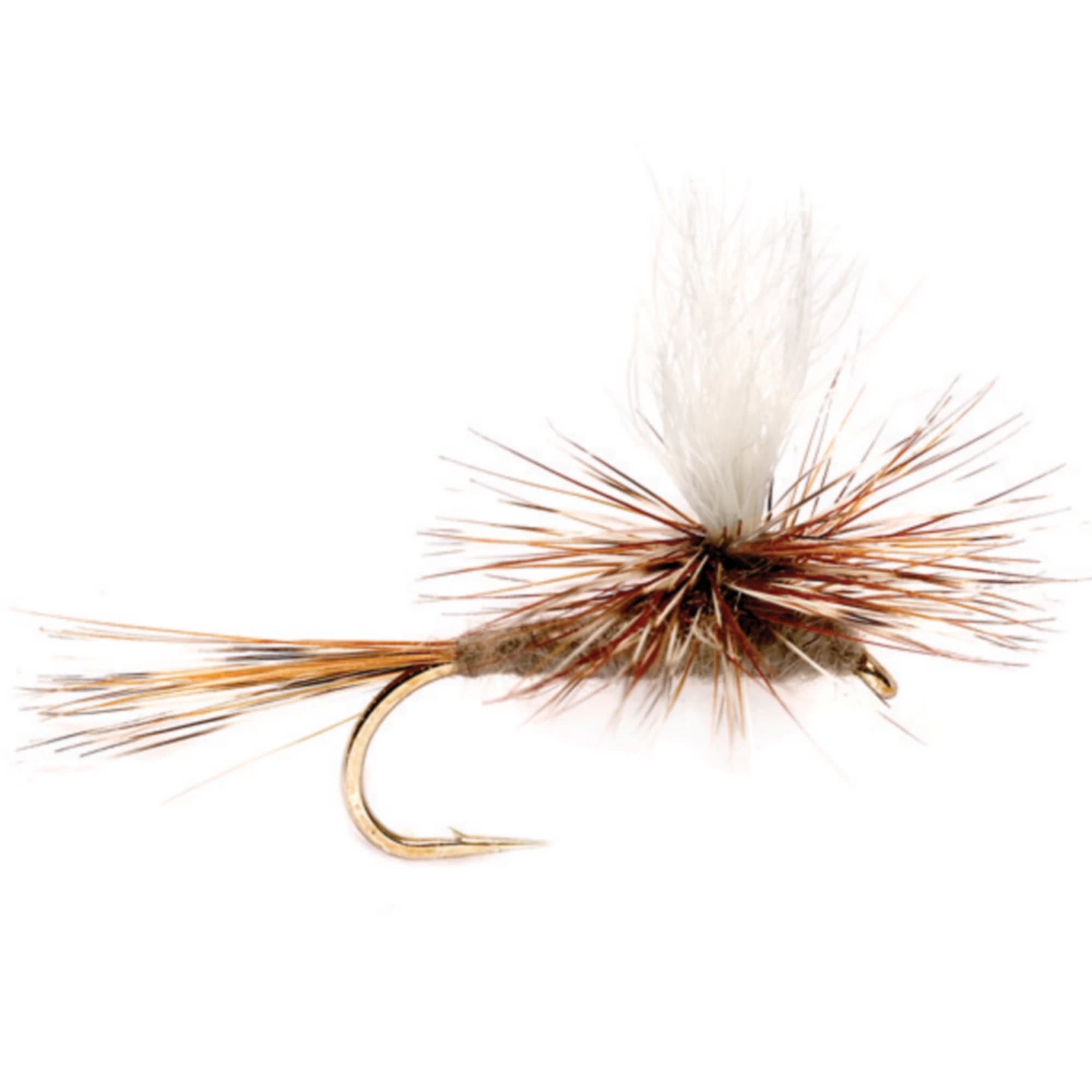
The Parachute Adams: How to Tie the One Fly Every Angler Carries and Why It Fools Everything
Monday, April 13, 2026
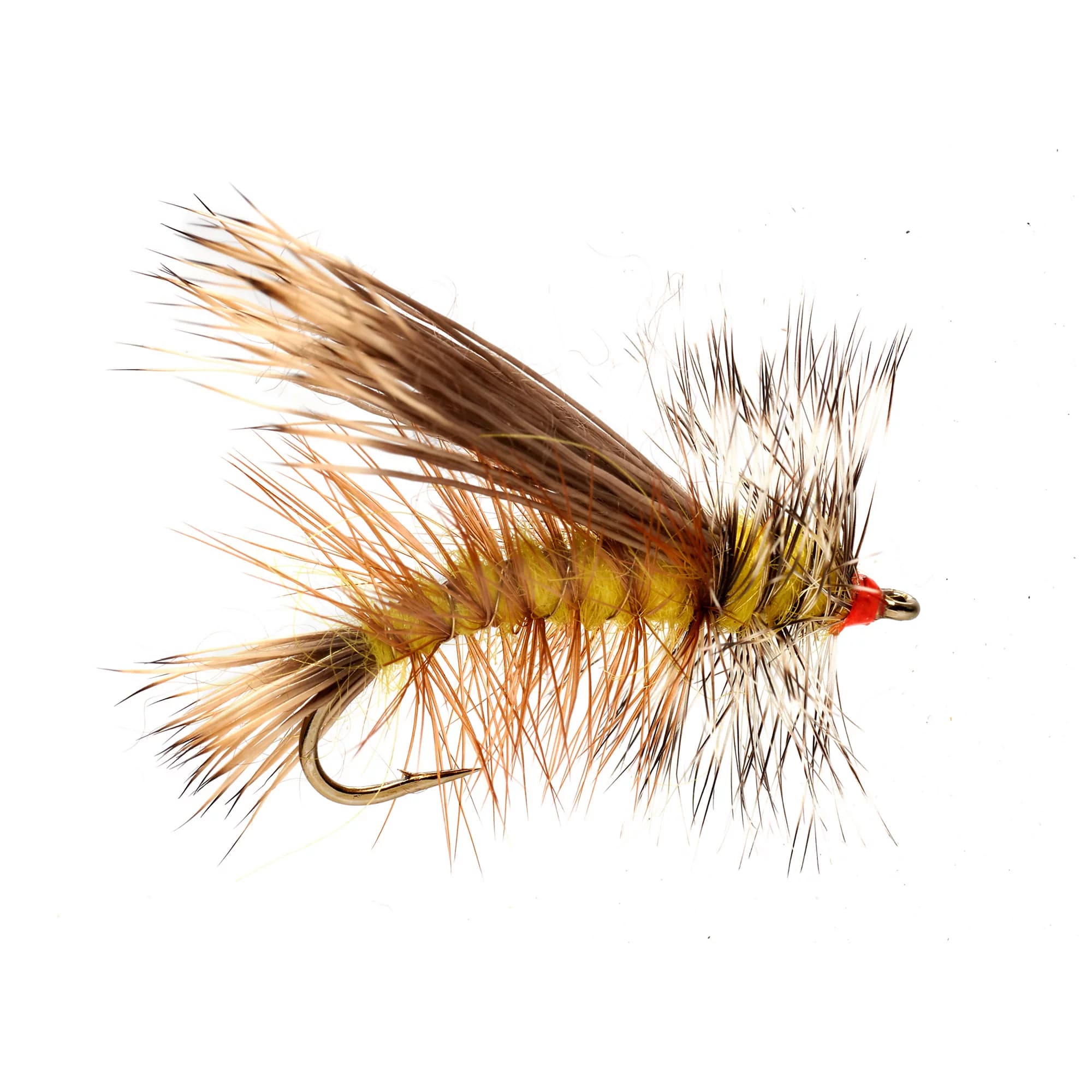
The Stimulator: The Stonefly-Caddis-Hopper-Attractor That Floats Through Anything
Thursday, March 12, 2026
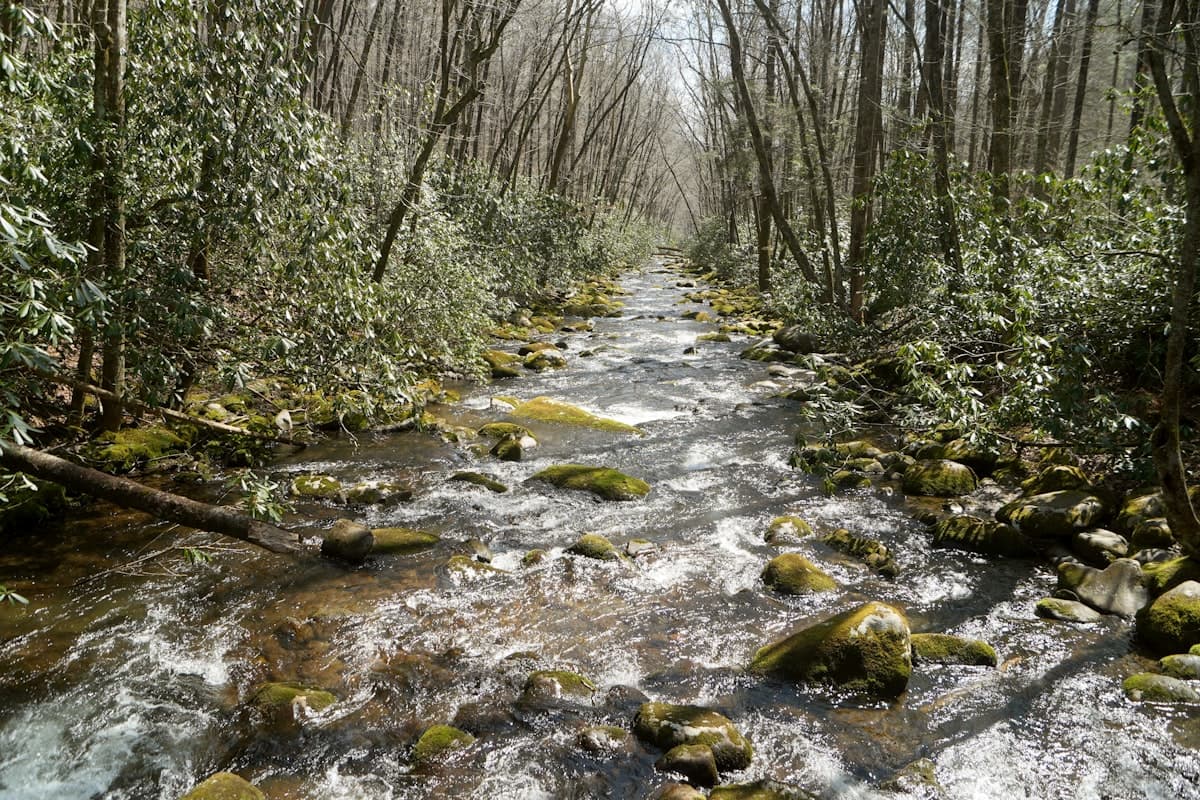
Fly Fishing the Great Smoky Mountains: Native Brook Trout, Old-Growth Streams, and the Oldest Mountains on Earth
Saturday, May 2, 2026
 ™
™