
The Hoh Bo Spey: How to Tie the #1 Steelhead Fly on the Olympic Peninsula
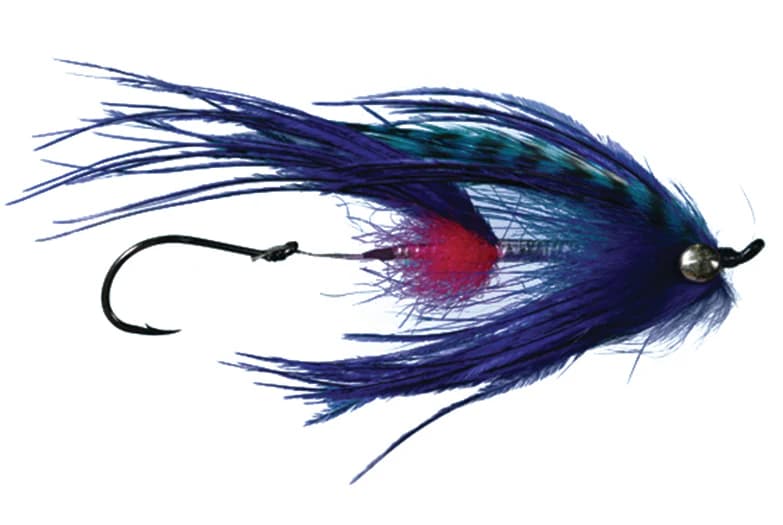
Charles St. Pierre named the Hoh Bo Spey after his two favorite Olympic Peninsula rivers — the Hoh and the Bogachiel. The intruder-style fly with its pink-and-purple profile, marabou collar, and guinea hackle has become the most fished steelhead pattern in the Pacific Northwest.

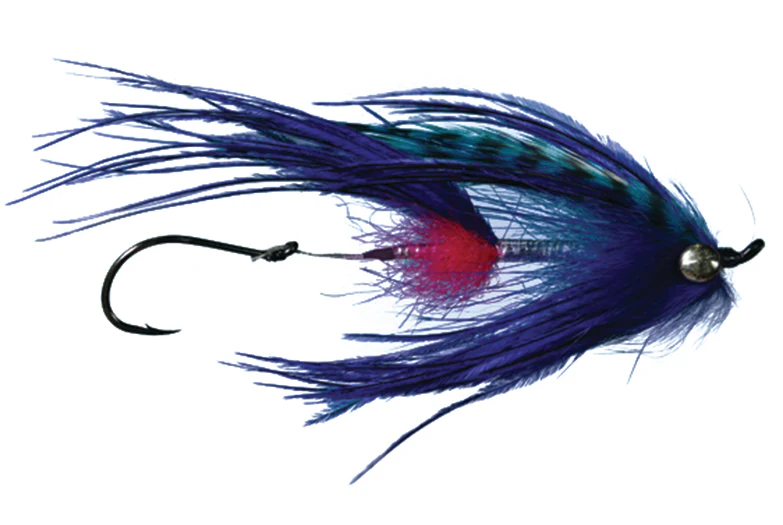 The Hoh Bo Spey — pink and purple intruder with marabou, guinea hen, and Lady Amherst on a Waddington shank. Photo: Red's Fly Shop / Solitude.
The Hoh Bo Spey is the fly that Olympic Peninsula steelhead guides tie on first. Not sometimes — first. Before the client has finished stringing up, before the coffee thermos is capped, before the rain has soaked through the first layer. The guide reaches into a box full of pink and purple and orange, pulls out a shank fly with marabou and guinea hackle flowing off every angle, and ties it to the tippet. That fly is the Hoh Bo Spey, and it has caught more wild winter steelhead on the Olympic Peninsula than any other pattern tied in the last 20 years.
Charles St. Pierre — a spey casting instructor and steelhead obsessive — designed the fly and named it after his two favorite OP rivers: the Hoh and the Bogachiel. The name is a portmanteau with a nod to the wandering angler's lifestyle — the "hobo" who follows the fish from river to river through the rainforest winter. The fly draws from the intruder tradition: an oversized, heavily dressed shank fly designed to push water, create movement, and trigger aggressive strikes from steelhead holding in cold winter flows.
What makes the Hoh Bo Spey different from a standard intruder is the material selection. Where many intruders use stiff hackle and flash to create a large profile, the Hoh Bo Spey uses soft, flowing materials — marabou, guinea hen, and Lady Amherst tail — that breathe and pulse in the current with minimal angler input. The fly comes alive in the water. Every fiber moves independently, creating the impression of something large, alive, and vulnerable. Winter steelhead, holding in cold water with suppressed metabolisms, are more likely to intercept a fly that looks alive on its own than one that requires aggressive stripping to move.
The Intruder Tradition
The Hoh Bo Spey belongs to the intruder family of steelhead flies — oversized, heavily dressed patterns tied on shanks rather than hooks, designed to create maximum water displacement and visual presence. The intruder concept was pioneered by Ed Ward and Scott Howell on the Skagit River in the late 1990s: a fly that's too big to be food but too alive-looking to ignore. The theory is that steelhead — especially winter fish in cold water — won't chase a small fly that requires effort to intercept, but they will react to a large, slow-moving presence that drifts through their holding water and triggers a territorial or predatory response.
The shank-and-trailing-hook construction is critical to the intruder concept. By separating the materials (on the shank) from the hook (trailing behind on wire or FireLine), the fly achieves a large silhouette without the leverage problems of a long-shank hook. A steelhead hooked on a 4-inch streamer hook can use the lever arm to throw the fly. A steelhead hooked on a small trailing octopus hook behind a shank has no leverage — the shank slides up the leader and the fish fights against just the hook. This means more landed fish per hookup, which matters enormously when you might swing through a thousand casts to get one pull.
The Hoh Bo Spey refined the intruder concept by prioritizing movement over bulk. Where early intruders used stiff materials (schlappen, rhea, ostrich) to create a rigid, water-pushing profile, St. Pierre chose materials that flow: marabou that collapses and expands with every current variation, guinea hen that pulses with barred translucence, and Lady Amherst that adds length without weight. The result is a fly that looks alive sitting still in a current seam — no stripping required, no rod-tip twitching, just the river doing the work.
What It Imitates
The Hoh Bo Spey doesn't imitate a specific food item. Winter steelhead aren't actively feeding — they're migrating upstream to spawn, and their strikes are triggered by aggression, territoriality, and predatory instinct rather than hunger. The fly is an attractor — designed to provoke a reaction from a fish that has no biological reason to eat.
This is the philosophical divide in steelhead fly fishing. Nymph anglers present small, natural-looking flies that steelhead eat out of residual feeding instinct — the same way a trout eats a drifted nymph. Swing anglers present large, unnatural flies that steelhead attack out of something deeper — aggression, curiosity, territorial defense, or a predatory reflex they can't suppress even though they're not hungry. The Hoh Bo Spey is built for the swing side of that divide. It's not trying to look like food. It's trying to look like something that needs to be dealt with.
The pink-and-purple color scheme isn't natural. Nothing in a steelhead river is that color. That's the point. The bright colors stand out against the dark, tannin-stained water of winter OP rivers, creating maximum contrast and visibility in conditions where a natural-colored fly would disappear. When the river is running green and clear, darker colors (black, blue, olive) produce. When it's high and stained after rain — which is most of winter on the OP — the pink and purple of the standard Hoh Bo Spey is what steelhead see and react to.
The color question — why do steelhead eat pink flies? — has never been satisfactorily answered. Some theories: pink resembles the flesh of spawned-out salmon that steelhead scavenge. Pink stands out against the green-gray palette of Northwest rivers. Pink triggers an aggressive response because it's unfamiliar and intrusive. The honest answer is that nobody knows, but pink and purple steelhead flies have been outproducing natural colors in stained water for decades, and the Hoh Bo Spey's pink-and-purple combination is the most refined expression of that empirical truth.
The Recipe — Standard Hoh Bo Spey
| Component | Material |
|---|---|
| Shank | 25mm Waddington shank or intruder shank |
| Thread | Black 140 denier (UTC) |
| Connection | 30 lb Berkley FireLine (smoke) — loop to trailing hook |
| Hook | Partridge Intruder or octopus hook, #2 |
| Butt | UV Ice Dub, pink — a small ball at the rear of the shank |
| Rib/hackle | Guinea hen feather, dyed pink — palmered through the body |
| Body | UV Ice Dub, purple — dubbed forward over the guinea |
| Collar | Black marabou (strung or spey quality) — 2-3 wraps |
| Flash | Holographic tinsel, fuchsia — 6-8 strands through the collar |
| Overwing | Lady Amherst center tail fibers — a few strands over the top |
How to Tie It — Step by Step
Step 1: Shank and connection. Mount the Waddington shank in the vise. Attach 30 lb FireLine to the rear of the shank in a loop, with a trailing octopus hook hanging about 1.5 inches behind. The trailing hook catches the fish — the shank holds the materials.
Step 2: Butt. Dub a small ball of pink UV Ice Dub at the rear of the shank, just in front of the connection. This is the hot spot that steelhead key on — a bright trigger point at the back of the fly.
Step 3: Guinea hackle. Tie in a dyed pink guinea hen feather at the butt and palmer it forward through the body area. Guinea hen is the signature material — the soft, barred fibers create a pulsing, breathing movement in the current that stiffer hackles can't match.
Step 4: Body. Dub purple UV Ice Dub forward over the guinea, building a tapered body to about two-thirds up the shank. The dubbing should be shaggy — pick it out with a bodkin to free the guinea fibers trapped underneath.
Step 5: Collar. Tie in black marabou at the front of the body and take 2-3 wraps forward. The marabou should flow rearward over the body, creating a full, dark collar that frames the pink-and-purple body. Marabou is what makes this fly move — every current change, every swing speed variation, every pause makes the marabou breathe.
Step 6: Flash and overwing. Add 6-8 strands of fuchsia holographic tinsel through the marabou collar. Top with a few strands of Lady Amherst center tail — the barred fibers add length and a mottled silhouette. Build a small thread head and whip finish.
The Variations
Pink/Purple/Black (standard) — The original. Pink butt, purple body, black marabou collar. The #1 color for stained winter water on the Hoh, Sol Duc, and Bogachiel. This is the fly that goes on first.
Orange/Black — Orange butt, orange body, black collar. The warm-water alternative when water temps climb above 45°F in late winter. Orange is more visible than pink in green-tinted water.
Chartreuse/Black — Chartreuse butt and body, black collar. The high-water fly for when the river is blown out and you need maximum visibility. Fish it on a heavy sink tip in the dirtiest water you'd still swing through.
Blue/Black — Blue butt, blue or purple body, black collar. The clear-water steelhead fly for late season (March-April) when flows drop and visibility improves. More subtle than pink.
Olive/Black — The most natural color combination. Olive body, black collar, minimal flash. For pressured fish on rivers that see heavy traffic — the Sol Duc in February, when every run has been swung through daily.
Where to Fish It
-
Olympic Peninsula — Hoh, Sol Duc, Bogachiel, WA — Its home water. The Hoh Bo Spey was designed for these rivers and is the default pattern for every OP guide. Fish it on a Skagit head with T-14 or T-17 sink tip in the classic down-and-across swing.
-
Pere Marquette River, Michigan — Great Lakes steelhead eat Hoh Bo Speys with the same aggression as Pacific fish. Pink/purple in stained water, olive/black in clear.
-
Pacific Northwest steelhead rivers — The Skagit, Sauk, Skykomish, Deschutes, Klickitat, Sandy, Clackamas — the Hoh Bo Spey has become the standard intruder-style pattern across the entire region.
How to Fish It — The Swing
The Hoh Bo Spey is a swinging fly, fished on a two-handed spey rod with a Skagit shooting head and sink tip. The technique is the foundation of steelhead fly fishing:
The cast. Spey cast (snap-T, double spey, or skagit cast) across and slightly downstream. The fly lands 30-60 feet out, quartering downstream.
The swing. The current catches the line and swings the fly broadside across the run. Mend upstream to slow the swing in fast water; mend downstream to speed it up in slow water. The fly should swing at a walking pace — slow enough for the materials to breathe, fast enough to cover water.
The step. After each swing completes (the fly hangs directly downstream), take two steps downstream and cast again. This systematic approach covers every foot of the run. Steelhead hold in specific lies — your fly needs to pass within a few feet of the fish to trigger a strike.
The take. A steelhead taking a swung fly is the most violent eat in freshwater fly fishing. The line goes tight — hard tight — and the rod loads against a fish that's already running. Don't set the hook. The swing sets it. Just hold on.
Sink tips matter. Water temperature and speed dictate the tip weight. T-11 for slower, shallower runs. T-14 for moderate winter water. T-17 for the deepest, fastest runs and the coldest days. The fly needs to be in the bottom third of the water column where steelhead hold. Carry all three weights — the difference between a T-11 and a T-17 can be the difference between swinging over every fish in the run and putting the fly in their face.
Reading steelhead water. Not every piece of river holds steelhead. Winter fish hold in moderate-speed runs with depth (3-8 feet), a gravel or cobble bottom, and a defined current seam where they can rest without fighting the full flow. The classic steelhead run has a riffle at the head (too fast), a deep slot in the middle (where the fish are), and a tailout that shallows out at the bottom (where fish rest before moving upstream). Start your swing at the top of the slot and work through the tailout. If the run has an inside seam where slow water meets fast water, focus your casts there — that's the highway steelhead travel.
The thousand-cast game. Steelhead fishing is not trout fishing. You will cast, swing, and step hundreds of times before a fish eats. The Hoh Bo Spey is designed for this reality — it casts effortlessly with a Skagit system, it swims on its own without requiring attention from the angler, and it covers water efficiently with the step-and-swing method. The mental game of steelhead is committing to the process: trust the fly, trust the swing, trust that a fish is there. When the pull comes — and it will feel like someone yanked your rod out of your hands — the hours of casting disappear instantly.
The grab vs. the pluck. Steelhead take swung flies in two ways. The grab is the classic take — a sudden, heavy pull that loads the rod and announces itself unmistakably. Let the fish turn with the fly before tightening. The pluck is subtler — a light tick or tap that feels like the fly bumped a rock. Plucks are steelhead mouthing the fly without committing. If you feel a pluck, don't react — let the fly continue swinging. If the fish wants it, it will come back harder. If it doesn't, continue your swing and cast again through the same water. Sometimes a second or third pass converts a plucker into a grabber.
How to Tie It — Video Tutorials
Step-by-step: Hoh Bo Spey for Salmon and Steelhead — Clear tying video with tips on guinea hackle palmering and marabou collar techniques.
With John Parisi: Hoh Bo Spey Fly Tutorial — Detailed instruction from a steelhead guide who fishes this pattern daily.
Trout Spey version: Tying the Hoh Bo Trout Spey — Scaled down for trout on lighter spey rods.
Tips From the Vise
Soft materials are the point. Don't substitute stiff hackle for the guinea or marabou. The Hoh Bo Spey's effectiveness comes from movement — soft fibers that pulse and breathe in the current without any input from the angler. A stiff fly is a dead fly.
Don't overdress. The temptation with intruder-style flies is to pile on materials until the fly looks like a parrot exploded. Resist. St. Pierre designed the Hoh Bo Spey to be dressed lightly — sparse enough that the fly sinks quickly and the individual fibers can move independently.
Pink guinea is hard to find. Dyed pink guinea hen feathers are a specialty item. Order online from Hareline or Spirit River, or dye your own with Rit or Jacquard acid dye.
The trailing hook matters. Use a short-shank octopus or circle hook on 30 lb wire or FireLine. The trailing hook should hang freely so it swings independently from the fly body. This catches short-striking fish that grab the tail.
Build Your Box
- Pink/Purple/Black #2 (4) — standard winter, stained water
- Orange/Black #2 (4) — warming water, late winter
- Blue/Black #2 (4) — clear water, late season
- Chartreuse/Black #2 (2) — blown-out high water
- Olive/Black #2 (2) — pressured fish, clear conditions
That's 16 flies. The Hoh Bo Spey takes 10-15 minutes each — the guinea palmering and marabou collar require care. Combined with the Muddler Minnow for skating and traditional wet flies for warm-water swinging, the Hoh Bo Spey is the centerpiece of the Olympic Peninsula steelhead fly box.
Frequently Asked Questions
Who designed the Hoh Bo Spey?
Charles St. Pierre, a spey casting instructor. The name combines the Hoh and Bogachiel rivers on the Olympic Peninsula — his two favorite steelhead rivers — with a nod to the wandering 'hobo' lifestyle of following steelhead from river to river.
What color Hoh Bo Spey is best?
Pink butt, purple body, black marabou collar is the standard for stained winter water. Orange/black for warming water. Blue/black for clear late-season conditions. Chartreuse/black for blown-out high water. Match the color to visibility conditions.
How do you fish a Hoh Bo Spey?
Swung on a two-handed spey rod with a Skagit shooting head and sink tip (T-11 through T-17 depending on depth). Cast across and downstream, let the current swing the fly broadside through the run. Step downstream after each swing. The take is violent — don't set the hook, the swing sets it.
What makes the Hoh Bo Spey different from other intruders?
Soft materials — marabou, guinea hen, Lady Amherst — that breathe and pulse in the current without angler input. Most intruders use stiffer materials. The Hoh Bo's soft construction creates lifelike movement that triggers strikes from lethargic winter steelhead.
What rod do you need for the Hoh Bo Spey?
A 13-14 foot spey rod in 7-8 weight with a Skagit shooting head. The Skagit system turns over the large, weighted fly and sink tip combination that winter steelhead fishing demands. Carry T-11, T-14, and T-17 sink tips for different water conditions.
Related Articles
Fly Fishing the Olympic Peninsula: Wild Steelhead in the Rainforest, the Rivers That Define the Sport, and Why They Need Us Now
Thursday, January 8, 2026
Fly Fishing the Pere Marquette: Great Lakes Steelhead, the Hex Hatch, and a River That Fishes Every Month of the Year
Wednesday, December 17, 2025
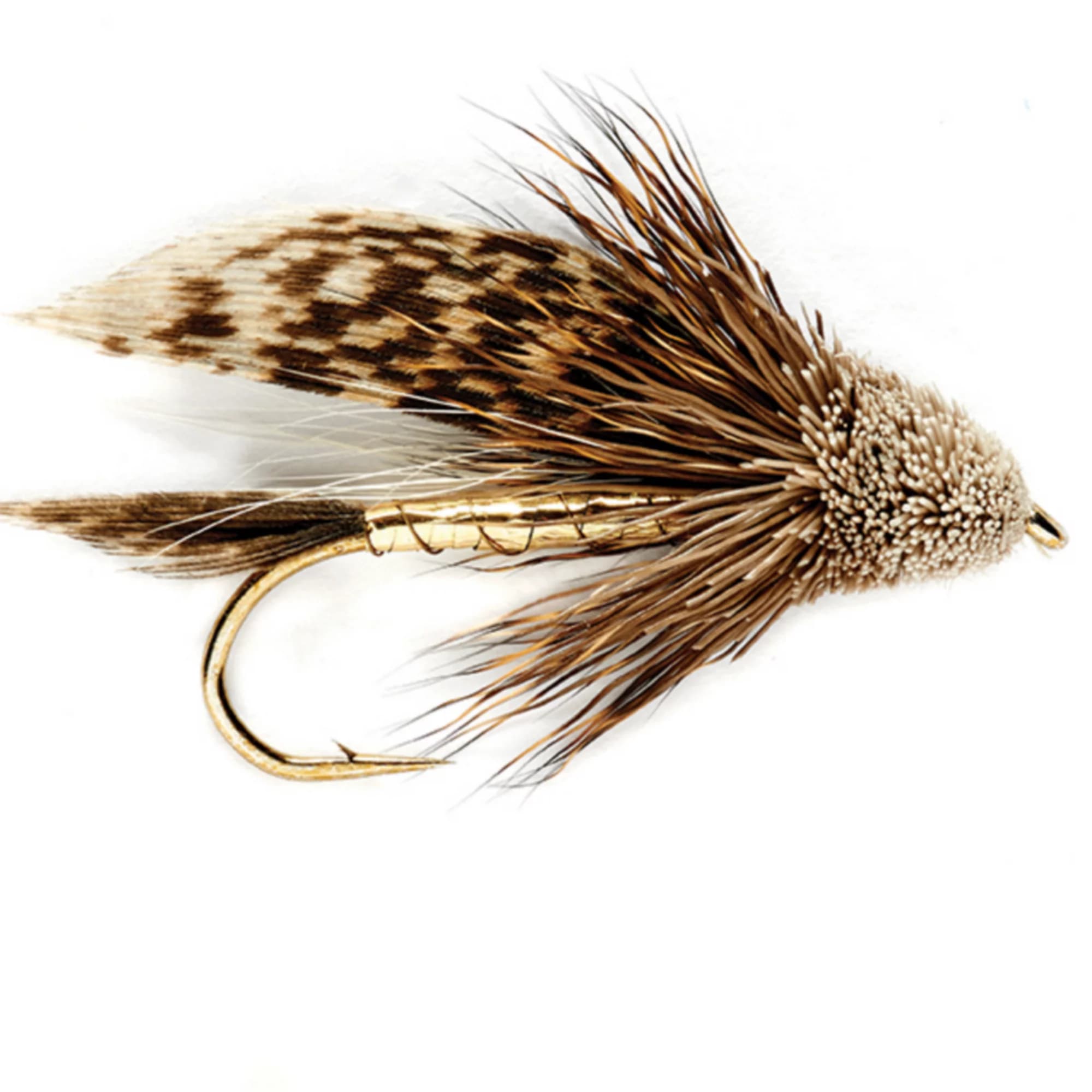
The Muddler Minnow: How to Tie the Fly That Imitates a Sculpin, a Grasshopper, a Stonefly, and Whatever Else You Need It to Be
Sunday, November 9, 2025
 ™
™