
How to Fish Grand Lake, Oklahoma: A First-Timer's Guide to Bass, Crappie, and Catfish
What a beginner needs to fish Grand Lake o' the Cherokees — the Oklahoma license, how to catch its trophy largemouth and spotted bass, slab crappie around docks and timber, the spring white bass run, big catfish, the unique paddlefish snagging fishery, and the gear and tactics that work on this Green Country reservoir.
Grand Lake o' the Cherokees sprawls across northeast Oklahoma's Green Country — a big, fishy Ozark-foothills reservoir on the Neosho (Grand) River with miles of dock-lined shoreline, standing timber, brushy coves, and rocky points. It's a nationally known bass tournament lake, a crappie factory, a catfish stronghold, and home to one of the most unusual fisheries in the country: the springtime paddlefish run. For a first-timer it's a forgiving, multi-species reservoir where you can catch a lot of fish a lot of ways. This guide breaks down each.
For the bigger picture — the species, the marinas, and the guide scene — read our complete Grand Lake fishing guide.
First: The Oklahoma License (and Paddlefish Rules)
Anyone 16 or older needs an Oklahoma fishing license, available online from the Oklahoma Department of Wildlife Conservation (ODWC); short-term options exist for visitors. The one species that needs special attention is paddlefish (spoonbill): they require a free paddlefish permit, and the snagging fishery has strict, day-specific rules — certain days are keep days and others are catch-and-release only, with reporting requirements. Study the ODWC paddlefish regulations carefully before you go. Bass, crappie, white bass, and catfish all have standard size and creel limits — check current ODWC rules before keeping a limit.
Largemouth and Spotted Bass
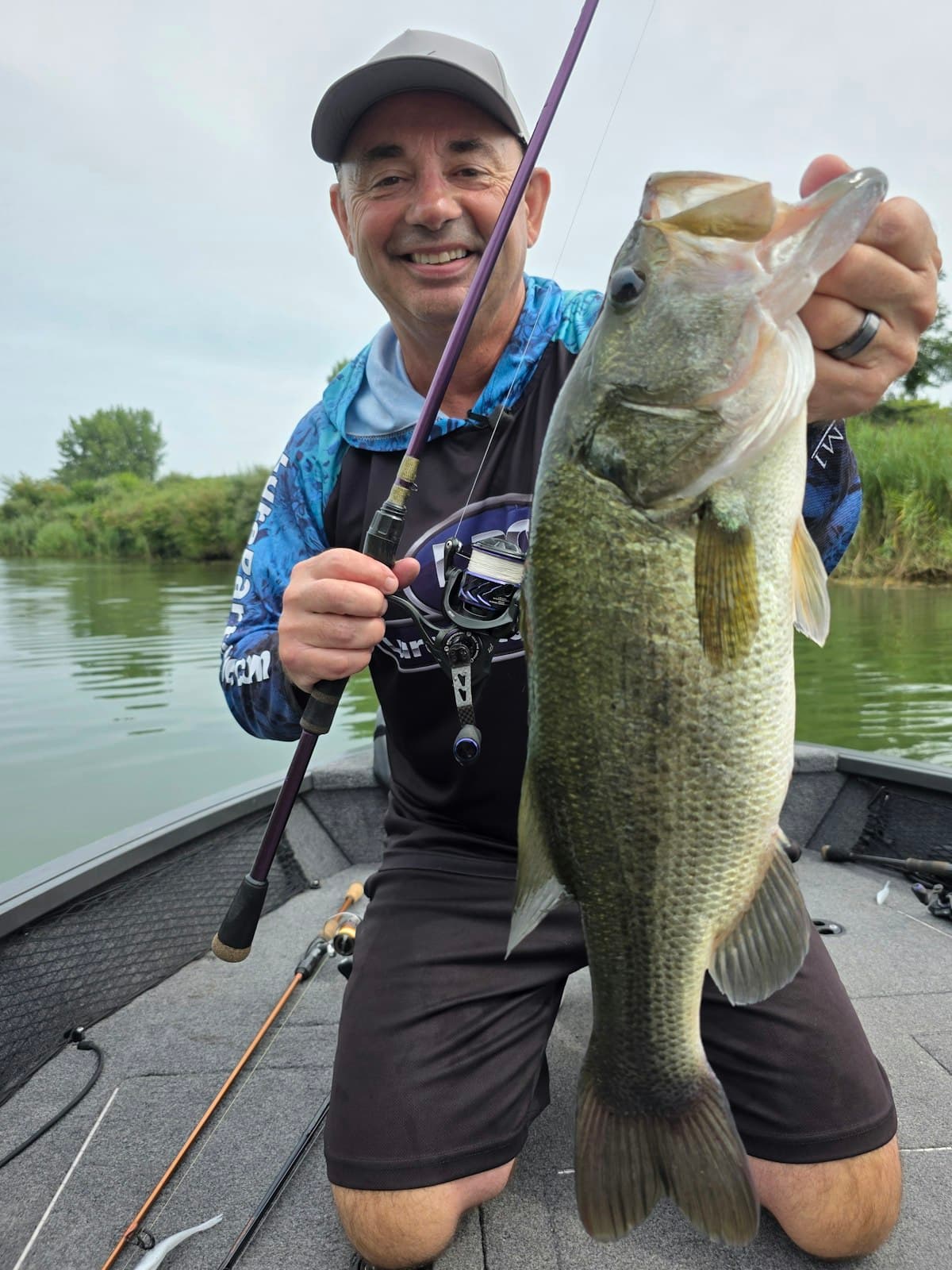
Grand Lake is bass country — it regularly hosts professional tournaments, and it grows quality largemouth plus a healthy population of spotted bass. The fish relate to the lake's three big features: boat docks, brush piles, and rocky points and channel swings.
The most productive beginner approaches: flip a jig (a War Eagle or a Strike King jig) or a Texas-rigged Zoom creature bait to the dock pilings and brush, throw a Strike King KVD squarebill crankbait along the rocky points and riprap, or run a Booyah spinnerbait along the bank in stained water. In spring, when bass move shallow to spawn, a wacky-rigged Yamamoto Senko skipped under docks is deadly; in fall, follow the shad into the creeks and throw a crankbait or a topwater. A 7-foot medium-heavy St. Croix Bass X with a Shimano SLX baitcaster covers the jig and crank work. Spring (the spawn) and fall (the shad migration) are the prime bass seasons.
Largemouth Bass Fishing Techniques on a ReservoirCrappie: A Grand Lake Tradition
Crappie fishing has always been a big deal on Grand Lake, and both black and white crappie are abundant. They stack up around the same cover bass use — brush piles, dock pilings, and standing timber — and they're one of the easiest, most rewarding fish for a beginner. Fish a Bobby Garland Baby Shad jig or a live minnow under a slip bobber tight to the cover, or vertically jig a brush pile you've marked on electronics. In spring, crappie move shallow to spawn and you can catch them right off the banks and docks; the rest of the year they school over deeper brush and creek channels. A light spinning rod or a long crappie pole (a B'n'M) and a handful of jigs is the whole kit, and a good day produces a cooler of "slabs" — superb eating.
Catching Crappie around Docks and BrushWhite Bass and Hybrid Stripers
Grand Lake has excellent numbers of white bass (sandies) plus hybrid striped bass, and they provide some of the most exciting fishing of the year. In spring, white bass run up the rivers — the Neosho (Grand) and Spring River arms — by the thousands to spawn, and you can catch them on nearly every cast on a small jig, a Kastmaster spoon, or an inline spinner like a Road Runner. The rest of the year, white bass and hybrids school and chase shad on the main lake, often busting bait on the surface — when you see the surface boiling and birds diving, cast a spoon or a swimbait into the school for fast action. They're scrappy fighters and good on the table.
Catfish: Monsters Year-Round
Grand Lake is a serious catfish lake, holding channel, blue, and flathead cats — and monster fish are pulled from it year-round. Channel cats are the easiest: fish cut shad, prepared stinkbait, or worms on a slip-sinker bottom rig off the bank, a dock, or anchored over flats and channel edges. Blue catfish grow huge and prefer fresh cut shad drifted or anchored over deeper structure. Flatheads are the trophy of the three and eat live bait — a live perch or shad fished near timber and rock after dark. A medium-heavy rod, a 4000-size spinning or baitcasting reel with 20- to 30-pound line, a Team Catfish circle hook, and a bag of cut bait will get you started, and evenings and nights in summer are prime.
Paddlefish: The Spring Spoonbill Run
Few places offer anything like Grand Lake's paddlefish (spoonbill) fishery. These prehistoric, plankton-eating giants — fish that can top 70 pounds — run up the rivers by the thousands during the spring spawn, and because they filter-feed and won't take a baited hook, anglers catch them by snagging: casting a large weighted treble hook on heavy gear and sweeping it through the water to hook fish as they migrate. The area below Twin Bridges (where the Neosho and Spring rivers enter) is the famous spot. This is a specialized, regulated pursuit — remember the ODWC's strict keep-day/catch-and-release-day rules and reporting — and a first-timer is far better off with a paddlefish guide who has the heavy snagging gear and knows the rules and the run. It's a uniquely Oklahoma experience worth knowing about.
Reading the Lake and Fishing the Docks
Grand Lake's defining feature is its boat docks — thousands of them line the shoreline, and they're fish magnets, providing shade, structure, and cover for bass and crappie alike. Learning to fish docks is the single most useful Grand Lake skill. The productive technique is skipping — casting a wacky-rigged worm, a jig, or a small swimbait low and flat so it skips under the dock into the shade where fish hide, the way a stone skips on water. It takes practice with a baitcaster (a spinning rod is easier to learn the skip on), but it puts your bait where the biggest fish live and where most anglers can't reach. Not all docks are equal: the best ones sit on or near deeper water, a creek channel swing, or a point, and docks with brush piles sunk around them (many owners add their own) are gold. A fish-finder helps you spot the brush and the depth.
Beyond docks, read the lake by its structure and the season. In spring, fish move shallow into the backs of coves and pockets to spawn — target the flats and bank cover. As summer heats up, they pull out to deeper brush, channel edges, points, and the dock lines over deep water; fish early, late, and at night. In fall, the shad migrate into the creeks and the bass and white bass follow, so run the creek arms and look for feeding activity. Wind, as always, positions fish — a chop on a main-lake point concentrates bait and feeding bass.
More on Schooling White Bass and Hybrids
The summer and fall surface-schooling action is some of the most fun fishing Grand Lake offers, and it's easy for a beginner once you find it. White bass and hybrid stripers corral shad against the surface and attack in a frenzy, often marked by diving gulls and terns wheeling over the boils. When you see birds working or the water "nervous" with fleeing shad, ease within casting range (don't drive into the school and put it down) and cast a chrome Kastmaster spoon, a small swimbait, or a topwater into the chaos — you'll often hook up immediately, and a school can keep you busy for an hour. Keep a rod rigged with a spoon ready at all times in summer and fall so you can react the moment a school pops up. Hybrids in particular pull hard and grow big, so don't be surprised by a brute mixed in with the smaller sandies.
A Note on Conservation
Grand Lake's quality fishing is a managed resource. Bass anglers — especially around tournaments — practice catch-and-release to protect the trophy population, and even casual anglers benefit from releasing the bigger fish that drive the lake's reputation. With crappie, white bass, and catfish, keep a reasonable mess within the limits and let the rest go; you don't need to fill every cooler. And with paddlefish, the ODWC's keep/release-day system exists precisely to protect a slow-growing, ancient species, so following it to the letter is essential. Fish the regulations, and Grand Lake stays the Green Country gem it is.
Gear: What to Bring
On a guided trip, gear is provided. Fishing on your own:
- Bass: a 7-foot medium-heavy St. Croix Bass X, a Shimano SLX baitcaster, jigs, Zoom worms, crankbaits, and spinnerbaits.
- Crappie: a light spinning rod or a B'n'M crappie pole, Bobby Garland jigs, slip bobbers, and minnows.
- White bass: a medium spinning rod, Kastmaster spoons, and Road Runner jigheads.
- Catfish: a medium-heavy rod, Team Catfish circle hooks, slip sinkers, and cut bait.
- Paddlefish: heavy snagging gear — best to go with a guide.
When to Go
- Spring (March–May): The prime all-around season — bass spawn shallow, crappie move to the banks, white bass run the rivers, and paddlefish snagging peaks.
- Summer (June–August): Bass and crappie move to deeper brush and docks; catfish are at their best at night; white bass and hybrids school and bust shad on the surface.
- Fall (September–November): Excellent — bass follow the shad into the creeks and feed up, and crappie fishing is strong again.
- Winter (December–February): Slower but quality — crappie and bass hold deep, and big blue catfish bite in the cold.
A First-Timer's Plan
For your first trip, book a half-day guide on Grand Lake — a bass or crappie guide supplies the boat, electronics, and gear and puts you on the docks and brush where the fish live. No boat? Fish a jig or minnow for crappie off any dock or marina, or bank-fish cut bait for catfish in the evening — both are easy and productive. If it's spring, the white bass run and the paddlefish snagging are bucket-list experiences (go with a guide for paddlefish). Buy your Oklahoma license online first, and study the paddlefish rules carefully if that's on your list.
Recommended Gear
St. Croix Bass X Casting Rod
All-purpose bass rod for jigs, cranks, and Texas rigs on Grand Lake
Shimano SLX Baitcaster
Workhorse reel for dock and brush bass
Bobby Garland Baby Shad
Crappie jig around docks, brush, and standing timber
Kastmaster Spoon
White bass schooling and the spring river run
Strike King KVD Squarebill
Crankbait for bass on rocky points and riprap
Team Catfish Double Action Circle Hook
Cut bait on a slip-sinker rig for channel and blue cats
B'n'M Crappie Pole
Long pole for dropping jigs and minnows into crappie cover
Top Fishing Guides in Grand Lake
Grand Lake's guides know which docks and brush piles are holding bass and crappie this week, when the white bass are running the rivers, and how the paddlefish snagging is shaping up. They bring the boat, electronics, and gear so a first-timer can just fish Oklahoma's Green Country.
Kirks Flyshop Grand Lake
Grand Lake, CO, US
4.9 (270 reviews)
Kirks Flyshop Grand Lake offers guided fly fishing float trips on the scenic Colorado River, where anglers pursue abundant rainbow and brown trout. With experienced guides at the helm, the outfitter welcomes both seasoned fly fishers and beginners, tailoring each trip to match individual skill levels and preferences. The operation provides a hassle-free experience by supplying all necessary gear and meals for half-day, full-day, and overnight excursions. Guests can focus entirely on the water and wildlife while enjoying the dramatic landscape that defines this Colorado destination. Whether seeking a quick getaway or an extended adventure, Kirks Flyshop Grand Lake delivers a thoughtfully curated fly fishing experience.
Beacon Landing
Grand Lake, CO, US
4.4 (168 reviews)
Beacon Landing specializes in guided fishing charters on Lake Granby, Colorado's premier destination for lake trout (Mackinaw). Their experienced guides cater to anglers of all skill levels, from first-time fishers to seasoned veterans, delivering expert instruction in a relaxed, welcoming atmosphere. With a strong commitment to responsible fishing practices, they ensure every guest enjoys a sustainable and respectful experience on the water. Each charter includes all necessary fishing equipment, bait, and tackle, removing barriers to entry for newcomers while allowing experienced anglers to focus on the fishing itself. Guests experience the serene beauty of Colorado's high country while enjoying personalized attention from knowledgeable guides. Beacon Landing is an ideal choice for families, beginners, and anyone seeking a comprehensive lake trout fishing experience in one of the region's most acclaimed waters.
For the full lake breakdown and the guide rundown, see our complete Grand Lake fishing guide. Fishing more Oklahoma and Ozark reservoirs? We also have first-timer guides for Lake Texoma and Branson's Table Rock Lake.
Frequently Asked Questions
What fish can you catch in Grand Lake, Oklahoma?
Largemouth and spotted bass (a noted tournament lake), black and white crappie, white bass and hybrid striped bass, channel, blue, and flathead catfish, plus bluegill, redear sunfish, walleye, and the unique springtime paddlefish (spoonbill).
Do I need a license to fish Grand Lake?
Yes — an Oklahoma fishing license for anyone 16 or older from ODWC. Paddlefish require a free paddlefish permit and have strict day-specific keep/release rules plus reporting — study the ODWC paddlefish regulations carefully. Bass, crappie, and catfish have standard limits.
What is the best way for a beginner to catch fish at Grand Lake?
Crappie are the easiest and most rewarding — fish a Bobby Garland jig or a live minnow under a slip bobber tight to dock pilings, brush piles, or standing timber. Catfish on cut bait off the bank in the evening are another simple, productive option.
What is paddlefish snagging at Grand Lake?
Paddlefish (spoonbill) are filter-feeding giants that run up the rivers each spring and won't take a baited hook, so anglers catch them by snagging — sweeping a large weighted treble hook through the migrating fish on heavy gear. It's regulated with strict keep/release days; go with a guide your first time.
When is the best time to fish Grand Lake?
Spring is the prime all-around season — the bass spawn, crappie move shallow, white bass run the rivers, and paddlefish snagging peaks. Fall is excellent for bass and crappie as fish follow the shad, and summer nights are best for catfish.
Related Articles
How to Fish Lake Texoma, Oklahoma/Texas: The Striper Capital of the World and Everything Else Swimming in It
Saturday, December 13, 2025
Grand Lake Fishing: Tournament Bass, Crappie Culture, and Paddlefish You Won't Find Anywhere Else
Friday, December 19, 2025
How to Fish Branson and Table Rock Lake, Missouri: Bass, Trout, Walleye, and the Two-Lake System That Makes This Place a Midwest Fishing Destination
Monday, December 29, 2025
Lake Texoma Fishing: The Only Lake Where Striped Bass Spawn on Their Own
Tuesday, December 23, 2025
How to Fish Lake of the Ozarks, Missouri: A Beginner's Guide to Bass, Crappie, and Dock Fishing
Thursday, February 5, 2026
How to Fish Nashville, Tennessee: A First-Timer's Guide to Music City's Freshwater
Monday, April 20, 2026