
How to Fish Lake of the Ozarks, Missouri: A Beginner's Guide to Bass, Crappie, and Dock Fishing
Everything a first-timer needs to fish Lake of the Ozarks — dock-skipping for largemouth bass, brush pile crappie on jigs, blue catfish on cut shad, white bass schooling action, bank fishing access, gear setups, and practical details for visiting anglers.

Lake of the Ozarks is a 54,000-acre reservoir in central Missouri with over 1,100 miles of shoreline — more than the coast of California. The Osage River was dammed at Bagnell in 1931, and the resulting lake filled a labyrinth of Ozark valleys, creating a serpentine main channel flanked by dozens of arms, coves, and pockets that stretch for 92 miles from the dam to Truman Dam at the upper end. Every inch of that shoreline holds some kind of fish-attracting structure: boat docks, rock bluffs, gravel points, submerged brush piles, standing timber, and riprap.
The lake is a bass fishing destination first — largemouth and spotted bass are the primary draw, and the dock-lined coves create a fishery unlike anything else in the Midwest. But Lake of the Ozarks is also one of Missouri's best crappie lakes, an underrated catfish fishery with blue cats exceeding 50 pounds, and a white bass and hybrid striper playground when the fish school on the surface in fall. It's a place where a beginner can catch fish on day one, and a place where serious anglers spend decades learning the nuances of each arm.
This guide covers the practical how-to for each major species — what gear to bring, what rigs to tie, where to fish, and what to expect by season.
The Lake's Geography: Arms, Coves, and Mile Markers
Understanding the lake's layout is the first step to fishing it effectively. Lake of the Ozarks is measured by mile markers along the main Osage River channel, starting at mile 0 at Bagnell Dam and running to mile 92 at Truman Dam. The lower lake (miles 0 to 30) is the deepest and clearest section, with steep bluff walls, deep docks, and rocky points. The mid-lake section (miles 30 to 60) is the most developed — Osage Beach and Lake Ozark are here — with thousands of boat docks lining every cove. The upper lake (miles 60 to 92) is shallower and more stained, with flatter banks, more standing timber, and muddier water after rain.
The major arms are where much of the best fishing happens. The Gravois Arm enters from the south near the dam and holds excellent crappie habitat with brush piles added by the Missouri Department of Conservation. The Grand Glaize Arm (also called the Glaize) enters near Osage Beach and is a tournament favorite for largemouth bass — its docks, points, and brush piles are textbook bass structure. The Niangua Arm is the largest tributary, entering from the southwest, and offers some of the best variety fishing on the lake: bass, crappie, catfish, and white bass all thrive in its stained water and abundant cover. The Linn Creek Arm and Gravois Creek are smaller but productive for crappie and channel catfish.
Largemouth and Spotted Bass: The Main Event
Bass are what put Lake of the Ozarks on the map. The lake holds both largemouth and spotted bass in big numbers. Largemouth dominate the coves, docks, and brush piles. Spotted bass (called "spots" locally) favor the main channel rock, bluff walls, and deeper structure in the lower lake. The average fish is 1.5 to 3 pounds, but 5-pounders are caught regularly and fish over 7 pounds come out every season.
Dock Fishing: The Lake's Signature Technique
Lake of the Ozarks has more boat docks per mile of shoreline than almost any lake in America. Those docks aren't just scenery — they're the single best bass habitat on the lake. Docks provide shade, current breaks, and ambush points. Every dock holds the potential for a bass, and some docks hold a dozen.
Skipping: The most effective dock technique is skipping a bait under the dock — using a sidearm or underhand cast to send a soft plastic skipping across the water's surface beneath the dock walkway, the way you'd skip a stone. The bait lands in the shaded water behind the dock cables where bass hide and rarely see a lure. A 5-inch Yamamoto Senko in green pumpkin or watermelon, rigged weightless on a 3/0 Gamakatsu EWG hook, is the standard skip bait. Texas-rigged soft plastics, small jigs (3/8-ounce Strike King Bitsy Bug in black/blue), and compact tubes also skip well.
Gear for docks: A 7-foot medium-heavy baitcasting rod with a fast tip gives the best skipping accuracy. Pair it with a low-profile baitcasting reel (the Abu Garcia Revo SX or Shimano SLX are popular mid-range choices) spooled with 15- to 17-pound Sunline Sniper fluorocarbon. Fluorocarbon sinks, which helps keep the bait in the strike zone, and it's nearly invisible in the clear lower-lake water.
For beginners who can't skip yet: Pitch instead. A pitch is a pendulum cast — let out a rod-length of line, hold the bait in your off hand at belt height, swing the rod tip forward, and release the bait simultaneously. It flies low and quiet under dock overhangs without the skipping motion. A 3/8-ounce jig (Strike King Hack Attack in black/blue with a Zoom Super Chunk Jr. trailer) pitched to the shady side of dock posts, cable anchors, and swim platforms catches bass all day.
Pitching and Skipping 101 — Bass Fishing, Lake of the OzarksSeasonal Bass Patterns
Spring (March through May): Bass move from deep winter haunts toward shallow spawning flats in the backs of coves. Pre-spawn fish stage on secondary points and brush piles in 8 to 15 feet. A 1/2-ounce chartreuse and white Strike King KVD spinnerbait slow-rolled past these staging areas is deadly in stained water. As water temperatures hit 60 to 65 degrees, bass push onto flat gravel banks to spawn. Sight-fishing for bedding bass with a white or green pumpkin soft plastic (Zoom Brush Hog or Missile Baits D Bomb) on a Texas rig is the spring standard. Post-spawn fish scatter to the nearest docks.
Summer (June through August): Bass relate heavily to docks, especially docks over deeper water (15 feet or more) on the main lake and major arm channels. Early morning topwater action is excellent — a Heddon Zara Spook or Strike King Sexy Dawg walked across flat water near dock lines produces explosive strikes before the sun gets high. Once the sun is up, switch to dock skipping or pitching. Deep-diving crankbaits (Strike King 6XD or Rapala DT-16 in shad patterns) cranked along main lake points and channel swings catch fish in the heat of the day.
Fall (September through November): Bass follow shad into the backs of coves and creeks, and the feeding is aggressive. Fast-moving lures dominate: buzzbaits (Booyah Buzz in white) over shallow flats at dawn, lipless crankbaits (Strike King Red Eye Shad in chrome) ripped through grass and brush, and spinnerbaits burned over submerged wood. This is the most consistent season for numbers — a good fall day on the Ozarks can produce 30 to 50 bass.
Winter (December through February): Bass go deep — 20 to 40 feet — and slow down. A 1/2-ounce football jig (Dirty Jigs No-Jack in peanut butter and jelly) dragged slowly along deep rock transitions and channel swings is the winter standard. Blade baits (Steel Shad in 1/2-ounce) and jigging spoons worked vertically over deep brush piles also produce. Winter fishing is slow but can yield the biggest bass of the year.
Catching Huge Fish by Docks — Lake of the OzarksCrappie: The People's Fish
Crappie might be more popular than bass at the Ozarks — at least by the number of people targeting them. The lake holds both black and white crappie, and the Missouri Department of Conservation's 2026 outlook rates the crappie fishing as excellent. The minimum length is 9 inches, and the daily limit is 30 per person (combined black and white).
Brush Pile Fishing
Crappie on the Ozarks revolve around brush piles — sunken bundles of cedar trees, hardwood tops, and even recycled Christmas trees sunk by MDC and private dock owners in 10 to 30 feet of water. Finding brush piles is the single most important skill for Ozarks crappie fishing. The traditional method is using your boat's depth finder (any basic fish finder works) to idle through coves and along channel edges, watching for brush signatures on the screen. Modern electronics — Garmin LiveScope, Humminbird Mega Live — let you see individual crappie suspended over brush in real time, which has changed the game.
The vertical jig approach: Position your boat directly over a brush pile using a trolling motor. Drop a 1/16-ounce or 1/32-ounce tube jig (Bobby Garland Baby Shad in monkey milk or pearl white) or a Southern Pro Lit'l Hustler on light line straight down to the depth where fish appear on the screen. Hold the jig just above the brush — crappie suspend over the top, not inside it. Twitch the rod tip gently every few seconds. The bite is a subtle tick or the line going slack. Set the hook with a smooth sweep, not a hard snap — crappie have paper-thin mouths.
Tipping with minnows: If artificials aren't producing, tip the jig with a live crappie minnow hooked through the lips. Minnows are available at bait shops throughout the lake area — Fitz Fishing, Dam Bait and Tackle near Bagnell Dam, and most marinas stock them. A plain minnow under a slip bobber set to the right depth catches crappie when nothing else will.
Gear: A 6- to 7-foot ultra-light spinning rod (B'n'M Sam's Super Sensitive or an Ugly Stik GX2 Ultra Light) with a 1000-size spinning reel spooled with 4- to 6-pound monofilament (Berkley Trilene XL in clear) is the standard crappie setup. Light line is critical — crappie are line-shy in the clear lower lake.
Seasonal Crappie Patterns
Spring (March through May): The best crappie fishing of the year. Fish move from deep brush piles to shallower brush and banks as water warms past 55 degrees. Pre-spawn fish stage on brush in 8 to 12 feet in the Gravois Arm, Niangua Arm, and Linn Creek. As temperatures hit 62 to 68 degrees, crappie spawn on pea-gravel banks in the backs of coves and pockets. Casting small jigs toward the bank and swimming them back slowly is the spawn technique.
Summer: Crappie retreat to deeper brush piles (18 to 28 feet) and suspend over or near them. Dawn and dusk are the best windows. Fish the main lake brush and the deeper arms.
Fall: Crappie feed aggressively on shad in preparation for winter. They move back to mid-depth brush (12 to 18 feet) and can be found along dock cable lines and standing timber in the upper lake. Dock shooting — a technique where you load a jig under the rod tip and slingshot it beneath docks — is productive for dock-oriented fall crappie.
Winter: Deep brush (25 to 35 feet) along the main channel. Slow jigging with minnow-tipped jigs. Fish are lethargic but concentrated — when you find the right brush pile, you can catch a limit without moving.
How to Catch Crappie from Docks — Lake of the Ozarks Limit of Crappie — Spring Fishing, Lake of the OzarksCatfish: The Overlooked Giants
Lake of the Ozarks holds three species of catfish — blue, channel, and flathead — and none of them get the attention they deserve. Blue catfish in particular have grown to trophy proportions, with fish over 50 pounds caught annually and the lake record exceeding 80 pounds.
Blue Catfish
Blues are open-water predators that roam the main channel, points, and humps following schools of shad. They're the largest catfish species in the lake and the most catchable in big numbers.
Where: Main channel points, the mouths of major arms (Gravois, Glaize, Niangua), deep humps, and the tailwater below Truman Dam. Blues hold in 20 to 40 feet of water and move with the bait.
How: Cut shad is the top bait — catch a few skipjack herring or gizzard shad with a cast net or Sabiki rig, slice them into chunks, and fish them on a circle hook (8/0 Team Catfish circle hook) on a simple slip-sinker rig: 2-ounce egg sinker sliding on the main line above a barrel swivel, 18 inches of 40-pound mono leader to the hook. Set the rod in a holder and let the circle hook do the work — when a blue picks up the bait and moves off, the hook sets itself in the corner of the mouth.
Gear: A 7-foot medium-heavy catfish rod (Ugly Stik Tiger or Berkley Big Game) paired with a 5000- to 6000-size spinning reel or a medium baitcaster, spooled with 30-pound braid. Blues fight hard and make strong runs — light tackle won't cut it.
Channel Catfish
Channels are the most common catfish species and the easiest to catch. They favor shallower water than blues — 5 to 20 feet — and hang around riprap, rock walls, and boat ramps.
How: Prepared baits work best for channels. A dip tube loaded with Team Catfish Secret 7 or Sonny's Super Sticky, fished on a slip-sinker rig on the bottom near riprap or a boat ramp, catches channel cats reliably. Nightcrawlers and chicken liver also work. Channels have an excellent sense of smell — scent is more important than presentation.
Flathead Catfish
Flatheads are the ambush predators of the catfish world. They want live bait — period. A live bluegill (4 to 6 inches, hooked through the back behind the dorsal fin) or a live creek chub fished on the bottom near large rock, submerged timber, or bluff walls at night is the standard approach. Flatheads are solitary and nocturnal. Landing a big flathead — 30 pounds and up — is a fight measured in minutes, not seconds.
White Bass and Hybrid Stripers: The Schooling Action
White bass and hybrid striped bass (wipers) provide some of the most exciting visual fishing on the lake. Both species school on the surface, chasing shad in feeding frenzies that can cover an acre of water. The action is seasonal and unpredictable — you can drive past 20 coves with nothing happening and then find a boil of feeding fish that lasts 30 minutes.
When: Late summer through fall (August through October) is prime. Spring spawning runs (March through April) push white bass up the tributaries — the Niangua Arm and Grand Glaize are the best runs.
How: When you find a surface school, cast into the boil with a small white or chartreuse inline spinner (Rooster Tail in 1/4-ounce), a silver Kastmaster spoon (1/4- to 3/8-ounce), or a white curly-tail grub on a 1/4-ounce jighead. Retrieve fast — white bass want a fleeing baitfish, not a slow-sinking meal. You can catch a dozen fish in 15 minutes when you hit an active school.
Gear: The same medium spinning rod you'd use for bass works fine. White bass average 1 to 2 pounds; hybrids can push 8 to 12 pounds and fight much harder.
Lake of the Ozarks Fishing Report — All Seasons, Casey ScanlonFishing Without a Boat: Bank Access and Public Areas
Not everyone has a boat, and the Ozarks can feel boat-centric. But bank fishing produces real fish here — you just need to know where to go.
Lake of the Ozarks State Park: Missouri's largest state park borders the Grand Glaize Arm with 85 miles of undeveloped shoreline. Public Beach #2 has trails leading to fishable shoreline. Bass hold in the riprap near the beach, and the rocky points within walking distance produce spotted bass on Ned rigs and shaky heads.
Bagnell Dam spillway: Bank fishing is open on both sides of the dam. The north side (Ameren Missouri property) is free. White bass, catfish, bass, crappie, and walleye all stack up in the turbulent tailwater below the dam, especially during spring generation. A 3/8-ounce white jig bounced through the current catches white bass consistently.
MDC public access ramps: Six access areas around the lake — Gravois Mills, Coffman Beach, Shawnee Bend, Larry Gale, and others — have riprap banks, courtesy docks, and enough fishable shoreline to spend a morning. Bass hold in the riprap year-round. A Ned rig (Z-Man TRD in green pumpkin on a 1/5-ounce Z-Man Finesse ShroomZ head) cast along the rocks and dragged slowly catches bass, crappie, and bluegill from the bank.
Crappie and Bass Fishing the Spawn — Lake of the OzarksGear for Beginners
If you're visiting and need one versatile setup, buy a 6-foot-6 or 7-foot medium-power spinning rod with a 2500-size reel. The Penn Battle III 2500 combo ($110) or the Shimano Sienna 2500 combo ($50) both handle bass, crappie, white bass, and smaller catfish. Spool with 10-pound Power Pro braided line in moss green and carry a spool of 8-pound Seaguar Red Label fluorocarbon for leaders.
Terminal tackle to pack: Yamamoto Senkos in green pumpkin (5-inch), Z-Man TRD in green pumpkin, 3/0 Gamakatsu EWG hooks, 1/5-ounce Z-Man Finesse ShroomZ heads, 1/16-ounce tube jig heads, Bobby Garland Baby Shad tubes in monkey milk, 1/4-ounce Kastmaster spoons in silver, and a pack of size 2 circle hooks for catfish bait.
Fishing License and Regulations
Missouri requires a fishing permit for anyone 16 or older. The annual permit costs $14 for residents and $57 for non-residents. A daily permit is $9 regardless of residency — the best deal for a short visit. Buy online at mdc.mo.gov/buypermits, through the free MO Fishing app, or at Walmart, Bass Pro Shops, and bait shops.
Key regulations at the Ozarks: Largemouth and spotted bass have a 12-inch minimum with a daily limit of 6 (combined). Crappie have a 9-inch minimum with a 30 per day limit. Blue catfish have no minimum length with a daily limit of 10. White bass daily limit is 30. No trout permit is needed on the lake — that applies only to trout waters.
Winter Crappie Fishing Deep Water — Lake of the OzarksTop Fishing Guides in Lake Of The Ozarks
Lake of the Ozarks is one of the most productive multi-species fisheries in the Midwest. Whether you want to skip docks for trophy largemouth, pull crappie off deep brush piles, drift for blue catfish on cut shad, or chase white bass on the surface in the fall, an Ozarks guide puts you on the right water at the right time — and teaches you the patterns that keep producing long after the trip is over.
Mike's Guide Service
Lake of the Ozarks, MO, US
5.0 (38 reviews)
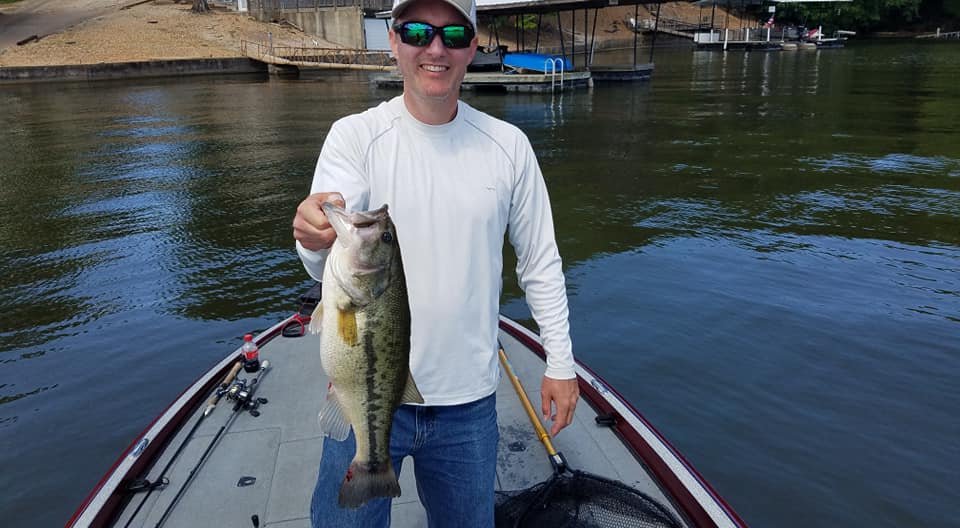
Mike's Guide Service specializes in guided fishing adventures on the beautiful Lake of the Ozarks, where bass and crappie fishing opportunities abound. Captain Mike welcomes anglers of all skill levels—from those casting a line for the first time to seasoned fishermen seeking to refine their techniques. Each trip is conducted aboard a premium 21PHX Phoenix bass boat equipped with professional-grade tackle and rods, eliminating the need for guests to bring their own gear. With trips accommodating up to three anglers and flexible scheduling options, Mike's Guide Service makes it accessible for everyone to experience quality time on the water. Whether planning a half-day outing or a longer expedition, guests can expect personalized attention and the local expertise that comes from years of navigating these productive waters.

Big Ed's Guide Service
Lake of the Ozarks, MO, US
5.0 (20 reviews)
Big Ed's Guide Service Big Ed brings years of expertise to bass fishing on the Lake of the Ozarks and the Osage River. His catch-and-release philosophy allows anglers to experience the thrill of the fight while supporting conservation efforts. Beyond largemouth and smallmouth bass, Big Ed also pursues crappie during early spring months, making spring trips particularly rewarding for anglers seeking variety. Guests fish from either a modern jet boat or a Phoenix, both equipped for comfort and efficiency on the water. Big Ed accommodates flexible schedules with morning, afternoon, and full-day options, welcoming solo anglers and small groups alike. His approach combines technical skill with a genuine passion for the water and the fish that swim there.
All Out Guide Service
Lake of the Ozarks, MO, US
4.9 (45 reviews)
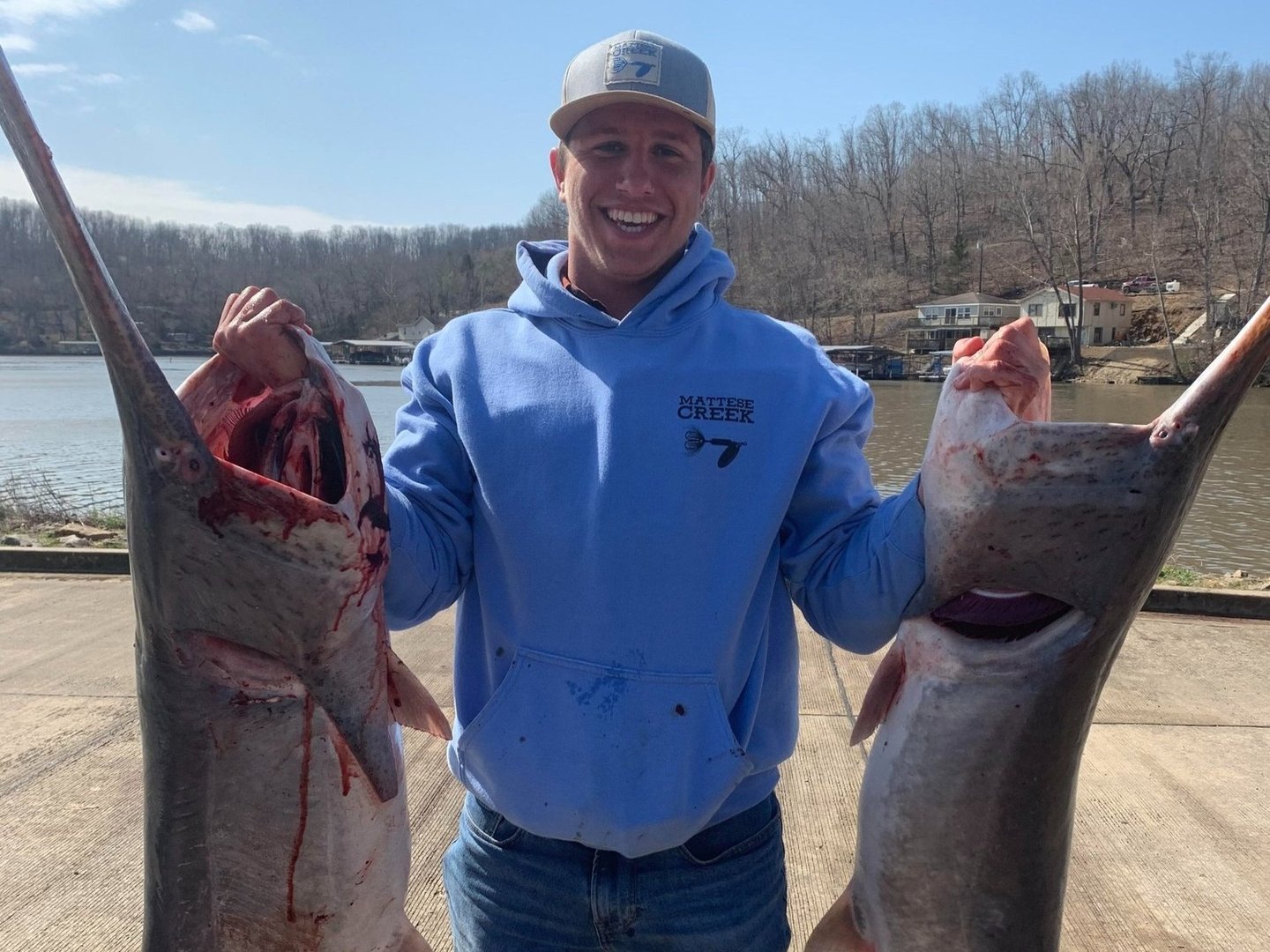
All Out Guide Service specializes in catfish and paddlefish fishing on two of the region's premier destinations: the scenic Lake of the Ozarks and Truman Lake. Led by experienced captains like Jeremy Ransom, the service is dedicated to creating unforgettable experiences for anglers of all skill levels, from first-time fishermen to seasoned veterans. The team combines deep knowledge of these productive waters with a strong commitment to sensible conservation practices. This approach ensures clients can fully enjoy their time on the water while helping preserve the natural beauty of these lakes for future generations. All Out Guide Service offers flexible trip options designed to accommodate groups of various sizes, making it accessible for anyone seeking a rewarding fishing adventure.
Frequently Asked Questions
What fish can I catch at Lake of the Ozarks?
Largemouth bass and spotted bass are the primary draw, with fish averaging 1.5-3 pounds and 5+ pounders common. Black and white crappie are excellent (2026 outlook rated excellent by MDC). Blue catfish exceed 50 pounds, with channel and flathead catfish also available. White bass and hybrid stripers provide exciting schooling action in summer and fall. Bluegill, walleye, and paddlefish round out the fishery.
How much does a fishing guide cost at Lake of the Ozarks?
Half-day guided bass or crappie trips (4-5 hours): $400-$650 for the boat, typically 1-2 anglers. Full-day trips (8 hours): $800-$950. Most guides provide all tackle, lures, and electronics. Boat rentals (fishing boats, not pontoons) run $200-$400/day if you want to fish on your own. Multiple guide services operate out of Osage Beach, Lake Ozark, and Camdenton.
Do I need a fishing license for Lake of the Ozarks?
Yes — Missouri requires a fishing permit for anyone 16 or older. Non-residents pay $57 annually or $9 for a daily permit (best value for visitors). Residents pay $14 annually. No additional trout permit is needed on the lake. Buy online at mdc.mo.gov/buypermits, via the MO Fishing app, or at Walmart, Bass Pro, and bait shops.
When is the best time to fish Lake of the Ozarks?
Spring (March-May) is best overall — bass are spawning in the shallows and crappie fishing is excellent on brush piles in 8-12 feet. Fall (September-November) is best for numbers — bass chase shad into coves aggressively. Summer is best for catfish and topwater bass at dawn. Winter is slowest but produces the biggest bass on deep jigs. White bass and hybrids peak in August-October.
Can I fish Lake of the Ozarks from the bank without a boat?
Yes — Lake of the Ozarks State Park has 85 miles of undeveloped shoreline with fishable bank access at Public Beach #2. Bagnell Dam spillway offers free bank fishing on the north side with white bass, catfish, and crappie. Six MDC public access areas (Gravois Mills, Coffman Beach, Shawnee Bend, others) have riprap banks and courtesy docks. A Ned rig dragged along riprap catches bass, crappie, and bluegill from shore.
 ™
™