
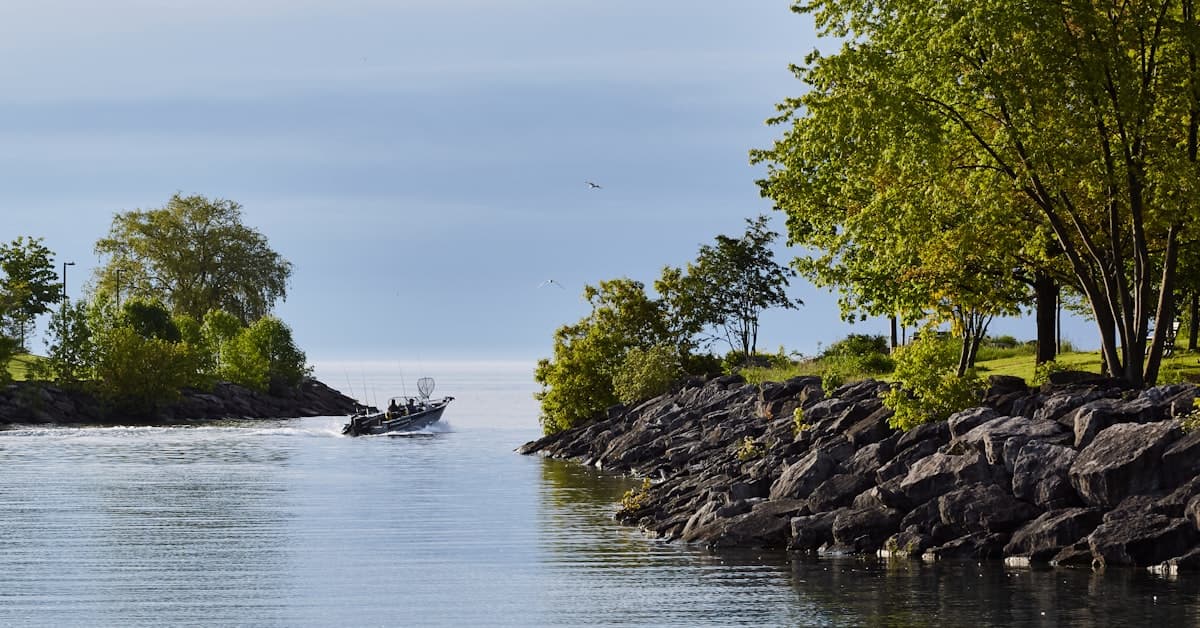
How to Fish the Miramichi River, New Brunswick: Atlantic Salmon Techniques from Spring Kelts to Fall Hookbills
The Miramichi is fly-fishing-only water for Atlantic salmon — here's every technique that works, from wet-fly swings for summer grilse to Spey casting for fall hookbills in the storied pools of New Brunswick.

The Miramichi is fly-fishing-only water. That is regulation, not suggestion. Every Atlantic salmon caught on this river — and nearly 50% of all rod-caught Atlantic salmon in North America are caught here — is taken on a fly rod with a single barbless hook. The techniques are traditional, the flies are specific to the river, and the culture around the fishing is as much a part of the experience as the fish.
This is not technical match-the-hatch trout fishing. Atlantic salmon stop feeding when they enter freshwater — they are not eating. Their willingness to take a fly is driven by aggression, territorial response, or something that no biologist has fully explained. This means fly selection is about triggering a response, not imitating food. The right fly at the right depth, presented at the right speed through the right lie, will move a salmon. The wrong presentation will not — regardless of the fly.
For trip planning, lodges, Crown Reserve access, and seasons, see our Miramichi River destination guide. For the dedicated fly fishing breakdown (Spey casting, fly patterns, leader setup), see our Fly Fishing the Miramichi guide.
The Wet Fly Swing: The Foundation
The wet fly swing is how most Miramichi salmon are caught. It is the oldest Atlantic salmon technique — a fly presented across and downstream, sweeping through the current at the speed the river dictates.
The mechanics: Cast across the river at 45 degrees (or slightly downstream of 45). Mend the line upstream if the current is fast, downstream if it is slow. Let the current swing the fly in an arc across the river. The fly starts at the far bank and finishes hanging directly below you. Take one or two steps downstream. Cast again. Repeat.
What the salmon sees: A small, mobile fly moving broadside across its field of vision at a constant speed. The fly arrives from the side, crosses in front of the salmon's nose, and continues downstream. If the salmon is inclined to take, it turns and grabs the fly as it passes — a heavy pull that loads the rod and starts a fight.
The take: Do NOT set the hook on the take. Let the fish turn. The current tension and the fish's own weight set the hook. Lifting the rod on the initial pull yanks the fly out of the fish's mouth — this is the number one mistake beginners make on the Miramichi.
Speed control: The speed of the swing is everything. Too fast and the fly skates unnaturally. Too slow and it hangs lifelessly. The guide controls this through mending — an upstream mend slows the swing, a downstream mend accelerates it. In cold water (below 12°C / 54°F), fish want a slower swing. In warm water, a faster swing.
Flyfishing on the Miramichi River — New Brunswick, CanadaDry Fly Fishing: The Bomber and the Bug
Dry fly fishing for Atlantic salmon on the Miramichi is not about matching a hatch. It is about provoking a response — skating a large, buoyant fly across the surface of a pool and waiting for a salmon to rise from the bottom and smash it.
The Bomber: A cigar-shaped deer-hair dry fly, sizes 2 to 6, that floats high and leaves a visible wake when skated across the surface. Natural deer hair is the standard colour. The Bomber is fished by casting it across the pool and letting the current drag it across the surface — intentional drag, not drag-free. The wake triggers an aggressive response from salmon holding in the pool.
When to dry fly: Warm water (above 15°C / 59°F) and low, clear conditions. Summer grilse (July-August) are the most responsive to dry flies. Large salmon will also take dries but less consistently. Evening is the best time — the combination of warm water, low light, and active fish creates the conditions for surface takes.
The rise: A salmon rising to a Bomber can be anything from a subtle head-and-tail sip to a full-body explosion that sends water 3 feet in the air. In both cases: do not set the hook until you feel the weight of the fish. The visual stimulus of seeing a 10-pound salmon eat a dry fly causes most anglers to strike immediately — and pull the fly away. Wait. Let the fish turn. Then lift.
Buck Bug and Green Machine on the surface: Smaller deer-hair bugs (sizes 4-8) fished dead-drift or with a slight twitch on the surface. Less dramatic than the Bomber but effective when salmon are showing but not committing to the skated fly.
Seasonal Techniques
Spring Kelts (April 15 - May 15)
Kelts are post-spawn salmon heading back to the ocean. They are dark, thin, and hungry after a winter in the river without feeding. They eat flies aggressively — more like trout than like fresh-run salmon.
Technique: Wet fly swing with brightly coloured streamers (Mickey Finn, Black Ghost, Black Bear Green Butt) in sizes 4-8. Strip-retrieve through pools and runs. Kelts will chase a stripped fly — something bright-run salmon rarely do.
Tackle: 8-weight single-hand rod or a light two-handed rod (12' 7wt). Floating line with a long leader (12 feet). Kelts fight well but are not as powerful as bright salmon — the lighter tackle makes the fight more fun.
Catch-and-release only. All kelts must be released. Handle carefully — these fish have survived the spawn and need to reach the ocean to recover.
Summer Bright Salmon (June - August)
The main season. Fresh, chrome-bright salmon entering the river from the ocean. Grilse (3-7 lbs) first, then large salmon (8-20+ lbs).
Technique: Classic wet fly swing with traditional Miramichi patterns — Green Machine, Blue Charm, Undertaker, Shady Lady, Cosseboom. Sizes 4 to 10, depending on water conditions. Higher water = larger fly, darker colour. Lower water = smaller fly, sparser pattern.
Dry fly: Bomber fishing peaks in July and August when water temperatures are warm and grilse are aggressive. Evening sessions from 6 PM to dark are the most productive dry fly window.
Warm water protocol: When the river exceeds 20°C (68°F), salmon are physiologically stressed. Many pools implement voluntary or mandatory fishing suspensions during warm spells. Do not fish warm water — even a released salmon may not survive the lactic acid buildup from a fight in water above 20°C. Wait for the water to cool (usually overnight) before fishing again.
Fall Hookbills (September - October)
The largest salmon of the year. Fish that have been in the river for weeks or months, developing the hooked jaw (kype) and dark colouration of pre-spawn condition. They are aggressive, territorial, and willing to eat large, dark flies.
Technique: Wet fly swing with larger flies (sizes 2-6) in dark colours — Black Bear Green Butt, Undertaker, General Practitioner, and Ally's Shrimp. Heavy sink tips or weighted flies to get deep in the cold, fall-flow pools. The swing should be slow and deliberate — fall fish are not as reactive as summer fish and need the fly close to their face.
The Cains River: The Cains tributary is legendary for late October salmon — big, dark, aggressive fish that run late and take large flies with violent takes. If you are planning a fall trip specifically for trophy salmon, the Cains is the destination within the destination.
Atlantic Salmon Fall Fishing — Miramichi RiverThe Canoe
The Miramichi is traditionally fished from a canoe poled by a guide. The guide stands in the stern and poles the canoe upstream or holds it in position while you cast from the bow. This is the defining feature of Miramichi salmon fishing — it has been done this way for over a century.
How it works: The guide poles the canoe to the head of a pool and holds position. You cast across and slightly downstream, letting the fly swing through the pool. After each cast, the guide drops the canoe 2 to 3 feet downstream. You cast again. The systematic coverage — cast, drop, cast, drop — works through the entire pool from head to tail. If a salmon is lying in the pool and is inclined to take, this method will put the fly in front of it.
Why canoe, not wade? Many Miramichi pools are too deep to wade or too wide to cover from the bank. The canoe positions you in the centre of the river where you can swing the fly through both the near and far lies. Some pools are wadeable and guides will drop you on a gravel bar to fish from the bank — but the canoe is the primary platform.
Reading Miramichi Pools
Every Miramichi salmon pool has a structure that dictates where fish hold. Learning to read a pool saves hours of casting to empty water.
The head: Where fast water enters the pool. Salmon rarely hold in the fastest current at the very head, but they stack up where the current decelerates — the transition zone from riffle to pool. This is often the most productive lie in the pool, especially for fresh-run fish that have just arrived.
The body: The deep, slow centre of the pool. Salmon rest here during the day, particularly in warm weather. They hold near the bottom in the deepest slots and behind any boulders or ledges that provide current breaks. Body lies require deeper presentations — sink tips or weighted flies — to reach fish that are 6 to 10 feet down.
The tail: Where the pool shallows and accelerates before dropping into the next riffle. Salmon move into the tail to feed (on whatever instinct drives them to take flies) during active periods — typically early morning, evening, and during overcast weather. Tail lies are the best dry fly water — the smooth surface lets fish see the Bomber and rise to it without fighting current.
The ledge: Miramichi pools often have underwater ledges — shelves of rock that create a sudden depth change. Salmon hold on the downstream side of ledges where they can rest in the slack water and watch for food or intruders passing above. Your guide knows where every ledge is in every pool.
Wading the Miramichi
While the canoe is the traditional platform, many pools — particularly on Crown Reserve water — are fished by wading.
Approach from downstream. Salmon face upstream. Approach from behind. Wade slowly — every step sends vibrations through the water. On the Miramichi, an experienced angler wading into a pool moves like they are walking in a hospital corridor at 3 AM — quietly, deliberately, and with purpose.
Depth: The Miramichi's pools range from thigh-deep to over-your-waders deep. Know the pool before wading in — your guide or the Crown Reserve warden will tell you the safe wading line. A wading staff is essential on unfamiliar water.
Gravel bars: Many pools have gravel bars that extend into the river, providing casting platforms. These bars are the premium wading spots — they position you in the centre of the pool where your swing covers both the near and far lies.
Rock type: The Miramichi bottom is a mix of gravel, cobble, and bedrock. Felt-soled wading boots provide the best grip. Rubber soles with studs are the alternative. The river is not as slippery as the Skeena but wading without proper boots is foolish.
Fighting and Landing Atlantic Salmon
Atlantic salmon fight differently from Pacific salmon or trout. They are acrobatic — multiple jumps are standard — and they make sustained runs that can peel 50 to 100 feet of backing in seconds.
The jump: When a salmon jumps, drop your rod tip (bow to the fish). A tight line during a jump puts the full force of the fish's weight on the hook — which often pops the barbless hook free. Dropping the rod creates slack that absorbs the shock.
The run: Atlantic salmon run downstream with the current. If possible, follow the fish — walk the bank or have the guide drop the canoe downstream. Fighting a salmon from 100 feet upstream with the full river current between you and the fish is a recipe for a broken leader.
Landing: Use a large net or tail the fish by hand (grip the wrist of the tail — the narrowest point — and lift). On the Miramichi, most guides carry a long-handled net and land the fish in the current, keeping it submerged.
Release: Hold the fish facing upstream in moderate current until it kicks away under its own power. Do not "walk" it back and forth. A healthy Atlantic salmon will recover quickly and swim away within 30 seconds. If it rolls or drifts sideways, continue supporting it until it stabilises.
Tackle Summary
| Season | Rod | Line | Leader | Flies |
|---|---|---|---|---|
| Spring kelts | 9' 8wt or 12' 7wt Spey | Floating or intermediate | 12' to 4X | Streamers 4-8, bright |
| Summer grilse | 9' 7-8wt or 13' 7wt Spey | Floating | 10-12' to 3X | Wet flies 6-10, dries 2-6 |
| Summer large salmon | 9' 8-9wt or 13' 8wt Spey | Floating or sink-tip | 10' to 2X-3X | Wet flies 4-8 |
| Fall hookbills | 9' 9wt or 13'6" 8wt Spey | Sink-tip or Skagit | 8' to 2X | Wet flies 2-6, dark |
Regulations
Fly fishing only. Single barbless hook. Catch-and-release on most sections (retention varies — check current NB regulations). All kelts must be released. Warm water protocol applies when river temperature exceeds 20°C. NB fishing licence + salmon tag required. Guide required on Crown Reserve water.
Atlantic Salmon Fly Fishing on New Brunswick's Famous Rivers Atlantic Salmon Fishing on the Miramichi River — New BrunswickRecommended Gear
Sage R8 Core 9' 8wt Fly Rod
Single-hand Atlantic salmon rod — handles wet flies, dries, and grilse
Echo OHS Spey Rod 13' 8wt
Two-handed Spey for large pools and fall fishing with sink tips
Lamson Guru S HD 7+
Large arbor reel — Atlantic salmon make long, screaming runs
RIO Scandi Short VersiTip 450 grain
Scandi head with interchangeable tips — covers all Miramichi conditions
Scientific Anglers Amplitude Smooth Infinity Line
Floating line for summer wet flies and dry fly Bomber fishing
RIO InTouch Skagit Max 475 grain
Skagit head for fall sink-tip fishing — heavy flies in deep pools
Simms G3 Guide Stockingfoot Waders
Cold Maritime water — premium waders for full-season fishing
Umpqua Atlantic Salmon Fly Selection
Green Machine, Blue Charm, Bomber, Undertaker — Miramichi essentials
Fishpond Nomad Mid-Length Net
Rubber mesh for catch-and-release — mandatory on the Miramichi
Rio Fluoroflex Strong Tippet 10 lb
Strong fluorocarbon for Atlantic salmon — invisible in clear water
Top Fishing Guides in Miramichi
A Miramichi guide reads the pool the way a musician reads a score — they know where every salmon lies at every water level, which fly to start with, and when to change. They pole the canoe through the pool while you cast from the bow, adjusting position with each cast to systematically cover every lie. The guide's water knowledge, built over decades on these specific pools, is what turns a cast into a connection.
Miramichi Bay Outfitters
Miramichi, NB, CA
5.0 (7 reviews)
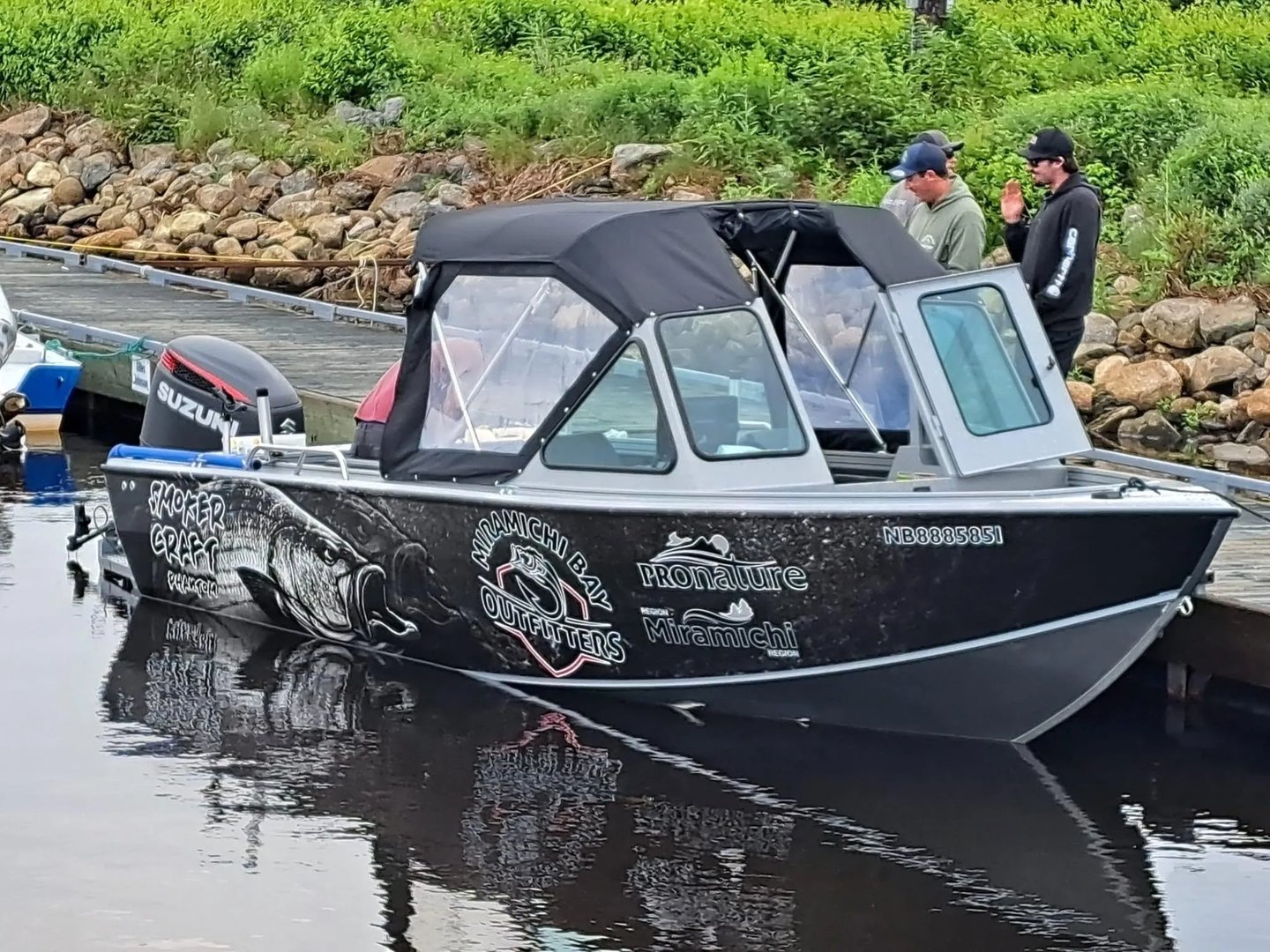
Miramichi Bay Outfitters specializes in striped bass fishing throughout the pristine waters of New Brunswick. Operating seasonally from April through October, the outfitter welcomes anglers of all experience levels, from families seeking a first fishing adventure to seasoned enthusiasts pursuing trophy catches. The operation features well-maintained boats and premium equipment suited for both river and bay exploration. Beyond fishing, Miramichi Bay Outfitters offers scenic river tours that celebrate the region's natural beauty, making each outing equally rewarding whether the focus is on landing striped bass or simply experiencing the landscape. Every trip is customized to match guests' interests and abilities, ensuring a safe and memorable time on the water.

OttsWorld
Miramichi, NB, CA
OttsWorld With 18 years of expertise along New Brunswick's renowned Miramichi River, OttsWorld has earned a stellar reputation for Atlantic salmon fly fishing. The lodge's impressive 90% repeat clientele speaks to its commitment to delivering exceptional angling experiences in pristine catch-and-release waters, where guided trips access private pools designed for optimal success. Guests enjoy comfortable rustic accommodations with sweeping river views, paired with guided fishing excursions tailored to various skill levels. Beyond the water, the lodge embraces the full outdoor experience, offering canoeing and kayaking to round out each stay. OttsWorld combines genuine hospitality, productive fishing, and the natural beauty of Canada's Atlantic salmon country.
Absolute Outfitters
Miramichi, NB, CA
Absolute Outfitters is a licensed 3 Star Canada Select outfitter based in Miramichi, New Brunswick, specializing in Atlantic salmon, bass, and trout fishing on the renowned Miramichi River. Their fishing season begins April 15th, welcoming anglers of all skill levels to pursue these prized species in one of Canada's premier salmon waters. Beyond fishing, Absolute Outfitters extends their expertise to spring and fall bear hunting, as well as moose and deer hunting throughout the season. Guests enjoy comfortable accommodations at their lodge, which overlooks the river and provides the perfect base for exploring both the water and surrounding wilderness. With experienced guides leading every expedition, Absolute Outfitters delivers a comprehensive outdoor experience tailored to fishing and hunting enthusiasts alike.
Miramichi Bay Outfitters
Miramichi, New Brunswick, CA
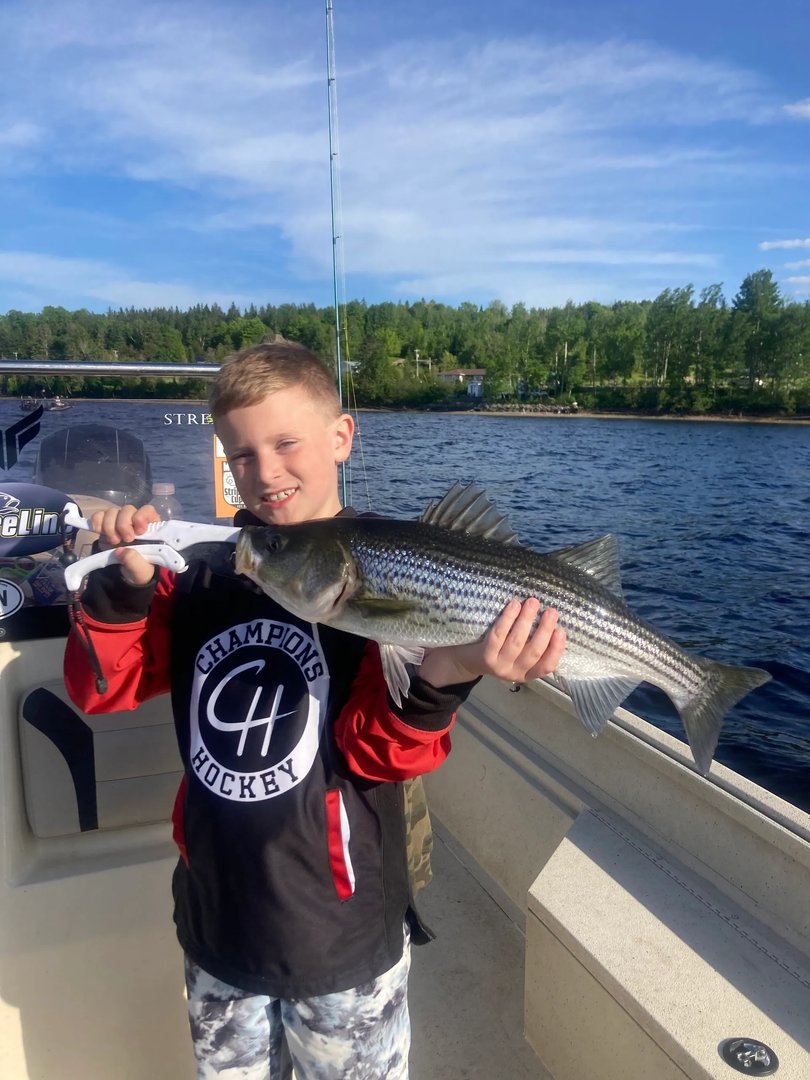
Miramichi Bay Outfitters brings three decades of expertise to the legendary Miramichi River, one of Atlantic Canada's premier fishing destinations. Their experienced captain combines deep knowledge of local waters with a commitment to safety and comfort, welcoming anglers of all skill levels. Operating a fully equipped 20' Smoker Craft Phantom, the outfitter provides everything needed for a successful day on the water—rods, tackle, and modern marine equipment included. Whether pursuing a half-day excursion or committing to a full-day adventure, clients benefit from flexible trip planning tailored to weather conditions and personal preferences. Miramichi Bay Outfitters transforms a fishing outing into a memorable experience on one of Canada's most celebrated salmon and sea-run trout waters.

Tangled Angling
Miramichi, NB, CA
Tangled Angling Guide Services specializes in multispecies fishing adventures on the legendary Miramichi River in New Brunswick, Canada. Whether pursuing the river's renowned Striped Bass and Atlantic Salmon or exploring other species, their guides deliver tailored experiences designed for both seasoned anglers and those new to the sport. Drawing on extensive local knowledge and genuine passion for the waters they fish, Tangled Angling creates immersive, rewarding trips that showcase the Miramichi's pristine beauty and abundant opportunities. Anglers can expect personalized attention and expert guidance suited to their skill level and goals.

Wilsons Camps
Miramichi, NB, CA
Wilsons Camps Wilsons Camps sits on the legendary Miramichi River in New Brunswick, Canada, where Atlantic salmon fishing reaches its finest. With exclusive access to 16 private pools across diverse holding waters, anglers enjoy premier conditions year-round. The camp's experienced guides pilot 28-foot luxury jet canoes, combining comfort with expert navigation of this storied river. Whether casting for the first time or refining advanced techniques, guests receive personalized instruction from seasoned professionals. Wilsons Camps provides everything needed for success—premium salmon flies, complete gear rentals, and the local knowledge that turns a fishing trip into an unforgettable adventure. The combination of pristine waters, private pools, and attentive service makes this camp an ideal destination for serious Atlantic salmon anglers seeking both excellence and comfort.
Frequently Asked Questions
How do you catch Atlantic salmon on the Miramichi?
The wet fly swing is the primary technique — cast a fly across the river and let the current sweep it through the pool. Atlantic salmon don't feed in freshwater, so fly selection is about triggering aggression, not matching food. Dry fly (Bomber) fishing works in warm summer conditions. Fly fishing only, single barbless hook.
What flies work on the Miramichi?
Summer: Green Machine, Blue Charm, Cosseboom, Undertaker (sizes 6-10 wet), Bomber (sizes 2-6 dry). Fall: Black Bear Green Butt, General Practitioner, Ally's Shrimp (sizes 2-6 wet, dark colours). Spring kelts: Mickey Finn, Black Ghost (sizes 4-8, bright streamers). Local fly shops and guides know what's working today.
Should I set the hook when a salmon takes?
No — the #1 beginner mistake on the Miramichi. When a salmon takes a swung fly, let the fish turn and feel the weight before lifting the rod. The current tension and the fish's own movement set the hook. Striking immediately on the take pulls the fly out of the fish's mouth.
What rod do I need for the Miramichi?
A 9' 8-weight single-hand fly rod handles most situations. A 13' 7-8 weight two-handed Spey rod covers the wider pools more efficiently. Many guides recommend bringing both — single-hand for smaller pools and dry flies, Spey for large pools and fall fishing with sink tips.
What is the warm water protocol?
When Miramichi water temperature exceeds 20°C (68°F), salmon are physiologically stressed. Many pools implement voluntary or mandatory fishing closures. Even catch-and-release fishing can kill salmon in warm water due to lactic acid buildup. Wait for temperatures to drop (usually overnight) before fishing.
Related Articles
Fishing the Miramichi River, New Brunswick: The Atlantic Salmon Capital of the World
Wednesday, May 6, 2026
How to Fish the Skeena River and Terrace, BC: Steelhead, Chinook, Coho, and Every Technique That Works
Thursday, June 11, 2026
Fly Fishing the Skeena River: Spey Casting for Wild Steelhead in Northern British Columbia
Saturday, June 20, 2026
 ™
™