
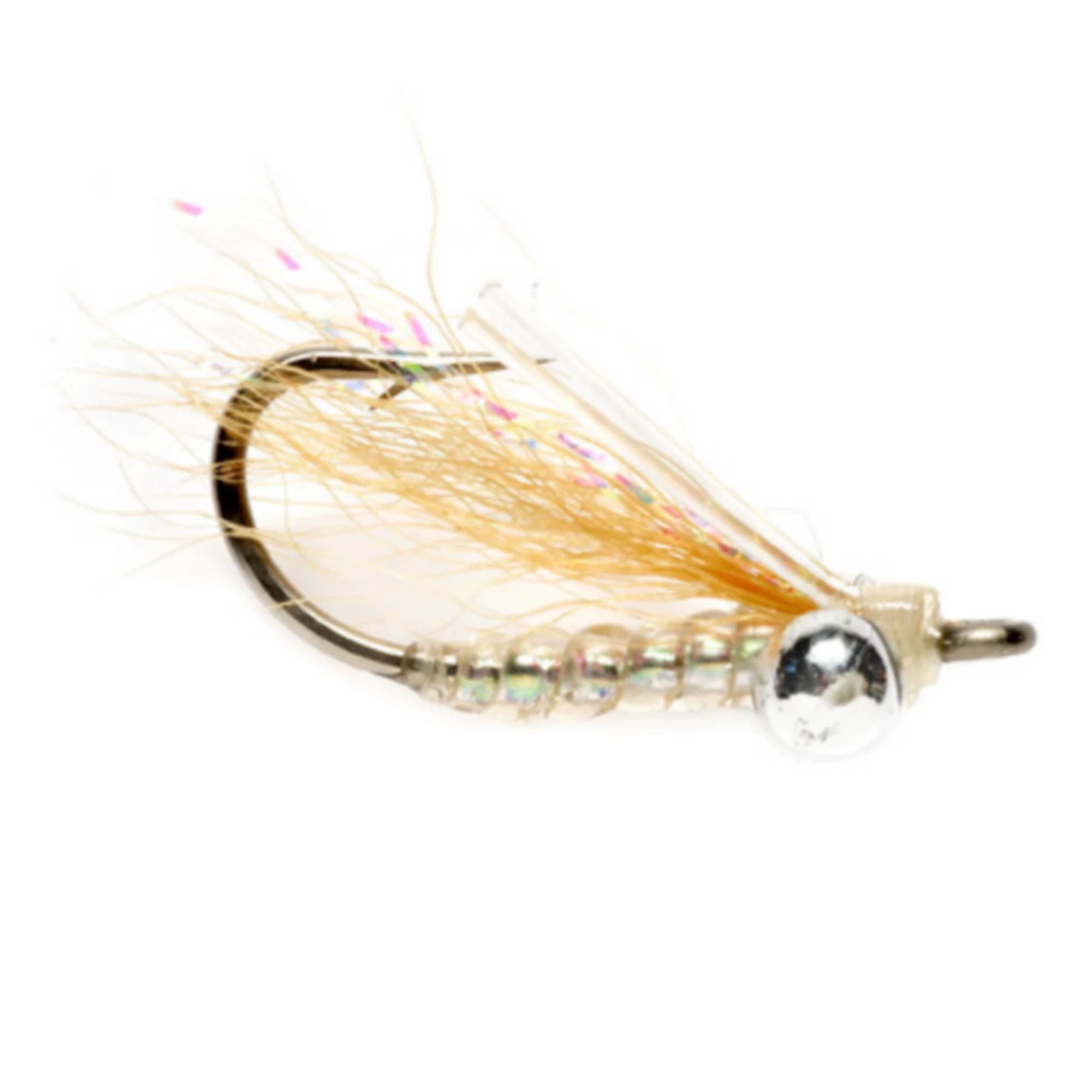
The Crazy Charlie: How to Tie the Fly That Invented Modern Bonefish Fishing and Still Outfishes Most of the Box
Bob Nauheim and Bahamian guide Charlie Smith created the Crazy Charlie on Andros Island in 1977 — the first bonefish fly with bead chain eyes, the first to ride hook-point-up, and still the most universally effective bonefish pattern ever tied.

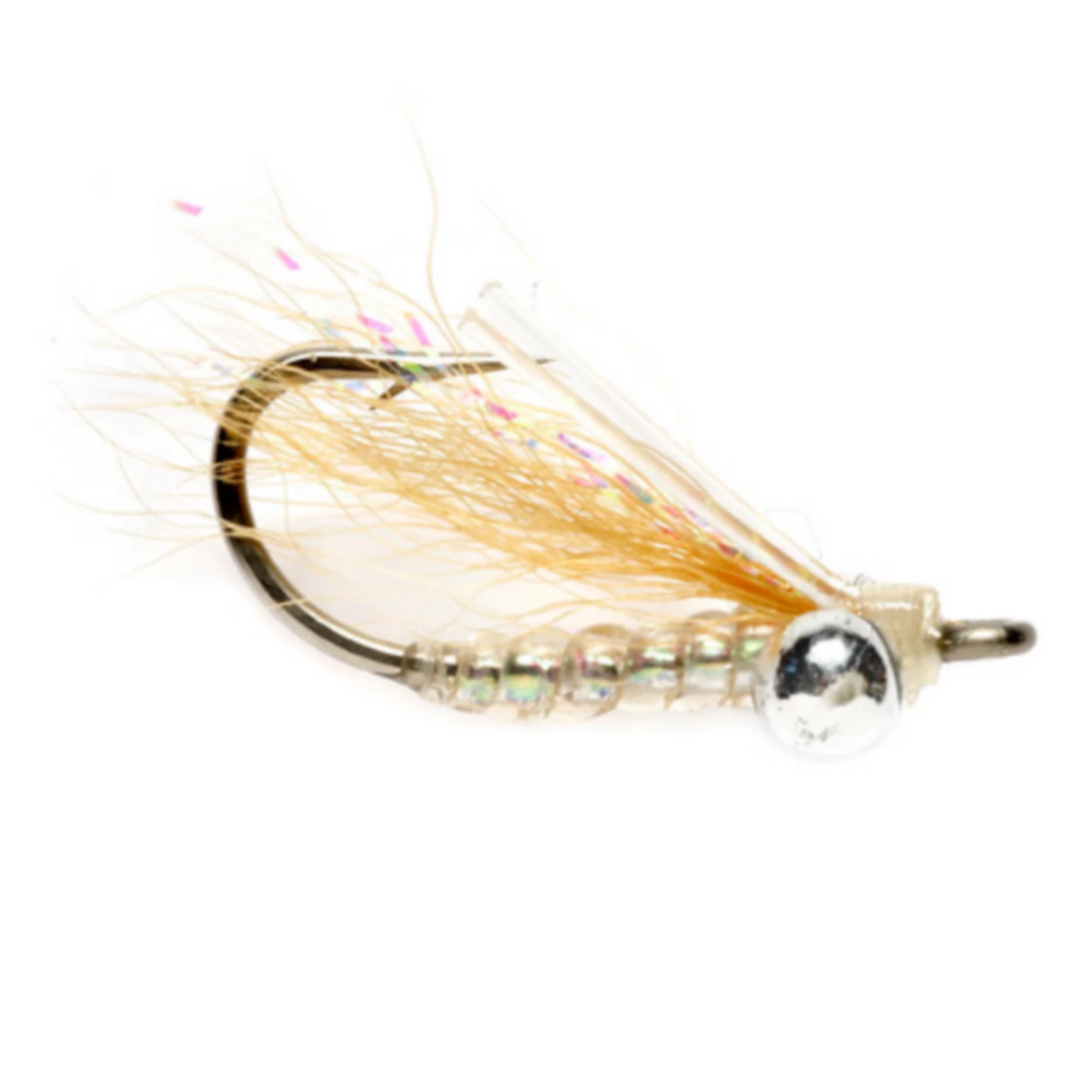 The Crazy Charlie — pearlescent body, calf tail wing, bead chain eyes. Photo: Orvis.
The Crazy Charlie did something that no bonefish fly had done before: it sank fast, rode hook-point-up, and looked like something a bonefish actually eats — all at the same time. Before 1977, bonefish flies were adaptations of trout flies and freshwater streamers tied on saltwater hooks. They sank slowly. They snagged on the bottom. They didn't match the translucent, shimmering glass minnows that bonefish feed on over sandy flats. Bob Nauheim changed all of that with a pair of bead chain eyes, some pearlescent tinsel, and a wing of white calf tail.
The story starts on Andros Island in the Bahamas. Nauheim, a San Francisco angler, was fishing with Charlie Smith — a legendary Bahamian guide who operated Charlie's Haven lodge on Behring Point. Smith was one of the first guides to pole a skiff for fly anglers on the Andros flats, and he understood bonefish behavior better than any scientist of his era. He knew what they ate, how they fed, and what triggered them to eat a fly versus spook.
During a 1977 trip, Nauheim and Smith were struggling with the existing patterns. That evening, back at the lodge, Nauheim sat down at a makeshift vise and tied something new: a fly with bead chain eyes mounted on top of the shank (forcing the hook to ride point-up), a body of pearlescent tinsel wrapped under clear monofilament (imitating the translucent body of a glass minnow), and a sparse wing of white calf tail. He called it the "Nasty Charlie" after his guide.
The next day, it caught bonefish. A lot of bonefish.
Nauheim brought the pattern home to California and showed it to Leigh Perkins, the owner of Orvis. Perkins loved the fly but not the name — "Nasty" didn't work for the Orvis catalog. With Charlie Smith's blessing, they renamed it the Crazy Charlie, and Orvis began selling it nationwide. Within five years, it was the most popular bonefish fly in the world.
It still is.
What It Imitates
The Crazy Charlie was designed to imitate glass minnows — juvenile anchovies (Anchoa species) that school in shimmering clouds over sandy flats throughout the Caribbean and tropical Pacific. Glass minnows are nearly transparent, an inch to two inches long, with a silvery flash that catches light as they dart.
But the Crazy Charlie's effectiveness extends far beyond glass minnows. Depending on color:
- White/pearl — Glass minnows, juvenile baitfish, small silversides. The universal color.
- Tan/bone — Shrimp and small crustaceans. The bottom-matching color for light sand flats.
- Pink — Spawning shrimp and small reef organisms. Inexplicably effective — bonefish eat pink Charlies with conviction even when nothing pink is visible on the flat.
- Chartreuse — An attractor color for murky water and deeper flats. Higher visibility than white.
- Brown — Dark-bottom flats with turtle grass or coral rubble. Matches the substrate to avoid spooking fish.
The bead chain eyes are the design breakthrough. They serve three functions: they add weight for sinking, they flip the hook point-up to prevent bottom snags, and they create a jigging action on the strip — a subtle up-and-down movement that makes the fly look alive.
The Recipe — Standard Crazy Charlie
| Component | Material |
|---|---|
| Hook | Short-shank saltwater, #4-8 (TMC 811S, Mustad 34007, Gamakatsu SC15) |
| Thread | White or matching 6/0 (UNI or Danville) |
| Eyes | Bead chain (silver or gold) — mounted on top of shank |
| Body | Pearlescent Mylar tinsel or Krystal Flash, wrapped |
| Rib | Clear monofilament (6-10 lb) — overwrap to protect the tinsel |
| Wing | White calf tail — sparse, extending just past the hook bend |
| Flash | 2-4 strands pearl Krystal Flash mixed into wing (optional) |
That's it — six materials plus thread. The Crazy Charlie is one of the simplest saltwater flies ever designed, and that simplicity is the point. There's nothing to overdress, nothing to complicate, nothing that doesn't serve the function of looking like a small, translucent baitfish sitting on the bottom of a tropical flat.
How to Tie It — Step by Step
Step 1: Eyes. Mount bead chain eyes on top of the shank, about two eye-widths behind the hook eye. Secure with figure-eight thread wraps and a drop of head cement. These eyes are what make the Charlie a Charlie — they flip the fly and create the sink rate.
Step 2: Body. Tie in pearlescent Mylar tinsel at the bend and wrap it forward to behind the eyes in smooth, touching turns. The body should be slim and even — a uniform tube of flash. Then tie in clear monofilament at the bend and wrap it forward over the tinsel in open spirals. The mono rib protects the tinsel body from bonefish teeth and coral abrasion.
Step 3: Wing. Flip the hook over (or rotate your vise) so the hook point faces up — this is how the fly will ride on the bottom. Tie in a sparse clump of white calf tail on top (which is now the bottom of the shank), extending just past the hook bend. Add 2-4 strands of pearl Krystal Flash if desired. The wing should be thin enough to see through.
Step 4: Head. Build a small, tapered thread head behind the bead chain eyes. Whip finish. Apply head cement.
The whole fly takes three minutes. You can tie a dozen in an hour.
Where to Fish It
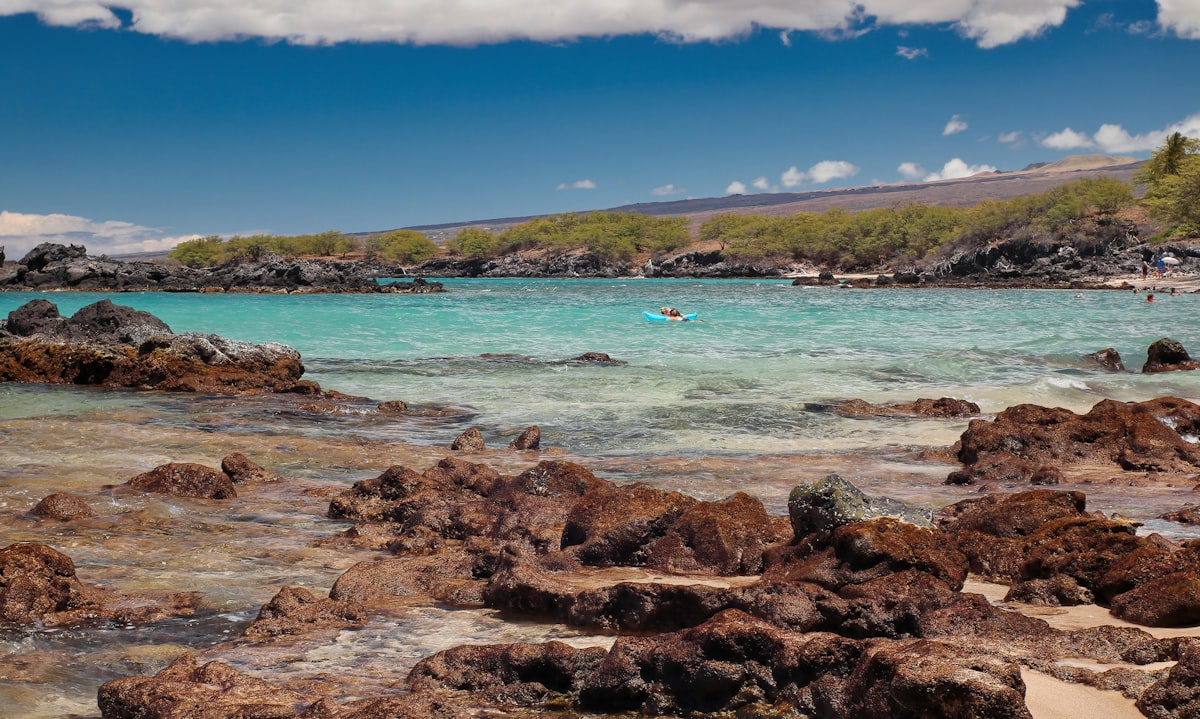
The Crazy Charlie works on every bonefish flat on earth:
-
Hawaii — All Islands — The Crazy Charlie is the backup pattern behind the Spam and Eggs. When bonefish are feeding on glass minnows rather than mantis shrimp — or when the Spam and Eggs is getting refused — the Charlie's slimmer, flashier profile often converts. Tan in #6 for O'ahu's south shore; white in #4 for Kāne'ohe Bay.
-
Bahamas — Its birthplace. The Crazy Charlie in white or pink is the first fly most Bahamian guides tie on for clients, and it's often the last fly they need. Andros, Abaco, Grand Bahama, Exuma — every island in the chain fishes Charlies.
-
Belize — White or tan on the sandy flats around Ambergris Caye and Turneffe Atoll. The Charlie's light weight and small profile work well on the spooky bonefish that inhabit Belize's shallow, gin-clear lagoons.
-
Florida Keys — Tan or pink in #6-8 for the Keys' smaller bonefish. The Charlie is a reliable producer on the oceanside flats from Islamorada to Key West.
-
Texas Coast — The Crazy Charlie isn't just a bonefish fly — it catches redfish, seatrout, and jacks in shallow water. Chartreuse on Texas flats during summer.
-
Christmas Island — The Crazy Charlie in pink or tan is a staple on Christmas Island's vast white-sand flats, where bonefish average 3-5 pounds and eat with abandon.
How to Fish It
Cast ahead and let it sink. The Crazy Charlie isn't a searching pattern — it's a sight-fishing pattern. Spot the bonefish (or the nervous water), cast 6-10 feet in front of the fish's path, and let the bead chain eyes pull the fly to the bottom. The fly should be sitting on the sand when the bonefish arrives, not sinking through the water column as the fish approaches.
Short strips, long pauses. Once the bonefish is within range, give one or two short strips (2-3 inches) to kick the fly off the bottom. Then pause. The bead chain eyes pull the nose down on the pause, creating the jigging action that makes the Charlie irresistible. Most takes come during the settle — the bonefish tips down and inhales the fly as it drops back to the bottom.
Match the color to the bottom. This is the single most important Crazy Charlie tip. Light flies on light sand. Dark flies on dark grass or coral. A white Charlie on a white sand flat is invisible to the bonefish until it moves — then the flash and movement trigger an instinctive eat. A white Charlie on a dark turtle-grass flat stands out unnaturally and spooks more fish than it catches. Carry multiple colors and switch based on the substrate you're fishing over.
Don't overweight. The Crazy Charlie's original genius was bead chain eyes — light enough to land softly on the water without spooking fish, heavy enough to sink the fly to the bottom. Substituting lead dumbbells or tungsten eyes creates a fly that splashes on landing and crashes to the bottom before the bonefish arrives. Use bead chain for water under 2 feet. Save the heavy eyes for deeper channels and current.
Strip-set, always. Bonefish eat with a downward tilt — you feel the weight on the line before you see the take. Strip-set by pulling the line sharply with your stripping hand. Never lift the rod to set the hook — a rod-lift pulls the fly up and out of the bonefish's mouth. A strip-set pulls the fly into the corner of the jaw.
How to Tie It — Video Tutorials
The classic: Crazy Charlie Bonefish Fly tutorial — Clear instruction on body wrapping, mono rib, and bead chain eye placement.
HD step-by-step: Crazy Charlie HD Fly Tying — Part of an excellent bonefish fly tying series with close-up camera work.
Quick and effective: Pacific Angler's Crazy Charlie — A simple, fast-paced tutorial that emphasizes keeping the fly sparse.
Tips From the Vise
Sparse wing is non-negotiable. The Crazy Charlie's wing should be thin enough to see through when held up to the light. A fat wing absorbs water, slows the sink rate, kills the jigging action, and looks nothing like a glass minnow. Use about half the calf tail you think you need, then take a third of that out.
The mono rib matters. Wrapping clear mono over the tinsel body isn't decorative — it's structural. Without the rib, the first bonefish's teeth will shred the tinsel and the fly falls apart. With the rib, each fly lasts for 10+ fish. Don't skip this step.
Calf tail, not bucktail. The original pattern calls for calf tail — it's finer, straighter, and more translucent than bucktail. Bucktail is stiffer and creates a bulkier wing that doesn't have the same shimmer. If you don't have calf tail, craft fur or EP fiber are better substitutes than bucktail.
Bead chain size matters. Small chain for #8 hooks (super skinny water, small fish). Medium chain for #6 (the standard). Large chain for #4 (deeper water, current). The weight-to-hook ratio controls how fast the fly sinks and how aggressively it jigs.
Build Your Box
- White #6, medium bead chain (8) — the universal standard
- Pink #6, medium bead chain (6) — the inexplicably effective color
- Tan #6, medium bead chain (6) — bottom-matching for light sand
- Chartreuse #6, medium bead chain (4) — murky water attractor
- White #8, small bead chain (4) — ultra-skinny water
That's 28 flies — the most complete single-pattern bonefish box you can build. The Crazy Charlie ties in three minutes each, costs pennies in materials, and catches bonefish everywhere they swim. Alongside the Spam and Eggs (for Hawaiian mantis shrimp) and the Clouser Minnow (for general baitfish), the Crazy Charlie completes the three-pattern bonefish box that covers every flat from O'ahu to Andros to Christmas Island.
Frequently Asked Questions
Who invented the Crazy Charlie?
Bob Nauheim (San Francisco angler) and Charlie Smith (Bahamian guide) created it on Andros Island in 1977. Originally called the 'Nasty Charlie,' it was renamed when Orvis owner Leigh Perkins added it to the Orvis catalog. It was the first bonefish fly with bead chain eyes.
What does the Crazy Charlie imitate?
Glass minnows — juvenile anchovies that school over tropical flats. The pearlescent body and sparse wing create a translucent, shimmering profile. In tan or brown it also reads as a small shrimp or crustacean. Pink works for reasons nobody fully understands.
What color Crazy Charlie is best?
Match the bottom: white on white sand, tan on light coral, brown on dark grass. Pink is effective everywhere for unknown reasons. White is the universal standard. Carry at least white, pink, and tan to cover most situations.
Can you use a Crazy Charlie in Hawaii?
Yes — it's the backup pattern behind the Spam and Eggs on Hawaiian flats. When bonefish are feeding on glass minnows rather than mantis shrimp, the Charlie's slim profile converts. Tan in #6 for O'ahu's south shore flats.
Is the Crazy Charlie hard to tie?
No — it's one of the simplest saltwater flies. Six materials, four steps, three minutes per fly. The key skills are bead chain eye mounting and keeping the wing sparse. It's an excellent first saltwater pattern for beginners.
Related Articles
Fly Fishing Hawaii: Giant Bonefish, Trevally on the Flats, Peacock Bass in the Reservoirs, and the Most Overlooked Fly Fishery in America
Tuesday, June 24, 2025
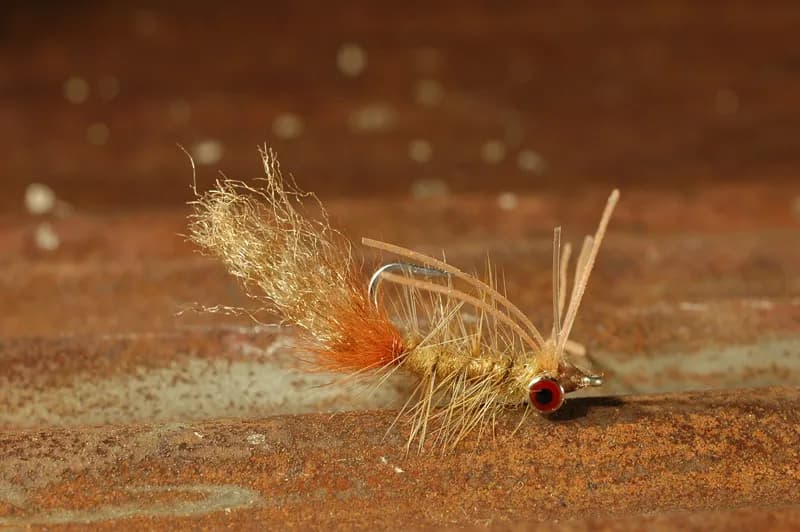
The Spam and Eggs: How to Tie the Hawaiian Bonefish Fly That Imitates What No Caribbean Pattern Can
Sunday, October 5, 2025
Fly Fishing the Florida Keys: Tarpon, Permit, Bonefish, and the Flats That Invented Saltwater Fly Fishing
Friday, January 2, 2026
 ™
™