
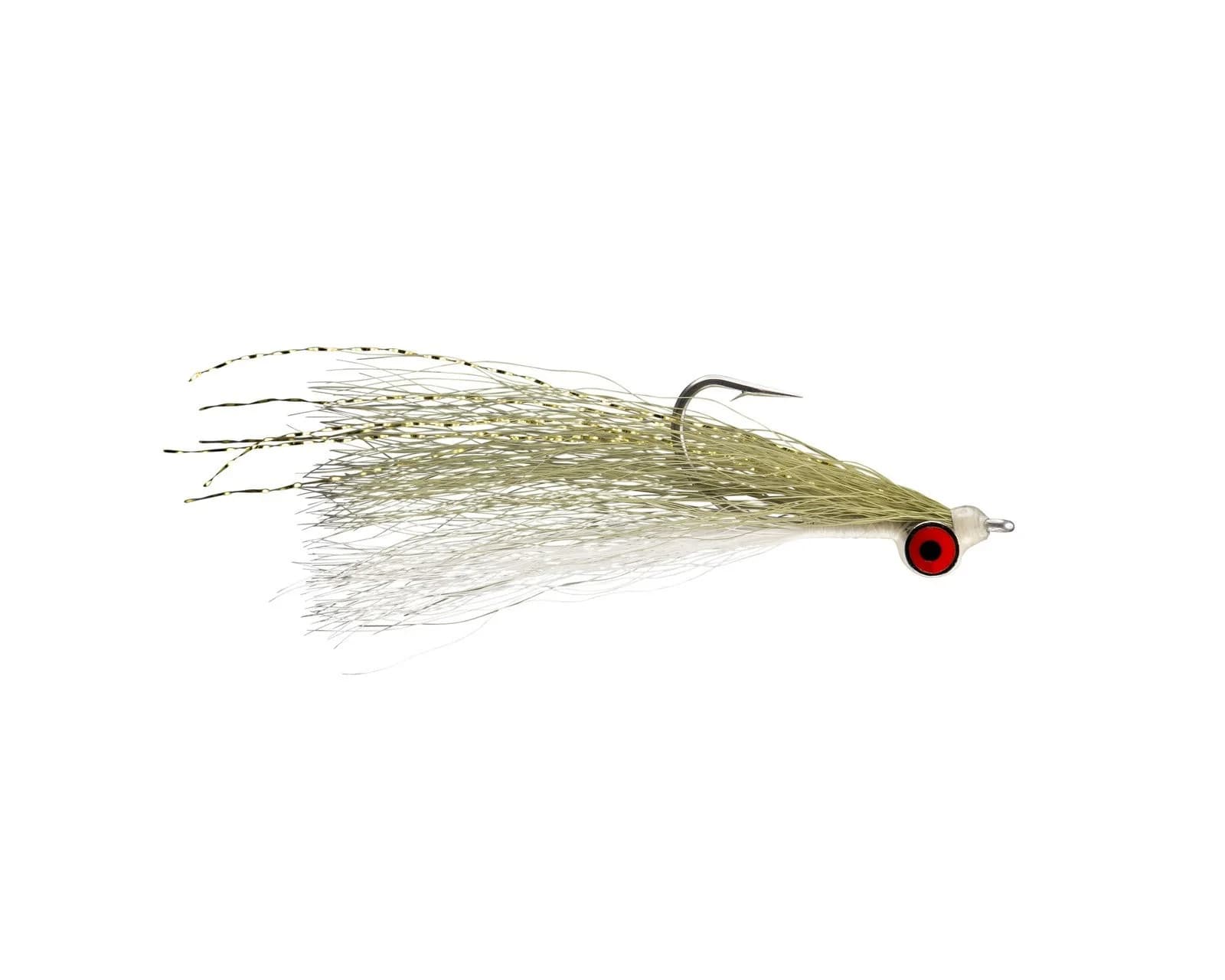
The Clouser Minnow: How to Tie the Fly That Catches Everything With Fins, From Bonefish to Bass to Stripers
The Clouser Deep Minnow has caught more species on a fly rod than any other pattern ever tied — 87 and counting. Bob Clouser designed it for smallmouth bass on the Susquehanna. Lefty Kreh took it around the world. Here's the recipe, the variations, and why it works.

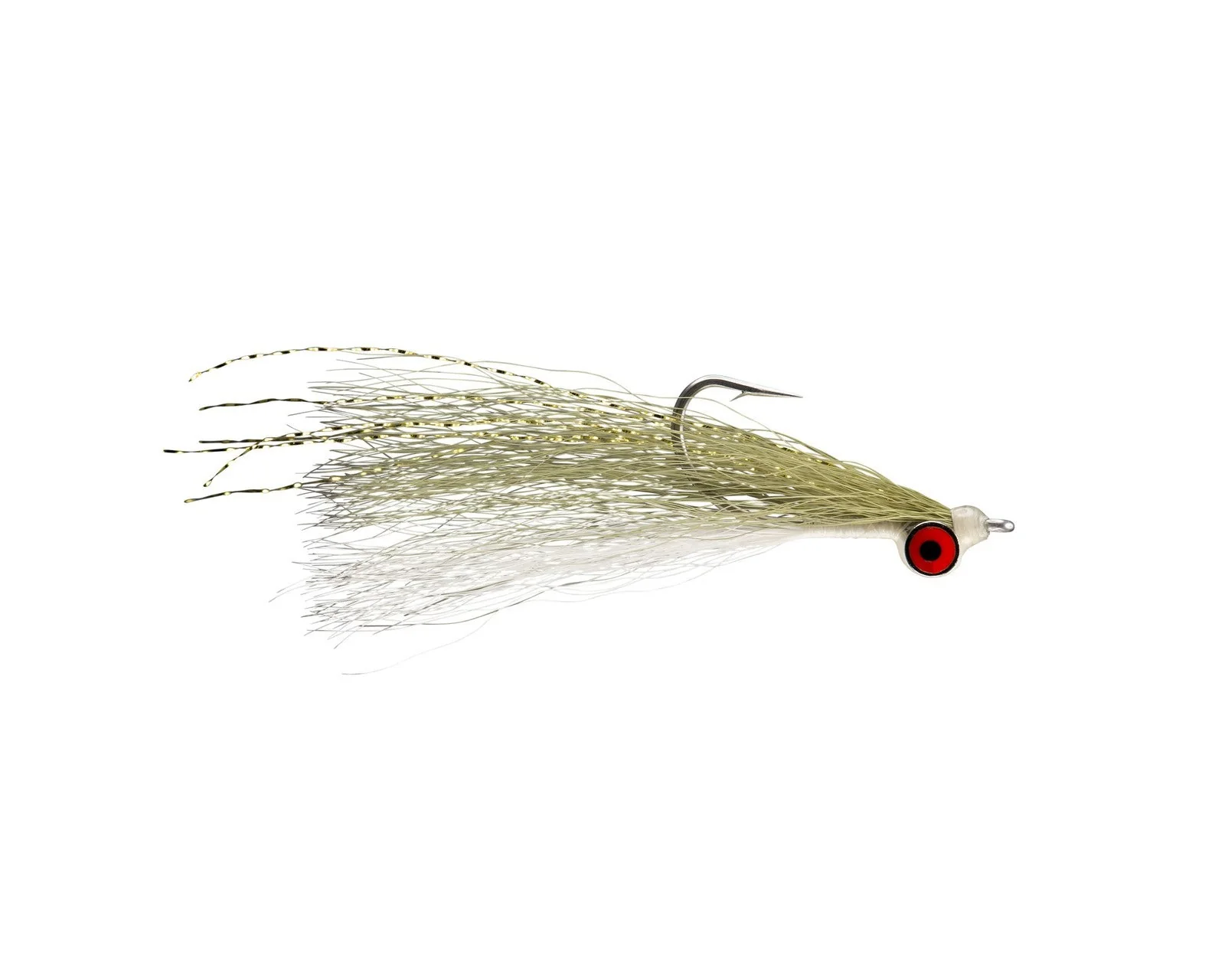 The Clouser Minnow — dumbbell eyes, bucktail, flash. Photo: Red's Fly Shop.
Lefty Kreh claimed to have caught 87 species of fish on the Clouser Deep Minnow. Not 87 individual fish — 87 species. Smallmouth bass, largemouth bass, bonefish, permit, striped bass, redfish, snook, seatrout, tarpon, false albacore, bluefish, trevally, peacock bass, carp, pike, and 71 others, on six continents, in fresh and saltwater, across three decades of fishing with a pattern that takes five minutes to tie.
No other fly comes close. The Woolly Bugger catches a lot of species, but it doesn't cross the saltwater line the way the Clouser does. The Deceiver is a classic saltwater baitfish, but it doesn't drop into the strike zone like a Clouser. The Clouser Minnow is the only pattern that works — genuinely works, not as a novelty but as a primary fly — in freshwater rivers, freshwater lakes, saltwater flats, saltwater surf, and bluewater inlets. It is the most universally effective fly pattern in the history of fly fishing.
And it started on a Pennsylvania river.
The History — Susquehanna Smallmouth
Bob Clouser was a fly shop owner and guide on the Susquehanna River near Middletown, Pennsylvania. He spent 50 years studying that river — the structure, the current, the behavior of its smallmouth bass — and in 1987 he sat down at his vise to solve a specific problem: he wanted a fly that could get down to the rocky bottom where the smallmouth held, stay in the strike zone through the retrieve, and imitate the river's sculpin and minnow forage.
The design he came up with was simple: a hook, weighted dumbbell eyes tied on top of the shank (which inverts the fly so it rides hook-point up), white bucktail underneath, a few strands of flash, and chartreuse bucktail on top. The dumbbell eyes give the fly weight to sink and a jigging action on the retrieve — each strip-and-pause makes the fly dart forward and then nose-dive, like a baitfish trying to escape and then losing momentum. That darting motion triggers predatory instinct in almost every fish that swims.
Clouser showed the fly to Lefty Kreh, who immediately recognized what it could do. Kreh named it the "Clouser Deep Minnow" in a 1989 article in Fly Fisherman magazine, then spent the next 20 years proving it worked on every fish he could find. Bonefish in the Bahamas. Tarpon in the Keys. Stripers on the Chesapeake. Peacock bass in the Amazon. Each species confirmed what Clouser's Susquehanna smallmouth already knew: the jigging baitfish profile is irresistible.
What It Imitates
The Clouser doesn't imitate a specific species — it imitates the concept of a small baitfish. The weighted eyes pull the fly down into the water column, and the bucktail breathes and pulses with every movement. On the strip, it darts forward like a fleeing minnow. On the pause, it nose-dives like a stunned baitfish losing its balance. That combination — flee and falter, flee and falter — triggers strikes from predators that are programmed to chase wounded prey.
Depending on the color and size, a Clouser reads as:
- A minnow or shiner (chartreuse/white, #4-1/0) — the universal baitfish
- A sculpin or goby (olive/brown, #4-2) — bottom-dwelling forage for river predators
- A sand lance (white/tan, #4-6) — the primary forage for Puget Sound cutthroat and Northeast stripers
- A shrimp or crab profile (tan/white, sparse, #6-8) — bonefish and redfish
- A herring or anchovy (silver/white or blue/white, #2/0-1/0) — Florida Keys bluewater species
- A generic panicking baitfish (anything bright, any size) — peacock bass, trevally, pike
The hook-point-up design means the fly bounces along the bottom without snagging — it ticks rocks, bumps structure, and slides over vegetation instead of catching. This makes it fishable in structure-heavy environments where other weighted flies would spend more time stuck than swimming.
The Recipe — Standard Clouser Minnow
| Component | Material |
|---|---|
| Hook | Saltwater/streamer hook, #6-2/0 (Mustad 34007, TMC 811S, Gamakatsu SL12S) |
| Thread | Flat-waxed nylon, 210 denier for #1-2/0; UTC 140 for #2-6. White. |
| Eyes | Painted lead dumbbell eyes, sized to match hook (see weight guide below) |
| Belly | White bucktail — sparse, about a pencil's width of hair |
| Flash | Pearl or silver Krystal Flash or Flashabou — 4-6 strands total |
| Wing | Chartreuse bucktail — matching belly length, same sparseness |
That's it. Five materials (six counting thread). The simplicity is the point — there's nothing extra, nothing decorative, nothing that doesn't serve the function of imitating a baitfish in the water column. Every material has a job, and none of them are optional.
How to Tie It — Step by Step
Step 1: Thread base. Start thread behind the hook eye. Lay a smooth thread base covering the front third of the shank — this is where everything happens. The rear two-thirds of the shank stay bare.
Step 2: Mount the eyes. Position the dumbbell eyes on top of the shank, approximately one-third of the shank length behind the hook eye. Secure with tight figure-eight wraps (crossing over the eyes in an X pattern), then post wraps (wrapping between the bottom of the eyes and the shank). Apply a drop of head cement or thin CA glue to lock the eyes in place. The eyes should be perpendicular to the shank and rock-solid.
Step 3: White belly. Select a sparse clump of white bucktail — about a pencil's width. Don't stack it; the natural unevenness creates a more lifelike silhouette. Tie it in behind the dumbbell eyes (between the eyes and the hook bend), with the tips extending beyond the hook bend by about 1.5 to 2 times the shank length. Pull the butt ends forward under the eyes and secure them in front of the eyes. Trim the butts and build a smooth thread base.
Step 4: Flash. Invert the hook (or rotate your vise). Tie in 4-6 strands of Krystal Flash at the midpoint, fold them back so a few strands sit on each side of the bucktail, and secure. Trim the flash slightly shorter than the bucktail wing.
Step 5: Top wing. Tie in a sparse clump of chartreuse bucktail in front of the eyes, matching the length of the white belly. The tips should extend to the same point as the white hair — no longer. Secure the butts tightly between the eyes and the hook eye. Trim the butts and build a smooth, tapered thread head.
Step 6: Finish. Whip finish behind the hook eye. Apply head cement or thin CA to the thread head and the eye wraps. The finished fly should have a clean, sparse profile — tall and thin like a real baitfish, not round and bushy.
The Eye Weight Guide
The dumbbell eyes are the fly's engine — they control the sink rate, the jigging action, and the depth the fly fishes. Choosing the right weight is critical:
| Depth / Current | Eye Weight | When to Use |
|---|---|---|
| Ultra-shallow (0-18") | Bead chain or X-small brass | Bonefish flats in skinny water, tailing redfish |
| Shallow flats (2-4 ft) | Small lead or brass | Standard flats fishing, calm water |
| Channels and edges (4-8 ft) | Medium lead | Drop-offs, river pools, moderate current |
| Deep rips and inlets (8-15+ ft) | Large/X-large lead | Fast current, deep water, surf zone |
| Extra depth needed | Tungsten | Same sizes as lead but 1.7× the density — fastest sink in the smallest profile |
Material trade-offs: Lead is dense and cheap. Brass is lead-free and durable. Tungsten is the densest option (fast sink in a small profile) but costs significantly more per pair.
The Variations — Color, Size, and What They Match
Bob Clouser himself says that chartreuse-over-white and chartreuse-over-yellow will produce 90% of the fish you'll catch on a Clouser. He's right. But the other 10% is where the variations earn their place in the box.
Chartreuse/White (#2-1/0) — The original, the standard, the one you reach for when you don't know what else to throw. Works on everything from Puget Sound sea-run cutthroat to Texas coast redfish to Susquehanna smallmouth. If you only tie one color, tie this one.
Olive/White (#4-2) — The sculpin and minnow imitation for river fishing. Darker and more natural than chartreuse. Deadly on Bighorn River browns, Madison River rainbows, and any river where sculpin or dace are the primary forage. Also works in the salt as a dark-water pattern.
Tan/White (#6-4) — The shrimp and sand lance imitation. Sparse and small for bonefish, Puget Sound sand lance, and redfish on the flats. Bead-chain eyes for the shallowest water.
Pink/White (#2-1/0) — The coho and salmon fly. Bright and visible in stained water. A staple for Puget Sound coho and Great Lakes salmon.
All White (#2/0-1/0) — The herring and anchovy imitation for striper, bluefish, and false albacore. Pearl flash. Fish it fast in the surf zone. Also excellent for Florida Keys barracuda.
Gray/White (#1-1/0) — The most natural baitfish color. Imitates silverside minnows and juvenile herring. Subtle enough for educated fish in clear water. Excellent for striped bass in calm conditions.
All Black (#4-1/0) — The dark-water and low-light specialist. Provides maximum silhouette against the sky when fish are looking up. Deadly at dawn, dusk, and in stained water for Missouri River browns and pike.
Chartreuse/Yellow — Clouser's second-favorite color behind chartreuse/white. More visible in murky water. A good choice for White River trout below the dam and for warm-water bass fishing.
Where to Fish It
The Clouser appears in more of our destination guides than any other pattern:
-
Puget Sound Beaches, WA — Chartreuse/white in #4-8 is the single most productive fly in the Sound for sea-run cutthroat, coho, and pink salmon. The jigging action on the strip-and-pause drives cutthroat crazy.
-
Hawaii — All Islands — Chartreuse/white for papio and omilu, pink/white for larger trevally. The most versatile reef pattern in the Hawaiian fly box.
-
Florida Keys — Tan/white for bonefish, chartreuse/white for everything else. The Clouser covers more species in the Keys than any other single pattern.
-
Texas Coast Redfish — Tan/white with bead-chain eyes for sight-casting to tailing redfish on the flats. The classic Texas fly.
-
The Madison River, Montana — Olive/white in #4-6 fished deep through the riffles for browns and rainbows. The Clouser is an underrated trout fly — it sinks fast, stays in the zone, and imitates the sculpin that big trout eat.
-
The Bighorn River, Montana — Olive/white in #6 for the big browns that hold along the banks and eat sculpin.
-
Pere Marquette River, Michigan — Chartreuse/white in #2-4 for swinging to steelhead. The Clouser's weight gets it into the zone without additional sink tips.
How to Fish It — The Susquehanna Strip
Bob Clouser developed a specific retrieve for his fly that he calls the "Susquehanna Strip" — and it's the most effective way to fish a Clouser in any water. The technique is simple: strip the fly forward with short, sharp pulls (6-10 inches), then pause for a beat. On the strip, the fly darts forward like a fleeing baitfish. On the pause, the weighted eyes pull the nose down in a diving motion — the signature "jigging" action that triggers strikes.
The pause is when the eat happens. Most fish hit the Clouser on the drop, not the strip. Your line will go tight or twitch during the pause — that's the take. Strip-set immediately. Don't lift the rod — a strip-set keeps the fly in the water if you miss, and the Clouser's hook-point-up design means a strip-set hooks the fish in the corner of the mouth almost every time.
Vary the cadence. Fast, aggressive strips for actively feeding fish (trevally, bluefish, false albacore). Slow strips with long pauses for bottom feeders (bonefish, redfish). Short, twitchy strips for trout and bass. The fly adapts to whatever cadence the fish want.
Attach with a loop knot. A non-slip loop knot (Lefty Kreh's favorite) lets the Clouser swing and kick freely on the leader, enhancing the jigging action. A clinch knot pins the fly to the tippet and kills the movement.
How to Tie It — Video Tutorials
The Clouser Minnow is one of the easiest and most rewarding patterns to tie — perfect for beginners, and a fly you'll tie hundreds of throughout your fly-fishing life.
The original: Bob Clouser demonstrates his own pattern — Nobody ties a Clouser like the man who invented it. His proportions and material handling are the standard everything else is measured against.
Step-by-step: Charlie Craven's Clouser Minnow tutorial — Charlie ties one of the cleanest Clousers you'll see. Excellent for understanding proportions and the figure-eight eye mounting technique.
For the freshwater angler: Tim Flagler's Freshwater Clouser — A scaled-down version for trout and smallmouth. Flagler's tutorials are consistently the most detailed and beginner-friendly.
Tips From the Vise
Sparse is better. The most common Clouser mistake is using too much bucktail. A fat, overdressed Clouser sinks slowly, casts poorly, and doesn't have the darting action that makes the fly work. Use about a pencil's width of hair for each wing. You should be able to see through the fly when you hold it up to the light.
The eyes must not spin. If your dumbbell eyes rotate on the shank, the fly will track crooked and won't ride hook-point up. Use at least 15 tight figure-eight wraps plus post wraps, and cement before tying any materials. Test the eyes by pushing on them — if they move, add more wraps.
Use flat thread. Flat-waxed nylon (like Danville Flat-Waxed or UTC) grips bucktail better than round thread and lays flatter, creating a cleaner head. It also distributes tension more evenly over the eye wraps.
Cut the bucktail from the tail. The best Clouser hair comes from the middle of a bucktail — long, straight fibers with minimal curl. Avoid the tips (too fine) and the base (too coarse and crinkly).
Build Your Box
A complete Clouser box for both fresh and saltwater covers four colors in two sizes:
- Chartreuse/white in #4 and #1/0 (6 each)
- Olive/white in #4 and #6 (6 each)
- Tan/white in #6 (6 — bonefish/redfish size)
- Pink/white in #2 (6 — coho/salmon size)
- All white in #1/0 (6 — striper/bluefish size)
That's 54 flies across five colors — a solid day at the vise. Vary the eye weights within each batch (bead-chain, small lead, medium lead) to cover different depths, and you've got a box that fishes from Hawaiian bonefish flats to Montana trout rivers to Puget Sound beaches.
Frequently Asked Questions
Who invented the Clouser Minnow?
Bob Clouser, a Pennsylvania fly shop owner and guide, created the Clouser Deep Minnow in 1987 for smallmouth bass on the Susquehanna River. Lefty Kreh named it and popularized it worldwide, eventually catching 87 species on the pattern across six continents.
What is the best color Clouser Minnow?
Chartreuse over white is the universal standard — Bob Clouser himself says chartreuse/white and chartreuse/yellow will catch 90%% of the fish. Olive/white for sculpin imitation in rivers. Tan/white for bonefish and redfish. Pink/white for salmon and coho.
What size Clouser Minnow should I use?
Size #2 to 1/0 is the sweet spot for most fishing. Go smaller (#4-8) for bonefish, trout, and Puget Sound cutthroat. Go larger (2/0-4/0) for tarpon, pike, and GT trevally. Match the size to the local baitfish.
How do you retrieve a Clouser Minnow?
The 'Susquehanna Strip' — short, sharp strips (6-10 inches) followed by a pause. The fly darts forward on the strip and nose-dives on the pause. Most strikes come during the pause. Use a non-slip loop knot for maximum jigging action.
Is the Clouser Minnow hard to tie?
No — it's one of the easiest flies to tie. Five materials, five steps, about five minutes per fly. The key skills are mounting dumbbell eyes with figure-eight wraps and keeping the bucktail sparse. It's an excellent pattern for beginners.
Related Articles
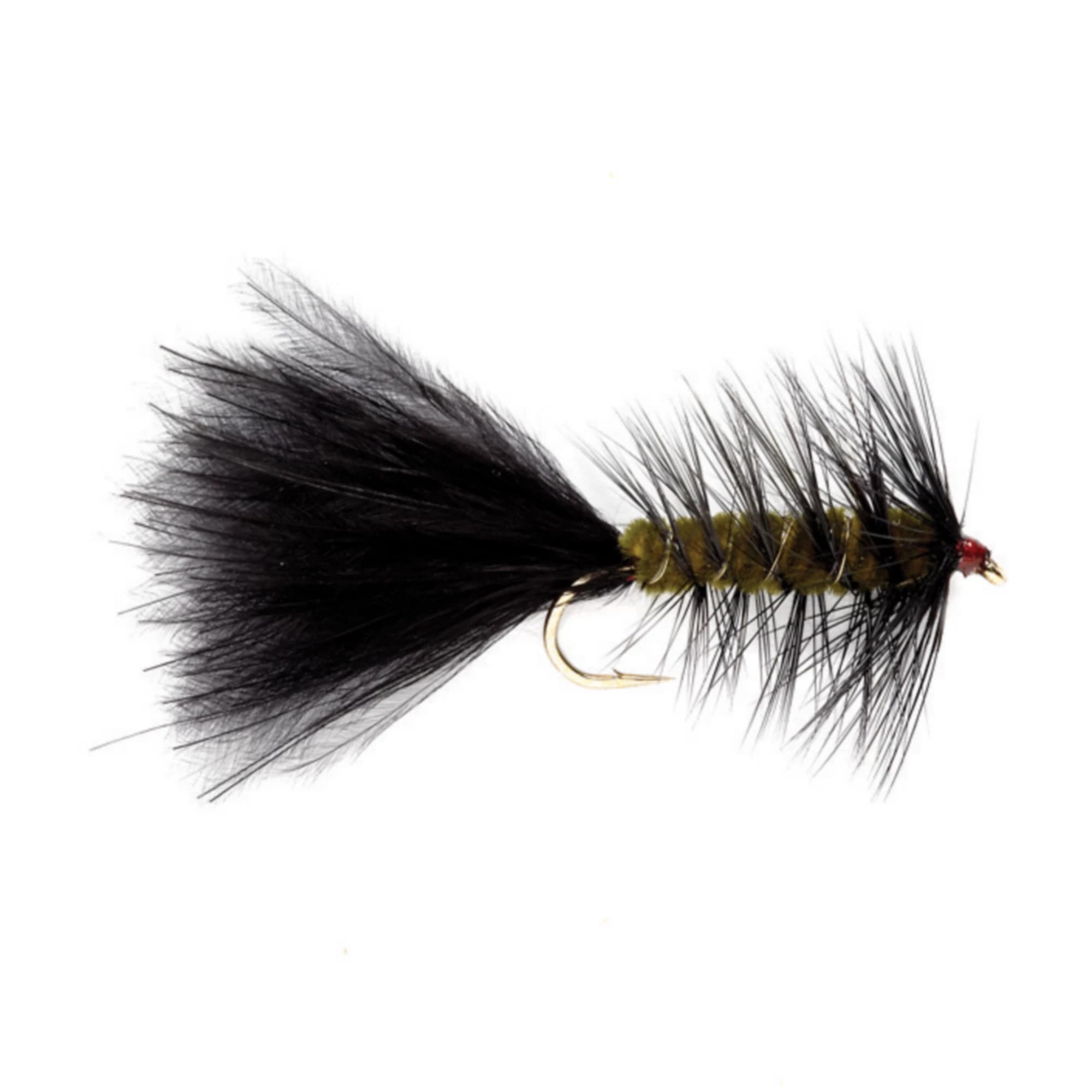
The Woolly Bugger: How to Tie the Fly That Catches Everything That Swims
Friday, April 17, 2026
Fly Fishing Puget Sound: Beach Fly Fishing for Sea-Run Cutthroat, Coho, and the Best Urban Fishery You've Never Heard Of
Thursday, December 4, 2025

Fly Fishing Hawaii: Giant Bonefish, Trevally on the Flats, Peacock Bass in the Reservoirs, and the Most Overlooked Fly Fishery in America
Tuesday, June 24, 2025
 ™
™