
Egg Patterns: The Glo Bug, Blood Dot, Sucker Spawn, and the Flies That Purists Hate and Guides Love
Egg patterns are the simplest flies you'll ever tie and the most controversial you'll ever fish. Four recipes, the full color chart, where to dead-drift them, and why the purist debate doesn't matter.

Every fly shop has one. A guide box with a corner dedicated to nothing more than balls of yarn on hooks. No wings, no hackle, no dubbing, no emerger profile. Just a round puff of bright yarn — chartreuse, peach, steelhead orange — sitting on a short-shank hook. The dry-fly purist at the counter looks at them and winces. The steelhead guide buying a dozen more looks at the purist and shrugs.
Egg patterns occupy a strange place in fly fishing. They are among the simplest flies ever tied, among the most effective ever fished, and among the most argued-about in fly shop conversations and internet forums. A Glo Bug takes thirty seconds to tie. It imitates something trout, steelhead, and salmon eat voraciously for months every year. And it catches fish with a consistency that makes technically demanding dry-fly patterns look like a hobby project.
The argument against egg patterns is philosophical: they're too simple, they're not "real" flies, they exploit spawning fish, they reduce the sport to something base. The argument for them is biological: spawning runs deposit millions of loose eggs into river systems every fall and spring, and every fish in the river — from six-inch parr to twenty-pound steelhead — eats them. An egg drifting along the bottom is the single most abundant high-protein food source in any river with a salmon or steelhead run. Refusing to imitate it isn't purism — it's ignoring the hatch.
Here's the history, the recipes, and where to fish the patterns that guides reach for first and purists pretend don't exist.
A Ball of Yarn From Anderson, California
The modern egg fly traces its origin to The Bug Shop in Anderson, California, which developed Glo Bug Yarn — a bright, translucent synthetic yarn specifically designed to imitate fish eggs. The yarn appeared in the 1970s, and the timing wasn't accidental. The Great Lakes steelhead fishery was exploding. Michigan, Ohio, and Pennsylvania had been stocking steelhead — first coho and Chinook salmon in the late 1960s, then the Little Manistee strain of steelhead rainbow trout through the 1970s and 1980s — and the tributaries of Lakes Erie, Huron, and Michigan were suddenly full of spawning fish and the loose eggs they left behind.
Great Lakes anglers figured it out fast. Salmon spawning in the fall deposited massive quantities of eggs, and steelhead, brown trout, and resident rainbow trout lined up downstream of the redds to eat every loose egg that tumbled past. The natural response was to imitate the food source. Early tiers used craft-store yarn — acrylic, angora, whatever they could find at the fabric shop. But the synthetic Glo Bug Yarn from The Bug Shop was different: it was translucent, it absorbed water without matting down, and it glowed in the colors of real fish eggs. The Glo Bug became the standard egg imitation almost overnight.
By the 1980s, egg patterns were the dominant fly on Great Lakes tributaries. Steelhead Alley — the stretch of Lake Erie tributaries running from the Conneaut Creek in Ohio through Erie, Pennsylvania's Elk and Walnut Creeks — became the proving ground. Guides built their entire nymphing systems around egg patterns. The Glo Bug, the Sucker Spawn, the Blood Dot, and later the Nuke Egg — these weren't afterthoughts in the fly box. They were the fly box.
The patterns moved west and north. Pacific Northwest steelheaders on the Olympic Peninsula adopted them for winter-run fish. Alaska lodge guides on the Kenai and Katmai rivers used them for rainbow trout staging behind spawning sockeye. Tailwater guides in Montana and Wyoming discovered that egg patterns worked on resident brown trout during the fall spawn and on rainbows eating whitefish eggs in winter. Today, egg patterns account for roughly 75 percent of fly-caught Great Lakes steelhead and are carried by guides on every salmon and steelhead river in North America.
Why Eggs — The Biology That Makes It Work
Understanding why egg patterns are so effective requires understanding what happens in a river during spawning season.
When salmon, steelhead, or trout spawn, they dig redds — nests in the gravel where the hen deposits eggs and the male fertilizes them. The process is violent. The hen turns on her side and beats her tail against the bottom, displacing gravel and creating a depression. Eggs are deposited, milt is released, and the hen covers the redd by digging upstream, letting the displaced gravel drift back over the eggs.
But the process isn't efficient. Eggs get knocked loose during redd construction. Some eggs drift downstream before they're covered. Unfertilized eggs wash out. High water events dislodge buried eggs days or weeks after they were deposited. The result is a constant stream of loose, single eggs tumbling along the bottom — free protein that every fish in the river has evolved to recognize and eat.
A fresh egg is bright and translucent — vivid orange, pink, or peach depending on the species. As eggs age in the water, they change. Fertilized eggs develop a milky, translucent membrane. Dead eggs turn opaque and pale — white, cream, or washed-out yellow.
Each stage of the egg's lifecycle corresponds to a different fly pattern:
- Fresh, bright eggs → Glo Bug in steelhead orange, oregon cheese, or pink
- Fertilized eggs with milky membrane → Nuke Egg (yarn core with translucent veil)
- Eggs with visible nucleus → Blood Dot Egg (contrasting dot of color in the center)
- Clusters of small eggs in connective tissue → Sucker Spawn (series of yarn loops)
- Dead, pale eggs → Glo Bug in white, cream, or pale pink
The Recipes — Four Patterns That Cover Every Situation
The Glo Bug (Classic Egg)
The original, the standard, the fly that started it all.
| Component | Material |
|---|---|
| Hook | Short-shank egg/scud hook, #6-14 (TMC 105, Gamakatsu C14S, Dai-Riki 135) |
| Thread | 6/0 or 140-denier, matched to yarn color (UTC 140, Danville 6/0) |
| Body | Glo Bug Yarn (The Bug Shop) or McFly Foam — single clump, trimmed to ball |
Lay a clump of yarn across the hook shank at the midpoint, secure it with tight thread wraps in a cross pattern, pull all the fibers upward, make several more wraps at the base to cinch them, and trim to a ball. The key is tension — loose wraps produce a floppy egg that falls apart after one fish.
The Blood Dot Egg
Invented by Jeff Blood in the early 1980s for Great Lakes steelhead and brown trout on Ohio's Lake Erie tributaries. The Blood Dot imitates an egg with a visible nucleus.
| Component | Material |
|---|---|
| Hook | Scud/emerger hook, #10-16 (Lightning Strike SE3, TMC 2457) |
| Thread | 140-denier in cream or white (UTC 140) |
| Body | Glo Bug Yarn or Egg Yarn — light color (oregon cheese, pale peach, cream) |
| Dot | Glo Bug Yarn — contrasting color (flame, dark orange, red) — half the amount of body yarn |
The secret of the Blood Dot is how sparse it is. Most egg patterns aim for a dense, opaque ball. The Blood Dot uses less material, which means it soaks up water quickly and becomes translucent — mimicking the way a real egg looks in the water, where light passes through the membrane and reveals the darker nucleus inside.
The Sucker Spawn
Where the Glo Bug imitates a single loose egg, the Sucker Spawn imitates a cluster — the stringy, connected mass of tiny eggs that suckers, whitefish, and some salmonids release during spawning.
| Component | Material |
|---|---|
| Hook | Short-shank scud hook, #10-14 (Dai-Riki 125, TMC 2457) |
| Thread | 70-denier in red or pink (UTC 70) |
| Body | Angora yarn, Glo Bug Yarn, or Aunt Lydia's Sparkle Yarn — 2-3 strands, 2-3 inches long |
The tying technique uses a loop method: tie in the yarn strands at the hook bend, twist them slightly, form a small loop, tie it down, then repeat up the shank — alternating sides — creating 4-6 small egg-shaped bumps. Angora yarn is the traditional material — its fuzzy, hairy texture imitates connective tissue between the eggs.
The Nuke Egg
The most realistic egg pattern in the box. A Glo Bug core wrapped in a translucent veil of yarn that, when wet, mimics the milky membrane of a fertilized egg.
| Component | Material |
|---|---|
| Hook | Egg/scud hook, #8-12 (TMC 105, Gamakatsu C14S) |
| Thread | 6/0 in white (Danville 6/0, UTC 140) |
| Core | McFly Foam or chenille — bright color (oregon cheese, steelhead orange, chartreuse) |
| Veil | Egg Yarn or McFly Foam — white or cream, 3-4 times the volume of the core |
The core is tied in first — a small, tight ball of bright material, same method as a standard Glo Bug but about half the size. Then the veil: a large clump of white or cream yarn is tied in over the core, pulled back to surround it evenly, secured with wraps at the base, and trimmed to a slightly larger ball. When wet, the veil becomes translucent and the bright core shows through.
The Color Chart — What to Tie, When to Fish It
Steelhead Orange / Oregon Cheese — The workhorse. Imitates fresh salmon and steelhead eggs. First color to reach for during active spawning runs.
Chartreuse — Counterintuitive but devastating. Doesn't match any natural egg color, but one of the most productive in stained water and low-light conditions. Guides on the Olympic Peninsula swear by chartreuse Glo Bugs on overcast winter days.
Peach / Pale Pink — The "just-laid" egg. Effective late in spawning runs when fish have seen thousands of bright orange eggs. Also the closest match to rainbow and cutthroat eggs.
Pink — The universal compromise between bright and natural. If you carry only one color, make it pink.
White / Cream — Dead eggs. After days in the water, unfertilized eggs lose their color. A white Glo Bug in #14 is one of the most underrated late-season patterns — effective on Yellowstone cutthroat in August, weeks after the spawning run ends, and on fall brown trout near Bozeman.
Clown (multi-color) — Two or three colors of yarn mixed together — typically orange and chartreuse, or pink and white. A guide secret on heavily pressured rivers.
Sizing
- Chinook salmon eggs: Large — #6-8 hooks, 10-14mm
- Steelhead / coho eggs: Medium — #8-10 hooks, 8-10mm
- Brown trout / rainbow eggs: Small — #12-14 hooks, 6-8mm
- Whitefish / sucker eggs: Tiny — #14-16 hooks, 4-6mm (Sucker Spawn pattern)
When in doubt, go smaller. A #12 egg in a subtle color catches more fish on more rivers than a #6 in screaming orange.
Where to Fish Egg Patterns
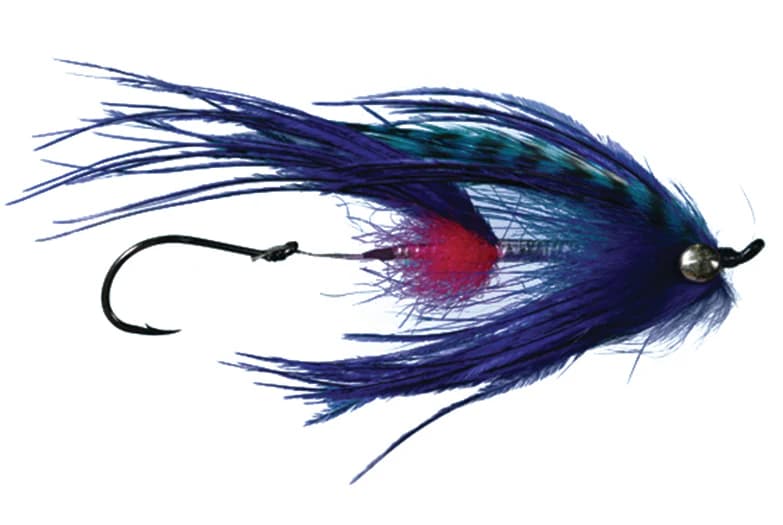
Olympic Peninsula, Washington — Winter steelhead on the Hoh, Queets, Sol Duc, and Bogachiel eat egg patterns aggressively in the swollen, tea-stained flows of December through March. Chartreuse and pink Glo Bugs in #8-10. Pair an egg with a Hoh Bo Spey for swinging.
Yellowstone National Park — Cutthroat spawn in Yellowstone's tributaries from June through August. Small peach or pink eggs (#12-14) fished below spawning cutthroat in the Yellowstone River, Lamar River, and Slough Creek produce fish that most anglers walk past while casting dry flies.
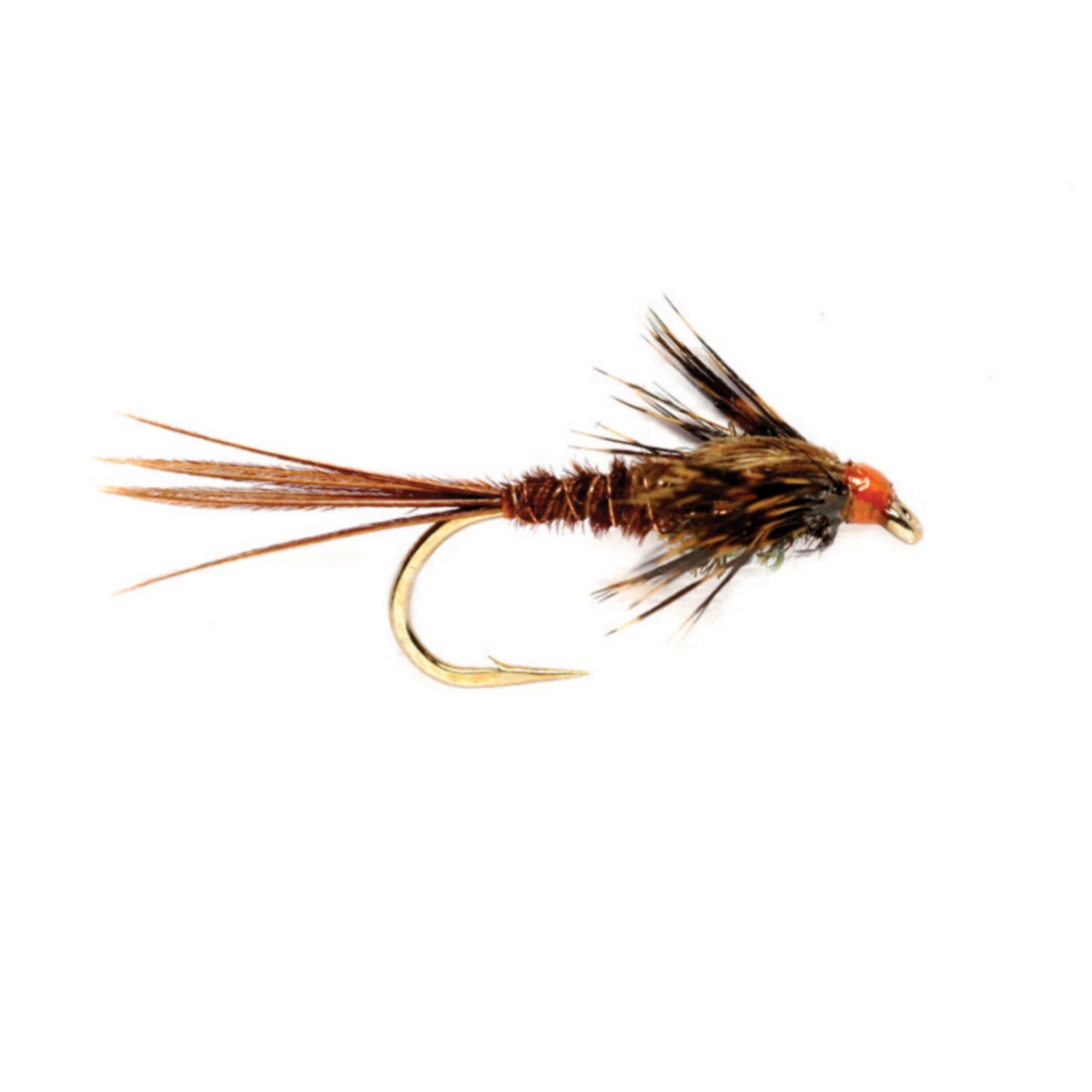
Bozeman, Montana — Fall brown trout spawning on the Gallatin, Madison, and East Gallatin runs from October through November. A dead-drifted Blood Dot or small Glo Bug in pale peach — matched with a Pheasant Tail Nymph dropper — picks up the rainbows and non-spawning browns that stage downstream of the redds.
Katmai National Park, Alaska — Rainbow trout grow enormous eating sockeye salmon eggs during the July and August spawn. A dead-drifted Glo Bug in bright orange behind spawning sockeye is the simplest and most effective technique in Alaska.
How to Tie Egg Patterns — Video Tutorials
Tying the McFlyfoam Egg (Glo Bug) - Stone River OutfittersClear walkthrough of the McFly Foam egg technique, from yarn selection through trimming.
Lethal Blood Dot Fly Pattern - How to Tie with Jeff BloodThe inventor of the Blood Dot demonstrates his pattern on the banks of the Ashtabula River in Ohio.
How to Tie the Nuke Egg - AvidMax Fly Tying TuesdayDetailed tutorial covering the two-stage construction: building the bright core and wrapping the translucent veil.
Tips From the Vise
Use the right thread. Glo Bug Yarn and McFly Foam are slippery — standard 6/0 thread doesn't grip well. GSP (gel-spun polyethylene) thread in 100-denier or heavier bites into the yarn fibers and locks them in place.
Trim with sharp scissors — not serrated. Serrated fly tying scissors grab and pull yarn fibers instead of cutting them cleanly. Use sharp, fine-tipped straight scissors and make small, careful cuts, rotating the fly as you go.
Wet the fly before you judge the color. Glo Bug Yarn and McFly Foam change dramatically when wet. Bright orange becomes more muted and translucent. White becomes nearly invisible. Always dunk a finished fly in water before you decide whether the color is right.
Dead-drift on the bottom. Egg patterns are not stripped, swung, or retrieved. They are dead-drifted — fished exactly like a nymph, tumbling along the bottom at the speed of the current. If the fly isn't occasionally ticking bottom, add weight.
Fish the right water. Eggs collect in tailouts and in the seams between fast and slow current below spawning redds. Don't fish egg patterns in fast riffles or deep pools. Find the transitional water where the current slows and deposits drifting food.
Two-fly rigs. An egg as the top fly with a Pheasant Tail or Zebra Midge trailing 18-24 inches behind is the standard Great Lakes steelhead rig. The egg gets the fish's attention and the trailing nymph seals the deal.
The Controversy — And Why It Doesn't Matter
The debate over egg patterns mirrors the debate over the San Juan Worm and every other "junk fly" in the catalog. The purist argument: a ball of yarn on a hook is not fly tying. It's bait with extra steps.
The response from guides: trout eat eggs. Eggs are a natural food source. Imitating a natural food source is literally the definition of fly fishing. A Glo Bug is no less a "fly" than a scud pattern or a San Juan Worm.
There's a more substantive concern: fishing egg patterns near active redds means fishing near spawning fish, and catching and handling a hen full of eggs can cause her to drop them prematurely, reducing reproductive success. This is real and responsible egg fishing means targeting the fish eating the eggs — not the spawning fish themselves. Fish the tailouts below the redds, not the redds.
The practical reality: you'll find egg patterns in the guide boxes on the Madison, the Henry's Fork, the North Platte, and every Great Lakes tributary. Guides use them because they catch fish. The philosophical debate is interesting over a beer at the fly shop. On the water, the egg doesn't care about your philosophy.
Build Your Box
Glo Bugs: 6 each in steelhead orange (#8, #12), pink (#10, #14), chartreuse (#8, #12), and white (#12, #14) = 48 flies
Blood Dots: 6 each in oregon cheese/flame dot (#12) and peach/red dot (#14) = 12 flies
Sucker Spawn: 6 each in pink (#12) and white (#14) = 12 flies
Nuke Eggs: 6 each in oregon cheese/white veil (#10) and pink/cream veil (#12) = 12 flies
That's 84 flies. At thirty seconds per Glo Bug, you can tie the entire box in a few evenings. The materials — a few hanks of Glo Bug Yarn, a pack of McFly Foam, some angora yarn, and a bag of scud hooks — cost less than a single box of commercially tied egg patterns. And you'll use every one of them.
Related Articles

Fly Fishing the Olympic Peninsula: Wild Steelhead in the Rainforest, the Rivers That Define the Sport, and Why They Need Us Now
Thursday, January 8, 2026
The Hoh Bo Spey: How to Tie the #1 Steelhead Fly on the Olympic Peninsula
Monday, September 22, 2025
The Pheasant Tail Nymph: Two Materials, No Thread, and the Subsurface Fly That Changed Everything
Thursday, April 9, 2026
 ™
™