
The Miyawaki Beach Popper: How to Tie the Fly That Put Puget Sound Topwater Fishing on the Map
Leland Miyawaki watched coho and gulls attacking crippled baitfish on a Puget Sound beach in 1978 and went home to tie a foam-headed slider that would change Pacific Northwest beach fly fishing forever. Here's the recipe, the technique, and why nothing else matches it.

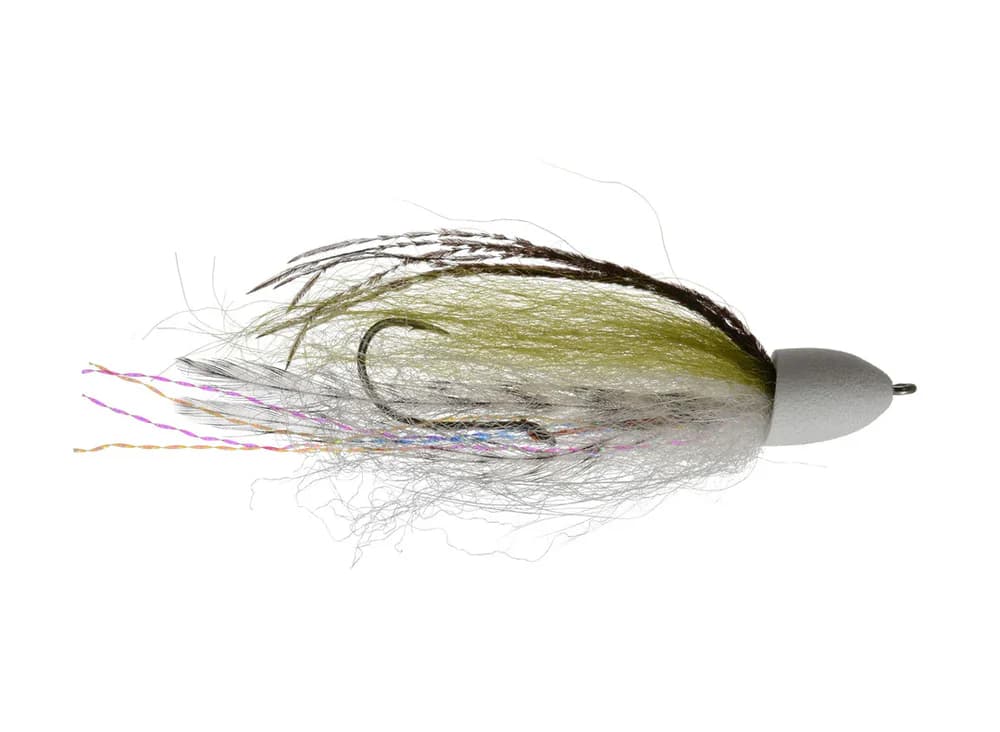
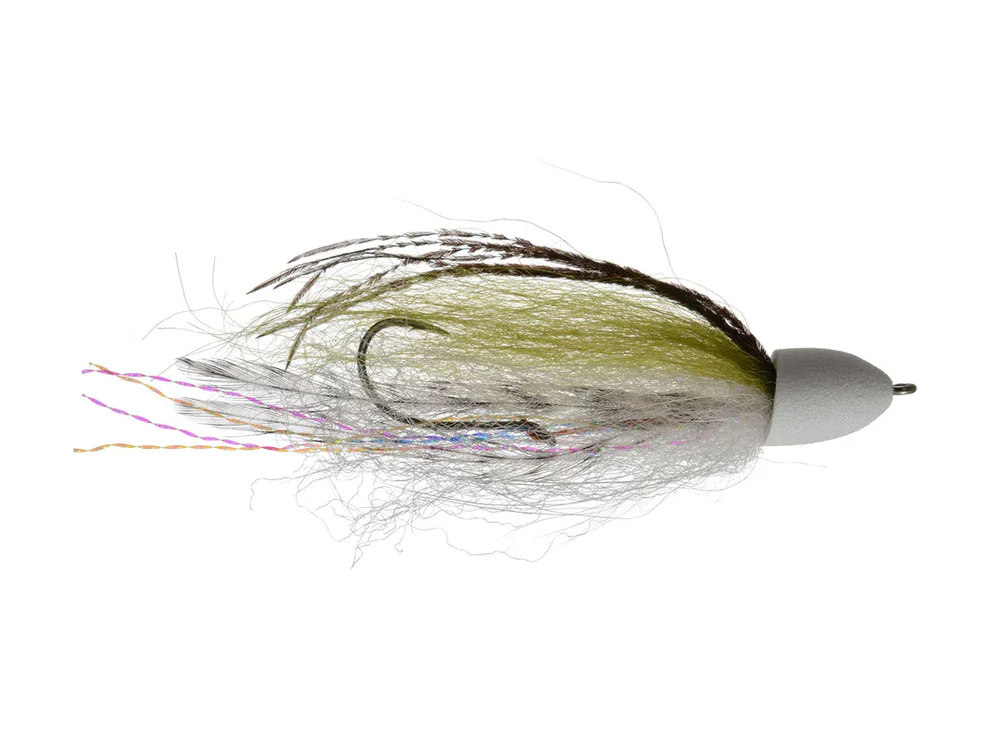 The Miyawaki Beach Popper — foam slider head, Icelandic sheep, stinger hook. Photo: Lost Coast Outfitters.
There are flies that catch fish, and there are flies that create a fishery. The Miyawaki Beach Popper did both. Before Leland Miyawaki tied his first foam-headed slider in 1978, fly fishing for sea-run cutthroat and coho from Puget Sound beaches was something a handful of Northwest anglers did quietly. After the Beach Popper proved that cutthroat and coho would explode on a surface fly stripped through the saltwater, beach fly fishing became a movement — and the Miyawaki Popper became its signature pattern.
The fly was born from observation. Miyawaki was fishing a Puget Sound beach for coho salmon when he noticed both salmon and gulls feeding on crippled baitfish at the surface. The baitfish weren't swimming normally — they were fluttering, struggling, waking across the surface in the way that dying or injured fish do. The predators weren't chasing healthy bait. They were targeting the wounded ones. The ones making a disturbance.
Miyawaki went home and tied a fly designed to create that disturbance: a foam slider head that pushes water and leaves a V-wake on the surface, trailing hackle and hair that pulse and breathe on the strip, and a stinger hook set back behind the materials to catch short-striking fish. The fly wasn't a popper in the traditional bass-bug sense — it didn't pop or chug. It slid. It waked. It left a subtle surface trail that said "something is struggling up here" to every predator within 30 feet.
Sea-run cutthroat ate it. Coho crushed it. And the take — a saltwater fish exploding on a surface fly in a foot of water on a public beach 30 minutes from downtown Seattle — turned out to be the most addictive experience in Pacific Northwest fly fishing.
What It Imitates
The Miyawaki Beach Popper imitates a crippled or injured baitfish struggling on the surface. Specifically:
-
Wounded sand lance — The primary forage for Puget Sound cutthroat. Sand lance are long, thin baitfish that school along beaches. When injured by predators, they flutter on the surface. The Popper's slim profile and waking action mimics this perfectly.
-
Injured herring — Juvenile herring pushed to the surface by feeding coho or cutthroat. The flash materials in the fly catch light the way a herring's scales do when the fish rolls on its side.
-
Any struggling baitfish — The fly's real power isn't species-specific imitation — it's the disturbance. The V-wake on the surface triggers a predatory response in any fish that hunts by sight. Cutthroat, coho, pink salmon, even the occasional resident chinook will hit a properly waked Beach Popper.
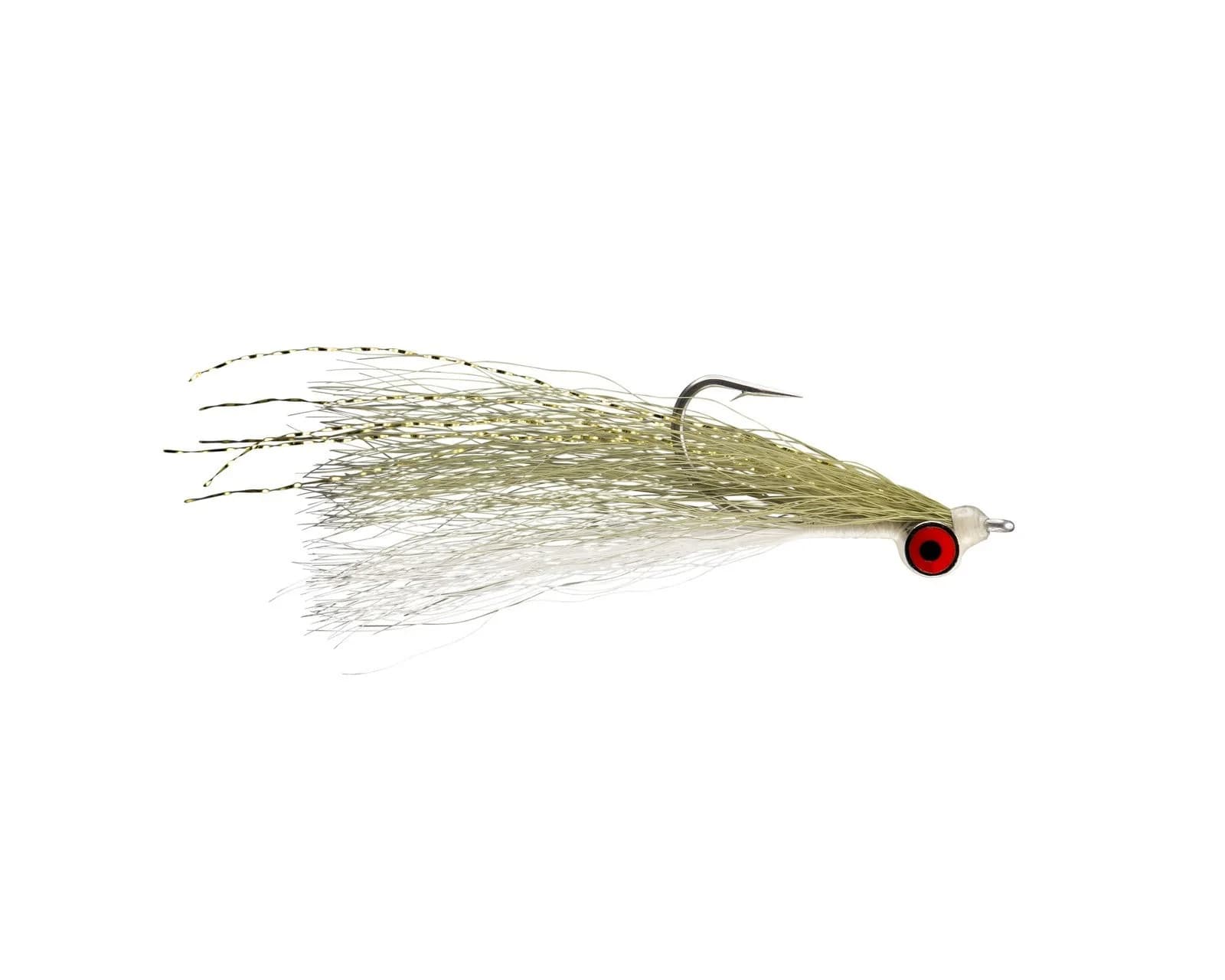
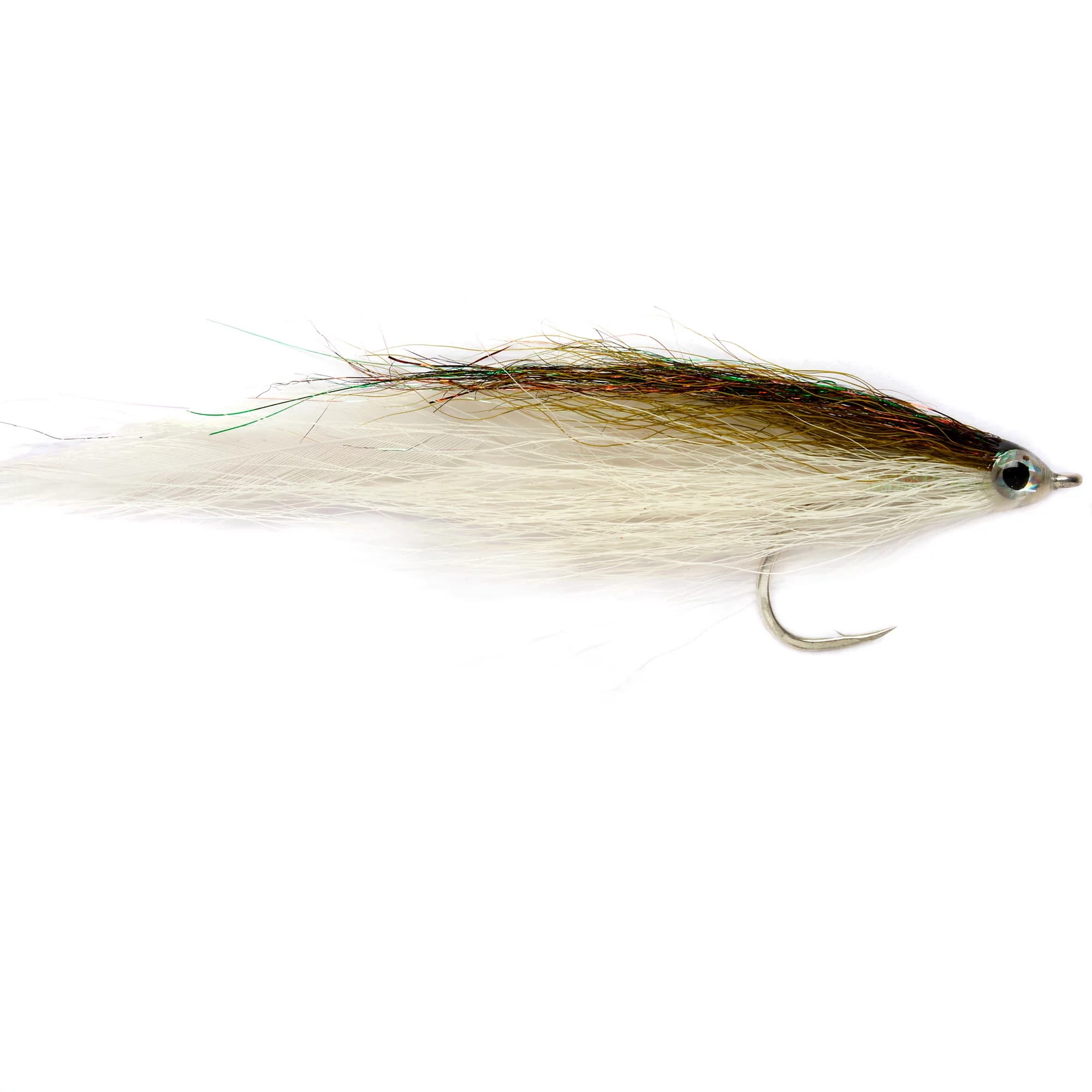
The distinction from the Clouser Minnow and Deceiver is critical: those flies imitate healthy, swimming baitfish in the water column. The Miyawaki Popper imitates a dying baitfish on the surface. Different trigger, different response. The subsurface flies draw investigation eats. The Popper draws violent, explosive strikes — fish launching out of the water to kill something that's trying to escape on the surface.
The Recipe — Standard Miyawaki Beach Popper
| Component | Material |
|---|---|
| Front hook | Straight-eye hook, #4-6 (Daiichi 2546 or Mustad 3407) — this is a mounting hook only, not for hooking fish |
| Stinger hook | Octopus-style hook, #4 (Owner SSW or Gamakatsu Octopus) — the actual fish hook |
| Connection | 20-25 lb Maxima monofilament loop connecting front hook to stinger |
| Thread | White 140 denier (UTC) |
| Tail | 2 grizzly saddle hackles, splayed outward |
| Flash | 2 strands silver holographic Flashabou + 3 strands rainbow pearl Krystal Flash |
| Underwing | White Icelandic sheep hair |
| Overwing | Olive Icelandic sheep hair |
| Topping | 3-5 strands peacock herl |
| Head | Foam slider/popper head — Rainy's Pee-Wee Pop (cutthroat size) or Mini-Me Pop (coho size) |
The two-hook setup is essential to the design. The front hook is just a mounting platform — it holds the materials and the foam head. The stinger hook trails behind on a mono loop and does the actual hooking. This arrangement means the foam head is at the front (creating the wake) while the hook point is set back in the tail zone (where fish actually grab the fly). Short strikes that miss a conventional single-hook fly connect on the stinger.
How to Tie It — Step by Step
Step 1: Stinger connection. Cut a 3-inch length of 20-25 lb Maxima mono. Thread it through the eye of the octopus hook and form a loop. Tie the loop to the bend of the front hook with tight thread wraps, so the stinger trails about 1.5 inches behind. Coat the wraps with head cement. The stinger should hang freely — don't lock it rigid.
Step 2: Tail. Tie in two grizzly saddle hackles at the bend of the front hook (just in front of the stinger connection), splayed outward with concave sides facing in. The hackle tips should extend about 1.5 shank lengths past the bend. These are the "wings" that pulse and breathe when the fly is stripped.
Step 3: Flash. Tie in 2 strands of silver holographic Flashabou and 3 strands of rainbow pearl Krystal Flash at the base of the hackle tail. Trim to hackle length or slightly shorter.
Step 4: Underwing. Tie in a sparse clump of white Icelandic sheep hair on top of the shank, extending back over the hackle tail. Icelandic sheep has a natural wave and movement in water that bucktail can't match — it's what gives the Popper its lifelike silhouette.
Step 5: Overwing and topping. Tie in a smaller clump of olive Icelandic sheep hair on top of the white, creating the dark-over-light baitfish profile. Top with 3-5 strands of peacock herl for iridescence. Build a smooth thread head behind the hook eye.
Step 6: Foam head. Slide the foam popper/slider head onto the hook shank (the slot in the foam fits over the shank). The flat or cupped face should point forward. Secure the foam with thread wraps behind it and a drop of super glue. The head should sit right at the hook eye, creating the blunt profile that pushes water.
Step 7: Finish. Whip finish behind the foam head. Apply head cement to all thread wraps. The finished fly should have the foam head at the front, grizzly hackle and sheep hair flowing back, and the stinger hook trailing at the rear.
The Variations
Cutthroat Standard (olive/white, #4-6 front, #4 stinger) — The original. Grizzly hackle, white and olive Icelandic sheep, peacock herl, Pee-Wee foam head. This is the year-round Puget Sound pattern for sea-run cutthroat. Fish it from March through November on any beach.
Coho Pink (#2-4 front, #2 stinger) — Substitute pink saddle hackle for the grizzly. Keep the peacock herl but drop the olive sheep. Use the larger Mini-Me foam head. Coho respond aggressively to pink — this variation is for the July–October coho season when salmon are staging along the beaches.
All White (#4-6) — White hackle, white sheep, silver flash. The sand lance specialist. When cutthroat are keying on silver baitfish and ignoring olive patterns, the all-white version matches the forage.
Chartreuse/White (#4-6) — Chartreuse sheep over white. The low-visibility water option. When Puget Sound is green and murky after rain, the chartreuse provides more contrast than olive.
Where to Fish It
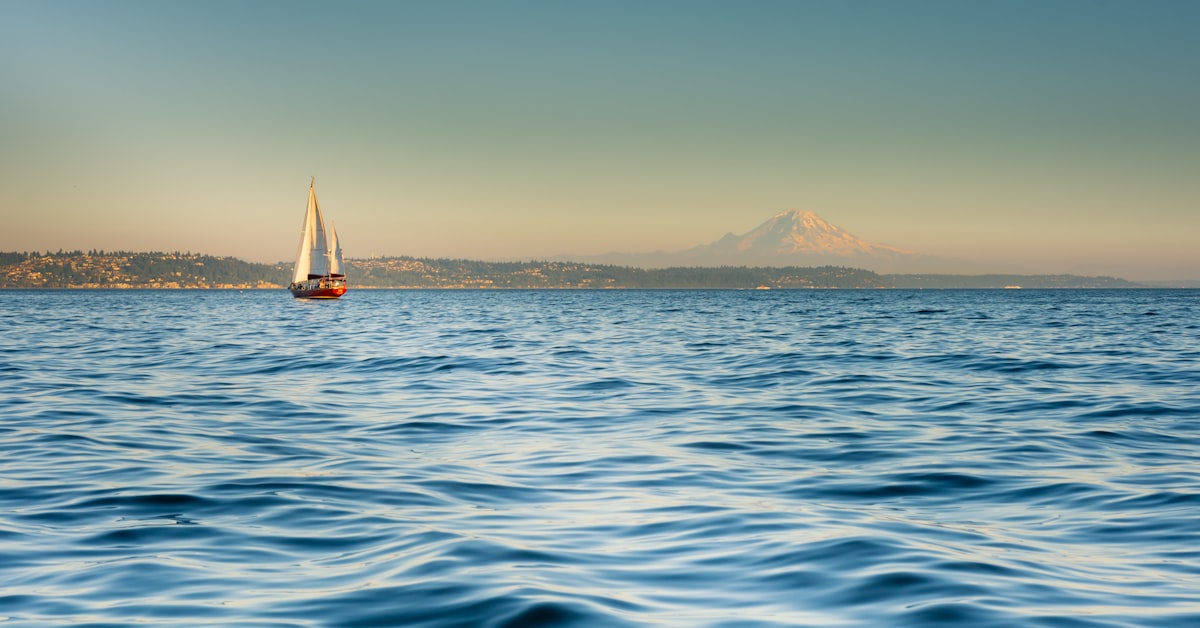
The Miyawaki Beach Popper was designed for one fishery, and it's still best there:
-
Puget Sound Beaches, WA — Every beach in our Puget Sound guide is Miyawaki Popper water. Lincoln Park, Golden Gardens, Carkeek, Titlow, Dash Point — wherever sea-run cutthroat cruise the shoreline, the Popper will draw strikes. September and October (peak cutthroat season) are prime, but any month produces.
-
Hood Canal — The Popper works on Hood Canal's chum salmon in October and November. Chum are aggressive and will hit a waked surface fly with the same violence as coho.
-
San Juan Islands — The rocky shorelines and kelp beds of the San Juans hold cutthroat that see fewer flies than the urban Sound beaches. The Popper is devastating in the clear water around the islands.
How to Fish It — The Wake
The Miyawaki Beach Popper is not a bass popper. You don't chug it, pop it, or work it with aggressive rod-tip action. You strip it — long, steady strips that create a smooth V-wake on the surface. The foam head slides through the water rather than popping, and the wake is what triggers strikes.
The retrieve: Cast out 40-60 feet, let the fly land and settle for a beat, then begin stripping with long, steady pulls (12-18 inches per strip). The fly should leave a continuous wake — a V-shaped disturbance on the surface that looks like a baitfish trying to escape. Don't pause between strips unless a fish follows without committing — then a sudden stop-and-start can trigger the eat.
The take: Sea-run cutthroat hit surface flies with a splash that looks exactly like a fish eating a bug off the surface — except it's a 14-inch chrome-sided trout launching at a baitfish imitation. Coho hits are more violent — a full-body explosion that sends water three feet in the air. In both cases, strip-set. Don't lift the rod on the take — strip to set the hook in the stinger.
Line and leader: Floating line only. The whole point is surface disturbance. Leader: 9-12 feet tapered to 8-10 lb (2X). Longer leaders let the fly work independently of the fly line's wake.
When to fish it: The Popper works best in calm conditions — light wind, flat water, early morning or evening. The wake is more visible (and more effective) when the surface is smooth. In choppy conditions, switch to a subsurface fly like the Clouser — the wake gets lost in the waves.
How to Tie It — Video Tutorials
The original: Leland Miyawaki ties his Beach Popper — The creator demonstrating his own pattern. Watch how he sets up the stinger connection and positions the foam head.
Step-by-step: How to tie the Miyawaki Popper — Clear instruction with materials list and close-up tying footage.
Friday Night Flies version: Miyawaki Beach Popper tutorial — Good alternative walkthrough with tips on foam head selection.
Tips From the Vise
The stinger loop length matters. Too short and the stinger hook sits inside the hackle — it'll foul on every cast. Too long and the hook trails behind the fly's profile — fish will miss it. About 1.5 inches of mono between the front hook bend and the stinger eye is the sweet spot.
Icelandic sheep, not bucktail. The Miyawaki Popper specifically calls for Icelandic sheep hair because of its natural wave and movement in water. Bucktail is stiffer and doesn't pulse the same way on the strip. If you can't find Icelandic sheep, craft fur or EP fiber are better substitutes than bucktail.
Size the foam to the target. Pee-Wee size heads for cutthroat (less disturbance, smaller profile). Mini-Me size heads for coho (more wake, bigger silhouette). Using a coho-size head for cutthroat will spook more fish than it attracts — cutthroat are subtler feeders than coho.
Test the wake. Before fishing a new batch of Poppers, drag one through the water next to you and watch the wake. The fly should slide smoothly with a consistent V-wake, not dive or skitter erratically. If it dives, the foam head isn't positioned far enough forward. If it spins, the materials are unbalanced.
Build Your Box
- Cutthroat standard (olive/white, #6 front, #4 stinger) — 6 flies
- Coho pink (#4 front, #2 stinger) — 4 flies
- All white (#6 front, #4 stinger) — 4 flies
That's 14 flies. The stinger connection makes these slightly more complex to tie than a standard streamer, but the materials are simple and the construction is straightforward once you've set up a few stinger rigs. An evening at the vise covers the box — and that box will catch every surface-feeding fish on Puget Sound from March through November.
Frequently Asked Questions
Who invented the Miyawaki Beach Popper?
Leland Miyawaki of Seattle created the Beach Popper in 1978 after watching coho and gulls feeding on crippled baitfish on a Puget Sound beach. The foam slider head he designed creates a V-wake that imitates a dying baitfish struggling on the surface.
How do you fish a Miyawaki Beach Popper?
Long, steady strips on a floating line — not popping or chugging. The foam head slides and creates a V-wake on the surface. Strip-set on the take. Works best in calm conditions on Puget Sound beaches for sea-run cutthroat (year-round) and coho (July-October).
Why does the Miyawaki Popper have two hooks?
The front hook is just a mounting platform for the foam head and materials. The stinger hook trails behind on a mono loop and does the actual hooking. This setup catches short-striking fish that grab the tail of the fly rather than the head.
What size Miyawaki Popper for cutthroat vs coho?
Cutthroat: #4-6 front hook with Pee-Wee foam head and #4 stinger. Coho: #2-4 front hook with Mini-Me foam head and #2 stinger. Coho want more wake and a bigger silhouette. Cutthroat want subtler presentation.
Can you use the Miyawaki Popper outside Puget Sound?
Yes — any saltwater beach with surface-feeding predators. The waking action works on stripers, bluefish, and seatrout. But the fly was designed for and is most effective on Puget Sound's sea-run cutthroat and coho salmon.
Related Articles
Fly Fishing Puget Sound: Beach Fly Fishing for Sea-Run Cutthroat, Coho, and the Best Urban Fishery You've Never Heard Of
Thursday, December 4, 2025
The Clouser Minnow: How to Tie the Fly That Catches Everything With Fins, From Bonefish to Bass to Stripers
Friday, November 28, 2025
Lefty's Deceiver: How to Tie the Saltwater Streamer That Lefty Kreh Called 'A Way of Tying, Not a Pattern'
Sunday, November 2, 2025
 ™
™