
Tying the Sculpin Streamer: The Big-Trout Fly That Changed How We Think About Streamers
Once a trout reaches 20 inches, it stops thinking like a trout and starts thinking like a predator. Sculpins are the prey it hunts most. From Don Gapen's 1936 Muddler to Kelly Galloup's Zoo Cougar, here's how to tie the flies that catch the biggest fish in the river.

Tying the Sculpin Streamer: The Big-Trout Fly That Changed How We Think About Streamers
There's a threshold that trout cross somewhere around 20 inches. Below that size, they eat insects. Mayflies, caddis, stoneflies — the standard menu. Above that size, insects no longer provide enough calories to sustain their mass, and they become something fundamentally different: predators. They eat fish. And the fish they eat most often — more than minnows, more than juvenile trout, more than dace — is the sculpin.
Sculpins are everywhere trout swim. They're bottom dwellers that hide under rocks, dart in short bursts across the substrate, and can't swim well enough to escape a determined predator. They lack a swim bladder, so they sink when they stop moving. They're territorial, predictable, and protein-dense. A single 4-inch sculpin delivers more calories than a trout could get from an entire evening's mayfly hatch. For a 24-inch brown trout — a fish that can consume prey up to half its own body length — a sculpin isn't a snack. It's a meal.
Kelly Galloup, the Montana guide and streamer evangelist who literally wrote the book on modern streamer fishing, puts it bluntly: the Zoo Cougar, his signature sculpin pattern, is "without a doubt the most productive fly for really big trout I have ever fished." Not one of the most productive. The most productive.
If you want to catch the biggest trout in the river, you need to think like a predator. And predators eat sculpins.
The Sculpin
Sculpins (family Cottidae) are small, bottom-dwelling fish found in virtually every coldwater stream in North America. The most common species — the mottled sculpin (Cottus bairdi) and the slimy sculpin (Cottus cognatus) — rarely exceed 5-6 inches. They're broad-headed, mottled brown and olive, with oversized pectoral fins that they use to brace against the current. They look like tiny, armored catfish.
What makes sculpins perfect prey is their locomotion. Without a swim bladder, they can't hover or glide — they sink the moment they stop propelling themselves. When disturbed from their hiding spots under rocks, they dislodge into the current, drift briefly, then dart in short, panicked bursts back toward the bottom. This hop-drift-dart pattern is the signature movement that predatory trout key on.
Sculpins are also nocturnal. They hide under rocks during the day and emerge at night to feed on aquatic insect larvae, crustaceans, fish eggs, and smaller fish — including other sculpins. This nocturnal behavior explains why the biggest trout in any river are often caught at dawn and dusk, when sculpins are most active and most vulnerable.
From Don Gapen to Kelly Galloup
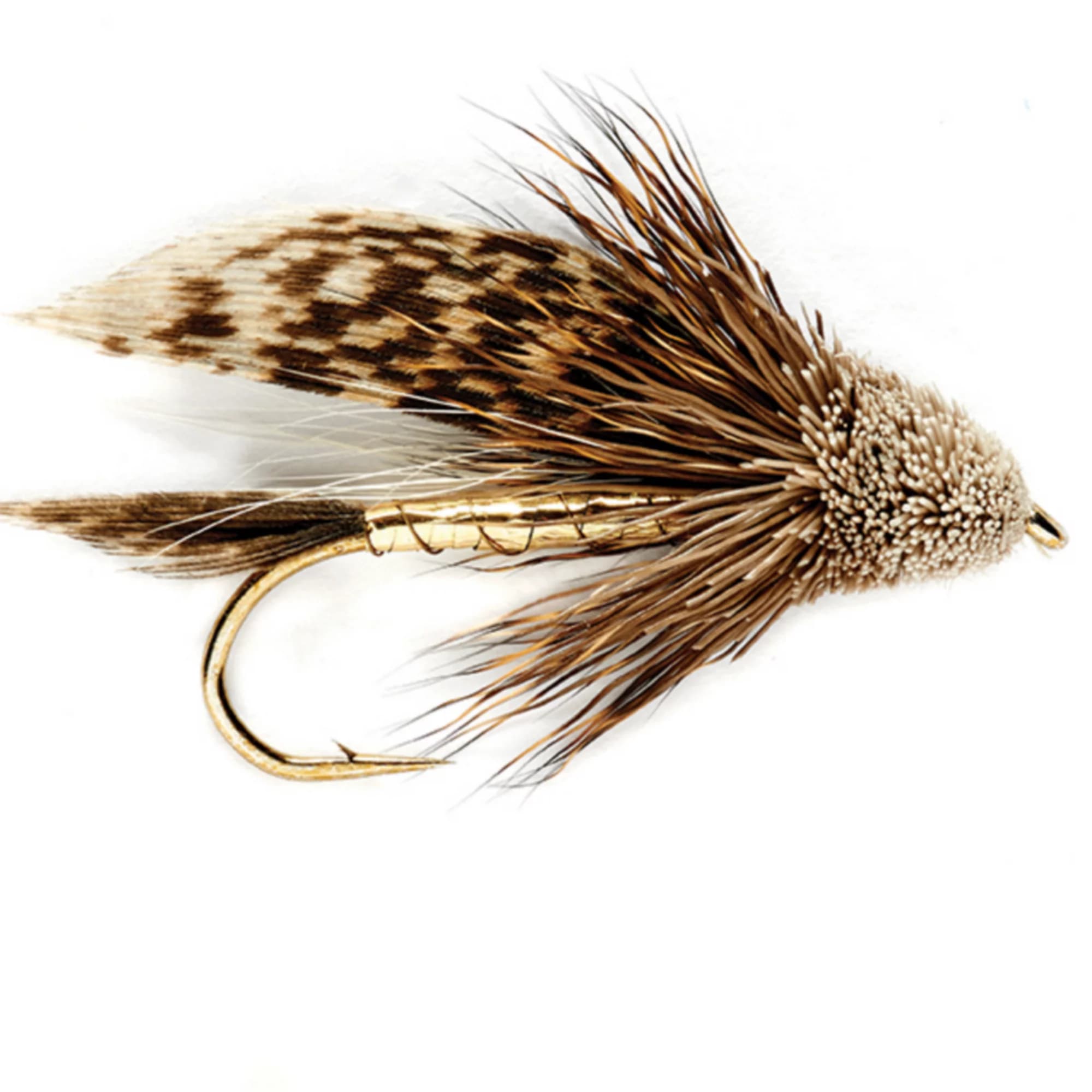
The sculpin fly story begins in 1936 on Ontario's Nipigon River, where Don Gapen was fishing for brook trout. Watching Ojibway Indian guides bait with dead minnows caught along the shore — a bottom-dwelling fish the locals called the "Cockatush Minnow" — Gapen sat down by lantern light and tied a dozen flies to imitate it. The result was the Muddler Minnow, arguably the most influential streamer pattern in fly fishing history.
Gapen's original had a sparse, untrimmed deer hair head — raggedy and loose, not the dense clipped ball that most tiers associate with the pattern today. That dense head was Dan Bailey's contribution around 1950. Bailey's version pushed more water and created a broader silhouette, but Gapen's loose original may have actually been more effective — the sparse fibers moved and breathed in the current like a living thing.
Dave Whitlock advanced sculpin imitations in the 1970s and 1980s with his Near Nuff Sculpin, which used dumbbell eyes for bottom contact and monofilament tied along each side of the shank to widen the body profile — mimicking the sculpin's characteristic broad, flat shape. Whitlock's patterns were designed to be fished on or near the bottom, where real sculpins live.
But the real revolution came from Kelly Galloup. Working on Montana's Madison River and writing with Bob Linsenman, Galloup published Modern Streamers for Trophy Trout and fundamentally changed how fly fishers approach big trout. His central insight: you're not trying to feed big trout. You're trying to make them angry. Trout over 20 inches are predators that feed primarily at night. During the day, the angler's best tool isn't a convincing imitation — it's a provocative intrusion. A fly that looks vulnerable, injured, or out of place triggers a reactionary strike driven by aggression and territoriality, not hunger.
Galloup's Zoo Cougar — a flat-headed, broad-profiled pattern with no weight, designed to look "slightly injured when retrieved" — embodies this philosophy. It floats at rest and dives when stripped, creating an erratic, darting action that drives big trout crazy. He's documented brown trout with 12-inch rainbows in their stomachs eating his sculpin patterns. The fish aren't hungry. They're territorial.
The Patterns
The Zoo Cougar (Kelly Galloup)
| Material | Specification |
|---|---|
| Hook | Streamer 3XL-4XL, #2-6 |
| Thread | Brown or olive 3/0 |
| Head | Spun and clipped deer hair, wide and flat |
| Collar | Deer hair, unclipped, flowing back |
| Wing | Mallard flank, extending past the bend |
| Tail | Marabou |
| Body | Dubbing or chenille |
The Zoo Cougar has no weight. This is intentional. It's designed to be fished on a sink-tip line. The lack of weight makes it incredibly responsive to current — every change in flow makes it flutter and wobble. When stripped, it dives and darts. On the pause, it rises and hovers. This erratic action is the trigger.
The Sculpzilla (Charlie Craven)
| Material | Specification |
|---|---|
| Shank | Articulated shank, #1/0 (TMC 811S or similar) |
| Trailing Hook | #4-6 Gamakatsu Octopus |
| Connection | 20-lb backing or Intruder wire |
| Thread | Black or olive 6/0 |
| Head | 3/8" cross-eyed conehead |
| Tail/Wing | Olive zonker-cut rabbit strip |
| Body | Pearl Ice Dub |
| Collar | Red guinea feather |
| Pectoral Fins | Woodduck or tan mallard flank |
| Eyes | 3/16" red holographic dome eyes |
Charlie Craven's Sculpzilla is an articulated sculpin that uses a heavy conehead for instant depth and a rabbit strip wing for maximum movement. The articulation creates what Galloup calls the "S-swim" — a side-to-side undulation that mimics how prey fish actually move through the water.
The Sculpin Helmet Shortcut
For tiers who don't want to spin deer hair, the Fish Skull Sculpin Helmet from Flymen Fishing Company is a pre-formed, weighted head that slides onto any streamer hook. It has recessed sockets for 3D eyes and keels the fly to ride hook-up. Tie the body normally, super-glue the helmet on, add eyes, UV cure, done. It's not as elegant as a hand-spun deer hair head, but it catches exactly as many fish.
The Near Nuff Sculpin (Dave Whitlock)
| Material | Specification |
|---|---|
| Hook | Streamer 3XL, #4-8 (TMC 5263) |
| Thread | Olive 140 denier |
| Eyes | Medium red dumbbell eyes |
| Tail | Grizzly marabou |
| Body | Olive dubbing with monofilament wideners |
Whitlock's innovation was tying monofilament along each side of the hook shank to artificially widen the body profile before dubbing over it. The result is a broad, flat body that matches the sculpin's shape without the bulk of deer hair.
How to Fish a Sculpin
Sculpin patterns are not Woolly Buggers. You don't cast across and strip back. The sculpin's natural behavior — bottom-dwelling, short darting movements, panic when dislodged — demands a specific approach.
Keep it on the bottom. Sculpins don't swim through the water column. They live on the substrate and move in short, desperate bursts. Your fly should be bouncing off rocks, scraping the bottom, and hugging the structure. Use a sink-tip line or add a sinking leader to keep the fly in the zone.
The strip-pause retrieve. Two short, sharp strips. Pause. Two more strips. Pause. The strips imitate the sculpin's darting escape. The pause is when the fly sinks and flutters — imitating the sculpin's helpless drift when it runs out of energy. Most strikes come on the pause. Set the hook when you feel weight, not when you see the line move.
Fish the seams and structure. Undercut banks, boulder gardens, log jams, the transition from fast riffle to slow pool — these are where big trout hold and where sculpins are most vulnerable. Cast tight to the structure and bring the fly back through the predator's ambush zone.
Low light is prime time. Dawn and dusk match the sculpin's activity pattern and the predatory trout's feeding schedule. Overcast days, tannic water, and turbid conditions also improve the bite. Bright midday sun pushes both sculpins and big trout deeper into cover.
Late fall through early spring. When aquatic insect hatches wane, trout shift to sculpin predation as their primary caloric strategy. October through April is prime streamer season on most trout rivers — the window when big trout are most actively hunting.
Colors
Sculpin coloration varies by stream, but the patterns fall into a few reliable categories:
Olive/brown — The most universal. Matches the mottled sculpin in most freestone streams. If you carry one color, carry olive.
Tan/cream — For lighter-substrate streams. Sand and gravel bottoms produce lighter-colored sculpins.
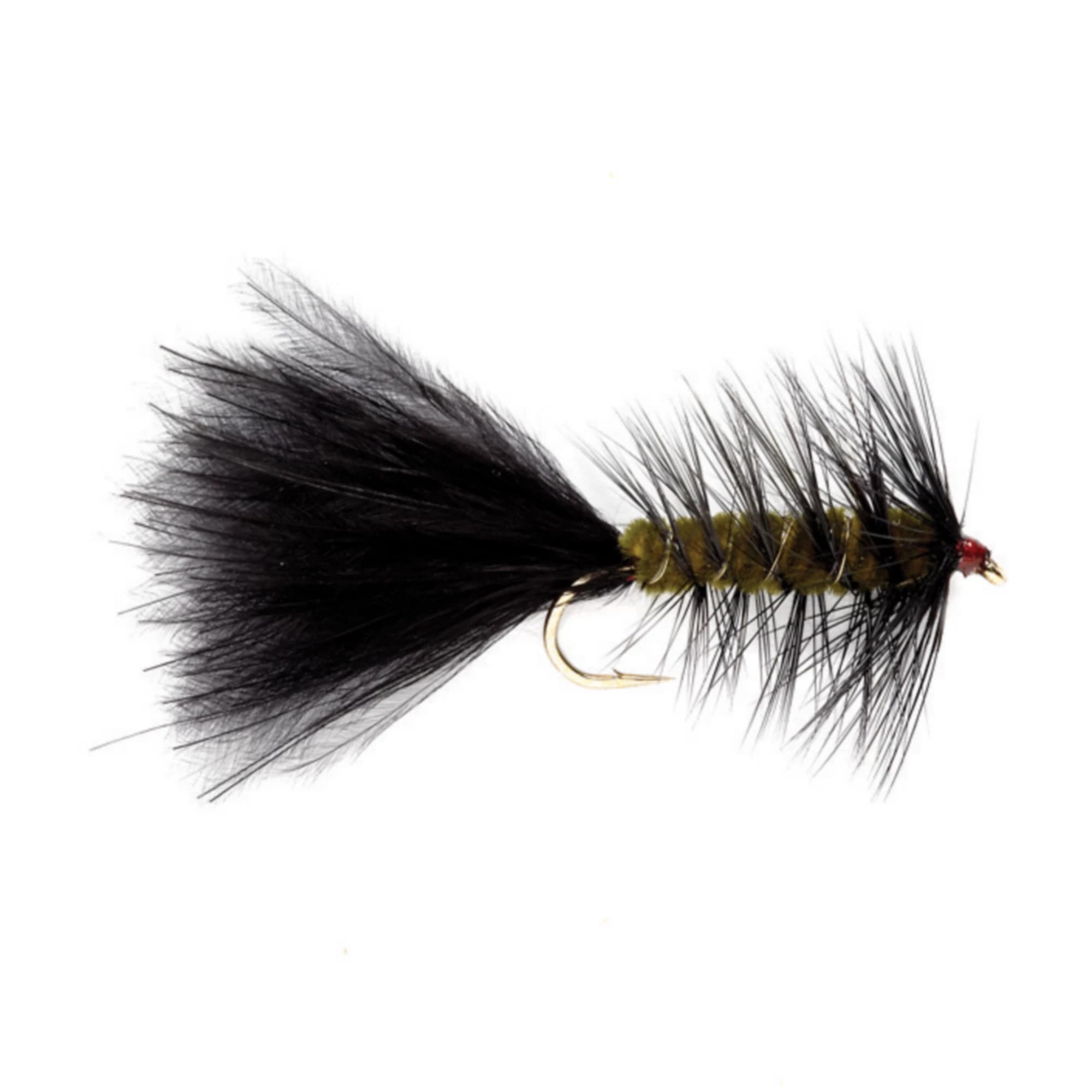
Black — The silhouette pattern. In low light, stained water, or deep runs, the silhouette matters more than the color. Black reads well against any background.
White belly — Many tiers add a lighter belly to their sculpin patterns (white rabbit strip underneath, cream dubbing on the belly). Real sculpins have pale undersides, and the contrast between dark back and light belly adds depth to the imitation.
Video Tutorials
Charlie Craven's Sculpzilla: Charlie Craven: Sculpzilla Fly Tying Instructions — The Sculpzilla's creator walks through the articulated pattern. Excellent instruction on conehead mounting and rabbit strip wing.
Kelly Galloup's Zoo Cougar: Charlie Craven: Zoo Cougar Fly Tying Instructions — Craven ties Galloup's signature sculpin pattern. Key technique: spinning the deer hair head.
Sculpin streamer overview: Trident Fly Fishing: Sculpin Streamer Fly Pattern Tutorial — A general sculpin tutorial covering materials and techniques.
How Many to Carry
For a general streamer box: 3 olive Zoo Cougars (#4), 3 olive Sculpzillas (#4), 3 olive/tan Near Nuff Sculpins (#6), 3 black Muddlers (#6). That's 12 flies.
For dedicated streamer fishing (the Galloup approach): double everything, add 3 tan (#4) and 3 black (#4) of your preferred pattern. Carry multiple articulated patterns — the trailing hook means you lose flies to rocks and snags more often than with standard streamers.
The materials vary by pattern — deer hair, rabbit strip, coneheads, articulation shanks. Sculpin patterns are among the most complex flies in the box. They take 15-20 minutes each at the vise. But each one represents a chance at the biggest trout in the river, and that math works out in your favor every time.
Frequently Asked Questions
What is a sculpin streamer?
A sculpin streamer imitates sculpins — small bottom-dwelling baitfish that are the primary prey of large trout. Once a trout reaches 16-20 inches, sculpins become a major part of its diet. Sculpin patterns are designed to be fished deep and slow, bouncing along the bottom where real sculpins live.
What size sculpin pattern should I tie?
Size 4-6 is the standard for most trout streams. Use #2 for big water and trophy browns. The original Muddler Minnow runs #4-8. Modern articulated sculpin patterns like the Sculpzilla and Zoo Cougar fish on #2-4 shanks. Match your sculpin size to the baitfish in your home water.
What's the best sculpin pattern?
The Muddler Minnow is the original and still catches fish everywhere. The Zoo Cougar is the modern standard for articulated sculpin fishing. Kelly Galloup's Sculpzilla pushes the most water. For beginners, start with a cone-head Woolly Bugger in olive/brown — it reads as a sculpin without the deer-hair spinning.
How do you fish a sculpin streamer?
Low and slow. Sculpins dart in short bursts and freeze — they don't swim continuously. Cast upstream, let it sink, then strip with short, sharp jerks followed by pauses. The pause is when most strikes happen. Fish them on sink-tip or full-sink lines to keep the fly in the bottom third of the water column.
Is tying sculpin patterns difficult?
Intermediate to advanced. The classic Muddler Minnow requires spinning and trimming deer hair — a technique that takes practice. Modern patterns like the Sculpzilla use rabbit strip and conehead construction, which is easier. Articulated patterns add complexity with shanks and interlocking loops. Start with cone-head versions.
 ™
™