
Classic Steelhead Wet Flies: How to Tie the Green Butt Skunk, Purple Peril, and the Patterns That Built the Sport
Before intruders, before Skagit lines, before spey rods crossed the Pacific — there were hair-wing wet flies. The Green Butt Skunk, Purple Peril, and their kin built steelhead fly fishing from the ground up. Here's how to tie them, how to fish them, and why they still produce.

Modern steelhead fly fishing runs on intruders and Skagit lines — big flies, heavy tips, cold water. But the sport was built on something simpler: small, elegant wet flies swung on floating lines across summer and fall runs. The Green Butt Skunk, the Purple Peril, the Freight Train, Brad's Brat, the Fall Favorite — these are the patterns that taught generations of Pacific Northwest anglers how to read steelhead water, how to mend a swing, and how to feel the pull of a chrome-bright fish on a tight line.
These flies predate the modern intruder revolution by half a century. They were tied for gut leaders and bamboo rods, fished on silk lines and canvas waders, in an era when steelhead fly fishing was a regional obsession known only to a handful of Pacific Northwest anglers who haunted the rivers of Oregon, Washington, and British Columbia. The patterns they created — using bucktail, hackle, chenille, and tinsel in combinations that looked more like art than bait — are still fished today because they still work. Not as relics. Not as novelties. As first-choice flies for summer and fall steelhead on a swung fly.
The Hoh Bo Spey and its intruder cousins dominate winter steelhead fishing because winter fish are deep, cold, and lethargic — they need a large, slow fly delivered to their faces. But when water temperatures climb above 50°F and steelhead move into shallower lies, the classic wet flies come alive. A Purple Peril swung on a floating line through a summer tailout, skating slightly in the surface film — that's steelhead fly fishing at its purest. No sink tip. No 14-foot rod. Just a fly, a current, and a fish that decides to eat it.
The Green Butt Skunk
History
The original Skunk was one of the earliest Pacific Northwest steelhead patterns — a black-and-white fly that imitated nothing in particular but caught steelhead reliably on rivers from the Umpqua to the Skagit. In the 1950s, Dan Callaghan — a legendary Oregon steelheader who spent his life on the North Umpqua River — added a green chenille butt to the standard Skunk, creating the Green Butt Skunk. The green butt didn't imitate anything either. It just worked. The flash of chartreuse at the rear of the fly became a trigger point that steelhead keyed on, and the Green Butt Skunk became — and remains — arguably the most recognized steelhead fly in the world.
Recipe
| Component | Material |
|---|---|
| Hook | Steelhead wet fly, #2-8 (TMC 7999, Daiichi 2441) |
| Thread | Black 6/0 |
| Tail | Red hackle fibers |
| Butt | Fluorescent green chenille — 3-4 wraps |
| Body | Black chenille |
| Rib | Medium flat silver tinsel |
| Hackle | Black saddle or hen hackle — 2-3 wraps, swept back |
| Wing | White calf tail — sparse, extending to the tail |
How to Tie It
Step 1: Tie in red hackle fibers at the bend for the tail — about a shank length.
Step 2: Tie in green chenille at the bend and wrap 3-4 turns forward. This is the "green butt" — a small, bright accent, not the whole body.
Step 3: Tie in silver tinsel, then black chenille. Wrap the black chenille forward to behind the eye, leaving room for the hackle and wing. Counter-wrap the tinsel forward in open spirals.
Step 4: Tie in black hackle and take 2-3 wraps. Stroke the fibers rearward so they sweep back along the body.
Step 5: Tie in a sparse clump of white calf tail on top — tips extending to the end of the tail. Build a small, lacquered thread head.
When to Fish It
The Green Butt Skunk is the summer and fall fly — June through November on rivers where steelhead are holding in moderate flows and temperatures above 48°F. It's the first fly on in low-light conditions (dawn, dusk, overcast days) because the black body creates a strong silhouette against the sky and the green butt provides a flash of contrast. On the Olympic Peninsula, guides tie on a Green Butt Skunk for summer-run fish on the Sol Duc when water temps are warm enough for floating-line swinging.
The Purple Peril
History
Ken McLeod introduced purple to steelhead fly fishing entirely by accident. In the late 1930s, the Washington state Game Department biologist and passionate steelheader ordered claret Montreal hackles from M. Schwartz and Sons in New York. The supplier made a mistake and shipped purple hackle instead. McLeod, rather than sending them back, tied up some experimental flies with the purple material. They caught steelhead — a lot of steelhead — and the Purple Peril was born.
The color purple has held a special place in steelhead fly tying ever since. It's the last color to disappear at depth — visible to fish in conditions where red, orange, and green have already faded to gray. Whether steelhead "see" purple or simply react to a wavelength that persists longer in dark water is debatable. What's not debatable is that purple steelhead flies have been catching fish for 90 years.
Recipe
| Component | Material |
|---|---|
| Hook | Steelhead wet fly, #2-8 (TMC 7999, Daiichi 2441) |
| Thread | Black 6/0 |
| Tail | Purple hackle fibers |
| Body | Purple chenille or yarn |
| Rib | Fine flat silver tinsel |
| Hackle | Purple saddle or hen hackle — 2-3 wraps, swept back |
| Wing | Natural brown bucktail or red squirrel tail |
How to Tie It
Step 1: Tie in purple hackle fibers at the bend for the tail.
Step 2: Tie in silver tinsel, then purple chenille. Wrap chenille forward, counter-wrap tinsel.
Step 3: Tie in purple hackle and wrap 2-3 turns, sweeping the fibers back.
Step 4: Tie in a sparse wing of brown bucktail or red squirrel tail — the natural brown over the purple body creates a subtle, mottled silhouette. Build a lacquered head.
When to Fish It
The Purple Peril excels in clear water and low-light conditions — overcast days, dawn, dusk, and the dark canyon pools where sunlight never reaches the surface. It's the clear-water alternative to the Green Butt Skunk. Where the Skunk's high contrast (black and white) works in stained water, the Peril's monochrome purple reads as a subtle, natural presence in gin-clear flows. On the Deschutes and the Battenkill-like spring creeks of steelhead country, the Purple Peril is the thinking angler's fly.
Other Essential Classics
The Green Butt Skunk and Purple Peril are the anchors, but the classic steelhead wet fly tradition includes a roster of patterns that every serious steelheader should know:
Freight Train — A multi-colored attractor with a fluorescent orange butt, purple chenille body, and hackle in layers of purple, orange, and black. More complex to tie than the Skunk, but devastatingly effective on fresh-run fish that respond to bright colors.
Brad's Brat — Created by Brad Forsberg on the Eel River in the 1960s. Orange and red body, brown hackle, white wing with orange shoulders. A warm-color fly for summer steelhead that's especially effective on Northern California and Southern Oregon rivers.
Fall Favorite — A simple, sparse fly with a silver body, orange hackle, and dark wing. As the name suggests, it's the autumn specialist — effective when steelhead are moving upstream in cooling water and shorter days.
Skykomish Sunrise — One of the oldest Pacific Northwest steelhead patterns, tied with a red-and-yellow chenille body, red hackle, and white calf tail wing. A bright, aggressive fly for stained water and overcast skies.
How to Fish Classic Wet Flies — The Floating-Line Swing
Classic steelhead wet flies are fished on floating lines — no sink tips, no lead, no weight. This is the purest form of the swing: the fly rides in the upper water column, just below or in the surface film, swimming across the current with the natural movement of the hackle and wing.
The presentation. Cast across and slightly downstream at a 45-degree angle. Mend upstream immediately to prevent the belly of the line from dragging the fly too fast. The fly should swing broadside across the current at a speed that matches the water — slower in slow water, faster in riffles. The hackle fibers pulse, the wing breathes, and the fly traces an arc from the far bank to your feet.
The greased-line method. Developed by A.H.E. Wood on the River Dee in Scotland and adopted by Northwest steelheaders, the greased-line technique uses upstream mends to slow the fly's swing to an almost dead-drift pace. The fly swings so slowly that it barely moves relative to the current — just a gentle lateral progression across the run. This technique is devastating in low, clear water where steelhead are spooky and won't chase a fast-moving fly.
Waking and skating. In warm water (above 55°F), classic wet flies can be waked across the surface by using a riffle hitch — two half-hitches behind the fly's head that angle it so it rides broadside on the surface and pushes a V-wake. The Muddler Minnow is the classic waking fly, but a riffle-hitched Green Butt Skunk or Purple Peril creates a similar disturbance. Steelhead rising to a waking wet fly is the most dramatic take in the sport.
Timing. Classic wet flies fish best in water temperatures between 50-65°F — the range where steelhead are aggressive enough to move laterally for a fly but not so lethargic that they need a fly delivered to their faces. This means summer and early fall on most rivers. When temperatures drop below 48°F, switch to sink tips and intruders like the Hoh Bo Spey.
Where to Fish Them
-
Olympic Peninsula, WA — Summer steelhead on the Sol Duc (June-October) and late-season warm days on the Hoh and Bogachiel. The OP's summer runs are the classic wet fly's natural habitat.
-
The Lower Deschutes, Oregon — The Deschutes' consistent summer steelhead run (July-November) is classic wet fly water. Warm canyon air, clear water, and aggressive fish that come to the surface make the Deschutes the best floating-line steelhead river in the West.
-
Pere Marquette River, Michigan — Great Lakes steelhead eat classic wet flies swung on floating lines during fall and spring runs. The Purple Peril in #6 is a Pere Marquette staple.
-
North Umpqua, Oregon — The Green Butt Skunk's home water. The North Umpqua's legendary Camp Water is classic wet fly water — long, even-paced runs over bedrock that swing a fly perfectly.
-
British Columbia — The Dean, the Bulkley, the Kispiox — BC's legendary steelhead rivers are the spiritual home of the classic wet fly tradition.
How to Tie Them — Video Tutorials
Green Butt Skunk: Beginner's Classic Steelhead — Green Butt Skunk — An excellent beginner tutorial that covers all the basics of the hair-wing wet fly.
Green Butt Skunk Spey: Green Butt Skunk Spey tutorial — The modern spey version tied on a tube or shank for two-handed rods.
Purple Peril: Tie a Purple Peril and Catch a Steelhead — Greg ties the fly on the river and hooks steelhead on it that evening.
Tips From the Vise
Sparse is the tradition. Classic steelhead wet flies are not bushy, overdressed patterns. They're sparse, elegant, and balanced. The wing should be a thin clump of calf tail or bucktail — just enough to create a silhouette. The hackle should be 2-3 wraps of soft material, swept back so it breathes in the current. Overdressing kills the movement that makes these flies work.
Calf tail, not bucktail. For the Green Butt Skunk's wing, calf tail is the traditional material — finer and more translucent than bucktail, with a natural sheen that looks alive in the water. Bucktail is stiffer and creates a more opaque wing.
Lacquer the head. A clean, glossy head is the mark of a well-tied wet fly. Multiple coats of head cement or UV resin, built up and dried between coats, create the hard, shiny head that characterizes the classic tradition. It's not just cosmetic — the lacquered head protects the thread wraps from steelhead teeth and rock scrapes.
The green butt proportion. The green chenille butt on the Skunk should be about one-quarter of the body length — a small, bright accent at the rear. Too much green and the fly loses its Skunk identity. Too little and you lose the trigger point that makes it different from the plain Skunk.
Purple is purple. Don't substitute violet, plum, or magenta for the Purple Peril's body. True purple — the wavelength that persists longest at depth — is the color that 90 years of steelheading has validated. Buy real purple chenille and hackle.
Build Your Box
- Green Butt Skunk #4 and #6 (4 each) — low-light, stained water
- Purple Peril #4 and #6 (4 each) — clear water, overcast days
- Freight Train #4 (4) — fresh-run fish, bright attractor
- Skykomish Sunrise #6 (4) — stained water, high contrast
That's 24 flies — the complete classic steelhead wet fly box. These patterns tie in 5-7 minutes each with inexpensive materials. Combined with the Hoh Bo Spey for winter and a Muddler Minnow for skating, this box covers every steelhead situation from the Olympic Peninsula to the Deschutes to the Dean.
Frequently Asked Questions
Who invented the Green Butt Skunk?
Dan Callaghan modified the original Skunk pattern in the 1950s by adding a green chenille butt, creating the Green Butt Skunk on the North Umpqua River in Oregon. It became the most recognized steelhead fly in the world.
Why is the Purple Peril purple?
Ken McLeod ordered claret hackle but received purple by mistake in the late 1930s. He tied flies with the wrong material, they caught steelhead, and purple entered the steelhead color canon. Purple is the last color to disappear at depth — visible when other colors fade.
How do you fish classic steelhead wet flies?
On floating lines — no sink tips. Cast across and downstream, mend upstream, and let the current swing the fly broadside through the run. The fly rides in the upper water column. Best in water temps above 50°F — summer and fall steelhead.
When do you use classic wet flies vs intruders?
Classic wet flies for water above 50°F (summer/fall) on floating lines. Intruders like the Hoh Bo Spey for water below 48°F (winter) with sink tips. The transition zone (48-52°F) is where both approaches work — match the depth steelhead are holding at.
What is the greased-line technique?
A slow-swing method using upstream mends to present the wet fly at near dead-drift speed. Developed by A.H.E. Wood in Scotland and adopted by Northwest steelheaders. Devastating in low, clear water where steelhead won't chase fast-moving flies.
Related Articles
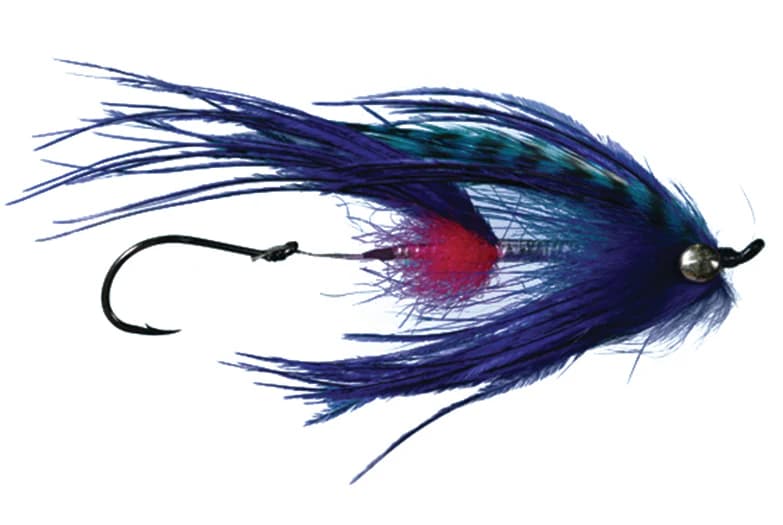
The Hoh Bo Spey: How to Tie the #1 Steelhead Fly on the Olympic Peninsula
Monday, September 22, 2025
Fly Fishing the Olympic Peninsula: Wild Steelhead in the Rainforest, the Rivers That Define the Sport, and Why They Need Us Now
Thursday, January 8, 2026
Fly Fishing the Lower Deschutes: Wild Redbands, Summer Steelhead, and the River That Makes You Get Out of the Boat
Monday, January 12, 2026
 ™
™