
Fly Fishing Dry Tortugas National Park: Giant Tarpon, Permit, and the Fort at the End of the World
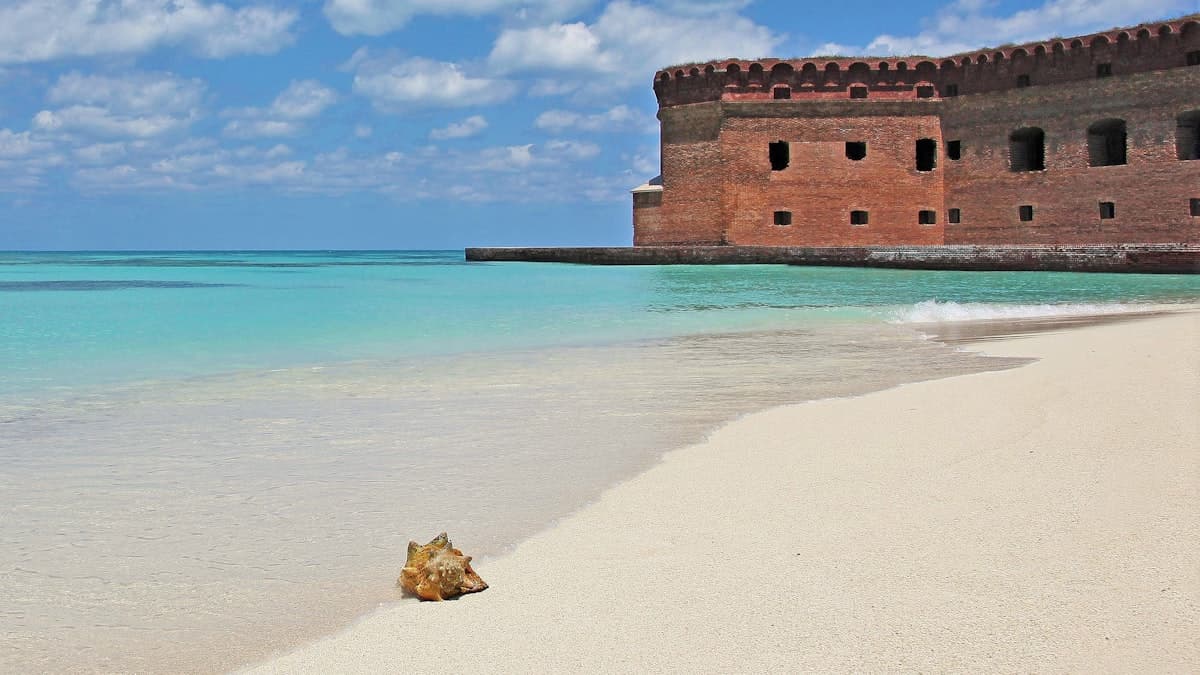
Seventy miles of open Gulf separate Key West from a hexagonal Civil War fortress built on a sand island the size of a few football fields. Migratory tarpon over a hundred pounds stage in the channels around Fort Jefferson each spring, permit tail on the surrounding flats, and barracuda slash through schools of baitfish against the fort walls. Getting there is the hard part. Fishing it is the reward.
There is nothing west of Key West except ocean. That is the first thing you learn if you look at a chart of the Florida Straits, and it stays true for about sixty-eight miles until a cluster of low sand and coral islands rises from the Gulf like an afterthought — seven small keys scattered across a shoal system where the Gulf of America meets the Straits of Florida, none of them more than a few feet above sea level, most of them barely qualifying as land at all. The Dry Tortugas. Named "Las Tortugas" by Ponce de Leon in 1513 for the sea turtles he found nesting there, and "Dry" later by sailors who wanted future mariners to know that there is no fresh water out here. None. Not a drop.
And rising from the largest of these islands — Garden Key, all sixteen acres of it — is Fort Jefferson, one of the most improbable structures in the Americas. A hexagonal masonry fortress built from over sixteen million bricks, with walls eight feet thick and forty-five feet high, surrounded by a moat, designed to hold 450 heavy cannon and a garrison of 1,500 soldiers. Construction began in 1846 and continued for thirty years. It was never finished. It was never attacked. During the Civil War it served as a Union military prison — its most famous inmate was Dr. Samuel Mudd, convicted of conspiring in the assassination of Abraham Lincoln. Today it sits on its tiny island, empty and magnificent, slowly crumbling in the salt air, surrounded by water so clear you can see the bottom at thirty feet, with tarpon the size of grown men rolling in the channels around the fort walls.
That last sentence is why you are reading this.
Getting There — The Expedition Begins in Key West
Dry Tortugas is the most difficult national park to reach in the lower forty-eight states. There are no bridges, no causeways, no roads. You cannot drive. You cannot walk. You have two options from Key West, and both of them cost real money.
The Yankee Freedom Ferry departs the Key West Historic Seaport every morning at 8:00 AM and makes the 70-mile run in roughly two and a half hours. The catamaran carries up to 150 passengers and returns the same afternoon, giving you approximately four and a half hours on Garden Key. Round trip runs about $220 per person. The ferry also transports the maximum ten campers per trip to the primitive campground on Garden Key. Reservations fill months in advance, especially for camping spots during spring tarpon season. If you are serious about fishing the Tortugas, camping is the play — those four and a half ferry hours evaporate fast if you are trying to explore the fort and fish.
Seaplane service flies from Key West International Airport and touches down in the harbor at Garden Key in about forty minutes. Half-day and full-day trips are available. The seaplane is faster, gives you an aerial view of the reef system that you will never forget, and costs more — roughly $350-650 depending on the trip. It also lands at the seaplane beach, which is one of the few shore-fishing spots on the island.
Private boat is the third option and the one that serious anglers choose. Charter boats from Key West run overnight Tortugas trips — typically two to three days — that put you on the water at dawn and dusk when the fishing peaks. The crossing takes four to six hours depending on the vessel and conditions. This is open Gulf water. Seas can build fast. Weather windows matter. If you are running your own boat, you need offshore experience, proper safety equipment, and a healthy respect for what seventy miles of open water can do to a schedule.
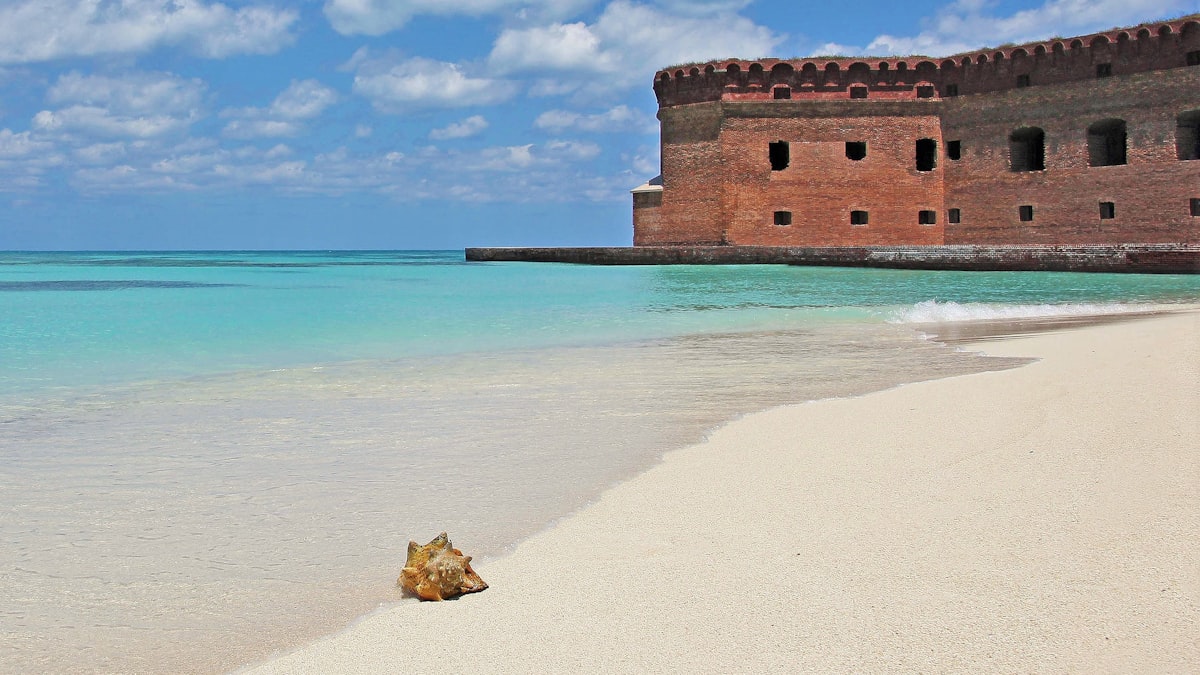
No matter how you arrive, you are now standing on a fourteen-acre island made of sand and coral rubble, surrounded by the clearest water in the continental United States, with a nineteenth-century fortress looming behind you and nothing between you and the Yucatan Peninsula except 300 miles of Gulf. The remoteness is not an inconvenience. It is the entire point.
The Tarpon — Spring Migration at the Edge of the Map
The tarpon migration that passes through the Dry Tortugas each spring is one of the great spectacles in saltwater fly fishing, and one of the least accessible. Here is what happens: beginning in late March and building through April, May, and into June, schools of Atlantic tarpon — fish ranging from sixty to well over two hundred pounds — move through the waters surrounding the Tortugas on their annual migration route. They stage in the deeper channels between the keys, roll along the edges of the shoals, and cruise the cuts and passes where tidal flow concentrates baitfish. The tarpon do not stay. They are passing through, heading northeast toward the Marquesas and the Florida Keys backcountry, and then fanning out along the Gulf coast toward Homosassa, Boca Grande, and points north. But while they are here — while they are staging in the channels and holding along the edges of the fort — you are looking at some of the biggest tarpon aggregations on the planet in water so clear that you can see the fish from fifty yards.
The challenge is presenting a fly. The water clarity that makes the Tortugas magical also makes the fish spooky. A shadow on the water, a sloppy cast, a boat positioned too close to the travel lane — any of these will push a school of tarpon out of casting range. The wind, which blows almost constantly out here, complicates the casting. And you need to reach fish at distance — forty-foot casts are minimum, sixty-foot casts are common, and the ability to put a fly on a dime at seventy feet in a crosswind separates the anglers who hook tarpon at the Tortugas from the ones who watch them swim by.
The Tarpon Fly Box
The fly selection for Tortugas tarpon follows the same principles as the rest of the Keys tarpon fishery, with one important caveat: the water is exceptionally clear, so fly profile and presentation matter more than they do in the stained backcountry water of Everglades National Park or Florida Bay. Dark flies against the bright sand bottom create a strong silhouette, and Keys guides have known this for decades.
The Cockroach — Norman Duncan's legendary creation — is the foundation tarpon fly. Brown-and-grizzly hackle over a body of natural deer hair, sparse and realistic. Duncan tied it because tarpon were ignoring the bright orange and yellow patterns everyone else was throwing, and the subdued coloring worked. It still works. Sizes 1/0-3/0, tied sparse, presented on a slow strip ahead of cruising fish.
The Black Death — Stu Apte's contribution to the tarpon canon. Black and purple materials over a dark body, deadly in low light conditions and during the early morning and late afternoon windows when the largest fish move. At the Tortugas, the Black Death fished at dawn along the fort walls — where tarpon cruise the structure looking for baitfish holding in the shadow of the moat wall — is as good as tarpon fishing gets.
The Apte Too — also from Stu Apte, a cross between the Cockroach and a Seaducer. The hybrid profile pushes water and breathes in the current, and the color combination works in the full spectrum of Tortugas light conditions.
Tarpon Toads in black/purple and black/red — Enrico Puglisi's foam-and-flash creation. The flat profile lands softly, which matters when fish are spooky in the clear water. The Purple Demon, a variation in deep purple and black, is a Tortugas standard.
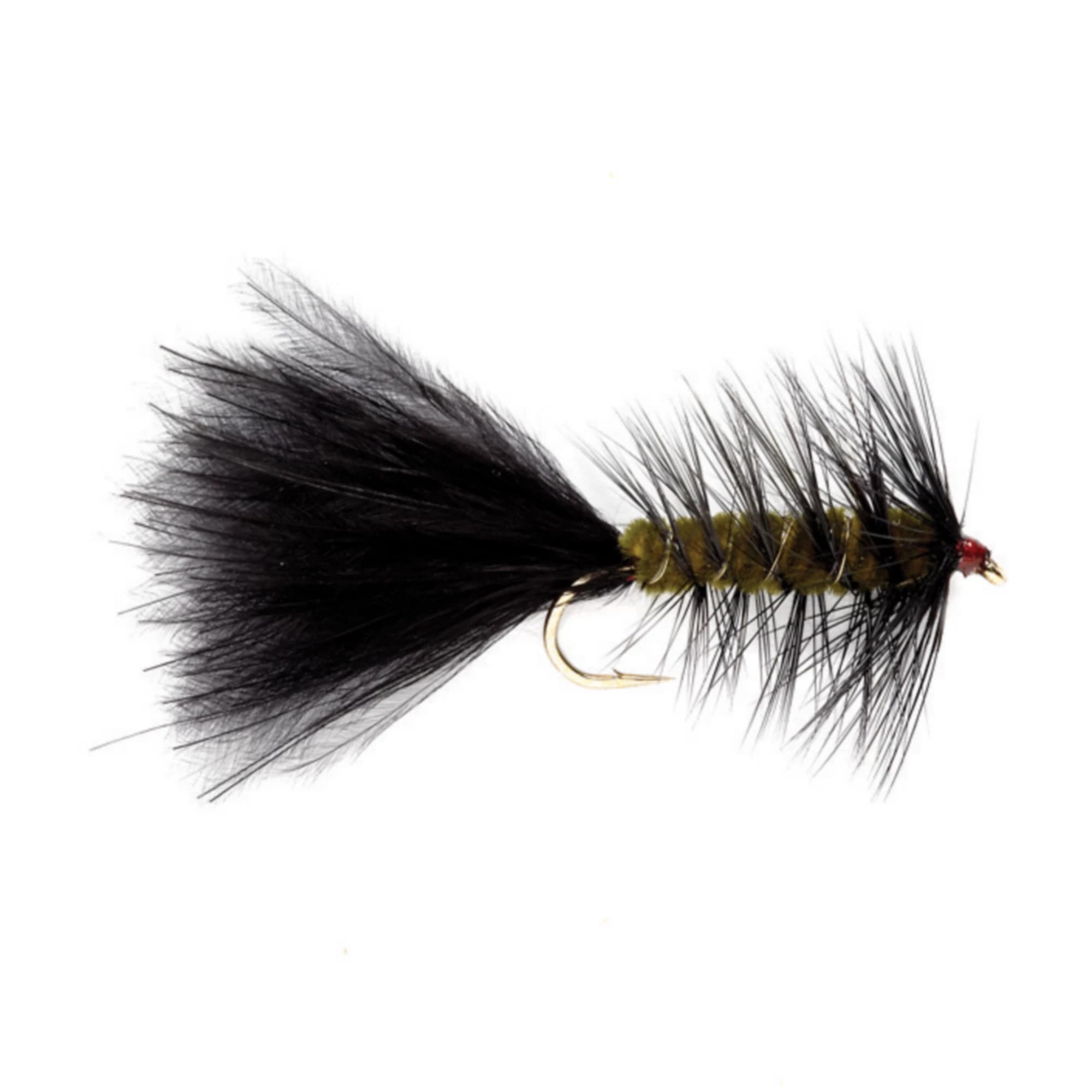
EP Tarpon Streamers in dark colors — the synthetic fibers shed water on the backcast and maintain their profile cast after cast, which matters when you are throwing into the wind all day. A large black Woolly Bugger in size 1/0 with a weighted head — not the classic trout pattern, but the saltwater adaptation — can work as a last-resort tarpon fly when the fish are feeding subsurface and ignoring traditional tarpon patterns. It is not the first choice, but it has caught tarpon in the Keys for decades.
You are fishing these on a 12-weight rod with a floating line and a twelve-foot leader tapered to 60-80 pound fluorocarbon, with a 60-100 pound hard mono bite tippet. The rod needs backbone to fight fish in current and wind. The reel needs a sealed drag and at least 200 yards of backing. A hooked tarpon at the Tortugas will run toward open water, and there is a lot of open water for it to run into.
Permit on the Flats — The Other Grand Slam Species
The shallow flats surrounding Garden Key, Bush Key, and Long Key hold permit. These are not the concentrated permit flats of Biscayne National Park or the Marquesas, but the fish are here, and the setting — tailing permit in gin-clear water with Fort Jefferson rising in the background — is something you will not find anywhere else on earth.
Permit at the Tortugas behave the way permit behave everywhere: they appear on the flats during incoming tides, nose down in the turtle grass and coral rubble digging for crabs, their scythe-shaped tails waving above the surface. You see the tail, you make the cast, the crab fly sinks, the permit either eats or it doesn't. More often it doesn't. That is permit fishing.
The Merkin Crab in tan or olive, weighted with lead eyes to sink quickly on the shallow flats. Sizes 2-4. The original Del Brown pattern that has caught more permit on fly than any other fly in history.
The Raghead Crab — EP fibers over a compact body with rubber legs. Lighter than the Merkin, better for the skinny water around the Tortugas keys where depth might be twelve inches and you need the fly to land softly and sink slowly.
EP Permit Crab — Enrico Puglisi's version of the weighted crab. The synthetic body sheds water fast on the backcast and sinks consistently. Tan, olive, brown — match the bottom color.
You are fishing permit on a 9- or 10-weight rod with a long leader — twelve to fourteen feet tapered to 12-pound fluorocarbon. The lighter tippet is not optional. Permit in clear water over white sand are the most leader-shy fish in the ocean. Circle hooks are required by park regulations, which actually works in your favor — circle hooks improve hookup rates on permit because the fish turns away with the fly and the hook finds the corner of the mouth.
The Fort Walls — Barracuda, Jacks, Mutton Snapper
The moat wall and the seawalls surrounding Fort Jefferson create a vertical reef structure that holds a resident population of fish year-round. The deep water on the outside of the walls drops quickly, creating an edge where predators patrol and baitfish school. This is where the incidental species — the ones that are not tarpon or permit but that make every cast interesting — live.
Barracuda are everywhere around the fort. Singles and small packs cruise the edges of the walls, hanging in the current, ambushing anything that moves too fast or flashes too bright. A great barracuda at the Tortugas can push five feet and forty pounds. They are not subtle fish. They hit like a truck and run like a bonefish, and they will straighten a hook or cut a leader if you are not prepared.
The flies for barracuda are long, slim, and flashy. Needlefish patterns — six to eight inches of synthetic fiber over a long-shank hook — trigger the chase instinct. Tube flies in chartreuse, white, or pink, stripped fast along the wall edges, draw explosive strikes. A long Lefty's Deceiver in white or chartreuse/white — the same fly that Lefty Kreh designed as a universal saltwater streamer — stripped in long, fast pulls, is the classic barracuda fly. Wire tippet is essential — barracuda teeth will sever forty-pound fluorocarbon without slowing down.
Crevalle jack and bar jack patrol the same edges. Crevalle jacks in the twenty-pound class are common and they fight with a dogged, circular power that will test a 10-weight rod. Bar jacks are smaller but travel in schools, and when you find a school feeding on baitfish against the wall, the action can be nonstop. Clouser Minnows in chartreuse/white — sizes 1/0-2/0, heavy lead eyes to sink fast — are the jack fly. Fast strips, aggressive retrieves. Jacks do not want a delicate presentation. They want speed and flash.
Saltwater topwater flies — poppers and gurglers — produce explosive surface strikes from jacks in the early morning. The sight of a fifteen-pound crevalle jack blowing up a foam popper against the brick wall of a Civil War fortress is not something you will experience on any other fishing trip.
Mutton snapper hold along the base of the fort walls and over the rocky rubble on the bottom of the moat. Mutton snapper at the Tortugas are serious fish — ten to fifteen pounds is common, and they fight hard for their size, using the structure to try to break you off. Small Clouser Minnows in white or pink — sizes 2-4, fished slowly along the bottom — work. Saltwater shrimp flies in tan or pink, drifted along the wall edge on a sinking tip, imitate the shrimp that mutton snapper eat off the structure. You are fishing 20-pound fluorocarbon tippet minimum — the wall is abrasive, the fish know the structure, and light tippet does not survive.
Yellowtail snapper are the smaller but more numerous cousin, holding higher in the water column and feeding more aggressively. Small Crazy Charlies or shrimp patterns in sizes 4-6, drifted in the current near the surface, pick up yellowtail when other species are not cooperating. They are excellent table fare — if you are camping, a few yellowtail on a camp grill on Garden Key at sunset is one of the great meals in the national park system.
Bonito and false albacore occasionally push through the channels chasing baitfish, particularly in spring and fall. When they are present, a Clouser Minnow or small Lefty's Deceiver in white, stripped fast through the school, draws immediate strikes. These are powerful fish for their size — a five-pound bonito on a 10-weight will empty your reel in the first run. Tie them sparse and small — sizes 2-4.
Sharks — blacktip, lemon, nurse, and the occasional bull shark — cruise the flats and the channels. They are not a fly-rod target in any practical sense, but they are present, and a hooked tarpon or permit will sometimes attract shark attention. Be aware. If a shark is following your hooked fish, break it off rather than risk a shark encounter at the end of a fight.
Where You Can Fish — Regulations and Closed Areas
Dry Tortugas has one of the more complex fishing regulation maps in the national park system, and understanding it before you arrive is not optional — it is the difference between fishing legally and receiving a federal citation.
The Research Natural Area (RNA) covers 46 square statute miles in the northwestern portion of the park. It is a complete no-take, no-anchor ecological preserve. No fishing. No anchoring. No exceptions. Vessels transiting the RNA must use designated mooring buoys. Large yellow buoys mark the RNA boundary. The RNA includes Loggerhead Key and the surrounding waters — you can visit Loggerhead Key to see the lighthouse, but you cannot fish there.
The one-mile Historic Use Area around Garden Key is where most park fishing occurs. Large yellow buoys mark this boundary as well. Within this area, fishing from a boat is permitted, and the shoreline fishing spots are defined by NPS regulation:
- The seaplane beach, east of the main dock (when the seaplane is not present)
- The main dock (when the Yankee Freedom ferry is not docked)
- The two westernmost finger piers (when not occupied by park vessels)
- Either dinghy beach, provided you are at least fifty feet from the historic coal dock ruins
- The land bridge between Garden Key and Bush Key (when Bush Key is open — it closes during bird nesting season, typically February through September)
Circle hooks only. J-hooks are prohibited in all park waters. This applies to all hook-and-line fishing, including fly fishing. Tie or buy your tarpon, permit, and snapper flies on circle hooks.
Florida Saltwater Fishing License required for all anglers 16 and older. Florida residents 65 and older are exempt. Tarpon over 75 inches require an additional tarpon tag. All Florida Fish and Wildlife Commission size and bag limits apply.
Spearfishing, lobstering, and net fishing are prohibited. Bait collection by cast net or dip net is limited to five gallons per vessel per day.
Bush Key, Hospital Key, and Long Key are closed to public access for wildlife protection (nesting seabirds and sea turtles). The Garden Key moat is closed to fishing. The coral and shark special protection zones are closed.
The Gear — Saltwater Expedition Loadout
This is not a trip where you can run to a fly shop if you forgot something. The nearest tackle store is seventy miles behind you in Key West. Pack everything you need, double-check your leader and tippet supply, and bring backup.
Rods
Tarpon: 12-weight, 9 feet. Non-negotiable. You need the power to cast big flies into the wind, set hooks in bony mouths, and fight fish that run into open ocean. A fast-action rod with a fighting butt. Some Tortugas guides carry a 10-weight as a backup for smaller juvenile tarpon, but the migratory fish demand a 12.
Permit: 9 or 10-weight, 9 feet. The 10-weight gives you insurance against wind — and the Tortugas is always windy — while still being light enough to present a crab fly with finesse. A 9-weight is ideal in lighter wind.
Barracuda and jacks: 10-weight. The same rod you use for permit can double for the fort-wall predators. Swap to a wire-tipped leader for barracuda, a heavy fluorocarbon leader for jacks.
Snapper and general flats: 8-weight, 9 feet. For the smaller species — yellowtail, mutton snapper, smaller jacks, the occasional bonefish that shows on the flats. Also serviceable as a permit rod in calm conditions.
Lines and Leaders
Floating lines for everything except deep structure fishing. Tarpon, permit, and barracuda on the flats are all sight-fishing games with floating lines and long leaders.
Intermediate or sinking-tip for working the fort walls. Getting a Clouser Minnow or shrimp pattern along the base of the wall requires depth. A Woolly Bugger or weighted Crazy Charlie fished on a 200-grain sinking tip or an intermediate full-sink puts you in the zone.
Leaders: 12-foot tarpon leaders tapered to 60-80 lb fluorocarbon with 80-100 lb hard mono bite tippet. 12-14 foot permit leaders to 12 lb fluorocarbon. 9-foot jack/snapper leaders to 20 lb fluorocarbon. Wire bite tippet (single-strand #3-5) for barracuda — no exceptions.
The Essentials You Cannot Forget
Sunscreen and sun protection. There is no shade on Garden Key outside the fort. The campground has no trees. The sun reflects off white sand and gin-clear water from every direction. A buff, long sleeves, a wide-brimmed hat, and reef-safe sunscreen rated SPF 50+ are survival gear, not luxuries.
Water. There is no fresh water at Dry Tortugas. The campground has composting toilets but no water, no showers, no sinks. Bring every drop you will drink, cook with, or wash with. For a camping trip, plan a gallon per person per day minimum.
Stripping guards and fingerless sun gloves. You are going to strip a lot of fly line in the heat. Bare fingers on salt-wet fly line over a full day of casting will shred your stripping hand.
Camping Garden Key — The Overnight Advantage
The Garden Key Campground has eight individual sites, each accommodating up to six people (three two-person tents). Sites are $15 per night, first-come first-served, but transport is the bottleneck — the Yankee Freedom takes a maximum of ten campers per trip. Reservations are recommended far in advance for spring tarpon season.
The campground sits south of Fort Jefferson on the open beach. Sites have picnic tables and grills. Composting toilets are the only facility. There is no store, no food service, no electricity, no water. You bring everything in and pack everything out.
The camping advantage for fishing is enormous. Day-trip visitors get four and a half hours on the island. Campers get the dawn and dusk windows — the hours when tarpon roll through the channels in the low-angle light, when permit appear on the flats with the incoming tide, when barracuda hunt the wall edges in the shadows. The two hours after sunrise and the two hours before sunset are the best fishing of the day, and they belong exclusively to the campers.
Camping at the Tortugas during tarpon season — April through June — is one of the most extraordinary outdoor experiences in the national park system. You are sleeping on a beach at the edge of the continental shelf, seventy miles from the nearest paved road, with the Milky Way overhead (there is virtually zero light pollution) and the sound of tarpon rolling in the channel fifty yards from your tent. The frigate birds circle Fort Jefferson at dusk. Loggerhead sea turtles nest on the beaches. The nurse sharks cruise the shallows at night. It is wild in a way that very few places in the lower forty-eight manage to be.
The Seasonal Calendar — When the Fish Are Here
Spring (March-June) — Tarpon Season and the Main Event
This is why you come to the Tortugas with a fly rod. The tarpon migration builds through March, peaks in April and May, and tapers in June. Water temperatures climb through the mid-70s into the 80s. The tarpon stage in the channels between the keys, often in large schools visible from the fort walls. Permit appear on the flats with increasing frequency as water warms. Mutton snapper spawn in the spring, concentrating around structure — the fort walls become particularly productive.
April and May are the peak months. If you can get a camping reservation for a three-night stay in late April or early May, you have positioned yourself for the best saltwater fly fishing in any national park on this list.
Summer (July-September) — Heat, Storms, and Resident Fish
The tarpon migration has mostly passed, though stragglers and juvenile tarpon remain through September. Summer brings afternoon thunderstorms that can blow up fast — the Tortugas has no shelter beyond the fort itself, and lightning on an exposed sand island is a serious hazard. Permit, barracuda, jacks, and snapper are resident year-round and fish well through summer, particularly in the early morning before the heat sets in. Saltwater shrimp flies fished along the fort walls produce mutton snapper through the hottest months. Hurricane season runs June through November, and the Tortugas is fully exposed — the park closes during hurricane threats.
Fall (October-December) — The Quiet Season
Visitor numbers drop. The weather cools. The tarpon are gone, but permit continue to work the flats through November. Barracuda and jacks are aggressive in the cooling water — topwater flies produce well through November. Mutton snapper feed heavily. The fall light — lower angle, softer quality — makes the water around the fort even more photogenic than usual. Fall is underrated at the Tortugas for anglers willing to fish the resident species rather than chase the tarpon migration.
Winter (January-March) — Cold Fronts and Solitude
Winter cold fronts push through the Keys and reach the Tortugas, dropping water temperatures and slowing the fishing. Permit become scarce. Barracuda and jacks slow down. Snapper remain active around the structure — a Crazy Charlie or small Clouser drifted along the walls still produces. The compensation is solitude — you may have the campground to yourself. The crossing from Key West can be rough in winter, with north winds building seas in the Gulf. Check weather windows carefully. Do not attempt the crossing in a small boat during a cold front.
How the Tortugas Fits — The Other Florida National Parks
Dry Tortugas is one of three Florida national parks with legitimate saltwater fly fishing, and each occupies its own niche.
Everglades National Park is the backcountry — a vast mangrove labyrinth where you pole a skiff through stained water looking for snook, redfish, tarpon, and trout in the creeks and bays. The Everglades is accessible by car (Flamingo, Chokoloskee), the water is shallow and often murky, and the fishing is technical but sheltered. It is the opposite of exposed.
Biscayne National Park is the reef — a subtropical underwater wilderness that happens to sit next to Miami. The flats hold bonefish and permit, the reef edges hold snapper and grouper, and the access is easy compared to either the Everglades or the Tortugas.
Dry Tortugas is the frontier. It has the clearest water, the most dramatic structure (a sixteen-million-brick fortress), the biggest tarpon (migratory giants versus Everglades juveniles), and the most difficult access of any national park fishery in the system. It is closer in spirit to Channel Islands National Park — another remote, boat-access-only park where the fishing rewards the expedition — than it is to its Florida neighbors. The Texas coast redfish flats share the sight-fishing DNA, and the tarpon connection runs directly to the Florida Keys saltwater fishery that the Tortugas feeds into each spring, but nowhere else in the national park system do you cast to hundred-pound fish against the backdrop of a crumbling Civil War fortress on an island at the edge of the known world.
The Hawaii bonefish and trevally fishery is the only national park-adjacent saltwater destination that approaches the Tortugas in terms of remoteness and species quality, but Hawaii has airports and hotels on every island. The Tortugas has eight campsites and a composting toilet. Even the freshwater national park giants — Yellowstone with its cutthroat trout, Glacier with its bull trout — do not match the Tortugas for sheer size of the quarry or the logistical commitment required to reach the water.
Bring a 12-weight. Bring a box of Cockroaches and Black Deaths and Merkin crabs. Book the ferry or charter a boat or fly a seaplane to a sand island seventy miles from anywhere. Stand on the wall of a fortress that was old before your grandparents were born, and watch tarpon the size of your leg roll through water the color of liquid glass. Then make the cast.
Top Fishing Guides in Key West
Migratory tarpon in the 80- to 200-pound class stage around Fort Jefferson each spring, rolling through water the color of liquid glass while permit tail on the surrounding flats. The Dry Tortugas is expedition fly fishing at its most committed — seventy miles from Key West, no hotels, and the biggest fish in the national park system.
Cora Beth Fishing
Key West, FL, US
5.0 (788 reviews)
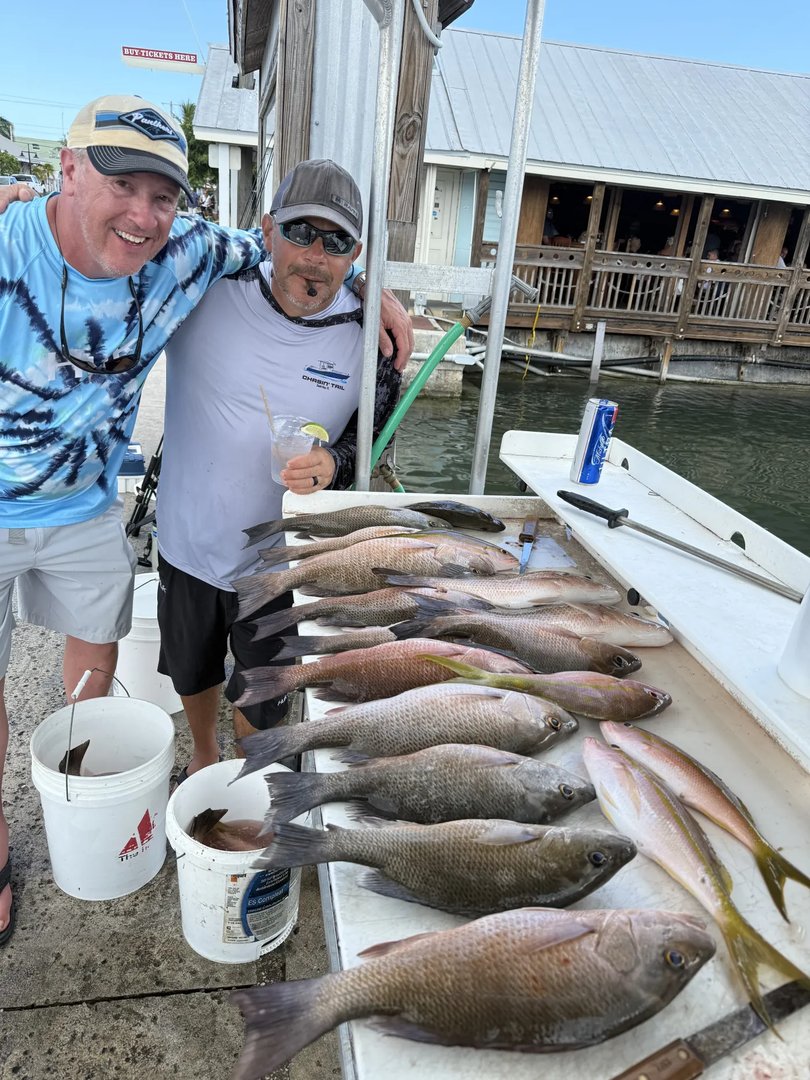
Cora Beth Fishing Cora Beth Fishing operates the 60-foot Cora Beth II out of Key West, Florida, where anglers of all skill levels can enjoy productive party boat fishing in a thoughtfully managed setting. By limiting public trips to 35 anglers, the operation ensures spacious decks, minimal tangles, and plenty of room to fish comfortably—a marked difference from typical crowded excursions. Targeting premium inshore and nearshore species including yellowtail, mangrove, lane, and mutton snapper alongside red, black, and gag grouper, trips deliver consistent action throughout the year. The combination of modern equipment, safety-focused operations, and genuine attention to customer satisfaction makes Cora Beth Fishing a trusted choice for creating memorable fishing experiences in the Florida Keys.
Good Times Key West
Key West, FL, US
5.0 (356 reviews)
Good Times Key West specializes in customizable private fishing charters and snorkeling adventures throughout the stunning waters of the Florida Keys. Their experienced captains design trips tailored to each group's interests and skill level, whether guests are seeking a half-day excursion or an extended multi-day adventure. The operation offers diverse experiences, from targeted fishing and dolphin watching to island exploration and snorkeling in the pristine Dry Tortugas. Good Times Key West maintains well-equipped vessels outfitted with premium gear and prioritizes both safety and service excellence. With flexibility to accommodate various group sizes and preferences, they create memorable, personalized experiences on the water.
Island To Island Charters
Key West, FL, US
5.0 (181 reviews)
Island To Island Charters specializes in personalized fishing and wildlife experiences throughout the stunning Florida Keys. Based in Key West, the operation combines expert guidance with a deep commitment to eco-friendly practices, ensuring guests enjoy pristine waters while respecting the delicate marine environment. Their trained naturalists lead small groups to secluded sandbars and prime fishing grounds, where both novice and seasoned anglers can pursue their passion. The charter offers diverse trip styles to suit every preference, from focused fishing expeditions to dolphin watching and sunset cruises. Whether guests are seeking an intimate day on the water or a chance to explore the Keys' natural wonders, Island To Island Charters delivers tailored adventures that showcase the region's incredible wildlife and coastal beauty.
Shadow Caster
Key West, FL, US
5.0 (166 reviews)
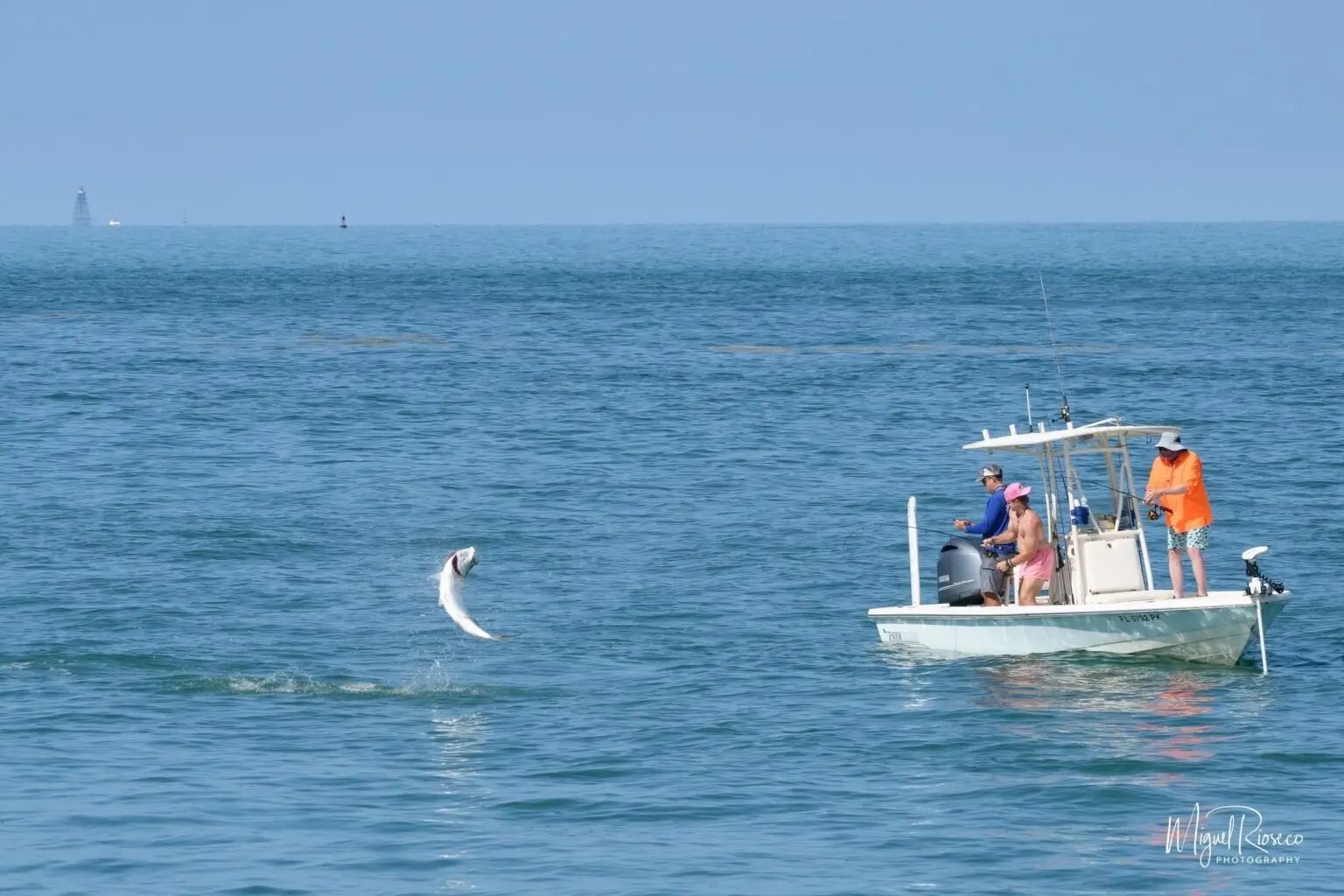
Shadow Caster brings two decades of expertise to light tackle fishing in Key West's pristine inshore and flats waters. Their specialized guides pursue tarpon, permit, sharks, and barracuda with a refined approach suited to both seasoned anglers and newcomers. Whether exploring shallow flats or deeper channels, they match their strategy to daily conditions and individual skill levels. The operation runs a fully-rigged Pathfinder 22, equipped for comfort and performance across varied water conditions. Shadow Caster offers flexible trip lengths—from half-day excursions to full-day adventures—allowing anglers to customize their experience around their schedule and goals. With genuine passion for Key West's fishery and a commitment to personalized service, they create memorable days on the water.
Cheap Fishing Key West
Key West, FL, US
5.0 (152 reviews)
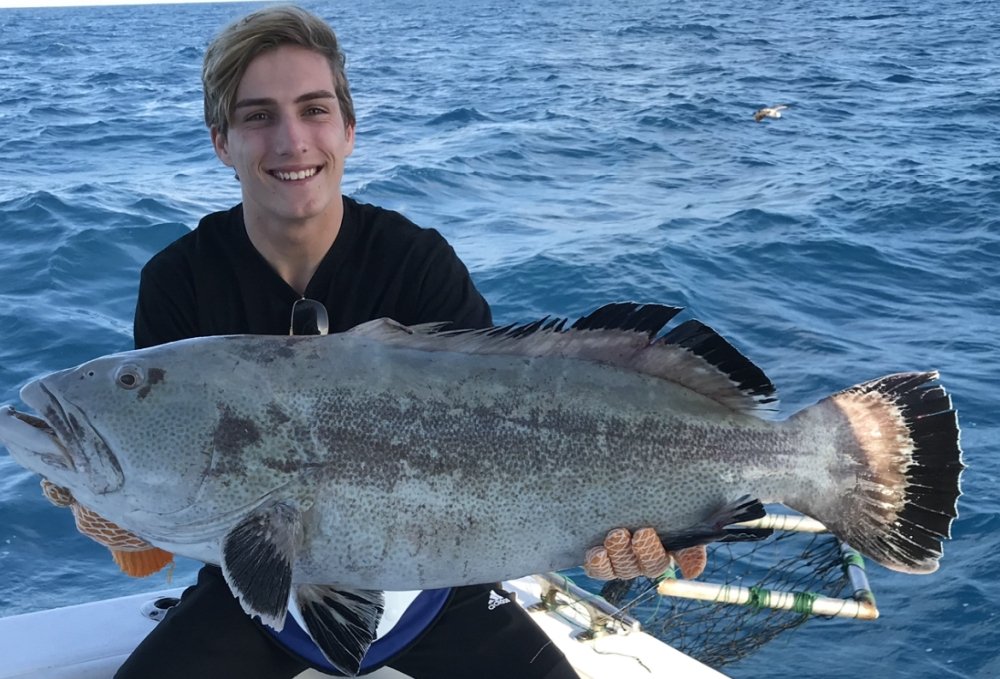
Cheap Fishing Key West brings over 35 years of deep sea fishing expertise to the crystal waters off Florida's southernmost coast. Captain Manny specializes in pursuing an impressive variety of species—including Sailfish, Mahi-Mahi, Tuna, Kingfish, Snapper, Grouper, and Sharks—offering anglers diverse opportunities to test their skills and experience genuine offshore adventure. The operation is built on straightforward service and honest pricing, with no hidden fees and flexible trip lengths that work for both families and solo anglers. Whether you're casting a line for the first time or you're a seasoned fisherman, Cheap Fishing Key West delivers quality charters designed to create lasting memories on the open water.

Live Action Sport Fishing
Key West, FL, US
5.0 (96 reviews)
Live Action Sport Fishing, led by Captain Carter, specializes in inshore charters throughout the pristine waters of Key West, Florida. With extensive expertise in pursuing Tarpon, Permit, and Cobia, this service welcomes anglers of all skill levels to experience shallow-water fishing at its finest. The operation utilizes a 24' Pathfinder bay boat, providing a stable and comfortable platform for a full day on the water. Captain Carter crafts memorable adventures for families and friends seeking to combine world-class fishing with the breathtaking natural beauty of the Florida Keys. Whether targeting trophy species or enjoying quality time together, guests discover why these waters remain a premier destination for serious anglers and casual fishermen alike.
Recommended Gear
Orvis Clearwater Fly Rod Outfit 8wt
Mid-tier — bonefish, redfish, baby tarpon ($400)
Sage Salt HD 8wt
Premium — purpose-built for saltwater flats ($950)
Redington Vice Combo 8wt
Entry level — starter saltwater outfit ($250)
Scientific Anglers Amplitude Bonefish Line
Hot-weather flats line ($50)
Clouser Minnow Chartreuse/White
Most versatile saltwater fly ($3)
Crazy Charlie White Size 6
The classic bonefish fly ($3)
Frequently Asked Questions
Can you fly fish at Dry Tortugas National Park?
Yes. Fly fishing is permitted within the one-mile Historic Use Area around Garden Key and outside the Research Natural Area. Shore fishing is allowed from the seaplane beach, the main dock (when the ferry is not present), the two westernmost finger piers, and the dinghy beaches. Boat fishing is permitted within the Historic Use Area. Circle hooks are required — J-hooks are prohibited. A Florida Saltwater Fishing License is required for anglers 16 and older.
What fish species can you catch at Dry Tortugas National Park?
The primary fly-rod targets are migratory tarpon (80-200+ pounds, peak season April-June), permit on the shallow flats, great barracuda along the fort walls, crevalle and bar jacks, mutton snapper, and yellowtail snapper. Sharks (blacktip, lemon, nurse, bull) are present but not targeted on fly. The tarpon migration that stages around the Tortugas each spring is one of the great spectacles in saltwater fly fishing.
How do you get to Dry Tortugas National Park for fishing?
Dry Tortugas is 70 miles west of Key West with no road access. The Yankee Freedom ferry departs Key West daily (about $220 round trip, 2.5 hours each way). Seaplane services offer 40-minute flights ($350-650). Private boats and charter boats from Key West make the 4-6 hour crossing. For serious fishing, camping on Garden Key (8 sites, $15/night, max 10 campers per ferry) or a multi-day charter provides the dawn and dusk fishing windows that day-trippers miss.
What flies work best for tarpon at Dry Tortugas?
Classic Keys tarpon patterns in dark colors dominate: the Cockroach, Black Death, Apte Too, Tarpon Toads in black/purple, Purple Demon, and EP Tarpon Streamers. Dark flies create strong silhouettes against the bright sand bottom in the ultra-clear Tortugas water. Fish them on a 12-weight rod with a floating line and 12-foot leader tapered to 60-80 pound fluorocarbon with 80-100 pound hard mono bite tippet. For permit, weighted crab patterns like the Merkin and Raghead Crab in sizes 2-4 on circle hooks.
Where is the Research Natural Area at Dry Tortugas and can you fish there?
The Research Natural Area (RNA) covers 46 square miles in the northwestern portion of Dry Tortugas National Park, including Loggerhead Key and surrounding waters. Fishing, anchoring, and all extractive activities are completely prohibited in the RNA. Large yellow buoys mark the boundary. Most fishing occurs in the one-mile Historic Use Area around Garden Key, which is excluded from the RNA. Vessels transiting the RNA must use designated mooring buoys.
Related Articles
Fly Fishing the Florida Keys: Tarpon, Permit, Bonefish, and the Flats That Invented Saltwater Fly Fishing
Friday, January 2, 2026
The Woolly Bugger: How to Tie the Fly That Catches Everything That Swims
Friday, April 17, 2026
Fly Fishing the Texas Coast: Sight-Casting to Redfish on the Flats, and Why It's the Best Saltwater Fly Fishing You've Never Tried
Monday, December 29, 2025