
Fly Fishing Shenandoah National Park: Native Brook Trout, Mountain Streams, and the Best Small-Water Fishing on the East Coast
Shenandoah National Park holds over 70 streams with wild, unstocked trout — including native brook trout that have lived in these Appalachian headwaters since the last ice age. The fishing is intimate, the streams are small, and the native brookies are the jewels of Eastern fly fishing.
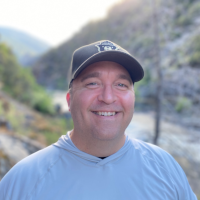
Shenandoah National Park is the antidote to everything Western about fly fishing. There are no wide rivers. No drift boats. No 60-foot casts across open water. Instead, there are 70+ mountain streams tumbling through hardwood forests, rhododendron tunnels, and mossy boulder fields — streams narrow enough to jump across, cold enough to numb your feet in July, and holding native brook trout that have lived in these Appalachian headwaters since the Pleistocene.
The fishing here is small. The streams are small. The fish are small — native brookies average 5-8 inches, with a 10-inch fish being a genuine prize. The rod is small (a 3-weight, 6.5-foot rod is the standard). The flies are small. And the experience is enormous. Stalking a 7-inch native brook trout through a tunnel of rhododendron, crouching behind a boulder, delivering a #16 Elk Hair Caddis to a plunge pool the size of a bathtub, and watching a wild fish — a fish whose ancestors survived the ice age in this same watershed — rise to eat it. That's Shenandoah.
If you've fished the Smokies, Shenandoah will feel familiar — both are Appalachian parks with native brook trout in mountain freestones. But Shenandoah is closer to the Eastern population centers (2 hours from Washington, D.C., 3 from Philadelphia), has better road access via Skyline Drive, and holds more streams per square mile than the Smokies. For the East Coast angler who wants to fish for wild native trout without a plane ticket, Shenandoah is the answer.
The Fish — Wild and Unstocked
Shenandoah National Park does not stock fish. Every trout in the park is wild — born in the stream, surviving on natural food, reproducing naturally. This policy has been in place for decades, and the result is a self-sustaining fishery of native brook trout, wild brown trout, and wild rainbow trout.
Native Brook Trout
The eastern brook trout (Salvelinus fontinalis) — technically a char, not a trout — is the native fish of Shenandoah. These are the same species that swam in Great Smoky Mountains streams, but Shenandoah's brookies occupy a different niche: smaller, more acidic headwater streams at higher elevations, where the water is cold enough and the gradient steep enough to exclude the non-native browns and rainbows.
Shenandoah's brookies are small but spectacular — olive-green backs with vermiculated (worm-track) patterns, red spots with blue halos, and orange-red fins edged in white and black. A 6-inch Shenandoah brookie in spawning colors is the most beautiful freshwater fish in eastern North America. They're cooperative feeders — they eat dry flies eagerly, they don't require fine tippets or technical presentations, and they reward stealth and positioning over casting distance.
Wild Brown and Rainbow Trout
Brown trout and rainbow trout occupy the lower and mid-elevation streams — larger water with more moderate gradients. These are not stocked fish; they're wild populations that have established themselves over decades. Browns can reach 12-14 inches in the bigger pools, and they're considerably more selective than the brookies. Rainbows occupy a middle ground — wilder than hatchery fish but less wary than browns.
The Waters — 70+ Streams
The Rapidan River
The Rapidan is Shenandoah's most famous trout stream — the one that draws fly anglers from D.C., Richmond, and beyond. It flows through the Rapidan Wildlife Management Area and into President Hoover's Camp Hoover (a historic retreat in the park). The Rapidan holds some of the largest brook trout in Virginia — fish pushing 10 inches — and has the most prolific hatches in the park.
Access: Hike down from Skyline Drive via the Mill Prong Trail or the Rapidan Fire Road. The hike is moderate but the return (uphill) will remind you that you're in the mountains.
Best hatches: Quill Gordon and Blue Quill in March-April. March Brown in April-May. Little Yellow Stoneflies April-July. Terrestrials (ants, beetles, hoppers) June-October.
The Rose River
The Rose River loop trail provides access to both Hogcamp Branch and the Rose River — two excellent brook trout streams in one hike. Park at Fisher's Gap on Skyline Drive (mile 49.4) and hike down the fire road to the trailhead. The Rose River has beautiful cascade pools and pocket water that hold brookies in every plunge.
Hughes River
The Hughes River drainage holds both brook trout in the upper reaches and brown trout in the lower sections. The Nicholson Hollow Trail follows the river and provides access to miles of fishable water. This is one of the longer streams in the park and allows you to experience both species in a single outing — brookies in the skinny headwaters, browns in the deeper downstream pools.
The Moorman's River
On the park's southern end, the Moorman's River holds wild trout in a less-visited setting. The South Fork of the Moorman's flows through a narrow, rocky gorge that requires scrambling over boulders to access — but the reward is solitude and untouched pools.
Big Run
Big Run is the longest stream in the park — flowing through the largest wilderness area in Shenandoah. The lower sections hold brown trout in deeper, slower pools. The upper reaches transition to native brook trout. The Big Run Portal Trail provides access, but the stream is remote enough that you'll likely have it to yourself. This is an all-day commitment — the hike in and out is substantial, and the fishing rewards patience and exploration.
Jeremy's Run
Jeremy's Run is a personal favorite of many park regulars — a longer stream on the park's east side with a good mix of pocket water, plunge pools, and long riffles. It holds both brookies (upper) and browns (lower), and the Knob Mountain Trail provides multiple access points. The stream fishes best after a light rain when the water has a slight stain — the fish feed more aggressively and are less spooky.
Dozens More
Shenandoah has over 70 fishable streams, and the best ones might not have names you'll find in a guidebook. The Rapidan and Rose River get the most attention — and the most pressure. The unnamed tributaries and smaller feeder streams often hold the most willing fish. Walk past the popular pools. Hike an extra half mile upstream. Follow a side channel that looks too small to hold a fish — it probably holds six. The brookies that never see a fly are the ones that eat with the most confidence.
The beauty of Shenandoah's fishing is that every stream is different. Some tumble through open hardwood forest with dappled sunlight. Some push through dark rhododendron tunnels where the canopy is so thick it feels like twilight at noon. Some cascade over exposed bedrock in a series of waterfalls and plunge pools. Some meander through grassy meadows on the ridgetop. Each stream has its own character, its own fish, and its own relationship with the surrounding forest. You could fish Shenandoah every weekend for a year and never fish the same water twice.
The Fly Box — Small and Simple
Shenandoah's trout eat small insects in small water. Your fly box should match:
Dry flies (primary):
- Parachute Adams #14-18 — the universal Appalachian dry
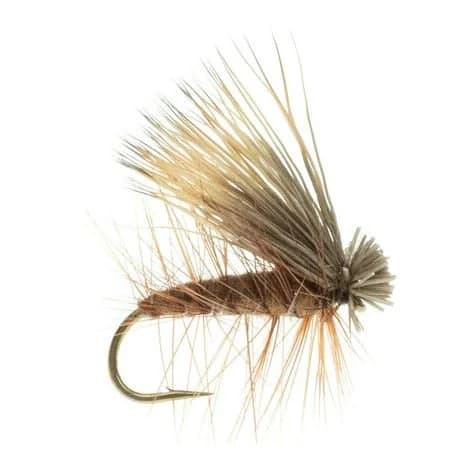
- Elk Hair Caddis #16-18 — caddis throughout the park
- Griffith's Gnat #18-22 — midge clusters in slow pools
- Stimulator #14 — stonefly attractor in pocket water
- Quill Gordon / Blue Quill #16 — early season mayflies
- Foam ants #18-20 — the best terrestrial from June through October
- Foam beetles #14-16 — August-September
Nymphs:
- Pheasant Tail #16-20 — the standard
- Hare's Ear #16-18
- Zebra Midge #20 — deep plunge pools
- Prince Nymph #16 — attractor in dark water
Streamers (rarely needed):
- Woolly Bugger #10-12, olive — deeper pools for browns
The Gear — Small-Stream Specific
Rod: 6.5-7.5 foot, 2- or 3-weight. This is not 9-foot-5-weight water. The streams are narrow, the canopy is low, and roll casts and bow-and-arrow casts are more common than overhead casts. A short, light rod is essential — it fits through rhododendron tunnels, loads on 15-foot casts, and makes 6-inch brookies feel like real fish.
Leader: 7.5 feet, 5X. Nothing longer — you're casting 10-20 feet, not 50. The short leader turns over small flies in tight quarters.
Wading: Wet-wade in summer (the streams are shin-deep). Lightweight wading boots with felt soles for the mossy, slippery rocks. A wading staff is essential — the boulders are uneven and the downhill approaches are treacherous.
No waders needed from June through September. The water is cold but not dangerously so, and the mobility of wet-wading through small streams is worth the cold feet.
When to Go
-
March–April: Quill Gordon and Blue Quill hatches open the season. Water is cold and high. The fishing is best on warm, overcast afternoons when the mayflies hatch. Access via Skyline Drive may be limited by lingering snow at higher elevations.
-
May–June: The best all-around months. March Browns and Little Yellow Stoneflies are hatching. Water levels are ideal. The forest canopy is filling in. The brookies are feeding aggressively.
-
July–August: Terrestrial season. Ants and beetles become the dominant food source as insects fall from overhanging trees. Fish the smallest headwater streams — they stay coldest in summer while lower streams warm up. Dawn and dusk are the best windows.
-
September–October: Fall colors in the Blue Ridge. Brook trout begin spawning — the males turn brilliant orange and red. The fishing is still good through mid-October, and the scenery is the best of the year. Skyline Drive in October is one of the most beautiful drives in America.
-
November–February: The park is open but Skyline Drive sections may close for weather. The fishing is slow but not impossible — warm afternoons produce midge hatches that bring fish to the surface. Winter fishing in Shenandoah is an acquired taste: short days, cold hands, and the patience to wait for a brief window of activity. But the solitude is absolute — you might be the only person in the park.
Conservation — Why Wild Trout Matter
Shenandoah's decision to stop stocking fish — made decades ago when most parks were still dumping hatchery trout into every stream — was controversial at the time. Anglers accustomed to catching 12-inch stocked rainbows were not thrilled to be catching 6-inch wild brookies instead. But the policy created something irreplaceable: a self-sustaining, genetically diverse, naturally reproducing trout fishery that doesn't depend on a truck showing up every spring.
The native brook trout in Shenandoah face real threats. Acid rain from coal-fired power plants to the west has lowered the pH of many headwater streams, making them inhospitable to brookies. Some streams that held brookies 50 years ago are now too acidic to support any fish. The park monitors stream chemistry closely, and the Clean Air Act amendments have reduced acid deposition, but recovery is measured in decades, not years.
Climate change is warming the streams — brook trout need water below 68°F to thrive, and as summer temperatures climb, the suitable habitat retreats further uphill. The headwater streams that are currently the last refuges for brookies may eventually become too warm for them.
Non-native trout (browns and rainbows) compete with and displace brookies in the lower-elevation streams. The native fish have retreated to the highest, coldest, steepest headwaters — water that's too harsh for the non-natives but marginal for the brookies too.
When you catch a native brook trout in Shenandoah, you're catching a fish that has survived acid rain, warming temperatures, and competition from introduced species — in a stream that may be one of its last strongholds. Handle it with care. The species' future in the southern Appalachians depends on every stream, every population, and every individual fish.
Small-Stream Technique — The Approach Matters More Than the Cast
In Shenandoah, how you approach the water matters more than how you cast the fly. The streams are small enough that the fish can see you — and hear you — from surprisingly far away. A careless approach spooks every trout in a pool. A careful one catches fish after fish.
Stay low. Crouch behind boulders. Kneel at the tail of a pool. The lower your profile, the closer you can get before the fish spook. Many Shenandoah anglers fish on their knees.
Move upstream. Fish face upstream, so approach from behind. Wade slowly — every footstep on gravel sends vibrations through the water. If you see a fish spook (a dark flash darting under a rock), you were too loud or too visible.
Cast short. Most Shenandoah casts are under 20 feet. Many are under 10. A 6-foot roll cast that lands a #18 ant in a 2-foot plunge pool is the standard presentation. Distance is irrelevant — accuracy and stealth are everything.
Fish every pocket. In small streams, trout hold in every piece of cover — behind rocks, under ledges, in the foam line of a tiny plunge, in the slack water beside a current seam. A pool the size of a dining table might hold three or four brookies. Hit every piece of it.
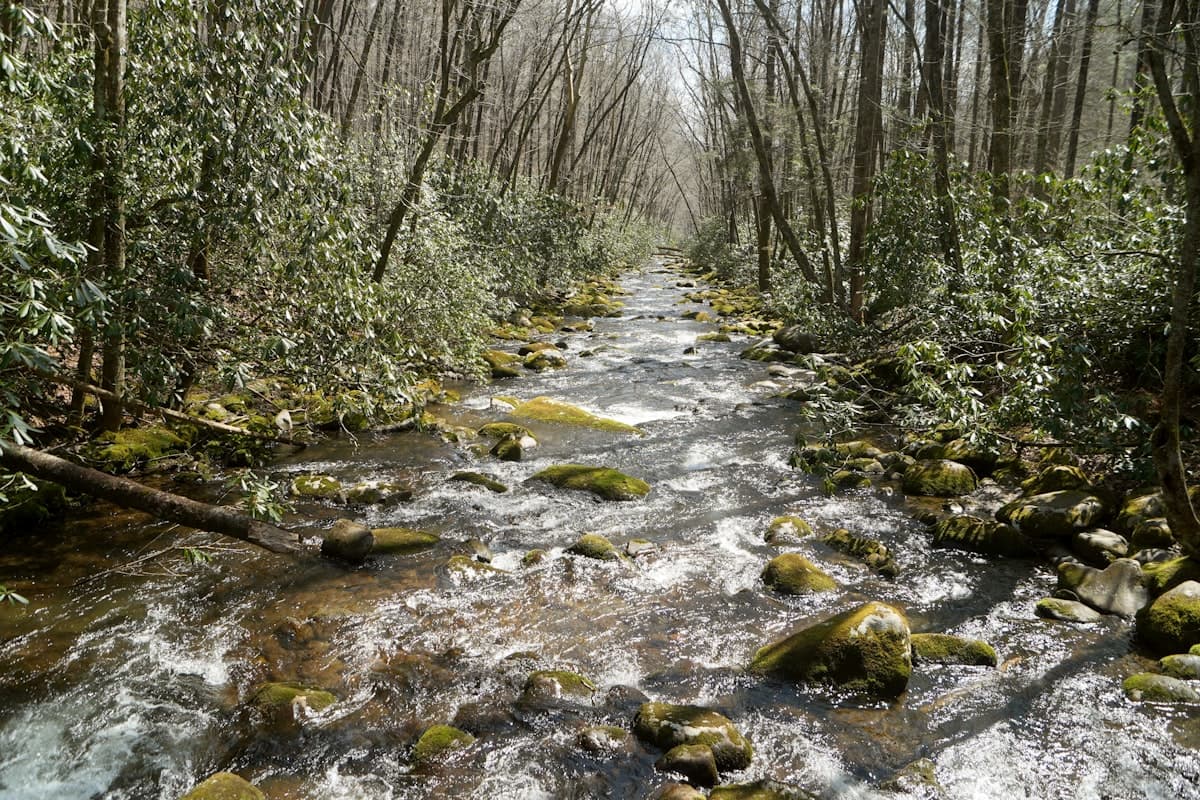
The Smokies connection. If you've fished the Great Smoky Mountains, the techniques are identical. If you haven't, Shenandoah is closer to the East Coast population centers and equally rewarding. The two parks — Shenandoah and the Smokies — are the twin pillars of Appalachian brook trout fly fishing.
Two Hours From the Capitol
Shenandoah's secret weapon is its location. The park's northern entrance at Front Royal, Virginia is 75 miles from Washington, D.C. — about 90 minutes in light traffic. The central section (where the best fishing is) is about 2 hours from D.C., 3 from Philadelphia, 4 from New York. No flights. No rental cars. No week-long trips required.
This means you can fish Shenandoah on a day trip. Leave D.C. at 5 AM, be on the Rapidan by 7, fish until noon, hike out, and be home for dinner. The combination of genuine wild native trout fishing within commuting distance of 10 million people is unique in American fly fishing. The Farmington River in Connecticut and the Battenkill in Vermont are good Eastern trout fisheries, but neither holds native brook trout in a national park setting.
For the D.C.-area angler who thinks they need to fly to Montana for real trout fishing — they don't. Shenandoah's native brookies are as wild, as beautiful, and as connected to their landscape as any cutthroat in Glacier or Grand Teton. The fish are just smaller. The experience isn't.
Local Knowledge
Shenandoah's fishing culture runs deep. Harry Murray literally wrote the book on Shenandoah fly fishing (Trout Fishing in the Shenandoah National Park) and developed patterns specifically for these streams, including the Mr. Rapidan — a parachute dry fly designed for the park's brook trout. Local guides who specialize in these waters know which streams are fishing on any given day and can dramatically improve your catch rate on your first visit.
Top Fishing Guides Nearby
Shenandoah's mountain streams hold wild native brook trout that rise to Parachute Adams and Mr. Rapidan patterns in pocket water shaded by hardwood canopy. Guides here specialize in the tight-casting, short-drift technique these narrow Blue Ridge freestone streams demand.

Ashby Gap Adventures
Front Royal, VA, US
5.0 (98 reviews)
Ashby Gap Adventures Ashby Gap Adventures is a premier outfitter serving the scenic Shenandoah Valley and DC area with expertly guided fishing and river adventures. Specializing in the Potomac and Shenandoah Rivers, the operation offers flexible half-day and full-day experiences tailored to each group's interests and skill level. What sets Ashby Gap Adventures apart is their commitment to the complete experience. Knowledgeable guides bring deep expertise in local ecology and history, enriching every outing beyond the fishing itself. Whether guests are kayaking, rafting, or wildlife viewing, trips are fully customized and complemented by gourmet meals prepared on-site. This full-service approach ensures memorable adventures for groups of any size, combining world-class fishing opportunities with the natural beauty and hospitality the region is known for.
Cool Water Outfitters
Harrisonburg, VA, US
4.9 (221 reviews)
Cool Water Outfitters specializes in fly fishing for trophy trout across the stunning Shenandoah Valley, operating throughout Virginia and West Virginia. Their experienced guides lead half-day, full-day, and overnight expeditions designed to accommodate anglers of all skill levels, ensuring both seasoned veterans and newcomers can enjoy world-class fly fishing. What truly sets Cool Water Outfitters apart is exclusive access to nearly one mile of private water on Beaver Creek, renowned for its abundant large rainbow and brook trout populations. Beyond their signature creek, they offer immersive backcountry fishing experiences in the Monongahela National Forest, where anglers can pursue native and stocked fish in pristine, remote settings. Whether seeking intimate creek-side days or ambitious backcountry adventures, anglers will find exceptional opportunities in beautiful mountain terrain.
Brook Trout Fishing Guide
Star Tannery, VA, US
5.0 (98 reviews)
Brook Trout Fishing Guide specializes in fly fishing for brook and brown trout throughout Virginia's pristine waters, with particular expertise in Shenandoah National Park. Drawing on years of experience, the guide offers access to carefully curated fishing locations, including hidden gem streams that many anglers overlook. Whether targeting wild or stocked trout, Brook Trout Fishing Guide tailors each outing to match the angler's skill level and preferences. From beginners taking their first cast to seasoned fly fishers seeking new challenges, clients benefit from insider knowledge of seasonal patterns and proven techniques that maximize time on the water. The combination of scenic Virginia landscapes and productive streams makes for memorable days in pursuit of brook and brown trout.

Last Cast Guide Service
Smith Mountain Lake, VA, US
5.0 (26 reviews)
Last Cast Guide Service, led by Captain Chad Green, specializes in bass fishing at Smith Mountain Lake, Virginia. With over 25 years of experience, Chad has developed deep expertise in electronics and multiple fishing techniques, ensuring success for anglers of all skill levels. He targets bass, stripers, and crappie throughout the season, providing both guided instruction and hands-on fishing. The service offers flexible half-day and full-day trips designed around each angler's goals—whether learning new techniques or pursuing trophy catches. Captain Chad supplies all necessary tackle and equipment, though anglers are welcome to bring personal gear. His focus on teaching combined with intimate knowledge of Smith Mountain Lake's best fishing grounds creates trips that are both productive and educational.
Rockfish Adventures (Rock Fish)
Smith Mountain Lake, VA, US
5.0 (22 reviews)
Rock Fish Captains Erik and Landon of Rock Fish offer specialized striper fishing experiences on Smith Mountain Lake in Virginia. With decades of combined expertise, this duo brings together Erik's deep knowledge of these waters and Landon's distinction as the lake's youngest captain. Their passion for sharing quality fishing is evident in every guided trip, blending seasoned instruction with genuine enthusiasm. Rock Fish operates year-round and stands behind each outing with their signature "Fish ON Guarantee," reflecting their commitment to successful, memorable days on the water. Whether pursuing citation stripers or simply enjoying the lake's abundant fishing opportunities, anglers can expect professional guidance and the kind of personalized attention that comes from guides who genuinely love what they do.
Hartman's Striper Fishing
Smith Mountain Lake, VA, US
5.0 (29 reviews)
Hartman's Striper Fishing Captain Hartman operates a premier striper fishing guide service on Smith Mountain Lake in Virginia, specializing in pursuing striped bass throughout their peak season from mid-April through November. With expertise honed through years of targeting these hard-fighting gamefish, Captain Hartman welcomes anglers of all skill levels and adapts techniques to match conditions and angler experience. Each charter is fully equipped with top-quality gear and includes bait, tackle, and professional fish cleaning services. Whether fishing with family or fellow enthusiasts, guests benefit from Captain Hartman's knowledge of Smith Mountain Lake and proven strategies for consistently locating and landing stripers. The comprehensive approach ensures a rewarding day on the water for both seasoned anglers and those new to the sport.
Frequently Asked Questions
What fish are in Shenandoah National Park?
Native eastern brook trout in the upper headwater streams, plus wild (unstocked) brown and rainbow trout in lower-elevation water. All fish in the park are wild — no stocking occurs. Brook trout average 5-8 inches with occasional fish to 10 inches.
Do you need a fishing license for Shenandoah?
A Virginia state fishing license is required for anglers 16 and older. A trout stamp is also needed. Only single-point hook artificial lures are allowed — no bait. Many streams are catch-and-release only.
When is the best time to fly fish Shenandoah?
May-June for hatches and ideal water levels. July-August for terrestrial fishing (ants, beetles) in headwater streams. September-October for fall colors and brook trout spawning colors. March-April for early-season Quill Gordon hatches.
What rod do you need for Shenandoah?
A 6.5-7.5 foot, 2- or 3-weight rod. The streams are narrow with low canopy — a standard 9-foot rod won't fit through the rhododendron tunnels. Short roll casts and bow-and-arrow casts are the norm. Most casts are under 20 feet.
How does Shenandoah compare to the Great Smoky Mountains?
Similar fishing — both are Appalachian parks with native brook trout in small freestone streams. Shenandoah is closer to D.C./Philadelphia (2-3 hours), has better road access via Skyline Drive, and holds more streams per square mile. The Smokies have more remote backcountry.
Related Articles
The Elk Hair Caddis: How to Tie the Fly That Works Everywhere, All Season, on Everything
Tuesday, April 21, 2026
Fly Fishing the Great Smoky Mountains: Native Brook Trout, Old-Growth Streams, and the Oldest Mountains on Earth
Saturday, May 2, 2026
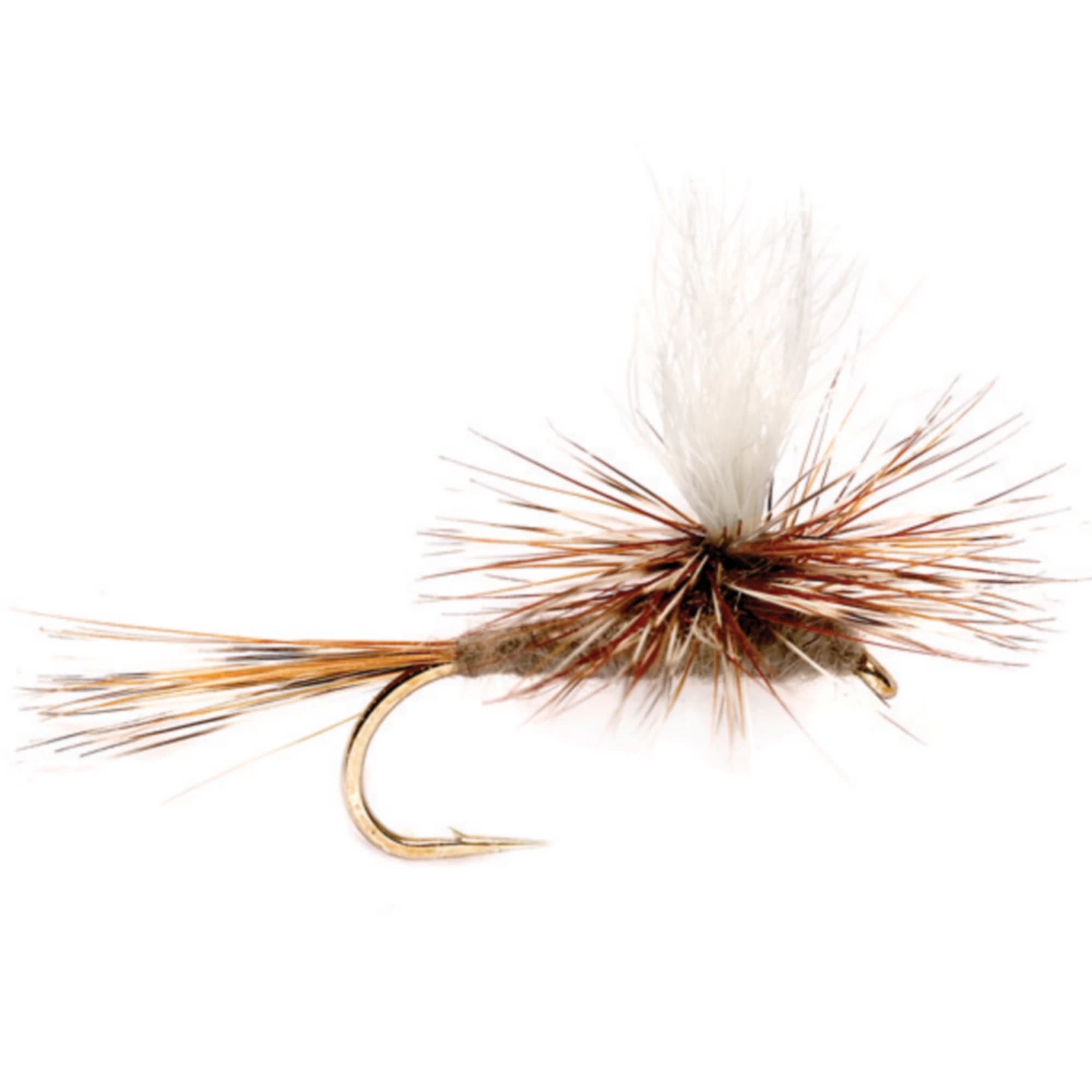
The Parachute Adams: How to Tie the One Fly Every Angler Carries and Why It Fools Everything
Monday, April 13, 2026
 ™
™