
The Prince Nymph: How to Tie the Attractor That Outfishes Everything When Nothing's Hatching
The Prince Nymph has been fooling trout since the 1940s with a combination of peacock herl, white biot wings, and brown hackle that doesn't match anything specific — and matches everything. Here's the recipe, the variations, and why it belongs in every nymph box.

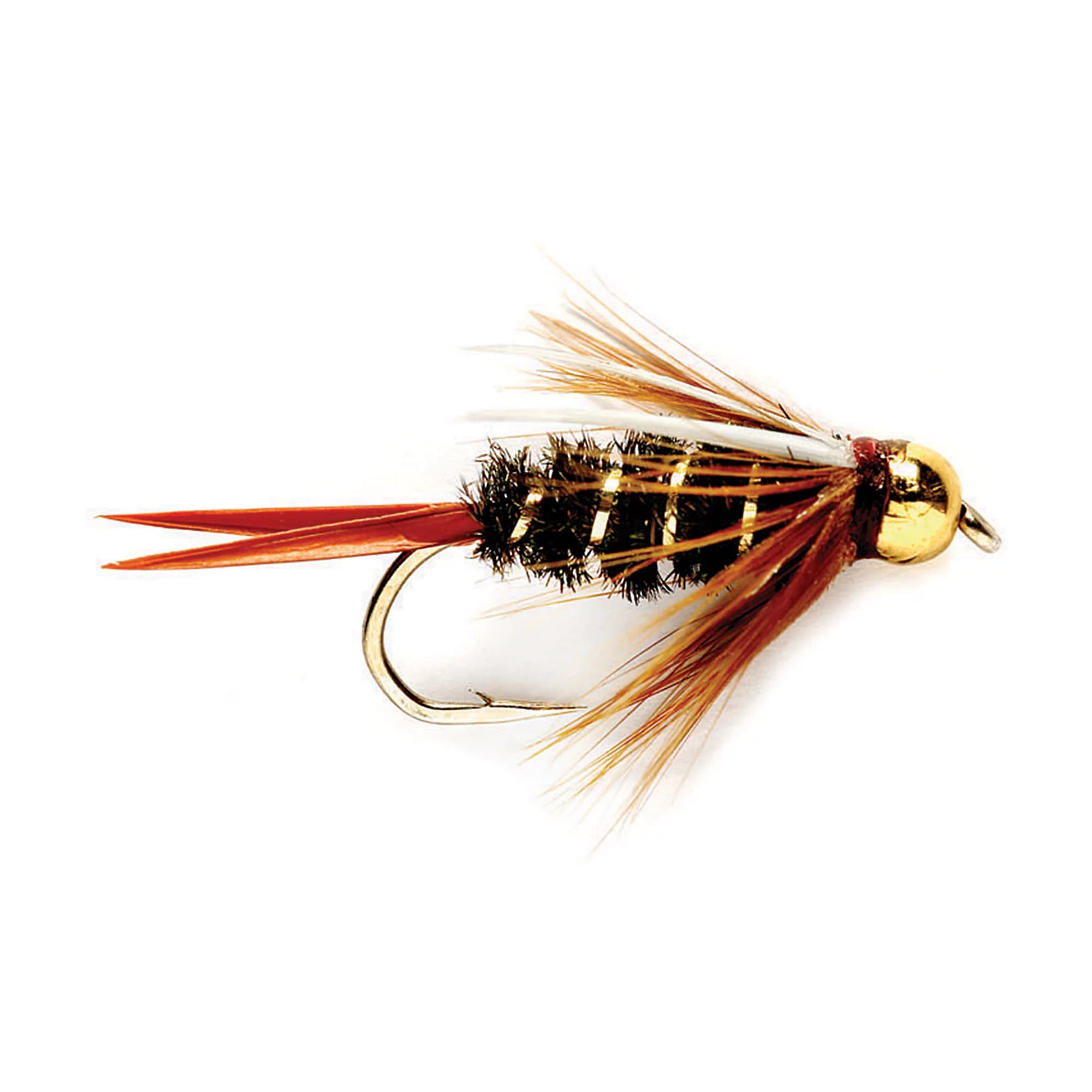
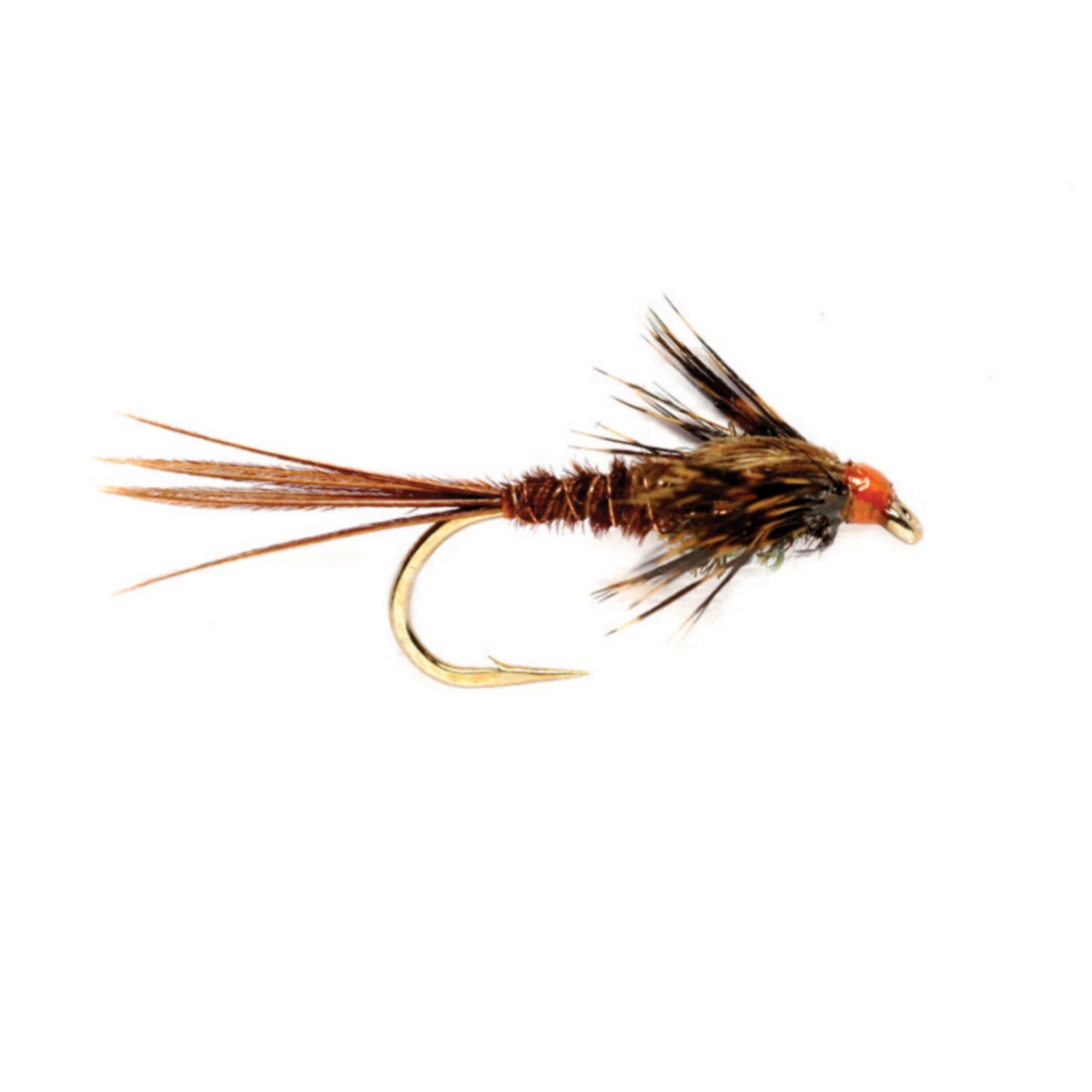
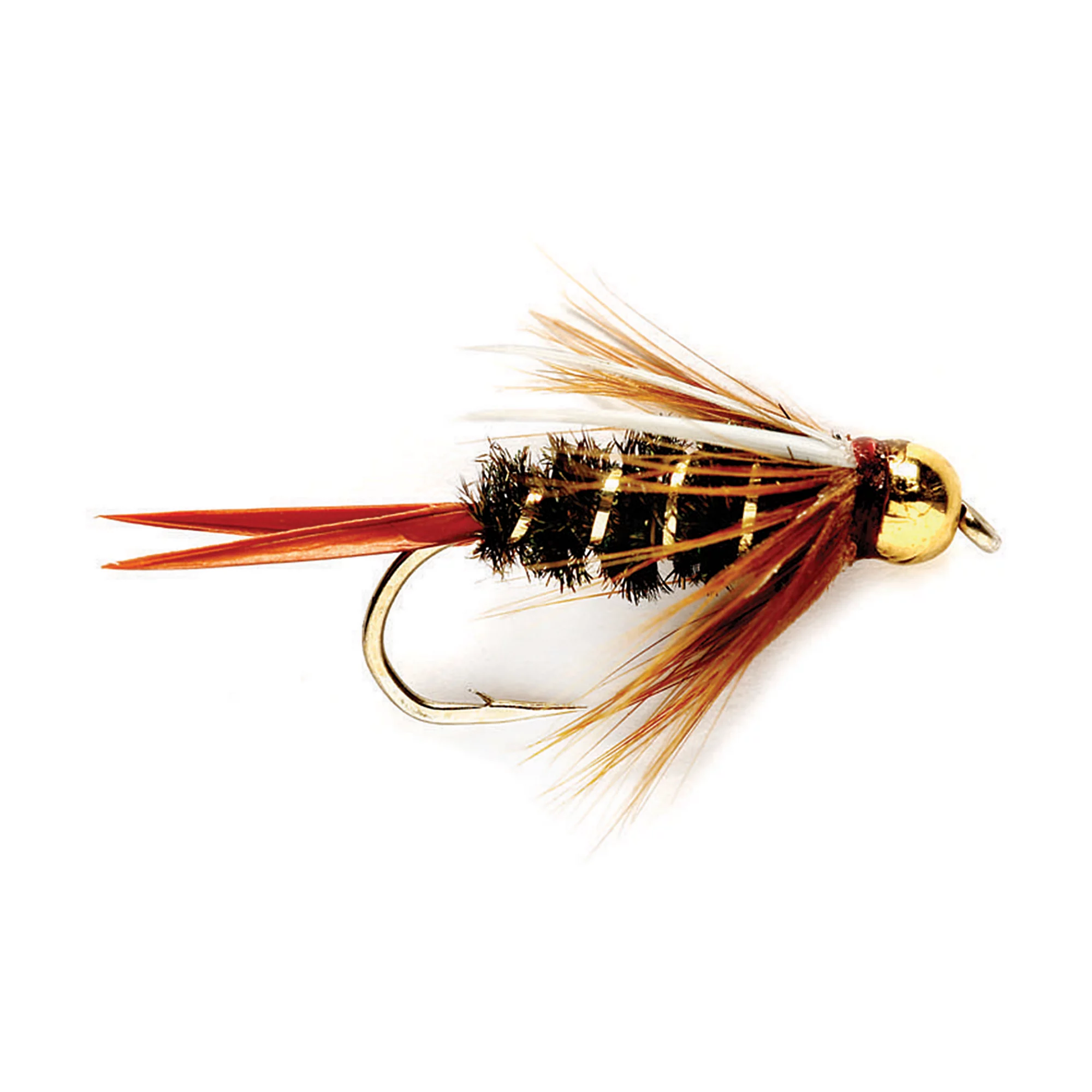 The Prince Nymph — peacock herl body, white biot wings, brown hackle. Photo: Orvis.
The Prince Nymph doesn't imitate any particular insect. That's the point. The peacock herl body catches light the way a dozen different nymphs do. The white goose biot wings create a flash of contrast that draws attention in broken water. The brown hackle legs suggest movement without committing to any species. The gold wire rib adds segmentation and durability. Put it all together and you get a fly that looks like something a trout should eat without looking like any one thing specifically.
This is what fly fishers call an attractor nymph — a pattern that triggers feeding behavior through contrast, flash, and buggy silhouette rather than through precise imitation of a specific insect. And the Prince Nymph is the king of the category. It has been catching trout on every type of water — freestones, tailwaters, spring creeks, mountain streams — since Doug Prince started fishing it on the Kings River in California in the 1940s. It works when nothing's hatching. It works when everything's hatching. It works when you have no idea what's happening underwater and need a fly that covers all possibilities.
Every fly shop in America stocks the Prince Nymph. Every guide box contains it. Every experienced trout angler has a story about a day when the Prince Nymph was the only fly that worked. It's not the sexiest pattern in the box — that honor goes to the Copper John or the Pheasant Tail. But it might be the most reliable.
The History — The Forked Tail Nymph
The fly we call the Prince Nymph was originally created in the 1930s by Don and Dick Olson, brothers from Minnesota, who called it the "Brown Forked Tail." The pattern used brown goose biot tails, peacock herl body, and a brown hackle collar — the same architecture the fly has today.
The name change happened in California. Doug Prince of Monterey started fishing the pattern on the Kings River around 1941 and had spectacular success. He shared flies with Buz Buszek, a well-known fly tier and tackle shop owner, who wanted to include the pattern in his mail-order catalog. Buszek couldn't remember the original name, so he called it the "Prince Nymph" after the man who gave it to him. The name stuck, and Doug Prince's name became permanently attached to a fly he didn't actually invent — one of fly fishing's better naming accidents.
The modern bead-head version, which added a tungsten or brass bead for weight and flash, emerged in the 1990s alongside the bead-head revolution that transformed nymph fishing. The bead-head Prince Nymph is now far more common than the original unweighted version, and it's the variant you'll find in most fly shops.
What It Imitates (Sort Of)
The Prince Nymph's effectiveness comes from suggesting multiple food items simultaneously:
-
Stonefly nymphs — The dark peacock body, split biot tail, and overall profile echo a stonefly nymph, particularly the smaller species (#12-16). The Prince Nymph is often the first fly guides reach for on stonefly-rich rivers like the Deschutes and the Madison.
-
Caddis pupae — The peacock herl body has a greenish iridescence that reads as a caddis pupa in certain light. The hackle legs suggest the emerging legs of a transitioning pupa.
-
Large mayfly nymphs — In sizes 12-14, the Prince Nymph's profile is close enough to a March Brown or Green Drake nymph that trout accept it during pre-hatch activity.
-
Drowned terrestrials — The white wings and dark body create a contrast pattern that mimics a beetle or ant that's been pulled underwater.
-
Nothing and everything — The honest answer is that the Prince Nymph doesn't precisely match anything, and trout eat it anyway. The peacock herl's natural iridescence, the contrast of the white wings against the dark body, and the movement of the hackle legs create an impression that screams "food" to a trout's brain without triggering the selectivity that a poor imitation would.
The Recipe — Bead Head Prince Nymph
| Component | Material |
|---|---|
| Hook | Standard nymph hook, 1XL, #10-16 (TMC 3761, Dai-Riki 060, Umpqua U202) |
| Bead | Gold tungsten or brass, sized to hook (3/32" for #16, 7/64" for #14, 1/8" for #12) |
| Weight | Lead or lead-free wire, .015" — 8-12 wraps under thorax (optional with tungsten bead) |
| Thread | Black 8/0 or 6/0 (UTC 70, UNI 8/0) |
| Tail | Brown goose biots — matched pair, split, forking outward |
| Rib | Fine gold wire (Brassie size) |
| Body | Peacock herl — 4-5 strands twisted into rope with thread |
| Hackle | Brown hen neck or soft hackle — 2-3 wraps |
| Wing | White goose biots — matched pair, forming a V over the body |
How to Tie It — Step by Step
Step 1: Bead and weight. Slide the bead onto the hook. Optionally wrap 8-12 turns of lead wire behind the bead and push them into the bead recess. Start your thread behind the lead and build a smooth transition to the bare shank.
Step 2: Tails. At the hook bend, tie in two brown goose biots — one on each side of the shank, curving outward to form a V-shaped fork. The tails should extend about half a shank length past the bend. This is the same biot-tail technique as the Copper John — take your time getting them symmetrical.
Step 3: Rib. Tie in a length of fine gold wire at the base of the tails. Let it hang while you build the body.
Step 4: Body. Tie in 4-5 strands of peacock herl at the tail. Twist the herl together with your thread to form a rope (this dramatically increases durability — untwisted peacock herl is fragile and breaks after a few fish). Wrap the herl rope forward to a point about two eye-lengths behind the bead, building a full, buggy body. The peacock should look lush and iridescent, not thin and sparse.
Step 5: Rib forward. Counter-wrap the gold wire forward through the peacock herl in evenly spaced spirals (5-6 turns). Counter-wrapping (spiraling in the opposite direction from the herl) reinforces the body — the wire binds the herl down so it doesn't unravel when a trout's teeth hit it. Tie off the wire behind the bead.
Step 6: Hackle. Select a brown hen neck or soft hackle feather with fibers roughly shank-length. Tie it in by the tip just behind the bead and take 2-3 wraps. Stroke the fibers rearward as you wrap so they sweep back along the body. The hackle should be sparse — this is a collar, not a parachute. Tie off and trim the stem.
Step 7: Wings. Select two white goose biots. Tie them in on top of the shank, just behind the bead, with the tips extending rearward at a 45-degree angle — one angling to the left, one to the right, forming a V-shape when viewed from above. The wing tips should extend to roughly the midpoint of the body. Secure with tight thread wraps, trim the butt ends, build a small thread head, and whip finish.
Step 8: Cement. Apply head cement to the thread wraps behind the bead. The finished fly should have a full peacock body, swept-back hackle legs, and two bright white wings forming a V over the dark body.
The Variations
Standard Bead Head (#12-16) — Gold bead, everything as described above. This is the universal version — the one you carry in quantity and fish with confidence on any water. Your go-to on the Green River, Farmington, and Battenkill.
Tungsten Bead (#12-14) — Same pattern with a tungsten bead for faster sinking. Essential on deeper, faster water like the Lower Deschutes, Madison, and North Platte / Grey Reef. The extra weight gets the fly into the strike zone a full second faster than brass.
Purple Prince (#12-16) — Purple thread or dubbing replaces the peacock herl body, creating a darker, higher-contrast pattern. Surprisingly effective in clear water where trout have seen a lot of standard Prince Nymphs. The purple reads as an attractor color that stands out against natural substrates.
Hot Wire Prince (#14-16) — Charlie Craven's variation using colored Ultra Wire in place of the peacock herl body — the same wire-body concept as the Copper John but with the Prince Nymph's biot tails, hackle collar, and white wings. Red, copper, and green wire versions cover different water types.
Unweighted (#14-18) — The original Don Olson pattern without bead or lead. Light enough to fish in skinny water, in film, or as a dropper behind a dry fly on small streams like the Smokies and PA limestone creeks.
Where to Fish It
The Prince Nymph works everywhere, but it excels as a prospecting fly — the pattern you tie on when you arrive at unfamiliar water and need to figure out what's happening:
-
The Lower Deschutes, Oregon — The Prince Nymph is a desert canyon staple. Sizes #12-14, tungsten bead, dead-drifted through the stonefly-rich runs and riffles. Pairs well with a trailing Pheasant Tail or Zebra Midge.
-
The Madison River, Montana — Prince Nymph in #12-14 nymphed through the boulder pocket water between Quake Lake and Ennis. The Madison's diverse insect life makes an attractor nymph the logical choice when multiple species are active.
-
The Green River, Utah — A #14-16 Prince Nymph prospecting the runs and riffles of Section A, with a Zebra Midge dropper for the midge-focused fish.
-
The Farmington River, Connecticut — Bead-head Prince Nymph in #14 for the Farmington's pocket water. An excellent choice during the shoulder seasons when no single hatch dominates.
-
The Battenkill, Vermont — Unweighted or lightly weighted in #14-16 for the Battenkill's spooky wild browns. Fish it under a small indicator in the deeper pools.
-
Great Smoky Mountains, NC — Unweighted in #14-16 as a dropper behind a dry fly. The Smokies' diverse insect life and small streams are perfect Prince Nymph water.
How to Fish It
As a prospecting nymph. The Prince Nymph's highest calling is covering water when you don't know what trout are eating. Arrive at a new river, tie on a #14 bead-head Prince, add an indicator or go tight-line, and work through the runs systematically. If trout are eating subsurface — and they almost always are — the Prince will find them.
In a two-nymph rig. The Prince Nymph works as either the point fly or the dropper. As the point fly (heavier, on the bottom), pair it with a smaller trailing nymph like a Zebra Midge or Pheasant Tail. As the dropper (lighter, trailing), fish it behind a heavier Copper John or San Juan Worm.
Under a dry fly. A #14-16 Prince Nymph 2-3 feet below a Stimulator or Chubby Chernobyl is a classic dry-dropper rig. The Prince's weight helps load the dry fly for easier casting, and the white wings make the fly visible enough that you can sometimes see the take.
How to Tie It — Video Tutorials
Step-by-step: Charlie Craven's Bead Head Prince Nymph — Clear instruction with the emphasis on proportion and biot wing placement. Craven's Prince is the standard most tiers reference.
Detailed closeups: Tim Flagler's Prince Nymph — Flagler's signature slow-paced, close-up instruction. Excellent for understanding the herl-rope technique and the wing tie-in.
Modern variation: Hot Wire Prince Nymph — Charlie Craven's wire-body variant that combines Prince Nymph architecture with Copper John-style flash. A productive pattern worth adding to the box.
Tips From the Vise
Twist the herl with thread. The single most important technique for tying a durable Prince Nymph. Peacock herl is fragile — a trout's teeth will break individual strands after one or two fish. Twisting 4-5 herl strands around your thread creates a rope that holds up for dozens of fish. The counter-wrapped gold wire rib adds further insurance.
The white wings make the fly. Don't skip them and don't substitute. The contrast of white goose biots against the dark peacock body is the Prince Nymph's visual signature — it's what trout see, and it's what makes this pattern an attractor rather than a generic nymph. Use bright white biots, not off-white or cream.
Sparse hackle. Two to three wraps of soft brown hackle is all you need. The collar should suggest legs, not create a dense ruff that traps air and prevents sinking. Stroke the fibers rearward as you wrap to keep them swept back along the body.
Size 14 is the sweet spot. If you only tie one size, tie 14. It's small enough for spring creeks and selective fish, large enough for freestone pocket water, and the right proportion for the peacock body and biot wings to look balanced.
Build Your Box
- Standard bead-head in #12 and #14 (6 each) — freestones and fast water
- Standard bead-head in #16 (6) — tailwaters and spring creeks
- Tungsten bead-head in #12 and #14 (4 each) — deep runs, Deschutes, Madison
- Unweighted in #14 and #16 (4 each) — dry-dropper rigs, small streams
That's 34 flies — an evening at the vise. The Prince Nymph is the fly you tie on when you don't know what else to tie on, and it rewards that trust more often than any attractor pattern in the box.
Frequently Asked Questions
Who invented the Prince Nymph?
Don and Dick Olson created the pattern (called the Brown Forked Tail) in the 1930s. Doug Prince of Monterey, California popularized it on the Kings River in the 1940s. Fly tier Buz Buszek couldn't remember the original name, so he called it the Prince Nymph after Doug Prince.
What does the Prince Nymph imitate?
Nothing specific — and that's the point. It's an attractor nymph that suggests stonefly nymphs, caddis pupae, large mayfly nymphs, and drowned terrestrials through contrast and flash rather than precise imitation. The peacock herl body and white biot wings create a 'food' impression that triggers feeding behavior.
What size Prince Nymph should I use?
Size 14 is the most versatile. Use #12 for fast freestone water and stonefly-heavy rivers. Use #16 for tailwaters and spring creeks. Carry tungsten beads for deep water and brass or unweighted for shallow streams and dry-dropper rigs.
How do you fish a Prince Nymph?
Dead-drift it under an indicator, on a Euro-nymph rig, or as a dropper below a dry fly. The Prince excels as a prospecting fly — tie it on when you arrive at unfamiliar water and need to figure out what trout are eating. It works in two-nymph rigs as either the point fly or the trailing dropper.
What makes the Prince Nymph different from a Pheasant Tail?
The Pheasant Tail is an imitative nymph — it closely matches mayfly nymphs. The Prince Nymph is an attractor — it doesn't match anything precisely but catches trout through contrast and flash. Carry both: the Prince for prospecting, the Pheasant Tail for matching hatches.
Related Articles
The Copper John: How to Tie the Nymph That Changed Modern Fly Fishing and Sinks Like It Means It
Sunday, November 23, 2025
The Pheasant Tail Nymph: Two Materials, No Thread, and the Subsurface Fly That Changed Everything
Thursday, April 9, 2026

Fly Fishing the Lower Deschutes: Wild Redbands, Summer Steelhead, and the River That Makes You Get Out of the Boat
Monday, January 12, 2026
 ™
™