
Fly Fishing Big Bend National Park: Desert Canyons, the Rio Grande, and Fish You Won't Find Anywhere Else
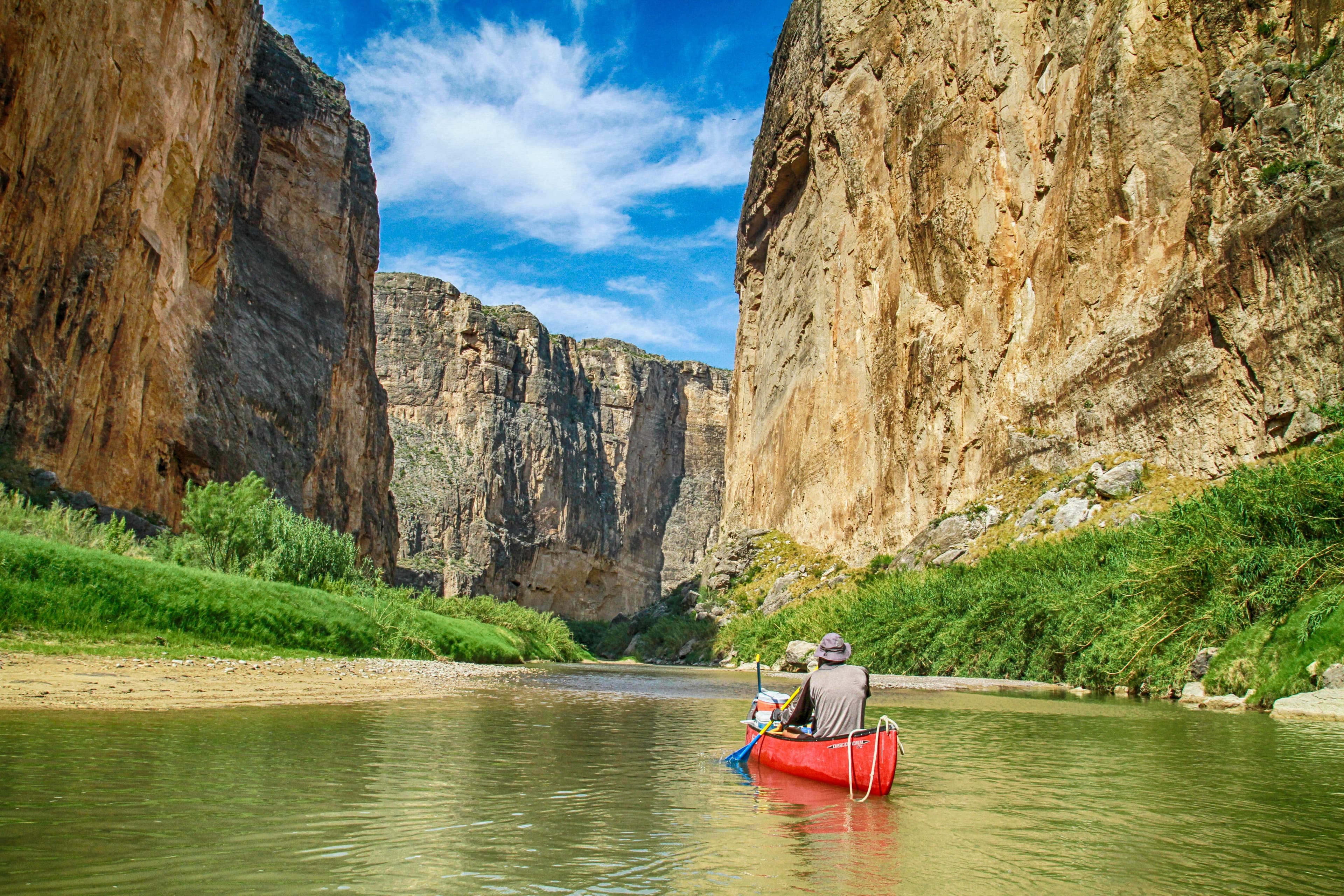
Big Bend is 801,163 acres of Chihuahuan Desert where the Rio Grande carves 1,500-foot canyons along the Mexican border. Nobody comes here to fish. But if you bring a rod, you'll find largemouth bass, channel catfish, Rio Grande cichlids, and bluegill in water framed by the most dramatic canyon scenery in the American Southwest.
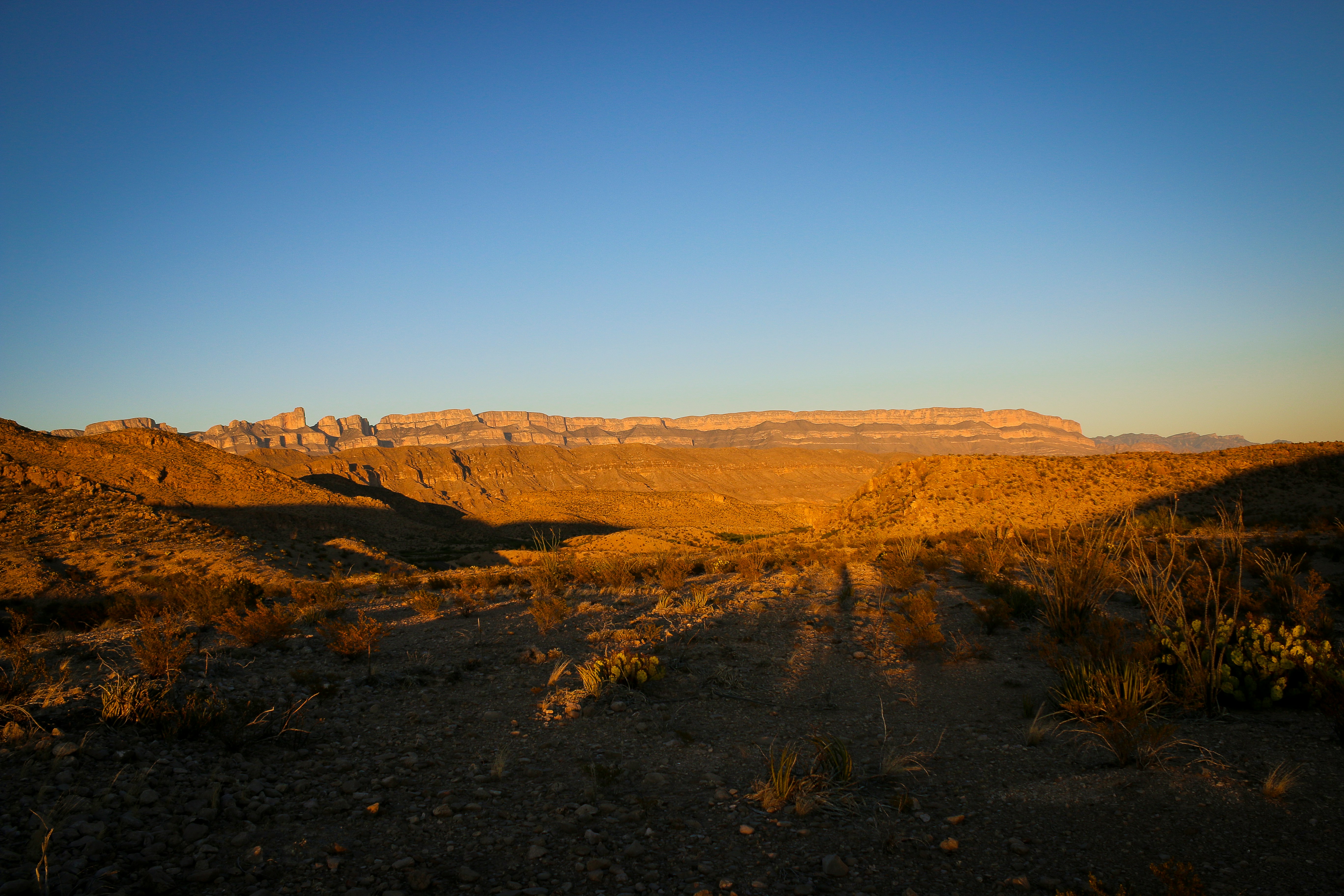
Big Bend National Park occupies a remote corner of southwest Texas where the Rio Grande makes a sweeping 90-degree turn — the "big bend" — along the Mexican border. The park covers 801,163 acres of Chihuahuan Desert, three major canyon systems with walls exceeding 1,500 feet, the only mountain range entirely contained within a national park (the Chisos), and some of the darkest skies left in the lower 48 states. It is enormous, desolate, brutally hot for half the year, and one of the least-visited national parks of its size in the system.
It is also, quietly and without fanfare, a place where you can catch fish.
This is not a destination fishing park. Nobody books a flight to Midland, drives three hours through empty desert, and parks at a trailhead because they heard the bass fishing was hot. That's not how Big Bend works. You come to Big Bend because you want to stand on the rim of Santa Elena Canyon and watch the Rio Grande disappear into a limestone slot 1,500 feet deep. You come to hike the Chisos Basin, soak in the hot springs at the river's edge, watch a roadrunner hunt lizards in the creosote flats, and sleep under a sky so thick with stars it looks fake. The fishing is something you discover after you arrive — a bonus, a surprise, a reason to spend an extra morning at the river instead of driving to the next trailhead.
But the fishing is real, and it is unlike anything you'll find in any other national park in the country. There are no trout here. No salmon. No steelhead. No grayling. The Rio Grande at Big Bend holds warmwater species — largemouth bass, channel catfish, blue catfish, flathead catfish, bluegill, green sunfish, and the Rio Grande cichlid, the only cichlid native to the United States, a subtropical panfish with turquoise spots and an attitude that belongs in a coral reef aquarium, not a desert river. If you've been fishing the Western national parks circuit — Yellowstone, Glacier, Grand Teton, Rocky Mountain — Big Bend is a hard left turn into entirely different water.
And that's what makes it worth bringing a rod.
The River — 118 Miles of International Border
The Rio Grande forms the entire southern boundary of Big Bend National Park — 118 miles of river that is simultaneously the park boundary, the state line, the international border between the United States and Mexico, and the only fishable water in the park. There are no lakes, no stocked ponds, no spring creeks. The Rio Grande and its two tributaries — Tornillo Creek and Terlingua Creek — are the only places in 801,163 acres where fish exist.
The river here is nothing like the Rio Grande of New Mexico, where fly anglers chase brown trout in mountain freestone water. By the time the Rio Grande reaches Big Bend, it has traveled through 800 miles of arid landscape, been dammed and diverted for agriculture, and shrunk to a fraction of its upstream volume. In some years, in some stretches, the river barely flows. In wet years, it floods violently. The water is warm — 75 to 85°F through the summer months — silty after rain, and clearer in the dry stretches between canyon runs.
This is border water in the most literal sense. You fish from the American side. The Mexican side — the state of Coahuila — rises directly across the river, sometimes close enough to toss a stone to. In the canyon sections, the walls narrow to 25 or 30 feet and the river occupies the entire gap. The international boundary runs down the middle of the channel. You cast into Mexico without trying.
The Three Canyons
Big Bend's defining geological features are three deep canyons that the Rio Grande has carved through uplifted limestone — Santa Elena, Mariscal, and Boquillas. Each creates a different fishing environment.
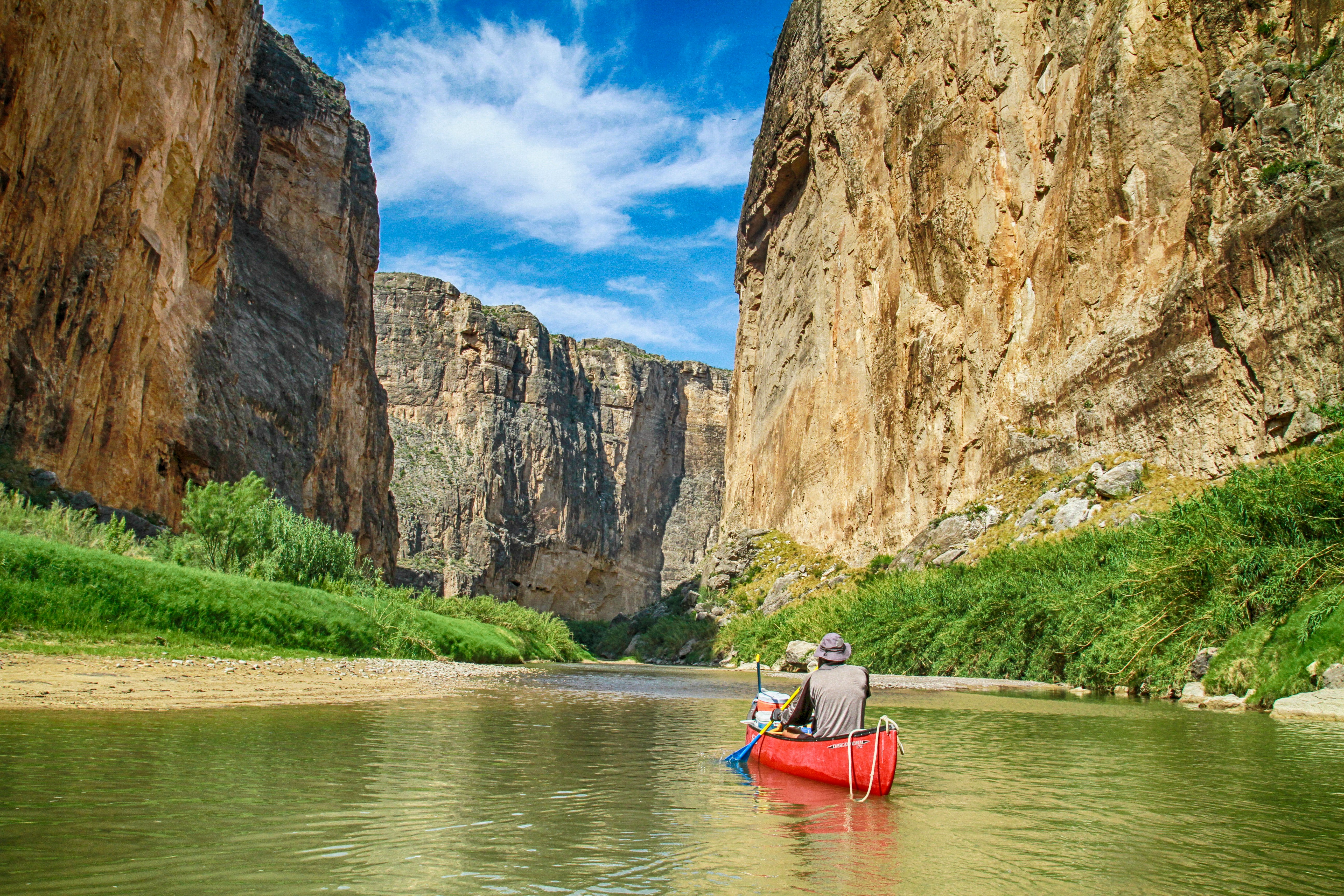
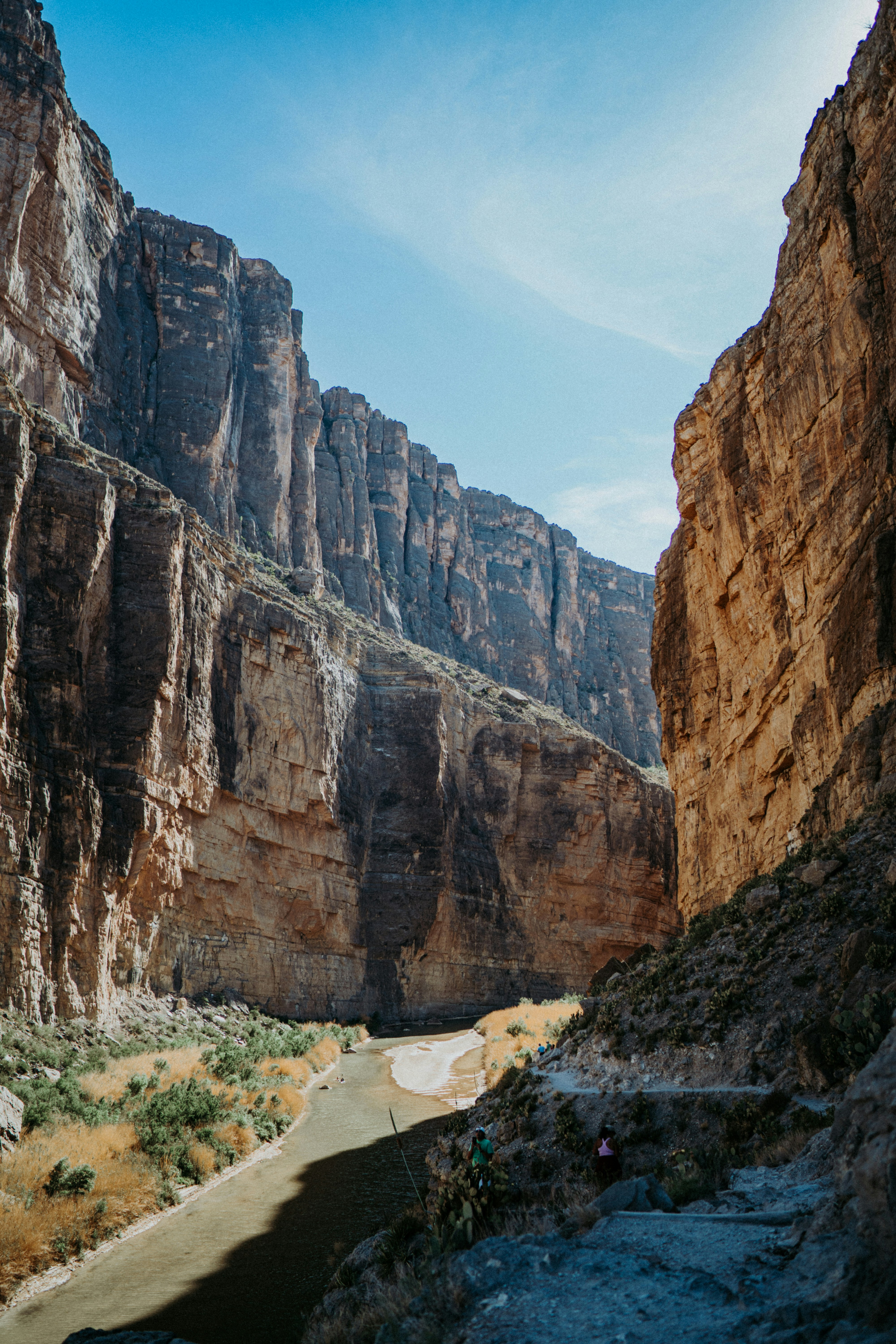
Santa Elena Canyon is the park's icon — 1,500-foot sheer walls, eight miles long, as narrow as 25 feet in places. The canyon creates deep, shaded water with structure along the walls — undercuts, boulder piles, and ledges where catfish hold during the day and bass ambush prey in the low-light hours. The access trail at the canyon mouth involves a creek crossing (Terlingua Creek, which can run high after rain) and a short, steep climb before descending to the river. Fishing Santa Elena requires wading or a canoe; the walls leave no bank to stand on in most sections. This is the canyon you've seen in every Big Bend photograph, and paddling into it with a fly rod across the thwarts is one of the more surreal fishing experiences in the national park system.
Boquillas Canyon is the longest and deepest — canyon walls reaching 1,500 feet with a vertical relief of over 7,000 feet from the summit of nearby Pico del Carmen to river level, deeper than the Grand Canyon. The water here is calmer than Santa Elena, with slower runs and backwater pools where largemouth bass hold in the slack water along the banks. The Boquillas Canyon Trail drops from the parking area to the river through sandy desert, and the riverbank access is better than Santa Elena — you can wade-fish the edges and cast to structure without necessarily needing a boat. This is arguably the most accessible fishing in the canyon sections.
Mariscal Canyon is the most remote and least visited of the three — accessible only by a rough dirt road and a hike, or by floating from upstream. The canyon is tighter and more rugged than Boquillas, with less bank access but excellent catfish habitat in the deep pools. Most anglers who fish Mariscal do so from a canoe or raft as part of a multi-day float trip.
Rio Grande Village — Where Most People Actually Fish
For every angler who paddles into a canyon, a hundred fish at Rio Grande Village. This is the park's easternmost developed area, located where the river emerges from the upstream canyons into a broader, slower stretch with cottonwood-lined banks, sandy beaches, and easy wading access. The campground sits a short walk from the river, and the hot springs are less than two miles downstream.
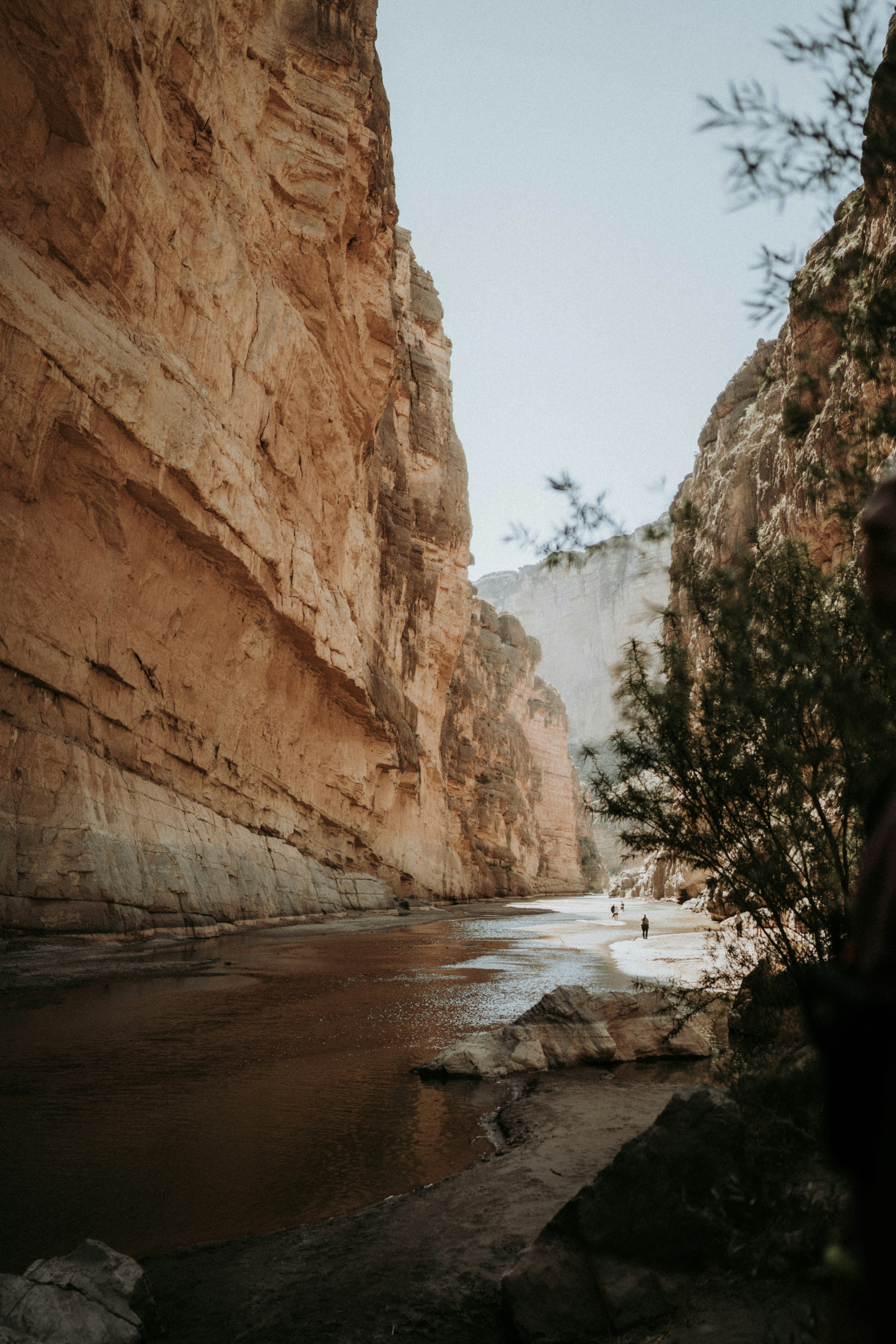
Rio Grande Village is where families fish with their kids using worms and bobbers. It's where the campground angler walks to the river after dinner with a spinning rod and catches channel catfish on chicken liver. And it's where a fly angler with a 6-weight and a box of Woolly Buggers can spend a morning sight-fishing to bass and cichlids in the clear, shallow runs along the gravel bars.
The ponds near Rio Grande Village — remnant oxbow pools — hold bluegill and green sunfish that will eat a Griffith's Gnat or a small foam beetle with abandon. These are tiny fish in tiny water, and they are absolutely delightful on a 3-weight. Just note: some ponds near Rio Grande Village are closed to fishing because they harbor the Big Bend gambusia, an endangered minnow with the smallest geographic range of any vertebrate on Earth. The signs are clear. Respect them.
The Fish — A Subtropical Surprise
Largemouth Bass
Largemouth bass exist in the Rio Grande at Big Bend, and they're real bass — not stunted pond fish, but legitimate largemouths that feed on minnows, crayfish, and sunfish in the slack water along the banks. They hold in the backwater pools behind sandbars, in the shade of overhanging brush, and along the undercut banks where the current slows. Fish exceeding three pounds are caught regularly.
The fly fishing for Big Bend bass is straightforward warmwater tactics. Poppers fished tight to the banks in the early morning and late evening draw explosive surface strikes. A foam bass popper or a foam slider in chartreuse or white works when the bass are looking up. When they're not, a Clouser Minnow in chartreuse-and-white fished on a slow retrieve through the deeper runs is the default subsurface pattern — the same fly that works for smallmouth at New River Gorge and bass water everywhere in the country. Woolly Buggers in olive and black, sizes 6-10, cover the middle ground between topwater and deep.
Channel Catfish, Blue Catfish, and Flathead Catfish
Catfish are the bread and butter of Big Bend fishing — the species most reliably caught, in the greatest numbers, from the most water. The Rio Grande holds three species: channel catfish (the most common), blue catfish (larger, deeper water), and flathead catfish (the bruiser of the group, reaching 20 pounds or more in the deeper canyon pools).
Fly fishing for catfish is an underappreciated art. A large Woolly Bugger (#4-6) in dark brown or black, dead-drifted along the bottom through deep runs and pools, is the standard approach. A San Juan Worm in red or brown is even simpler — drift it through the seams where fast water meets slow, and the channel cats will find it. The takes are not subtle. A catfish on a 6-weight fly rod in current is a legitimate fight — bulldogging runs toward the bottom, headshakes, and raw power that will surprise you if you've been conditioned by trout.
Rio Grande Cichlid — The Fish You Can't Catch Anywhere Else
The Rio Grande cichlid (Herichthys cyanoguttatus) is the star of Big Bend fly fishing — not because of its size (most are under ten inches) but because of its strangeness. This is the only cichlid species native to the United States, a tropical-looking fish with cream and iridescent turquoise spots across its flanks, an aggressive personality entirely out of proportion to its body, and a willingness to eat flies that makes it one of the most entertaining panfish on a fly rod anywhere.
Also known as the Texas cichlid or Rio Grande perch, this fish looks like it belongs in a Central American river, not a desert park in Texas. Adult males develop a pronounced bump on their foreheads — a nuchal hump — that gives them an almost comical, pugnacious appearance. They hold in rocky shallows, around submerged structure, and along the margins of pools where they defend small territories with disproportionate aggression.
Fly fishing for cichlids requires small flies — they have small mouths despite their attitude. Pheasant Tail Nymphs in #14-18, Hare's Ear Nymphs in #14-16, Prince Nymphs in #14-16, and Copper Johns in #16-18 all work subsurface. Small crayfish imitations bounced along rocky bottoms are deadly. On top, tiny foam poppers, deer-hair ants, and small Elk Hair Caddis in #14-16 will draw strikes when cichlids are holding in shallow water — cast beyond and upstream, let the fly drift into their territory, and be ready for a hit that feels far too aggressive for an eight-inch fish.
The key with cichlids is subtlety in the approach. They spook in shallow clear water. Wade slowly, cast gently, and fish the edges of pools rather than bombing a cast into the middle.
Bluegill and Green Sunfish
Bluegill and green sunfish populate the slower stretches and backwater areas throughout the park. They're small — rarely exceeding eight inches — but they eat dry flies with the enthusiasm of fish that don't see many artificial presentations. A Parachute Adams in #14-16, a small foam beetle, a Griffith's Gnat in #18, or a Chubby Chernobyl in #12 (hopper-style, the sunfish treat it like a buffet) will all produce. The fishing is simple, immediate, and particularly good for introducing someone to fly fishing — the fish are cooperative, the takes are visible, and the fight on a light rod is genuine fun.
The Fly Box for Big Bend
This is a warmwater fly box — closer to what you'd pack for New River Gorge or Voyageurs than anything you'd carry in the Rockies.
Topwater: Foam poppers (#6-10, chartreuse, white, black), foam bass popper (#6-8), foam sliders, deer-hair poppers (#8-10), Chubby Chernobyl (#10-14, hopper imitation), foam beetles (#12-14), deer-hair ants (#12-14)
Streamers: Clouser Minnow (#4-8, chartreuse/white — the single most important fly in the box), Woolly Bugger (#4-10, olive, black, brown), Muddler Minnow (#6-8), small crayfish patterns (#6-10, olive and brown)
Nymphs (for cichlids and panfish): Pheasant Tail (#14-18), Hare's Ear (#14-16), Prince Nymph (#14-16), Copper John (#16-18), San Juan Worm (#10-14, red/brown — catfish and bass)
Dries (for sunfish and cichlids): Parachute Adams (#14-18), Elk Hair Caddis (#14-16), Griffith's Gnat (#18-20), Stimulator (#12-14)
The Gear
Rod: A 6-weight is the primary rod here — enough backbone to throw poppers and Clousers at bass and catfish, enough feel to fight a three-pound largemouth or a ten-pound channel cat in current. Bring a 3-weight or 4-weight if you want to spend time on cichlids and sunfish — the light-rod experience is where these smaller fish really shine.
Reel: Nothing fancy. The bass won't run you into your backing. Disc drag is nice for catfish but not essential.
Line: Weight-forward floating for most situations. A sink-tip line or a sinking leader can help get Clousers and Woolly Buggers into the deeper canyon pools, but it's not essential.
Leaders: 7.5-foot, tapered to 2X or 3X for bass and catfish. The fish are not leader-shy. You're casting into silty water next to rocks and brush — you need tippet that can handle abrasion, not tippet that disappears. For cichlids and sunfish in clear shallows, drop to 4X or 5X.
Wading gear: Wet-wading is the standard approach from spring through fall — the water is warm enough that neoprene waders would be a heat-stroke risk in summer. Quick-dry pants, wading boots with good ankle support (the river bottom is rocky and uneven), and sun protection are the essentials. If you're fishing in winter (November through February), breathable waders and a fleece layer underneath are appropriate.
The Calendar — When to Fish Big Bend
Big Bend's fishing calendar is inverted from what trout anglers know. Summer is the worst time, not because the fish stop feeding but because the heat can kill you.
October through March is prime fishing season. Daytime temperatures in the desert drop from the low 100s to the 60s and 70s, making the river approachable for more than 20 minutes at a time. The water is still warm enough for the fish to feed actively — remember, these are warmwater species evolved for subtropical conditions. Fall bass fishing is excellent, with largemouths feeding aggressively in the cooler mornings. Catfish remain active through the winter. Cichlids slow down in the coldest months (December-January) but don't stop entirely.
Spring (March through May) is ideal — warm but not punishing, with longer days and increasingly active fish. Cichlids become particularly aggressive as they enter their breeding season, defending territories and striking at anything that enters their space. Bass are feeding up after winter. The desert wildflowers bloom after winter rain, and the park is at its most beautiful.
Summer (June through September) is survivable but demanding. Desert temperatures regularly exceed 100°F at river level, and days above 110°F are not uncommon. The Chisos Mountains offer some relief — temperatures run 10 to 20 degrees cooler at the higher elevations — but the fishing is at river level, where there is no relief. If you fish in summer, fish at dawn and dusk only. Carry far more water than you think you need. Understand that heat-related emergencies in Big Bend are real — the nearest hospital is over 100 miles away.
Permits, Regulations, and Practicalities
Big Bend makes the regulatory side easy. No Texas fishing license is required — you fish under the park's federal regulations, not state regulations. You do need a free fishing permit, available at any open visitor center during business hours. The daily limit is 25 fish per person. Fishing is permitted only in the Rio Grande and is allowed year-round.
Certain ponds and springs — particularly near Rio Grande Village — are closed to all fishing to protect endangered species like the Big Bend gambusia. The closures are signed. Obey them.
If you're planning a multi-day float trip through any of the canyons, you'll need a backcountry permit from the park, available at the Panther Junction Visitor Center. River conditions vary dramatically with rainfall and upstream releases — check current conditions before committing to a float.
Terlingua — The Ghost Town Gateway
The gateway to Big Bend is Terlingua, a town with 58 permanent residents, a ghost town on one side, a handful of outfitters on the other, and a personality that could only exist in far West Texas. There is one gas station. There is no cell service on most carriers until you reach the park headquarters at Panther Junction. There is no fly shop within 150 miles.
Terlingua is where you stage — buy supplies at the small general store, fill your water containers, eat at the Starlight Theatre (a restaurant inside an actual restored movie theater), and accept that you're about to spend several days in one of the most remote corners of the continental United States. The nearest airport of consequence is Midland-Odessa, roughly a three-hour drive northeast. El Paso is five hours west. This is not a place you casually visit.
If you're looking for guided fishing, a handful of river outfitters operate out of Terlingua and nearby Lajitas, primarily offering canoe and raft trips through the canyons with fishing as an add-on. These are not dedicated fishing guides in the way you'd find on a trout river — they're river guides who happen to know where the fish hold. For a dedicated fishing guide in Terlingua, the options are limited but growing.
The Hot Springs — Where Desert and River Meet
One of Big Bend's most remarkable features sits just downstream of Rio Grande Village: the Langford Hot Springs, a 105°F thermal pool contained within the stone walls of a historic bathhouse, sitting directly on the bank of the Rio Grande. You soak in the hot spring while looking across the river into Mexico. The ruins of J.O. Langford's 1909 resort surround the pool.
This has nothing to do with fishing, except that it has everything to do with why you're here. You spend the morning fishing the river near Rio Grande Village, catching cichlids and bass on a light rod in the desert sun. You walk downstream to the hot springs. You soak in 105-degree water while a canyon wren calls from the cliff above. You watch the Rio Grande slide past, the same river you were casting into an hour ago. The fish were a bonus. The setting was the point.
Big Bend vs. Other Canyon Parks
If you've fished the Grand Canyon, the comparison is inevitable but misleading. The Colorado through the Grand Canyon is cold, fast tailwater holding rainbow and brown trout. The Rio Grande through Big Bend is warm, variable, and holds an entirely different assemblage of species. The Grand Canyon is a world-class trout fishery wrapped in canyon scenery. Big Bend is world-class canyon scenery with a bonus fishery attached.
The better comparison is Everglades — another park where the fishing is legitimate but secondary to the landscape, where the species are subtropical and unfamiliar to the average fly angler, and where the experience of being in the place overwhelms the act of catching fish. Both parks reward the angler who brings a rod without making fishing the primary objective.
If you want warmwater fly fishing at a national park where the fishing is the primary draw, go to New River Gorge or Voyageurs. If you want to fish in a landscape so stark and beautiful it changes the way you think about desert — and catch fish that exist nowhere else in the national park system — bring your rod to Big Bend.
What to Expect — The Honest Assessment
The fishing at Big Bend is good. It is not great. The catfish are cooperative, the bass are real, the cichlids are a genuine treat, and the sunfish are reliable. But the fish populations in the Rio Grande have declined in recent decades — dams upstream and downstream have blocked migrations, reduced flows, and altered the river's ecology. Some species that once existed here — American eel, Atlantic sturgeon — are gone entirely. The river is a shadow of what it was a century ago.
What Big Bend offers that nowhere else can match is the combination. You fish in 1,500-foot canyons. You fish on an international border. You fish for a species — the Rio Grande cichlid — that you literally cannot target in any other national park. You fish in the Chihuahuan Desert, where the nearest town has 58 people and the nearest stoplight is two hours away. You fish under some of the darkest, most star-filled skies remaining in the contiguous United States. The Texas coast redfish are a few hundred miles east if you want serious Texas fly fishing. Big Bend is for the angler who wants something stranger, quieter, and more remote.
Bring a 6-weight. Bring a box of Clousers and Woolly Buggers and San Juan Worms. Bring sunscreen, three times more water than you think you need, and the understanding that you're fishing in a desert where the river is the only relief for a hundred miles in any direction. Expect catfish. Hope for bass. Watch for cichlids in the clear shallows. And accept that the fishing is not the reason you drove five hours from the nearest airport — but it might be the reason you come back.
Top Fishing Guides Nearby
Big Bend's Rio Grande carves through 1,500-foot limestone canyons where largemouth bass, channel catfish, and the colorful Rio Grande cichlid take Clouser Minnows and Woolly Buggers in desert water that rarely sees a fly line. Guides know which canyon stretches hold fish and how to read the river's moods in the Chihuahuan Desert heat.

Wild Adventure Outfitters
Big Bend National Park, TX, US
4.7 (272 reviews)
Wild Adventure Outfitters specializes in guided fly fishing across Texas's most renowned waters, including Lake Amistad, the Rio Grande, and the Devils River. The outfitter focuses on personalized experiences, keeping groups to just two anglers per trip to ensure individualized attention and a truly tailored adventure. Whether targeting bass or other species, Wild Adventure Outfitters offers both half-day and full-day trips suited to anglers of any skill level. Set against the striking landscapes of Central Texas, these excursions combine expert guidance with the flexibility to match your schedule and experience. The team's years of dedication to the sport and commitment to customer satisfaction make them a trusted partner for unforgettable fishing experiences.
Texas Fishing Guide
Amistad, TX, US
5.0 (49 reviews)
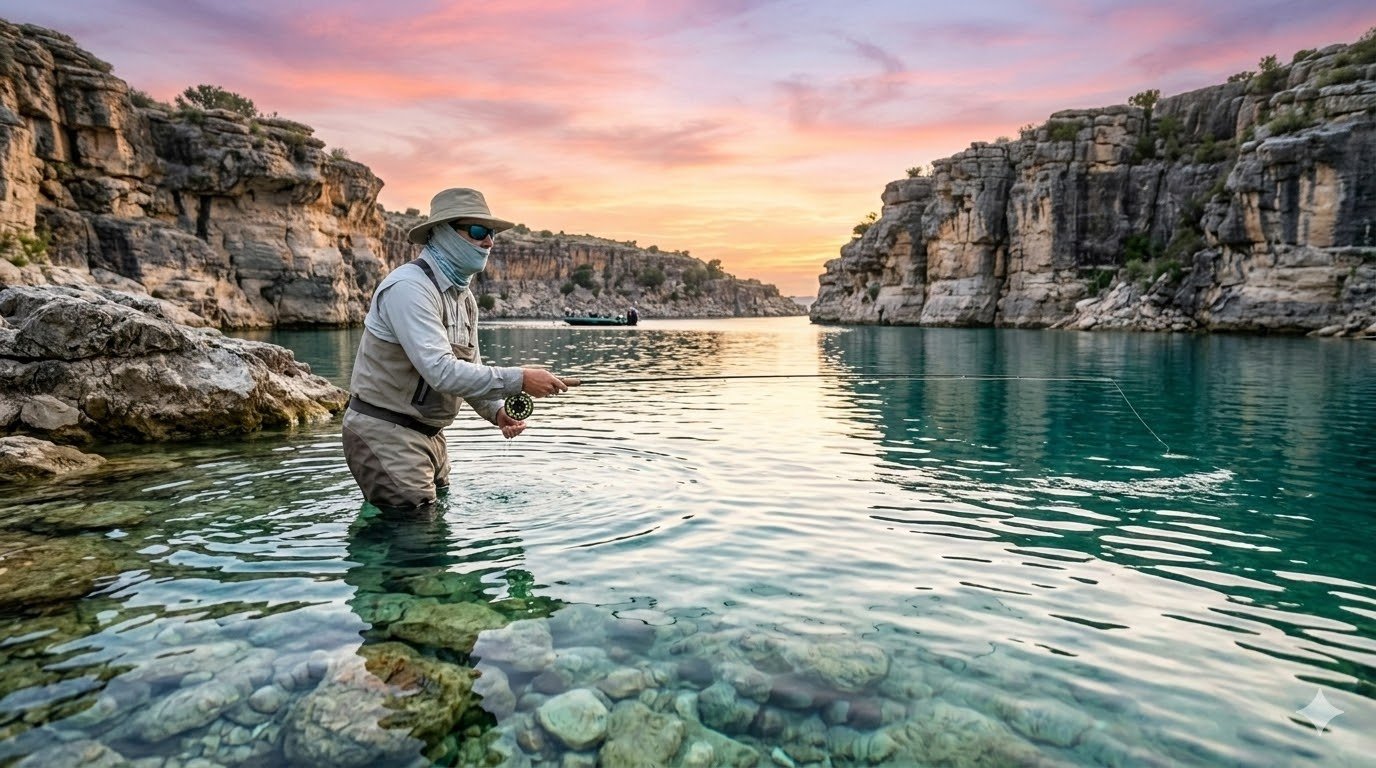
Texas Fishing Guide Texas Fishing Guide specializes in fly fishing for bass along the pristine Devils River arm of Lake Amistad. This distinctive destination offers anglers the rare opportunity to pursue both largemouth and smallmouth bass in a single outing, all while enjoying remarkably clear waters and dramatic rocky terrain that few other Texas fisheries can match. With extensive expertise navigating these unique waters, the guide crafts trips that feel more like personal expeditions than standard outings. By emphasizing sight-casting techniques, clients experience the full thrill of visually tracking and engaging their quarry. Whether seeking solitude or adventure, anglers discover a tranquil setting far removed from crowded fishing areas, where the combination of pristine scenery and world-class bass fishing creates truly memorable days on the water.
O.H. Ivie Bass
Amistad, TX, US
4.6 (102 reviews)
OH Ivie Bass With over four decades of guided fishing experience, Stan Gerzsenyi brings deep expertise to every outing on O.H. Ivie Lake and Lake Amistad. OH Ivie Bass specializes in trophy Largemouth Bass fishing, taking advantage of these renowned Texas waters' clear conditions and abundant structure to deliver both quantity and quality catches year-round. Stan tailors each trip to match anglers' skill levels, creating a welcoming, family-friendly environment where learning and enjoyment go hand in hand. Whether anglers are seasoned or picking up a rod for the first time, they'll find knowledgeable guidance and the opportunity to land memorable fish on some of Texas's most productive bass waters.
Amistad Bass Guide
Del Rio, TX, US
5.0 (49 reviews)
Amistadbassguide brings together expert knowledge and authentic passion for bass fishing on Lake Amistad, one of America's premier fishing destinations. Led by guide Kurt Dove, the operation specializes in pursuing trophy bass in this stunning setting, offering tailored experiences for both newcomers and experienced anglers alike. Kurt's years of hands-on experience translate into thoughtfully designed trips that maximize your time on the water. Whether you're interested in a half-day excursion or committing to a full day of fishing, Amistadbassguide focuses on creating memorable outings that match your skill level and goals.

Farwest Guide Service
Del Rio, TX, US
5.0 (49 reviews)
Lake Amistad Bass Fishing Guide With over 30 years of experience on Lake Amistad, Raul Cordero has established himself as a trusted fixture in Texas bass fishing. Farwest Guide Service specializes in largemouth and white bass on one of the state's premier fishing destinations, welcoming both novice and experienced anglers alike. This full-time operation is known for personalized service tailored to each angler's skill level and goals. While currently unavailable for guided trips, Raul remains committed to the fishing community and is happy to recommend other qualified guides to help anglers plan their Lake Amistad adventure.
The Wild HQ
Presidio, TX, US
The Wild HQ is a premier outfitter based in Presidio, Texas, specializing in intimate river adventures throughout the Far West Texas region. Led by veteran Big Bend river guides, the operation offers customized fishing expeditions and scenic floats on the Rio Grande, Devils River, and Pecos River—waters renowned for their clarity and abundant smallmouth bass populations. With a dedication to small group experiences, The Wild HQ tailors each trip to match guest skill levels, whether for novice anglers taking their first cast or seasoned fishermen seeking new waters. Beyond fishing, trips feature scenic floats and guided hikes through some of North America's most dramatic landscapes. Throughout every adventure, the team prioritizes personalized service and safety, ensuring guests leave with unforgettable memories and a deeper connection to Big Bend's natural beauty.
Find a fly fishing guide in Terlingua who knows the Rio Grande's canyon water, its seasonal moods, and where the bass hold when the desert heat pushes everything into the shade.
Frequently Asked Questions
Do you need a fishing license to fish in Big Bend National Park?
No. No Texas state fishing license is required to fish in Big Bend National Park. You do need a free fishing permit, available at any open visitor center during business hours. The daily catch limit is 25 fish per person, and fishing is permitted only in the Rio Grande. Certain ponds and springs near Rio Grande Village are closed to protect endangered species like the Big Bend gambusia.
What fish can you catch at Big Bend National Park?
The Rio Grande at Big Bend holds largemouth bass, three species of catfish (channel, blue, and flathead), Rio Grande cichlid (the only cichlid native to the United States — a colorful subtropical panfish with turquoise spots), bluegill, and green sunfish. Catfish are the most commonly caught species. There are no trout, salmon, or coldwater species — this is entirely warmwater fishing in a desert river.
When is the best time to fish at Big Bend National Park?
October through March offers the best combination of comfortable temperatures and active fish. Spring (March-May) is ideal — warm but not punishing, with cichlids entering their aggressive breeding season and bass feeding actively. Avoid summer (June-September) unless you fish only at dawn and dusk — desert temperatures regularly exceed 100-110 degrees Fahrenheit at river level, and the nearest hospital is over 100 miles away.
Where is the best place to fish in Big Bend National Park?
Rio Grande Village is the most accessible fishing area — it has easy river access, sandy banks, shallow wading water, and holds bass, catfish, cichlids, and sunfish. The canyon sections (Santa Elena, Boquillas, and Mariscal) offer more dramatic scenery and deeper catfish water but require wading, canoeing, or a backcountry float permit. Boquillas Canyon has the best bank access of the three canyons.
What flies work best for fishing the Rio Grande at Big Bend?
Clouser Minnows in chartreuse-and-white (sizes 4-8) are the most versatile pattern — effective for bass and catfish in deeper water. Woolly Buggers in olive and black (sizes 4-10) cover everything. Foam poppers work for morning and evening bass. For Rio Grande cichlids, use small nymphs — Pheasant Tails, Hare's Ears, Prince Nymphs in sizes 14-18 — or tiny foam poppers and deer-hair ants. San Juan Worms dead-drifted along the bottom catch catfish reliably.
Related Articles
Fly Fishing Yellowstone National Park: Cutthroat in the Meadows, Wolves on the Ridge, and the Strangest Trout Stream on Earth
Monday, December 22, 2025
Fly Fishing Glacier National Park: Native Cutthroat, Wild Rivers, and Backcountry Water That Hasn't Changed in a Thousand Years
Tuesday, September 2, 2025
Fly Fishing Grand Teton National Park: Snake River Cutthroat, Alpine Lakes, and the Most Photogenic Water in the West
Thursday, August 28, 2025
 ™
™