
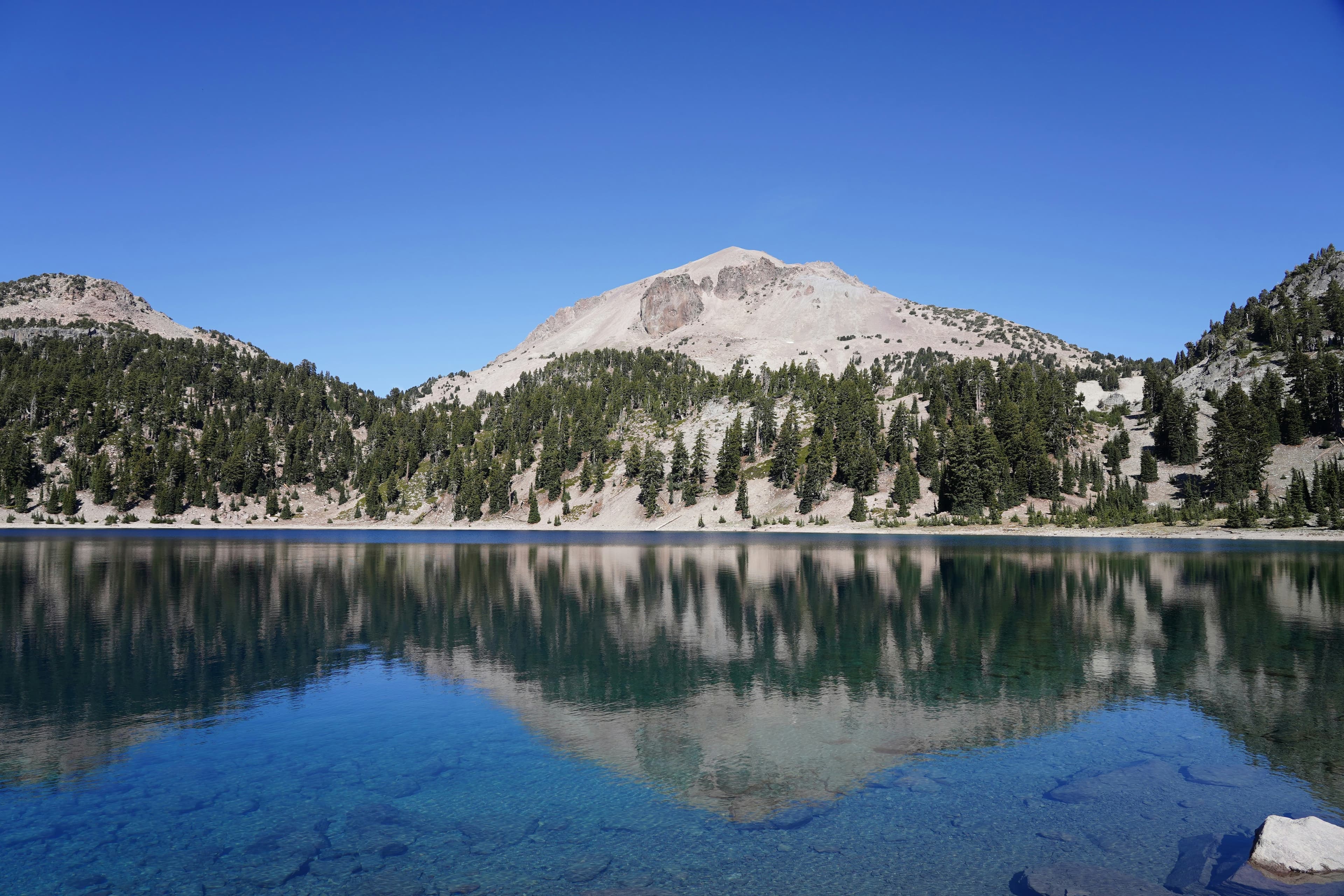
Fly Fishing Lassen Volcanic National Park: Volcanic Lakes, Spring Creeks, and California's Quietest Corner
Lassen Volcanic holds California's best catch-and-release stillwater trout fishing at Manzanita Lake — plus Hat Creek and Fall River, two of the West's most famous spring creeks, are thirty minutes from the park entrance. Here's why this overlooked Cascade volcano deserves a week of your summer.
Nobody talks about Lassen. Ask a dozen fly fishers to name California's national parks and they'll rattle off Yosemite, Sequoia & Kings Canyon, maybe Redwood — places that dominate Instagram feeds and pull millions of visitors a year. Lassen Volcanic National Park sits in the quiet northeast corner of the state, three hours north of Sacramento, and draws fewer annual visitors than Yosemite gets in a single busy month. Most Californians have never been. Most fly fishers don't know what they're missing.
What they're missing is this: a volcanic landscape where boiling mud pots steam a few miles from a crystal-clear lake holding big rainbow and brown trout under catch-and-release regulations. A park where you can sight-cast to cruising fish in the morning, hike past fumaroles and sulfur vents after lunch, and drive thirty minutes to one of the most famous spring creeks in the American West before dinner. Lassen is the convergence of world-class trout water and active volcanic geology that you didn't know existed — and the fact that almost nobody else knows about it is part of what makes it extraordinary.
Lassen Peak — 10,457 feet of plug-dome volcano — is the southernmost active volcano in the Cascade Range. It erupted violently between 1914 and 1917, the last Cascade volcano to blow before Mount St. Helens in 1980. The May 22, 1915 eruption sent a mushroom cloud four miles into the sky and deposited volcanic ash as far as Reno. The park was established the following year, and the volcano has been quiet since 1921 — but the hydrothermal features at Bumpass Hell, the park's largest geothermal area, make it clear that the system underneath is very much alive. Boiling mud pots, hissing fumaroles, and turquoise acid pools sit in a basin surrounded by bleached, mineral-stained rock. It's one of the few places in the lower 48 where the earth actively reminds you that you're standing on a thin crust over molten rock.
This is the landscape you fish in. And the fishing is far better than most people expect.
Manzanita Lake — The Gem
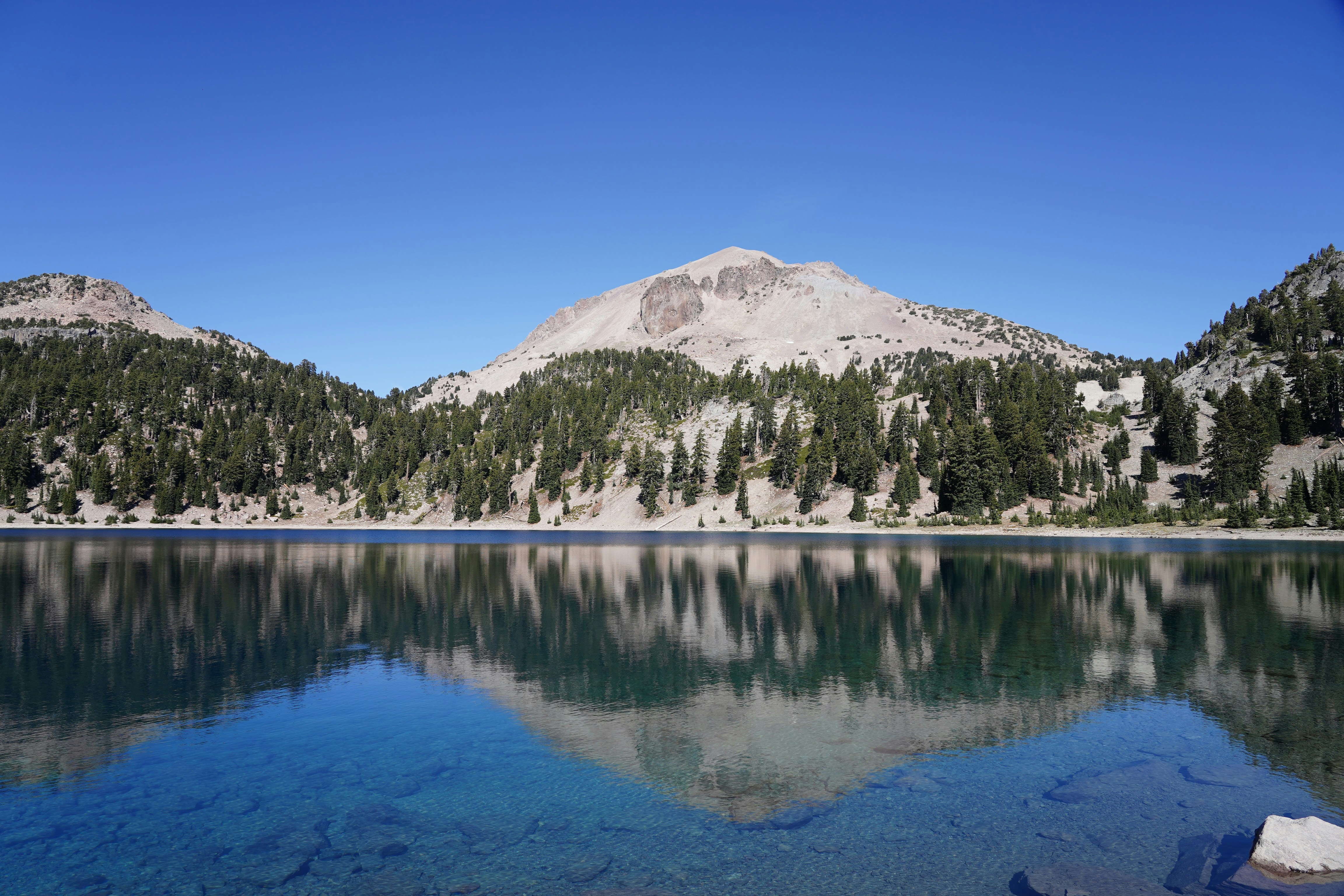
Manzanita Lake is the reason fly fishers come to Lassen. Sitting at 5,850 feet in the northwest corner of the park, just inside the entrance off Highway 89, this 52-acre lake was created when a massive rockslide from Chaos Crags dammed a creek drainage roughly 350 years ago. The lake is shallow — 30 feet at its deepest — with a soft, weedy bottom that produces a rich food chain of aquatic insects. The California Department of Fish and Wildlife designated it a Heritage and Wild Trout fishery, and the park manages it under strict catch-and-release, artificial-only, single barbless hook regulations.
The trout stocking that once supplemented park waters ended entirely in the early 1990s. Manzanita Lake's rainbow and brown trout are now self-sustaining — wild fish that have adapted to this specific lake over decades. They cruise the weed edges and shallow flats in predictable patterns, feeding on Callibaetis mayflies, damselfly nymphs, chironomids, and leeches. The rainbows average 14 to 17 inches, with fish over 20 inches present and catchable if you put in the time. The browns tend to be fewer but larger, holding tighter to structure and feeding more aggressively in low light.
The best way to fish Manzanita Lake is from a float tube. The lake allows non-motorized watercraft, and a float tube puts you at the right level to spot cruising fish against the sandy bottom and weed beds. The technique is patience — you position yourself along a weed edge, watch for the dark shapes of moving trout, and cast ahead of them with a fly that matches what they're eating. It's sight-fishing for trout in still water, and it's as technical and rewarding as anything you'll do on a spring creek.
The Manzanita Fly Box
The hatches on Manzanita Lake follow a predictable stillwater calendar:
Callibaetis mayflies are the signature hatch. These pale, speckled mayflies emerge throughout summer, with the best activity on overcast mornings and evenings. A #14-16 Callibaetis dry or a Callibaetis nymph fished in the film produces some of the best dry-fly action on the lake. When you see trout dimpling the surface in a steady rhythm, they're almost certainly eating Callibaetis emergers or duns. A Sparkle Dun in pale gray or a Parachute Adams in #14-16 is the go-to.
Damselfly nymphs are huge on Manzanita Lake — arguably the most important subsurface food source during summer. Olive damsel nymphs in #10-12, fished with a slow, twitching retrieve along the weed edges, draw aggressive strikes from cruising trout. The damsel migration in June and July, when nymphs swim toward shore to hatch, triggers some of the lake's most exciting fishing. Strip a damsel nymph pattern slowly through the shallows and hold on.
Chironomids (midges) are the year-round staple. Zebra Midges in #16-20, fished under an indicator at varying depths, catch fish on days when nothing else is happening. Chironomid fishing isn't glamorous, but it's deadly effective on Manzanita Lake, especially early and late in the season when the bigger hatches haven't started or have wound down.
Leeches and streamers cover the aggressive fish. A Woolly Bugger in olive or black (#8-10), stripped along the weed edges with an intermediate sinking line, is the best searching pattern on the lake. Balanced leeches fished under an indicator — a technique borrowed from British Columbia stillwater fishing — work particularly well for the browns, which tend to sit deeper and respond to larger offerings.
The complete Manzanita box: Callibaetis dries and nymphs (#14-16), damselfly nymphs (#10-12, olive), Zebra Midges (#16-20), Griffith's Gnat (#18-20), Woolly Bugger (#8-10, olive/black), balanced leeches (#10, olive/maroon), scuds (#14-16, olive), Pheasant Tail nymphs (#14-18), and Hare's Ear nymphs (#12-16).
Gear for Manzanita
Rod: A 9-foot 5-weight or 6-weight handles the wind that funnels through the basin and gives you the backbone for longer casts from a float tube. The 6-weight is the better choice if you're throwing Woolly Buggers and leech patterns.
Lines: Bring a weight-forward floating line for dry flies and chironomids, and an intermediate sinking line (clear) for stripping streamers and damsel nymphs along the weed edges. The intermediate line is the workhorse for this lake.
Leaders: 9 to 12 feet, tapered to 4X or 5X for most subsurface work. Go to 5X or 6X for Callibaetis dries when the fish are being selective. Fluorocarbon tippet is essential — the water clarity is extreme and the fish will refuse anything they can see.
Float tube: Strongly recommended. You can fish from shore, but the weed beds extend well out from the bank, and the best cruising lanes are 30 to 60 feet offshore. A float tube with fins puts you in the zone.
The Other Park Waters
Manzanita Lake gets the attention, but Lassen Volcanic holds other fishable water worth exploring — especially if you want solitude.
Butte Lake sits on the park's northeast side, accessed via Highway 44 and a dirt road. It's a 212-acre lake formed by a lava flow from the Cinder Cone — you can see the black volcanic rock along the eastern shore. Butte Lake holds rainbow and brook trout, and unlike Manzanita, you can keep fish here under standard California regulations. The fishing is simpler — small Pheasant Tail nymphs, Elk Hair Caddis in the evening, and Woolly Buggers stripped along the lava rock shoreline. The trout tend to run smaller (10-14 inches), but the setting — fishing against a backdrop of volcanic cinder cone and lava flow — is unlike anything else in the park system.
Summit Lake (both North and South) straddles the park highway about twelve miles south of Manzanita Lake. These shallow lakes hold small brook trout that rise freely to dry flies. A #14 Elk Hair Caddis or Parachute Adams tossed along the shoreline in the evening will catch fish on nearly every cast. It's not trophy fishing — it's campfire fishing, the kind where you walk fifty yards from your tent at sunset and catch a dozen brookies before dark.
Kings Creek is the longest stream in the park, flowing from the slopes of Lassen Peak down through meadows and a dramatic cascading gorge to Warner Valley. The meadow sections along Highway 89 hold small brook trout in clear, shallow water — perfect for a light rod and small dry flies. A #14-16 Stimulator or Royal Wulff fished through the pocket water, or a Parachute Adams drifted through the meadow pools, is all you need. The fish are small but willing, and the setting — wildflower meadows beneath the volcanic peak — is stunning.
Horseshoe Lake requires a 1.5-mile hike from the Juniper Lake road area and rewards the effort with genuine solitude. Rainbow and brown trout patrol this mid-park lake, and you'll likely have the water to yourself. Hare's Ear nymphs and small Woolly Buggers fished from the bank cover the bases.
The Region — Why Lassen Is a Destination Trip
Here's the part that transforms a Lassen trip from a pleasant national park visit into a genuine fly-fishing pilgrimage: two of the most famous spring creeks in the American West sit within thirty minutes of the park entrance.
Hat Creek — California's First Wild Trout Water
Hat Creek begins on the slopes of Lassen Peak and flows north through the park before emerging into the lowlands east of Highway 89. The upper sections inside and near the park are pleasant small-stream fishing — brook trout in pocket water, nothing technical. But the Wild Trout section of Lower Hat Creek, a 3.5-mile stretch beginning at Powerhouse #2, is one of the most celebrated — and most humbling — pieces of trout water in California.
In 1971, Hat Creek became the first stream in California designated as a Wild Trout Area, and it has been managed as catch-and-release, artificial-only water ever since. The Wild Trout section is classic spring creek: gin-clear water flowing over weed beds at a constant cold temperature, fed by volcanic aquifers. The long, glass-smooth flats hold rainbow and brown trout that have seen every fly pattern sold at every fly shop within driving distance. They're PhD-level fish — selective, leader-shy, and maddeningly consistent in their refusals.
The hatches on Hat Creek are technical spring creek hatches that demand precise matching:
- Pale Morning Duns (#16-18) — the bread-and-butter summer hatch, June through August. Sparkle Duns and CDC emergers outfish standard dun patterns.
- Blue-Winged Olives (#18-22) — the overcast-day hatch, best in spring and fall. Parachute Adams in olive.
- Tricos (#20-24) — the tiny morning spinnerfall that blankets the water in July and August. Test your eyes, your patience, and your 7X tippet.
- Green Drakes (#10-12) — the big event, sporadic but spectacular when it happens. One of the few times these fish eat something you can actually see.
- October Caddis (#8-10) — the fall bonus. Big orange caddis that bring large fish to the surface. An orange Stimulator or Elk Hair Caddis in October is one of the best dry-fly experiences in Northern California.
Hat Creek demands long leaders (12-15 feet), fine tippet (5X to 7X), and a drag-free drift measured in inches. It's the kind of water where you spend an hour watching a single fish rise, tie on three different flies, make six careful casts, and either catch the fish of the day or watch it refuse everything and slide back under the weed bed. If you love technical dry-fly fishing, Hat Creek is a pilgrimage.
Fall River — The Spring Creek Giant
Fall River is thirty to forty-five minutes east of the park, and it's a different beast entirely. This is the largest spring creek in California and one of the longest in North America — a broad, deep, slow-flowing river fed entirely by massive volcanic springs that emerge from the porous basalt of the Modoc Plateau. The water is impossibly clear (20+ feet of visibility), and the wild rainbow and brown trout average 17 to 21 inches, with fish pushing 24 inches not uncommon.
Fall River is almost exclusively fished from small boats — prams, pontoon boats, or canoes — because the soft, mucky bottom makes wading impractical and the deep channels require watercraft to reach feeding fish. Access is limited, with most of the river flowing through private land, and a few public access points and guide-accessed stretches provide the only opportunities.
The famous hatch on Fall River is the Hexagenia — giant yellow mayflies nearly two inches long that emerge in early summer and bring the biggest trout in the river to the surface. The Hex hatch on Fall River is a bucket-list event for Western fly fishers. Beyond the Hex, the river has consistent PMD, Trico, and BWO hatches that fish similarly to Hat Creek but with larger average trout.
McArthur-Burney Falls and Burney Creek
McArthur-Burney Falls Memorial State Park sits about forty minutes north of the Lassen park entrance, and Burney Creek below the 129-foot waterfall holds rainbow and brown trout in a beautiful, accessible setting. The fishing is simpler than Hat Creek — standard attractor dries like Elk Hair Caddis, Parachute Adams, and Prince Nymphs fished through pocket water and short runs. It's a good half-day option and a spectacular waterfall visit.
The Pit River
The Pit River flows west from Fall River toward Lake Shasta, and the tailwater sections below the various powerhouses hold quality rainbow trout in pocket water and freestone runs. It's wilder, less technical water than Hat Creek or Fall River — good for Copper Johns, Hare's Ear nymphs, Golden Stonefly nymphs in early summer, and Elk Hair Caddis in the evening. The Pit is the accessible, meat-and-potatoes option when Hat Creek is being impossible.
The Volcanic Landscape
You're fishing inside one of the most geologically active zones in the lower 48. The park contains all four types of volcanoes — plug dome (Lassen Peak), shield (Prospect Peak), cinder cone (the aptly named Cinder Cone), and composite (Brokeoff Volcano, the remnant of ancient Mount Tehama). Bumpass Hell, a three-mile round-trip hike from the park highway, puts you in the middle of a roiling hydrothermal basin where the ground is literally too hot to touch and the air smells of sulfur. You can hike Lassen Peak itself — a strenuous five-mile round trip to the 10,457-foot summit with views of the entire southern Cascade Range, from Mount Shasta to the north down to the Sacramento Valley.
The juxtaposition is what makes Lassen special. You fish Manzanita Lake in the morning — calm, clear water, cruising trout, the volcanic peak reflected on the surface. You drive twenty minutes and walk through a landscape of boiling mud and acid pools. You drive another twenty minutes and stand on the rim of a cinder cone made of black volcanic rock, looking down at Butte Lake and the Fantastic Lava Beds. This is a working volcanic system, and the fishing happens in the middle of it.
Planning the Trip
When to Go
The park highway (Highway 89 through the park) typically opens in June and closes with the first heavy snowfall in October or November, depending on the year. Manzanita Lake and the northwest entrance area may open earlier and stay open later than the full highway.
- June: Park opening, snowmelt, water still cold. Chironomid fishing on Manzanita Lake. Hat Creek begins its summer hatches. Higher elevation lakes may still have ice.
- July–August: Peak season. Callibaetis and damselfly hatches on Manzanita Lake. PMD and Trico hatches on Hat Creek. Hex hatch on Fall River (early summer). Best weather, most visitors — though "most visitors" at Lassen still means you can find solitude.
- September: The sweet spot. Fewer crowds, cooler air, active trout. BWO hatches begin on Hat Creek. Manzanita Lake trout feed aggressively ahead of winter. Fall color in the aspens.
- October: October Caddis on Hat Creek — the late-season bonus. Manzanita Lake fishes well until the road closes. Watch weather forecasts for early snow.
Getting There
Lassen is remote by California standards, which is part of the appeal. Redding (70 miles west) and Red Bluff (50 miles southwest) are the nearest gateway towns with full services — hotels, restaurants, fly shops, grocery stores. The fly shops in Redding are among the most respected in the West and a mandatory stop for current conditions, flies, and guide recommendations for Hat Creek, Fall River, and the park waters.
From Sacramento, it's about three and a half hours. From San Francisco, roughly four and a half. From Reno, about three hours via Highway 44 to the northeast entrance.
Where to Stay
Manzanita Lake Campground inside the park puts you walking distance from the best fishing in the park. Sites fill quickly in summer — reserve early. The park also has several other campgrounds, including Butte Lake Campground on the northeast side.
Hat Creek area lodges and cabins (along Highway 89 between the park and Burney) put you between the park and Hat Creek — the ideal base for splitting time between Manzanita Lake and the spring creeks.
Redding has the full range of hotels and is a convenient base for day trips to the park, Hat Creek, Fall River, and the Pit River.
Regulations Summary
- Manzanita Lake: Catch-and-release only, artificial flies and lures only, single barbless hook. California fishing license required.
- Other park waters (Butte Lake, Summit Lake, Kings Creek, etc.): Standard California fishing regulations apply. California license required.
- Hat Creek Wild Trout section: Catch-and-release, artificial only, zero kill. California license required.
- Fall River: Special regulations vary by section. California license required. Check current CDFW regulations.
The Fly Box — One Week, All Waters
If you're spending a week splitting time between Manzanita Lake, Hat Creek, and the park streams, here's what you need:
Stillwater (Manzanita Lake): Callibaetis dries and nymphs (#14-16), damselfly nymphs (#10-12, olive), Zebra Midges (#16-20), balanced leeches (#10), Woolly Bugger (#8-10, olive/black), scuds (#14-16)
Spring creek (Hat Creek / Fall River): Sparkle Dun PMD (#16-18), Parachute Adams (#16-22), CDC emergers (#18-22), Trico spinners (#20-24), Griffith's Gnat (#20-22), Elk Hair Caddis (#14-16), October Caddis / Stimulator (#8-10, orange, fall only), Pheasant Tail (#16-20), Copper John (#14-18), San Juan Worm (#12-14, red)
Small streams (Kings Creek, park streams): Elk Hair Caddis (#14-16), Parachute Adams (#14-18), Royal Wulff (#12-16), Stimulator (#12-16), Chubby Chernobyl (#10-14) with a Pheasant Tail or Prince Nymph dropper
The Quiet Corner
Lassen Volcanic National Park won't ever compete with Yosemite or Yellowstone for fame. It doesn't have the granite cathedrals or the geysers. What it has is a volcanic lake full of wild trout that you might have entirely to yourself on a Tuesday morning in September, a spring creek thirty minutes away where the fish have PhDs, and a landscape that reminds you the earth is still building itself in real time. The fishing ranges from deeply technical to quietly simple, the volcanic scenery is genuinely otherworldly, and the crowds — compared to anything else in California's park system — barely exist.
If you've fished Crater Lake and loved the volcanic-lake-meets-fly-rod experience, Lassen is the next step — better fishing, more accessible water, and an entire region of world-class trout streams surrounding the park. If you've fished the famous waters of Montana or Idaho and want to see what California has to offer at that level, Hat Creek and Fall River are the answer, and Lassen Volcanic is the national park bonus that turns the trip into something more.
Pack a float tube, a 5-weight, and your finest tippet. Drive past the crowds heading to Yosemite. Keep going north until the highway narrows, the pines close in, and a volcanic peak appears above the treeline with a clear lake at its base. That's Manzanita Lake. The trout are cruising the weed edges. Nobody else is here.
Find a fly fishing guide in Redding who knows the park waters, Hat Creek, and Fall River — a guide who can read the Manzanita Lake cruisers and put you on the right weed edge will transform your first trip from exploration into revelation.
Looking for a guide in Redding?
We don't have specific guides listed in Reddingyet, but we're growing fast.
Browse All GuidesFrequently Asked Questions
Do you need a fishing license to fish in Lassen Volcanic National Park?
Yes. A valid California state fishing license is required to fish anywhere in Lassen Volcanic National Park, including Manzanita Lake, Butte Lake, Summit Lake, and all park streams. Licenses can be purchased online from the California Department of Fish and Wildlife or at sporting goods stores in Redding and Red Bluff.
What are the fishing regulations for Manzanita Lake?
Manzanita Lake is managed as catch-and-release only with artificial flies and lures only — no bait of any kind is permitted. You must use a single, barbless hook. The lake is designated a Heritage and Wild Trout fishery by the California Department of Fish and Wildlife. Other park lakes like Butte Lake and Summit Lake follow standard California fishing regulations.
What fish species are in Lassen Volcanic National Park?
Lassen Volcanic National Park contains rainbow trout, brown trout, and brook trout. Manzanita Lake holds self-sustaining populations of rainbow and brown trout. Brook trout are the dominant species in the park's smaller streams like Kings Creek. Butte Lake holds rainbow and brook trout. Fish stocking ended in the early 1990s, so all trout in the park are now wild and self-reproducing.
What flies work best for Manzanita Lake?
Callibaetis dry flies and nymphs (#14-16) are the signature pattern for Manzanita Lake. Damselfly nymphs (#10-12, olive) are arguably the most important subsurface fly, especially during the summer migration. Zebra Midges (#16-20) work year-round. Woolly Buggers (#8-10, olive or black) stripped along weed edges are the best searching pattern. Balanced leeches under an indicator target the larger brown trout. A float tube is strongly recommended to reach the cruising lanes along the weed beds.
When is the best time to fly fish Lassen Volcanic National Park?
The park highway typically opens in June and closes in October or November, depending on snowfall. July and August offer peak hatches on Manzanita Lake (Callibaetis, damselflies) and nearby Hat Creek (PMDs, Tricos). September is the sweet spot — fewer crowds, cooler air, aggressive trout, and BWO hatches on Hat Creek. October brings the famous October Caddis hatch on Hat Creek. The Manzanita Lake area near the northwest entrance may open earlier and close later than the full park highway.
Related Articles
Fly Fishing Yosemite National Park: The Merced, the Tuolumne, and Trout Beneath the Granite Walls
Sunday, August 3, 2025
Fly Fishing Sequoia & Kings Canyon: California Golden Trout, the Deepest Canyon in America, and the State Fish in Its Native Water
Wednesday, July 30, 2025
The Comparadun and Sparkle Dun: The No-Hackle Revolution and the Flies That Fool the Smartest Trout
Monday, March 2, 2026
 ™
™