
The Royal Wulff: How to Tie the Attractor Dry Fly That Changed Everything
The Royal Wulff is the most recognizable dry fly ever tied — white hair wings, peacock and red body, and enough buoyancy to ride the roughest pocket water on earth. Here's the history, the recipe, the variations, and where to fish it.

There is no fly in the history of American fly fishing more immediately recognizable than the Royal Wulff. The white upright wings, the peacock herl body banded with red floss, the bushy brown hackle — even people who have never held a fly rod know what a Royal Wulff looks like. It's the fly on the postcards, the logo patches, the shop signs, and the coffee mugs. And unlike most things that become symbols of a sport, the Royal Wulff earned its status by being genuinely, relentlessly effective on trout water from Maine to Alaska for nearly a century.
The fly's origin story is tangled in the way that fly-fishing history often is — with multiple people arriving at similar ideas independently, and credit settling on the name with the best story. But the broad strokes are clear, and they start with a problem that every Eastern fly angler in the 1920s understood: the Fanwing Royal Coachman was beautiful, but it fell apart after two fish.
The Origin — Lee Wulff and the Hair Wing Revolution
The Royal Coachman was already the most popular trout fly in America by the late 1800s. Its combination of peacock herl, red silk body, and white wing was flashy enough to attract trout in any water, and anglers carried it the way later generations would carry the Parachute Adams — as the default dry fly when nothing else was working. But the standard dressing used married duck quill wings or fan-shaped wood duck wings, and those feather wings were fragile. A few casts through pocket water and the wings shredded. A single aggressive take and you were retying.
In 1929 and 1930, two fly tiers independently solved this problem by replacing the feather wings with hair. Lee Wulff, fishing the fast rivers of the Catskills and Adirondacks in New York, began tying Royal Coachman variants with upright bucktail wings and bucktail tails. Around the same time, Q.L. Quackenbush, a member of the Beaverkill Trout Club near Lew Beach, New York, was making similar modifications on the same water.
Wulff's innovation went beyond just swapping materials. He understood that hair wings changed the physics of the fly. Bucktail and calf tail are buoyant, durable, and visible from a distance. A hair-wing Royal Coachman could survive dozens of fish, float higher than any feather-wing pattern, and remain visible to the angler in rough water at dusk. Wulff also replaced the silk tail fibers with hair, further improving floatation and durability.
Wulff originally called his creations the Bucktail Coachman, the Ausable Gray, and the Coffin May — names that reflected their parent patterns and the rivers he fished. Dan Bailey, who opened his legendary fly shop in Livingston, Montana in 1938, began promoting the hair-wing patterns to Western anglers and renamed the series with the "Wulff" designation. The Bucktail Coachman became the Royal Wulff. The Ausable Gray became the Grey Wulff. The Coffin May became the White Wulff. Bailey's endorsement gave the patterns national reach, and by the 1950s the Royal Wulff was standard issue in every fly box in America.
Wulff himself was characteristically humble about the recipe. He considered the pattern generic and encouraged tiers to adapt it — to change colors, switch materials, and evolve the design rather than treating it as sacred. That philosophy produced an entire family of Wulff-style flies, each built on the same hair-wing, hair-tail architecture but tuned for different water and different hatches.
The Recipe — Standard Royal Wulff
| Component | Material |
|---|---|
| Hook | Standard dry fly, #10-16 (TMC 100, Dai-Riki 300, Umpqua U202) |
| Thread | Black 8/0 or 6/0 (UTC 70 Denier, Danville 6/0) |
| Tail | Natural brown moose body hair or brown bucktail, one shank length |
| Wing | White calf body hair, upright and divided |
| Body | Peacock herl — rear third, then red floss center band, then peacock herl front third |
| Hackle | Coachman brown dry-fly hackle, wound as a collar behind and in front of wing |
The body construction is the signature of every Royal Coachman derivative: peacock herl at the rear, a band of red floss in the middle third, and peacock herl again at the front. That red band is what makes a Royal a Royal — it's the flash of color that turns a generic attractor into something trout seem unable to resist. The peacock herl provides iridescence and a buggy silhouette. Together, they create a body that doesn't match any specific insect but triggers an aggressive feeding response in trout that have never seen a PMD chart in their lives.
The white calf tail wings are the other defining feature. They're upright, divided, and visible — you can track a Royal Wulff on the water at distances where other dry flies disappear. This visibility is not a cosmetic feature. It's a functional advantage, especially on broken water at dusk or dawn when you need to see your fly to set the hook.
The Variations — The Wulff Family
Lee Wulff's hair-wing design spawned an entire series, each variation tuned for different conditions:
White Wulff (#10-14) — White calf tail wings and tail, cream dubbing body. Wulff's original "Coffin May" — designed to imitate the Ephemera guttulata spinnerfall on Eastern rivers. The go-to pattern during the evening Coffin Fly fall on the Delaware and other Eastern limestone streams.
Grey Wulff (#12-16) — Natural brown bucktail wings and tail, grey fox or muskrat dubbing body. The original "Ausable Gray" — Wulff's searching pattern for overcast days and dark water. A prospecting fly for freestone rivers when nothing specific is hatching.
Grizzly Wulff (#10-14) — Brown bucktail wings and tail, yellow floss body, grizzly hackle. Dan Bailey's variation for Montana rivers. The yellow body and grizzly hackle imitate large stoneflies on Western freestone water. Deadly on the Yellowstone and Madison during summer.
Ausable Wulff (#10-14) — White calf tail wings, woodchuck tail, rusty orange dubbing body, mixed grizzly and brown hackle. Fran Betters' adaptation for the Ausable River in the Adirondacks — the rusty orange body matches the tannic water better than the standard Royal dressing.
Blonde Wulff (#10-14) — Light tan calf tail wings and tail, tan dubbing body, ginger hackle. A subtle variation for bright conditions and clear water where the Royal's flash might spook fish.
Where to Fish It
The Royal Wulff's genius is its universality. It is not a hatch-matching fly — it's an attractor, a fly that provokes strikes through visibility, silhouette, and the iridescent flash of the peacock-and-red body. That makes it effective everywhere trout live, but especially in water where matching specific insects matters less than getting noticed.
-
Acadia National Park, Maine — Brook trout on dark, tannin-stained water. The white wings stay visible where other dry flies disappear.
-
Great Smoky Mountains, North Carolina — The Smokies are Royal Wulff water. A #14 fished through pocket water and plunge pools is one of the most effective patterns for Southern Appalachian brook trout.
-
Shenandoah National Park, Virginia — Native brook trout in tight mountain streams. The Royal Wulff's visibility in tumbling pocket water makes it a first-choice prospecting fly.
-
Isle Royale National Park, Michigan — Remote wilderness brook trout that rarely see artificial flies. The Royal Wulff is the ideal attractor for unpressured fish.
-
Battenkill, Vermont — Classic Eastern freestone water. The Royal Wulff has been fished on the Battenkill since the pattern was invented — it's part of the river's identity.
-
Denali National Park, Alaska — Arctic grayling eat Royal Wulffs eagerly. The visibility and floatation are ideal for drifting through the long, clear pools of Denali's rivers.
-
Gates of the Arctic National Park, Alaska — Arctic grayling and Dolly Varden in some of the most remote water in North America. The white wings stay visible in midnight-sun light.
-
Kobuk Valley National Park, Alaska — More grayling water in the far north. A #12-14 Royal Wulff is a standard grayling pattern across Alaska's roadless interior.
-
Snoqualmie River, Washington — Wild cutthroat on Pacific Northwest freestone water. The Royal Wulff works as an attractor on the riffles and runs.
-
Mount Rainier National Park, Washington — Native cutthroat in high-gradient mountain streams. Small Royal Wulffs (#14-16) produce aggressive takes from opportunistic fish.
-
Crater Lake National Park, Oregon — Rainbow and brown trout in fast Cascade mountain streams where high floatation matters.
-
Lassen Volcanic National Park, California — Stream trout in volcanic mountain water. A standard attractor for prospecting the park's small freestone creeks.
-
Great Basin National Park, Nevada — Bonneville cutthroat in remote mountain streams of the Snake Range.
-
Great Sand Dunes National Park, Colorado — Rio Grande cutthroat in high-mountain creeks where attractors outperform hatch-matchers.
The Royal Wulff shines anywhere you'd fish an attractor dry fly: fast riffles, pocket water, plunge pools, and mountain streams. If you're fishing unfamiliar water and don't know what the trout are eating, tie on a Royal Wulff. It's been the answer to that question since 1930.
How to Tie It — Video Tutorials
The Royal Wulff is an intermediate pattern — the upright divided hair wings are the challenging step. Once you can set wings, the rest of the fly (peacock herl body, red floss band, hackle collar) is straightforward.
Royal Wulff Fly Pattern — Trident Fly Fishing Tying Tutorial Royal Wulff — Classic Dry Fly Tying with Lee Wulff's Pattern Royal Wulff — Fly Tying Tutorial for BeginnersTips From the Vise
Calf tail, not calf body hair. For the wings, use white calf tail — it's stiffer, more durable, and holds its shape better than calf body hair. Clean out the underfur thoroughly before tying in, and use a hair stacker to align the tips. A pencil-width clump per wing is about right for a size 12.
Set the wings before the body. Tie in the calf tail wings first, divide them with figure-eight wraps, and post them upright with thread wraps at the base. Get the wings right before you do anything else — if the wings are crooked, the fly will spin on the water and twist your tippet. The wings should be about one hook-shank length tall.
The peacock herl trick. Peacock herl is beautiful but fragile — it breaks after a few fish. Reinforce it by twisting two or three herl fibers around the thread before wrapping the body. This creates a peacock-herl rope that's three times as durable as bare herl. The body will survive dozens of fish instead of falling apart on the third.
Red floss, not thread. Use actual single-strand floss for the red band — not tying thread dyed red, not yarn. Floss lays flat and creates the smooth, glossy band that defines the Royal pattern. Wrap two to three layers for a bright, even band in the center third of the body.
Hackle density matters. The Royal Wulff needs a bushy hackle collar — this is a high-floating attractor, not a flush-riding emerger. Wind three to four turns behind the wings and three to four turns in front. The hackle should support the fly high on the water, with the body barely touching the surface. Use quality dry-fly hackle — stiff, web-free fibers from the top of a Whiting or Metz cape.
Size down for educated fish. The standard Royal Wulff is a #12 — big, visible, and confident. But on pressured water or late in the season, a #16 Royal Wulff with slightly sparser hackle and smaller wings can catch fish that refuse the big version. The same attractor profile in a smaller package reads as less threatening to trout that have been caught before.
Build Your Box
Tie a dozen in #12 (the workhorse size for freestone rivers and brook trout streams), a dozen in #14 (the all-purpose size that works everywhere), and a half-dozen in #16 for pressured water. Add a half-dozen Grey Wulffs in #14 for overcast days and a half-dozen Ausable Wulffs in #12 for tannic Eastern water. Total: about 50 flies — enough to fish the Royal Wulff family on any trout water in America for a full season.
Frequently Asked Questions
Who invented the Royal Wulff?
Lee Wulff and Q.L. Quackenbush independently modified the Royal Coachman with hair wings and tails in 1929-1930, both fishing the fast rivers of the Catskills and Adirondacks in New York. Dan Bailey later promoted the pattern nationally from his fly shop in Livingston, Montana, and renamed the series with the Wulff designation.
What size Royal Wulff should I use?
Size 14 is the most versatile all-around size. Use #10-12 for fast pocket water, big rivers, and grayling. Use #14 as the standard searching pattern on freestone rivers. Use #16 for pressured water or selective fish. Carry sizes 12, 14, and 16 to cover most situations.
What does the Royal Wulff imitate?
The Royal Wulff is an attractor pattern — it doesn't imitate a specific insect. The peacock herl and red floss body creates an iridescent flash that triggers aggressive feeding responses. It loosely suggests large mayflies, caddisflies, or stoneflies depending on size, but its effectiveness comes from provoking strikes rather than matching hatches.
What is the difference between a Royal Wulff and a Royal Coachman?
Both share the peacock herl and red floss body, but the Royal Coachman uses fragile feather wings (duck quill or wood duck fan wings) while the Royal Wulff uses durable white calf tail or bucktail hair wings. The hair wings float higher, last longer, and are more visible — the Royal Wulff is essentially a modernized, more fishable Royal Coachman.
Is the Royal Wulff hard to tie?
It's an intermediate pattern. The upright divided calf tail wings are the most challenging step — setting them upright and dividing them with figure-eight thread wraps takes practice. The peacock herl body and red floss band are straightforward, and the hackle collar is standard dry-fly technique. If you can tie a Parachute Adams, you can tie a Royal Wulff.
Related Articles
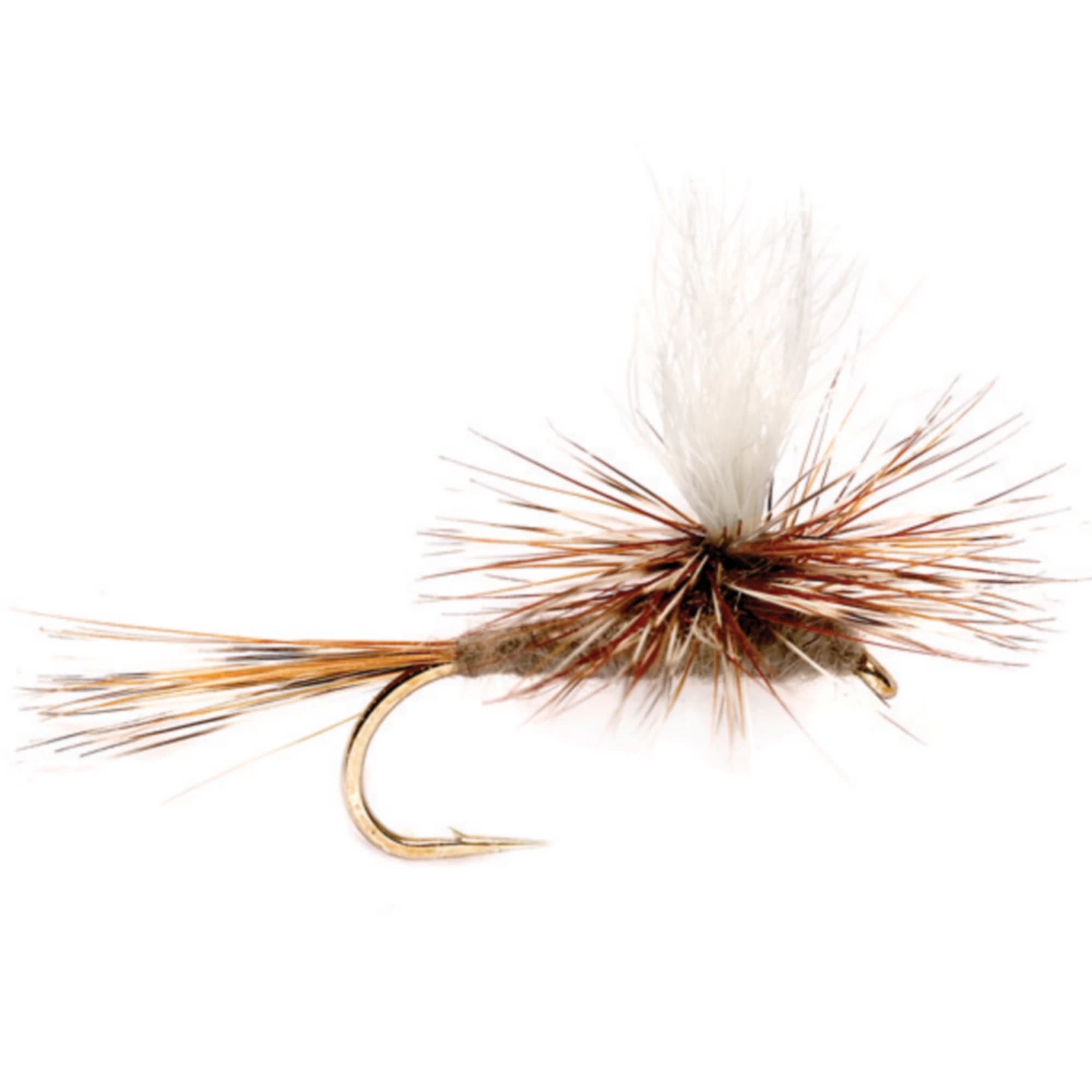
The Parachute Adams: How to Tie the One Fly Every Angler Carries and Why It Fools Everything
Monday, April 13, 2026
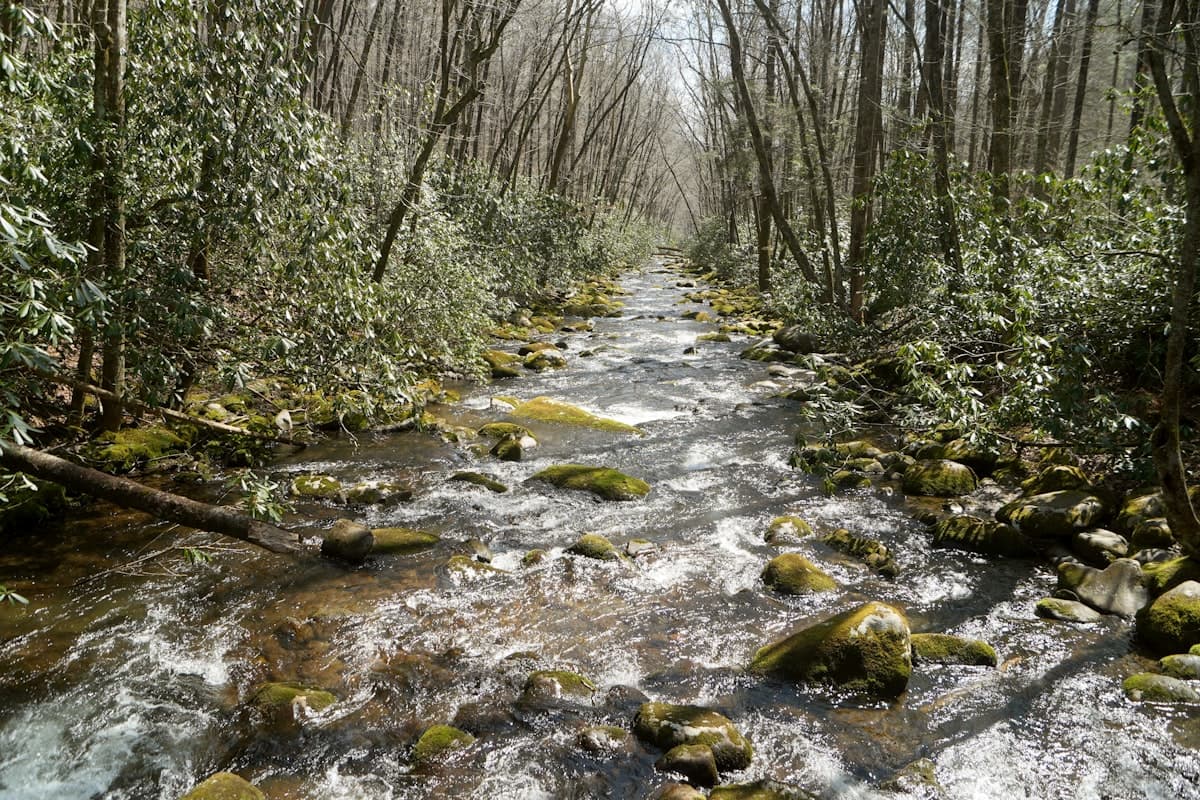
Fly Fishing the Great Smoky Mountains: Native Brook Trout, Old-Growth Streams, and the Oldest Mountains on Earth
Saturday, May 2, 2026

Fly Fishing Shenandoah National Park: Native Brook Trout, Mountain Streams, and the Best Small-Water Fishing on the East Coast
Wednesday, August 20, 2025
 ™
™