
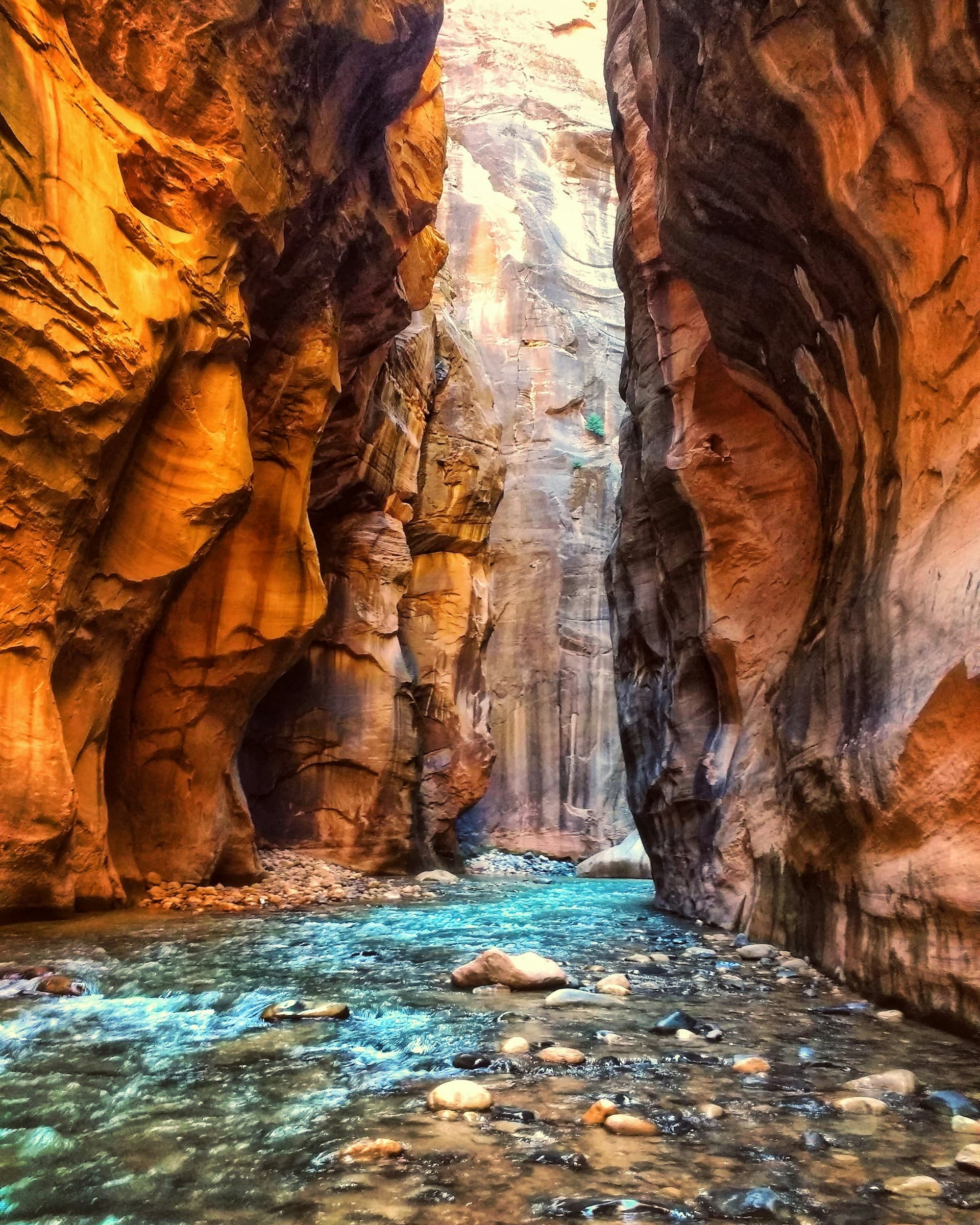
Fly Fishing Zion National Park: Wild Brown Trout, the Virgin River, and the Canyon You Didn't Come Here to Fish
Five million people visit Zion National Park every year. Almost none of them bring a fly rod. The Virgin River holds wild brown trout in the shadow of 2,000-foot sandstone walls — right where the hiking crowds wade through the Narrows. Here's how to fish it, when to go, and why flash floods should scare you more than the trout.
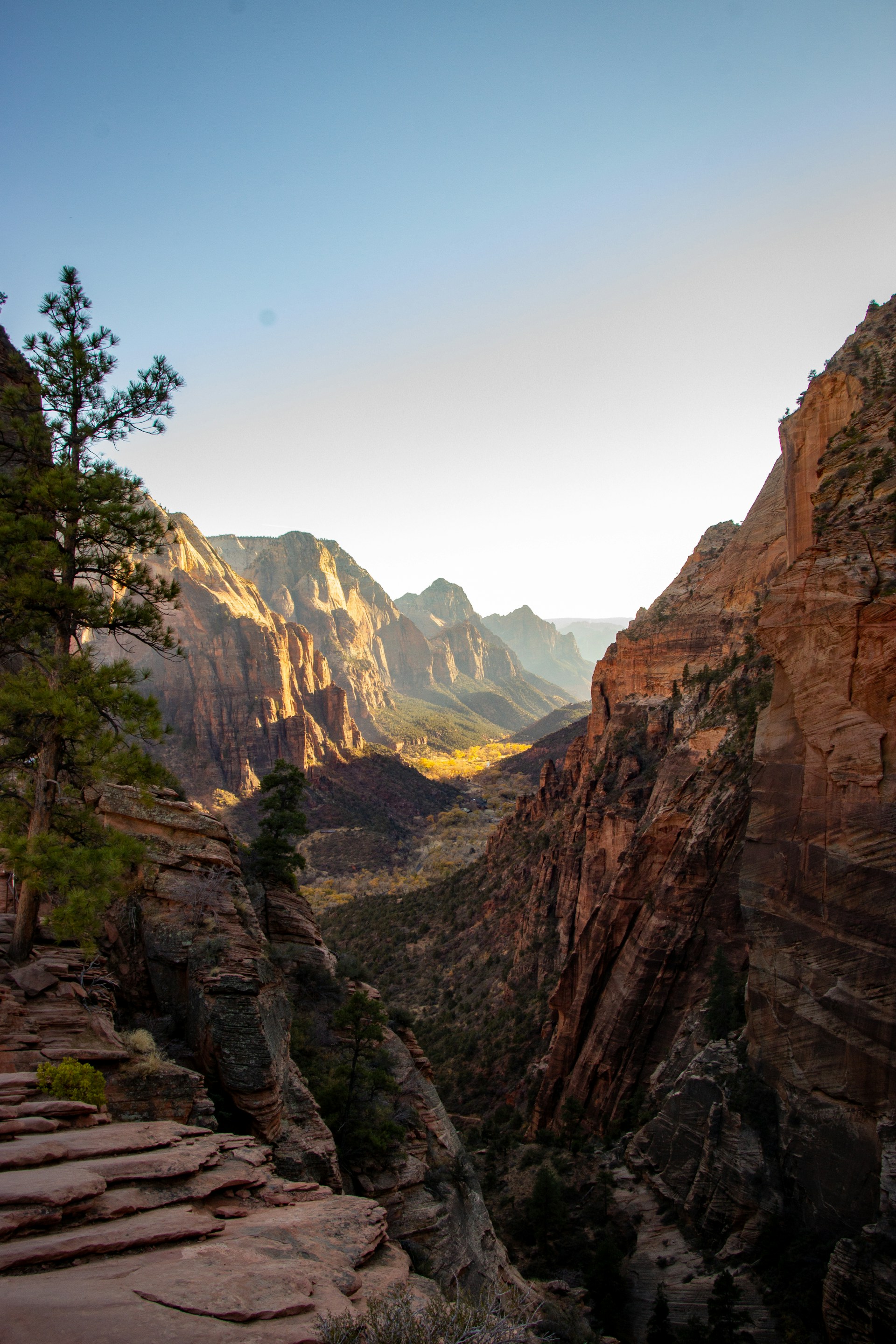
Five million people visit Zion National Park every year to hike Angel's Landing, wade the Narrows, and photograph sandstone walls that glow amber at sunset. Almost none of them bring a fly rod.
That is a mistake — not because Zion is a world-class trout fishery, but because the fishing here is one of those hidden-in-plain-sight experiences that transforms a national park trip into something you remember differently. Wild brown trout holding in a pool beneath the Court of the Patriarchs. A Pheasant Tail Nymph drifting through a riffle while the canyon walls above you catch the last light of the day. The sound of the Virgin River — the same river that carved this entire canyon over thirteen million years — running over cobble while you false cast under a cottonwood.
The fishing is not easy. The trout are wild and educated. The river gets more foot traffic than most trout streams see in a decade. And the flash flood danger is real — people have died in this canyon when the Virgin River rose ten feet in minutes during monsoon season. But if you respect the weather, read the water carefully, and bring the right flies in the right sizes, Zion offers something no other national park can: technical small-stream trout fishing inside a canyon that looks like it was carved by God on a day when He was showing off.
The Virgin River — A Fishery Hiding Inside a Cathedral
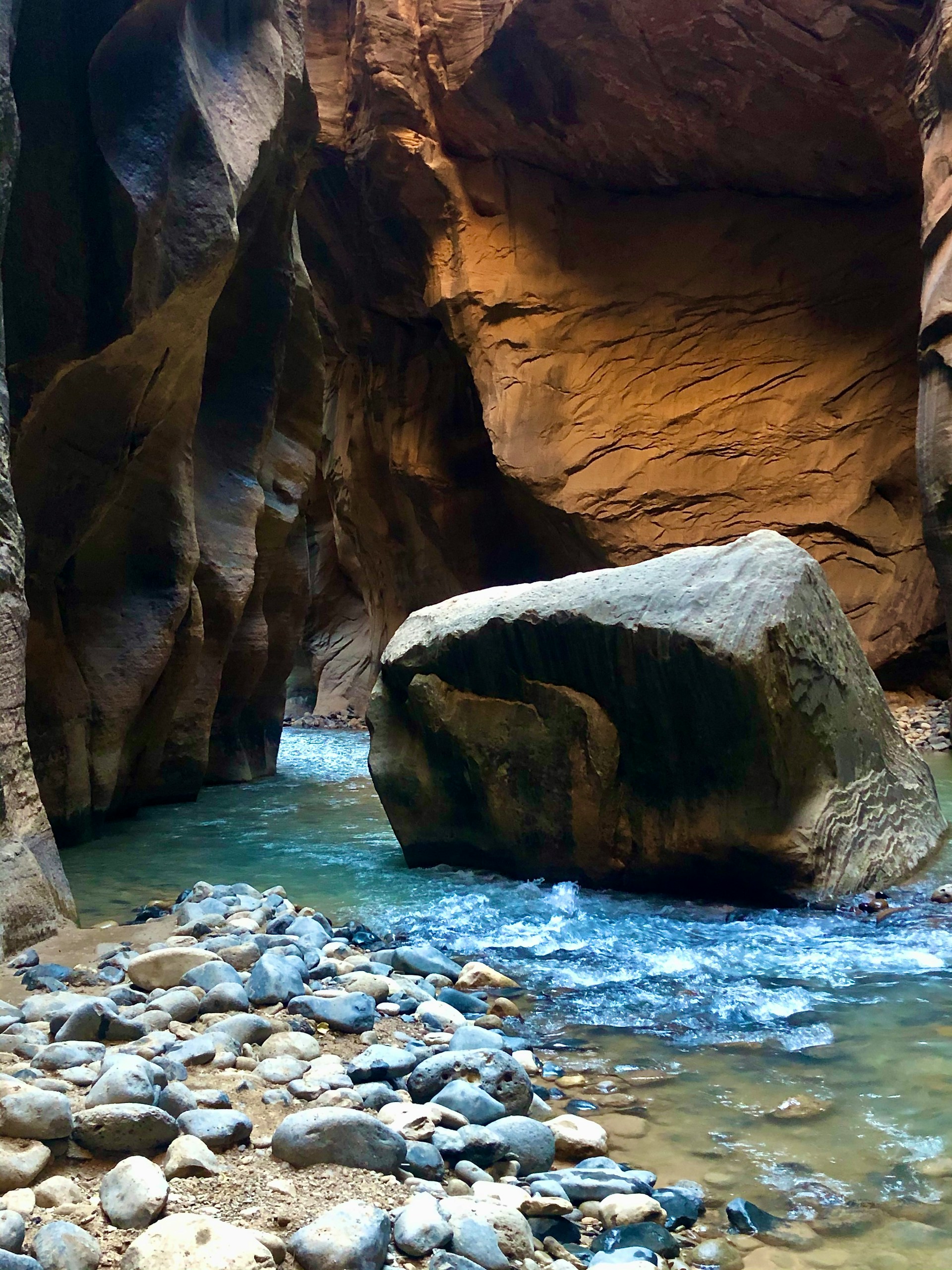
The Virgin River is not a famous trout stream. It will never appear on a top-ten list alongside the Madison or the Green. It is a small desert river that carved one of the most spectacular canyons on earth, and the trout in it are almost an afterthought — a biological footnote in a landscape defined by geology.
But the fish are there. The North Fork of the Virgin River flows through the heart of Zion Canyon, from the Narrows downstream past the Temple of Sinawava, the Court of the Patriarchs, and the town of Springdale. It holds brown trout, rainbow trout, and — less commonly — cutthroat trout that were stocked historically and have persisted in some reaches. The browns are the most important fish here. They are self-sustaining in some sections, wild fish that reproduce naturally in the Virgin River's gravel beds despite the flash floods, the sediment loads, and the millions of hikers who wade through their home water every summer.
The East Fork of the Virgin River enters from the east, flowing through Parunuweap Canyon — a section of the park that is far less visited than the main canyon. The East Fork joins the North Fork south of Springdale and offers some of the better trout water in the area, particularly upstream toward Mount Carmel Junction along Highway 89. The larger rainbows — fish in the 14- to 24-inch range — tend to roam the East Fork, which sees a fraction of the foot traffic that the main canyon gets.
The river also supports four native fish species that are not trout: the Virgin River spinedace (endangered — you cannot target or keep these), speckled dace, desert sucker, and flannelmouth sucker. The native fish are part of what makes the Virgin River ecologically significant. The park collaborates with the Virgin River Program — a cooperative involving the National Park Service, Utah Department of Natural Resources, and U.S. Fish and Wildlife Service — to monitor native species and manage the watershed. As an angler, your job is simple: if you catch something that is not a trout, release it immediately and handle it with care.
The Brown Trout Problem (Your Problem, Not Theirs)
The brown trout in the Virgin River are not stocked pellet-eaters waiting for your fly. They are wild fish that have survived in a river where the water temperature exceeds 70°F in summer, where flash floods rearrange the streambed multiple times a year, and where thousands of hikers wade through their holding water daily from April through October.
These fish have seen people. They have seen boots, trekking poles, and the shadows of hikers on the water surface. They are not spooked by the presence of humans in the way that a backcountry brown trout would be — they have learned to tolerate it. But they are spooked by the wrong presentation: a fly line slapping the surface, a heavy footfall on the cobble upstream, a drag-free drift that isn't quite drag-free. They are educated in the way that spring creek browns are educated, except they live in pocket water instead of flat water, which means the feeding lanes are shorter and the windows of opportunity are smaller.
The key to catching these fish is not pattern selection — it is stealth, accuracy, and the willingness to fish 7X tippet in a canyon where the light makes it hard to see your fly. Long leaders (10 to 12 feet), light tippet, and short, accurate casts matter more here than having the right fly in the right size. That said, having the right fly helps.
Flash Floods — The Thing That Should Scare You
This section comes before the hatch chart and the fly box because it is more important than either of those things. Flash floods kill people at Zion National Park. They have killed hikers in the Narrows, swept people off their feet at river crossings, and turned a calm ankle-deep river into a violent, debris-choked torrent in the time it takes to tie on a new tippet.
The Virgin River drains a large watershed above Zion Canyon. When a thunderstorm drops rain on the plateaus miles upstream — storms you cannot see and may not know about — that water funnels into the narrow canyon with nowhere to go but down. The river can rise from calf-deep to over your head in minutes. The 2022 monsoon season produced a flash flood that killed a hiker in the Narrows and required over 1,500 person-hours of search and rescue effort.
The rules for fishing the Virgin River during monsoon season (July through September):
- Check the flash flood potential forecast every morning. The National Weather Service issues flash flood watches and warnings for Zion. If there is any chance of afternoon thunderstorms, do not fish in the canyon.
- Fish early. Monsoon storms typically build in the afternoon. If you are going to fish during summer, be on the water at dawn and off the water by noon.
- Watch the water. If the river suddenly changes color — going from clear to brown — get out immediately. If you hear a roaring sound from upstream, get to high ground. Do not wait to see what is coming.
- Never fish the Narrows during flash flood season. The walls are too close, the water is too deep, and there is no high ground to escape to.
- Tell someone where you are going and when you will be back. This is canyon country, not a city park.
The best seasons to fish the Virgin River and avoid flash flood risk are October through November and March through May. The fall window is the sweet spot — cooler air temperatures, lower water, and brown trout that are more active as they approach the spawn.
The Waters — Where to Fish
The Main Canyon (North Fork Virgin River)
The most accessible water in Zion runs alongside the Zion Canyon Scenic Drive from the Temple of Sinawava downstream to Springdale. The shuttle system (mandatory from March through November) drops you at various trailheads along the canyon floor, and the river is right there — running over cobble and through pools between the canyon walls.
The fishing in the main canyon is limited by the foot traffic. From April through October, the riverside trails see hundreds of hikers daily, and many of them wade into the river to cool off. The trout adjust their behavior accordingly: they feed early and late, hold tight to structure during the day, and become more accessible in the low-light hours when the crowds thin.
Best spots in the main canyon:
- Big Bend area — deeper pools and undercut banks where brown trout hold during the day
- Court of the Patriarchs — riffly water with pocket water that holds fish year-round
- Below the confluence with Pine Creek — where additional cold water enters and creates a temperature refuge
The East Fork (Highway 89 Access)
The East Fork of the Virgin River offers better fishing with less pressure than the main canyon. Access is along Highway 89 north of the park's east entrance, particularly between Mount Carmel Junction and the park boundary. The East Fork flows through Parunuweap Canyon — a narrow, red-walled gorge that is less developed and less visited than Zion Canyon proper.
The East Fork holds larger rainbows than the North Fork, with fish in the 14- to 24-inch range reported. The water is also more varied — riffles, runs, deeper pools, and undercut banks in a canyon setting that is quieter and more intimate than the main canyon. This is where you go if you want to fish seriously for a full day without the hiking crowds.
Kolob Reservoir and Kolob Creek
In the northern reaches of the park, the Kolob Terrace Road climbs from the town of Virgin to Kolob Reservoir at 8,100 feet. The reservoir sits at 250 surface acres and holds rainbow trout, cutthroat trout, and brown trout. It is managed under special regulations: anglers are allowed two trout under 15 inches or over 22 inches (all trout between 15 and 22 inches must be released).
Kolob Creek, south of the reservoir, holds small trout and provides an alternative when the reservoir is not fishing well. The creek is closed from January 1 through the second Saturday of July — check current Utah DWR regulations before fishing.
The Kolob section of Zion is a different world from the main canyon — high-elevation forest instead of desert sandstone, pine and fir instead of cottonwood and cactus. If you are camping in this area, the evening fishing on Kolob Reservoir is worth the drive.
La Verkin Creek (Kolob Canyons)
La Verkin Creek flows through the Kolob Canyons section of Zion — the less-visited northwestern part of the park accessed from Exit 40 on Interstate 15. The creek is primarily a hiking and backpacking destination (the 14-mile trail to Kolob Arch is the main draw), but the lower reaches hold some small trout. This is not destination fishing — it is a bonus for backpackers who bring a tenkara rod or a packable 3-weight.
Can You Fish the Narrows?
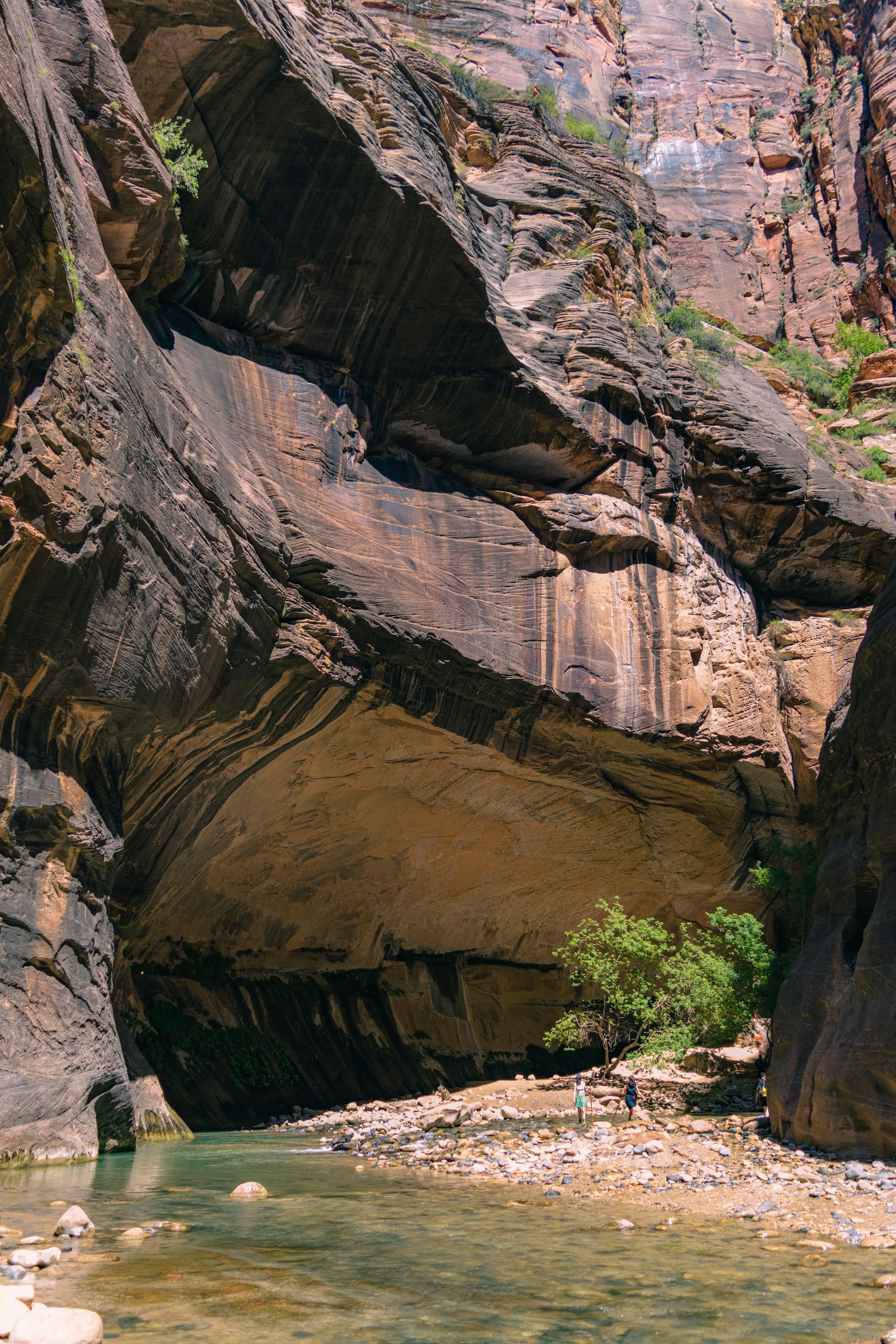
The Narrows is the most famous hike in Zion — a sixteen-mile upstream wade through a slot canyon where the walls close to twenty feet apart and tower 1,500 feet above the river. Millions of hikers wade the lower section from the Temple of Sinawava every year. It is one of the most photographed places in the National Park System.
Can you fish it? Technically, yes — fishing is legal in the Virgin River throughout the park with a valid Utah license. Practically, the Narrows is not good trout water. The deep sediment, the frequent flooding, and the sheer volume of foot traffic mean that trout do not hold in the Narrows in significant numbers. The fish tend to flush downstream to the wider sections of the canyon where there is more structure, more food, and less disturbance.
If you want to combine a Narrows hike with fishing, the better approach is to hike the Narrows in the morning (start early to avoid crowds) and then fish the wider water downstream near Big Bend or the Court of the Patriarchs in the evening. The fish are where the food is, and the food is where the river has room to breathe.
The Seasonal Calendar
October–November (Prime Time): The best window for fishing the Virgin River. Summer heat has broken, flash flood risk drops significantly, the monsoon season is over, and brown trout become more active as water temperatures cool into the 50s. Blue Winged Olives hatch on overcast days — a #18 Comparadun BWO is the dry-fly play. The crowds thin after mid-October and the canyon light shifts — golden and low-angle, turning the Navajo sandstone into a cathedral of amber and rust. This is when you want to be here.
March–May (Spring Window): Snowmelt from the plateaus above can blow out the river in April, but March and May often fish well. Water temperatures rise into the range where trout start feeding actively. Midges and small caddis begin hatching. The park is less crowded than summer but busier than fall. Watch for late-season storms and be aware of rising water from upstream snowmelt.
June (Transition): The river is fishable if the snowmelt has subsided, but afternoon temperatures in the canyon climb into the 100s. Fish very early — dawn to mid-morning — and expect the trout to go deep as the water warms. Caddis hatches can be good in June.
July–September (Monsoon — Caution): The monsoon season brings afternoon thunderstorms, flash flood danger, and water temperatures that can exceed 70°F. This is the worst time to fish the Virgin River. If you must fish during these months, fish at dawn, check the flash flood forecast daily, and be off the water before noon. The Kolob Reservoir at 8,100 feet is a better option during summer — cooler water, no flash flood risk, and stocked trout.
December–February (Winter): The canyon is cold but beautiful — snow on the rim, ice on the side creeks, and almost no other people. The trout are sluggish but catchable with small nymphs fished slowly through deeper pools. Zebra Midges (#20-22) and small San Juan Worms are the winter standards. Dress warm and fish the warmest part of the day (11 a.m. to 3 p.m.).
The Fly Box — What the Virgin River Trout Eat
The Virgin River is a desert canyon stream. The insect life is less diverse than a Rocky Mountain freestone, but caddis are dominant, terrestrials are important in the warm months, and small mayflies provide the technical dry-fly opportunities.
Dry Flies
-
Elk Hair Caddis (#14-18): The single most important dry fly on the Virgin River. Caddis dominate the insect life here, and a tan or light olive Elk Hair Caddis in #16 is your default confidence pattern. Fish it on a dead drift in the riffles, then let it swing at the end — caddis skitter on the surface, and the trout know it.
-
Parachute Adams (#14-18): The universal searching pattern. When you do not know what the fish are eating, tie on a #16 Parachute Adams and work the likely water. It covers the small BWOs and PMDs that hatch sporadically.
-
Stimulator (#12-16): Yellow and orange. Doubles as a stonefly imitation in the faster pocket water and as a general attractor in the riffles. Especially useful in spring and early summer when the larger insects are active.
-
Chubby Chernobyl (#10-14): The hopper pattern for the Virgin River. From July through September, grasshoppers fall into the river from the dry canyon slopes, and the trout eat them aggressively. Fish the Chubby tight to the banks and under the cottonwood trees. It also serves as an indicator fly for a nymph dropper.
-
Foam terrestrials — ants (#16-20) and beetles (#14-18): Underrated on the Virgin River. The desert canyon environment produces ants and beetles that end up in the water regularly, and the trout key on them during the hot months when other insect activity is minimal. A small black foam ant in #18 fished in the slower water against the banks can be deadly when nothing else is working.
Nymphs
-
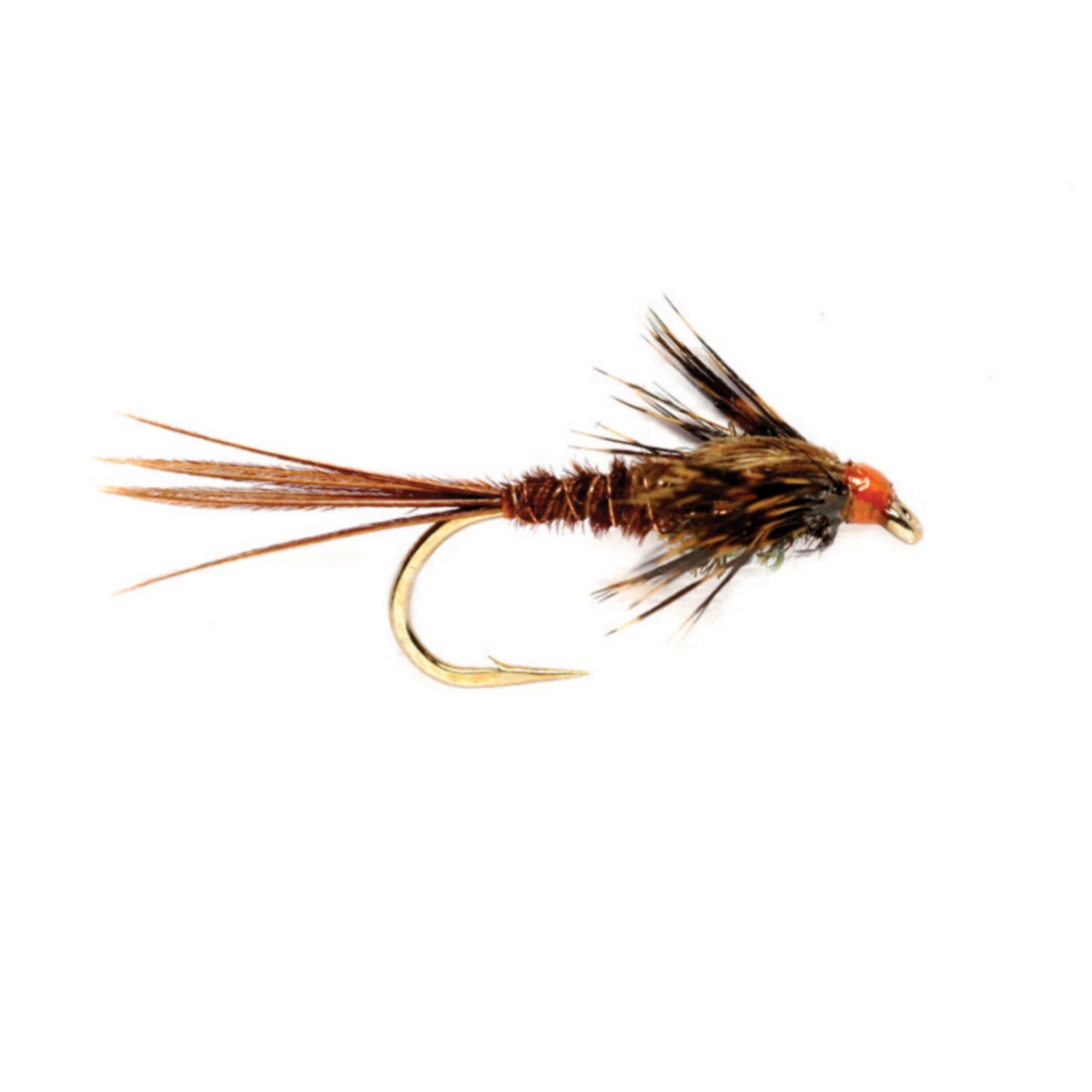
Pheasant Tail Nymph (#16-20): The most important subsurface fly on the Virgin River. The smaller sizes (#18-20) match the small mayfly nymphs that the trout eat year-round. Fish it under an indicator or as a dropper behind a dry fly. If you could only bring one nymph to Zion, this is the one.
-
Hare's Ear Nymph (#14-18): A buggy general-purpose nymph that covers caddis larvae, mayfly nymphs, and the general invertebrate buffet. The #16 is the all-around size.
-
Prince Nymph (#14-16): An attractor nymph that works in the faster riffles and pocket water where the trout are feeding opportunistically. The flash from the peacock herl and biot tail triggers strikes when the fish are not keyed on a specific insect.
-
Copper John (#16-18): A heavy nymph that sinks fast in the pocket water. Useful when you need to get down quickly in the deeper runs between boulders.
-
San Juan Worm (#14-16, red and wine): Effective year-round, especially after rain when the river picks up sediment and the trout shift to feeding on worms and larvae washed into the current.
Streamers
-
Woolly Bugger (#10-12, olive and black): For the deeper pools where larger brown trout hold — particularly in the Big Bend area and below the confluence with Pine Creek. Strip it slowly along the bottom during low-light hours.
-
Muddler Minnow (#10-12): A sculpin imitation that works in the deeper runs. The brown trout in the Virgin River eat small fish when they can get them, and a Muddler swung through the tail of a pool at dusk can move a fish that would not look at a nymph.
The Gear
Rod: An 8- or 8.5-foot 3-weight or 4-weight is the ideal rod for the Virgin River. The canyon walls limit your backcast in many spots, and the short, accurate casts you need in the pocket water are easier with a shorter, lighter rod. A 9-foot 4-weight works but is more rod than the water demands. If you are also fishing Kolob Reservoir, bring a 9-foot 5-weight for the lake work.
Leaders and tippet: 9- to 12-foot leaders tapered to 5X for general fishing. Go to 6X for the dry-fly work and 7X when the water is clear and the fish are refusing. Fluorocarbon tippet is worth it in the clear stretches — these fish can see monofilament. Carry extra tippet in 5X, 6X, and 7X. You will lose flies to the cobble bottom.
Line: Weight-forward floating line. No need for sinking lines in the river. If you are fishing Kolob Reservoir, a sink-tip or intermediate line is useful for stripping streamers.
Wading: Wading boots with felt soles or sticky rubber are essential — the Virgin River cobble is slick. You can wet-wade from June through September (the water and air temperatures are warm enough), but bring lightweight waders for spring and fall. A wading staff is not mandatory but is helpful in the deeper sections near Big Bend and in the Narrows approaches.
Other essentials: Polarized sunglasses are critical — the canyon light creates glare on the water that makes it impossible to see fish without them. Carry more water than you think you need. The canyon is a desert, and dehydration happens fast, especially if you are wading and casting in direct sun.
Springdale — The Gateway
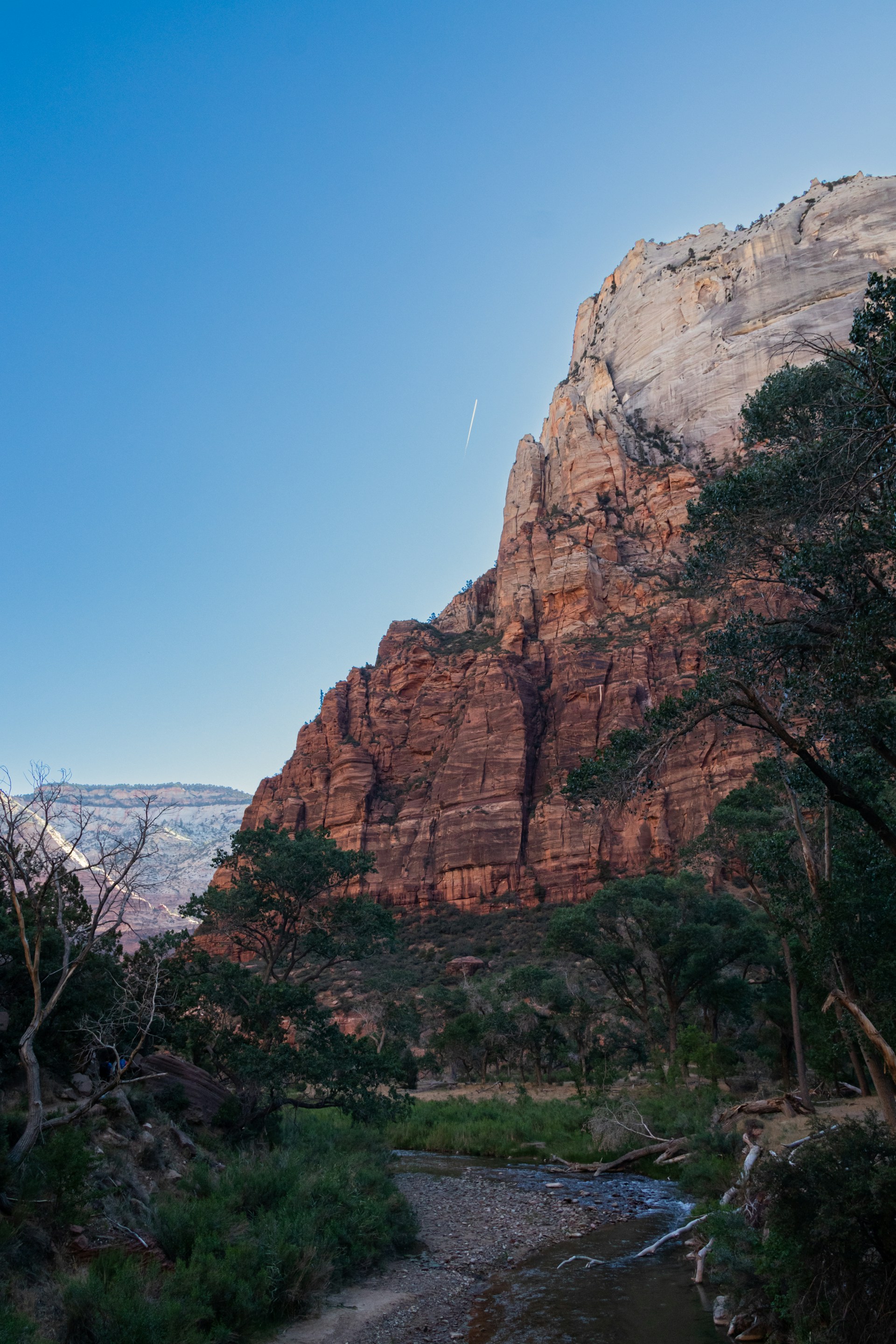
Springdale sits directly at the south entrance to Zion National Park — a town of roughly 500 year-round residents stretched along the Virgin River beneath the canyon walls. It is the base camp for most Zion visitors, and it has the lodging, restaurants, and outfitter shops that a gateway town needs.
There is no dedicated fly shop in Springdale. The closest fly-fishing-specific outfitters are in the St. George area, about 45 minutes southwest, or you can book a guided trip through outfitters in Torrey who run trips in the Zion area. For basic tackle, the outdoor shops in Springdale carry some gear and can point you toward the fishable water.
Find a fishing guide near Springdale if you want local knowledge on the Virgin River — the fish move with the seasons, and a guide who knows the current conditions can save you a day of blind prospecting.
The Combined Trip
Zion is a hiking park first and a fishing park second. The best approach is to build your trip around the iconic hikes — the Narrows, Angel's Landing, Observation Point, the Emerald Pools — and add fishing in the early morning and evening hours when the hiking crowds have not yet materialized or have already cleared out.
A four-day itinerary that works:
Day 1: Arrive in Springdale. Evening fish on the North Fork downstream from the park entrance — the stretch through town is accessible without the shuttle and holds trout in the deeper pools.
Day 2: Dawn fishing at Big Bend or below the Court of the Patriarchs (take the first shuttle). Mid-morning switch to hiking — Emerald Pools or the Canyon Overlook Trail. Late afternoon, drive east through the tunnel to the East Fork and fish the Highway 89 access until dark.
Day 3: Narrows day. Start early, hike upstream from the Temple of Sinawava, spend the morning in the slot canyon. Afternoon rest in Springdale. Evening fish the North Fork near the Watchman Campground area.
Day 4: Drive north on Kolob Terrace Road to Kolob Reservoir for a morning of lake fishing. Afternoon hike in the Kolob Canyons section (Timber Creek Overlook or the Taylor Creek trail). Drive out via I-15 toward Bryce Canyon, the Green River, or south toward the Grand Canyon.
Regulations and Licenses
Utah requires a fishing license for anyone 12 and older. Non-resident licenses are available online through the Utah Division of Wildlife Resources as one-day, seven-day, or annual options. The seven-day license is the best value for a multi-day trip.
General park rules:
- Fishing is allowed year-round in all park waters with a valid Utah license
- Artificial flies, lures, and bait are permitted on most waters (check individual stream regulations)
- Four-trout daily limit on most waters
- The Virgin River spinedace is an endangered native species — learn to identify it and release any immediately. It is a small (4-6 inch), silvery fish with a slender body. If you are unsure, release it.
Kolob Reservoir special regulations:
- Two-trout limit: only fish under 15 inches or over 22 inches may be kept
- All trout between 15 and 22 inches must be released
- Kolob Creek above the reservoir is closed January 1 through the second Saturday of July
The Honest Assessment
Zion National Park is not a fly-fishing destination. It is a geological destination that happens to have fishable water. The Green River — three hours northeast — is one of the greatest tailwater trout fisheries in the American West. The East Fork of the Sevier near Bryce Canyon offers more consistent small-stream fishing with less human pressure. Canyonlands has its own desert-water story. Great Basin across the Nevada border has Bonneville cutthroat in high-desert solitude.
But none of those places are Zion. None of them give you wild brown trout holding in a pool beneath sandstone walls that glow amber in the last light of the day. None of them give you the sound of the Virgin River echoing off the Court of the Patriarchs while you work a Pheasant Tail through a riffle. None of them give you the Narrows in the morning, a Griffith's Gnat at dusk, and the memory of casting in a canyon that took thirteen million years to build.
The fishing in Zion is a secret that five million annual visitors walk right past. Bring a rod. Fish the edges of the day. Respect the flash floods. And understand that the trout are not the reason you came — but they might be the reason you remember it differently than everyone else.
Top Fishing Guides in Springdale
Wild brown trout hold in pools beneath sandstone walls that glow amber at last light, eating Pheasant Tails and Griffith's Gnats in the Virgin River as it flows through Zion Canyon. Five million visitors walk past this fishing every year — bring a rod, fish the edges of the day, and respect the flash floods.
Island Safaris
Springdale, NL, CA
Island Safaris is a premier hunting and fishing outfitter based in Newfoundland, offering over 15 years of expertise in pursuing big game and pursuing trophy fish across the region's most pristine waters. Owner and pilot Cog Pelley operates two full-service lodges and an air charter service, providing unparalleled access to remote fishing and hunting grounds that few outfitters can reach. The operation specializes in wilderness experiences tailored to different preferences—from comfortable lodge-based stays to rugged tent camp adventures for those seeking immersion in the backcountry. Island Safaris is known for consistently high success rates and a commitment to personalized service, ensuring every angler and hunter experiences the best that Newfoundland's wild landscape has to offer.
Premier Trout Guide Service
Springdale, AR, US
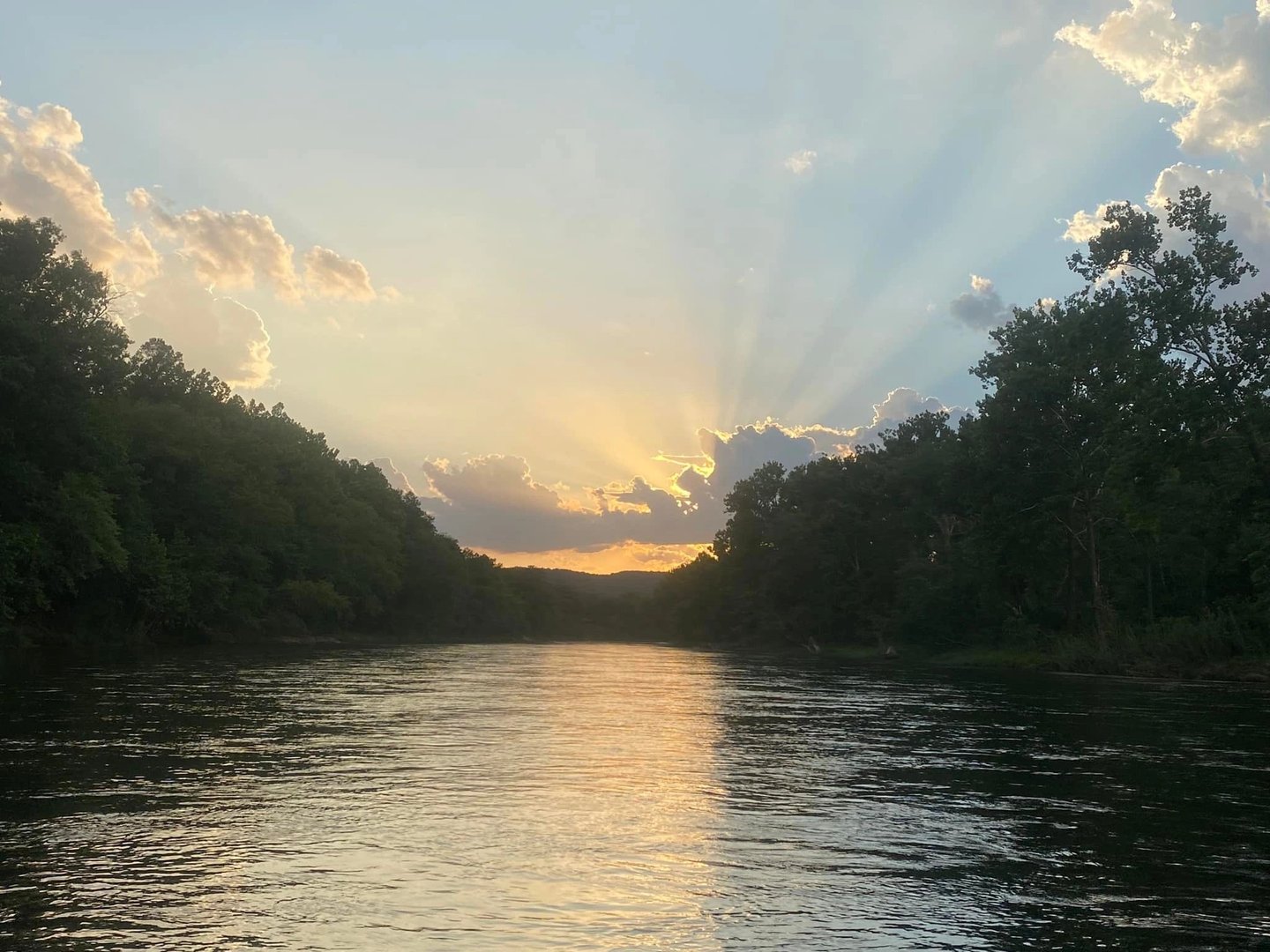
Premier Trout Guide Service brings four decades of expertise to the pristine trout waters of northwest Arkansas. Based in Springdale, guide Lester Wilkinson specializes in the White River and its renowned tailwaters, including Beaver Dam and Bull Shoals. His deep passion for the sport shines through in every outing, whether sharing techniques with seasoned anglers or introducing newcomers to trout fishing. The service accommodates various schedules with flexible half-day and full-day trips, all supported by a modern 2020 Supreme L60 boat designed for comfort and accessibility. Complete tackle is provided, allowing guests to focus on the experience rather than logistics. For those seeking an extended adventure, Premier Trout Guide Service offers all-inclusive multi-day packages that combine expert instruction with the natural beauty of Arkansas's premier trout fishery.
Natural State Fly Fishing
Springdale, AR, US
Natural State Fly Fishing is led by Matthew Hutchinson, an experienced guide with nearly 20 years of fly fishing expertise in the pristine waters of Northwest Arkansas. He specializes in targeting trout, smallmouth bass, and walleye, offering guided trips tailored to anglers of all skill levels. Matthew is dedicated to teaching the art of fly fishing through personalized lessons and customizable outings designed to match each angler's goals and experience. Safety and preparedness are paramount—he maintains top-notch equipment and holds both guide licensure and insurance, along with National Registered Paramedic certification. Whether seeking instruction or a memorable day on the water, anglers can trust in a knowledgeable, well-equipped professional committed to delivering an exceptional experience.
Frequently Asked Questions
Can you fish inside Zion National Park?
Yes. Fishing is allowed year-round in all waters within Zion National Park with a valid Utah fishing license. The Virgin River, both its North Fork (which flows through Zion Canyon) and East Fork, hold brown trout, rainbow trout, and cutthroat trout. Kolob Reservoir in the northern section of the park also offers trout fishing under special regulations.
What fish species are in the Virgin River at Zion?
The Virgin River holds non-native brown trout, rainbow trout, cutthroat trout, and brook trout, along with four native species: Virgin River spinedace (endangered — release immediately), speckled dace, desert sucker, and flannelmouth sucker. Brown and rainbow trout are the primary gamefish. The river is stocked annually with adult trout in spring and fingerlings in fall.
When is the best time to fish at Zion National Park?
October through November is the prime fishing window at Zion. Summer heat, flash flood danger during monsoon season (July-September), and extreme foot traffic make summer the worst time to fish. Spring (March-May) is the second-best window. If fishing in summer, go at dawn and be off the water before noon.
Are flash floods dangerous for fishing in Zion?
Yes — flash floods are the most serious safety hazard for anglers at Zion. The Virgin River can rise from ankle-deep to over-head in minutes during monsoon storms. Always check the NWS flash flood forecast before fishing, never fish in the Narrows during flash flood season, watch for sudden water color changes, and be prepared to move to high ground immediately.
What flies work best on the Virgin River at Zion?
Caddis dominate the Virgin River: Elk Hair Caddis (#14-18) is the most important dry fly. For nymphs, Pheasant Tail (#16-20) is the top subsurface pattern. Parachute Adams (#14-18), foam terrestrials (ants and beetles), and Chubby Chernobyl hoppers (#10-14) round out the dry-fly box. Small flies and light tippet (6X-7X) matter more than pattern selection — the brown trout are wild and educated.
Related Articles
The Pheasant Tail Nymph: Two Materials, No Thread, and the Subsurface Fly That Changed Everything
Thursday, April 9, 2026
Fly Fishing the Madison River: The 50-Mile Riffle, the Salmonfly Hatch, and the River That Defined Western Fly Fishing
Tuesday, February 24, 2026
Fly Fishing the Green River: 14,000 Trout Per Mile in a Red-Rock Desert Canyon
Saturday, April 25, 2026
 ™
™