
Fly Fishing Great Basin National Park: Bonneville Cutthroat Trout, Alpine Creeks, and the Loneliest Fishing in the Lower 48
Great Basin National Park sits at the end of the road in eastern Nevada — a 13,000-foot mountain range rising from sagebrush desert, holding native Bonneville cutthroat trout in small creeks that most visitors never fish. Here is the water, the fly box, and the quiet that makes this park unlike anything else in the system.
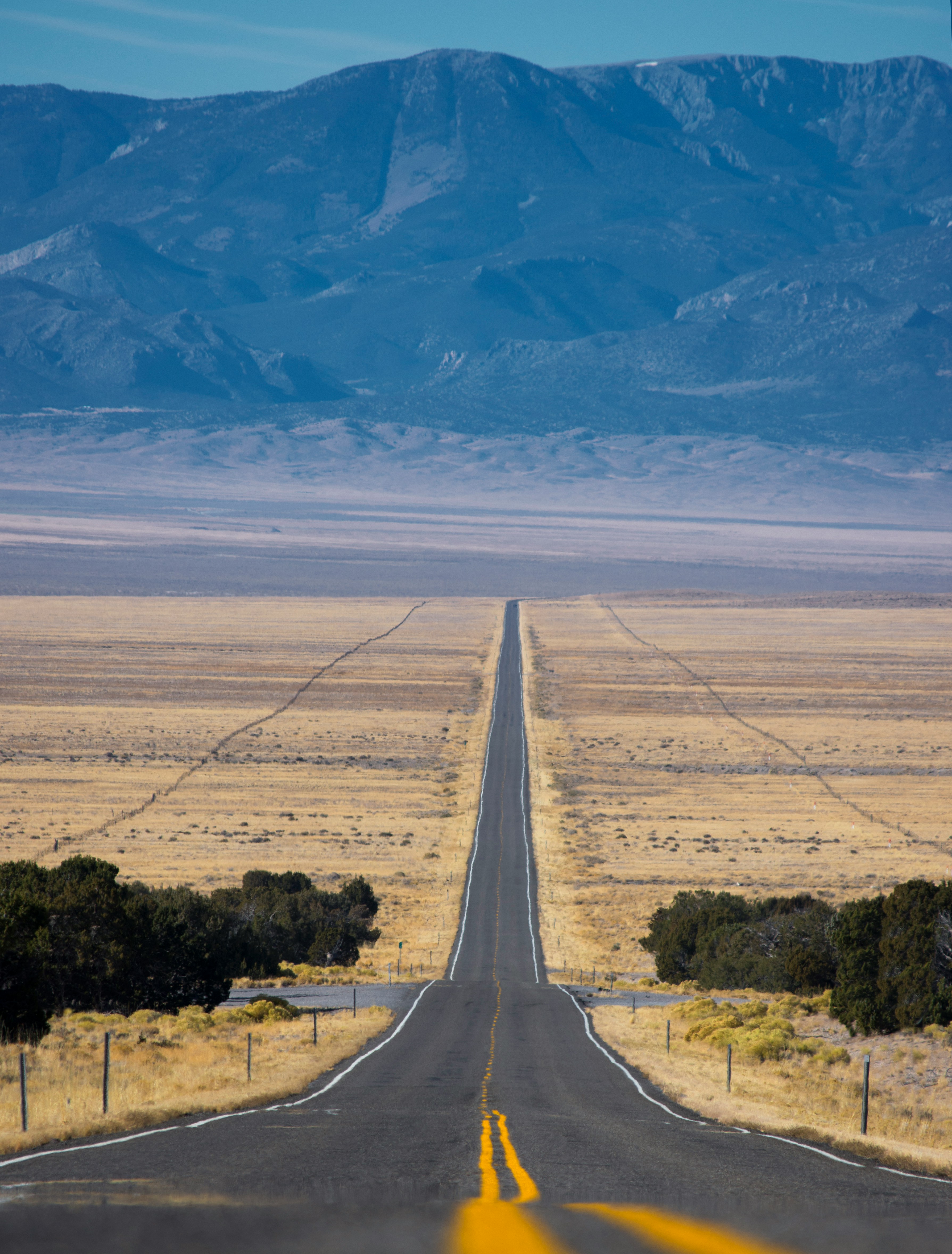
The drive to Great Basin National Park is the first thing that separates it from every other unit in the national park system. You cross Nevada on US-50 — the Loneliest Road in America, and the name is earned — watching the basin-and-range geography repeat itself for hours: flat sagebrush valley, mountain range, flat sagebrush valley, mountain range. The towns are specks. Ely has a few thousand people. Austin has a few hundred. Between them, there is nothing but sage, sky, and the kind of distance that makes your odometer feel like it is lying.
Then you turn south from US-93 at a junction marked by a gas station and a handful of buildings, and you drive another five miles to Baker, Nevada. Baker has a population that hovers around sixty-eight, depending on who is home. There is a restaurant, a motel, a general store, and a gas pump. That is Baker. That is the gateway to Great Basin National Park.
Most people who make the drive come for Lehman Caves — a limestone cavern discovered by Absalom Lehman in 1885, protected as a national monument since 1922, and incorporated into Great Basin National Park when it was established in 1986. The cave tours are excellent, the formations are world-class, and Lehman Caves remains the primary draw for the roughly 180,000 annual visitors who find their way here. Some of those visitors drive the Wheeler Peak Scenic Drive to the upper elevations, hike to the alpine lakes, or summit Wheeler Peak itself — at 13,065 feet, the tallest peak entirely within Nevada and the second highest in the state.
Almost none of them bring a fly rod. That is both the problem and the opportunity.
Great Basin National Park holds three fishable creeks and several alpine lakes, and the streams contain a fish that makes this place genuinely significant to anyone who cares about native trout: the Bonneville cutthroat trout. This is not just another cutthroat subspecies. The Bonneville cutthroat is a relict — a survivor from ancient Lake Bonneville, which covered much of present-day Utah and eastern Nevada during the Pleistocene. When the lake dried up fifteen thousand years ago, these fish retreated into the cold mountain streams of the Snake Range and held on. They are still here, in the same creeks, beneath the same peaks, doing what they have done since the ice retreated.
The fishing at Great Basin is small. The creeks are narrow. The fish are not large. But what you find here — native trout in pristine water, alpine lakes at ten thousand feet, and the near-certainty that you will fish alone — is worth the drive across the emptiest part of the lower forty-eight.
The Bonneville Cutthroat — The Fish That Survived the Desert
The Bonneville cutthroat trout (Oncorhynchus clarkii utah) is the only trout species native to eastern Nevada and the streams of Great Basin National Park. Every other trout you will catch here — rainbow, brown, brook — was stocked by humans. The Bonneville cutthroat was here first, and its story is one of the most compelling in western fisheries conservation.
During the Pleistocene, Lake Bonneville was an inland sea covering more than twenty thousand square miles. The Bonneville cutthroat thrived in the lake and its tributaries. As the climate warmed and the lake shrank — eventually leaving behind the remnant we call the Great Salt Lake — the cutthroat populations became isolated in the mountain streams that once fed the larger body of water. They survived in these high, cold refugia for thousands of years.
Then European settlement brought cattle, mining, and the deliberate stocking of non-native trout species into every fishable stream in the West. Brook trout, brown trout, and rainbow trout outcompeted and hybridized with the native cutthroat. By the mid-twentieth century, genetically pure Bonneville cutthroat populations had disappeared from most of their historic range in the Snake Range.
The restoration effort began in the late 1990s. The National Park Service, Nevada Department of Wildlife, US Fish and Wildlife Service, Bureau of Land Management, Trout Unlimited, and the Humboldt-Toiyabe National Forest formed a partnership to bring the Bonneville cutthroat back. The method is straightforward but labor-intensive: remove all non-native fish from a target stream using chemical treatment, confirm eradication, then reintroduce genetically pure Bonneville cutthroat from surviving source populations. Monitor. Wait. Let the fish do what they have done for fifteen thousand years.
It is working. Five streams within the park now hold Bonneville cutthroat: Strawberry Creek, Mill Creek, the South Fork of Baker Creek, Upper Snake Creek, and the South Fork of Big Wash. Additional streams outside the park in the Snake Range also support restored populations. Most recently, the park has begun moving Bonneville cutthroat into Baker Lake and Johnson Lake — high-elevation refugia that provide insurance populations against drought, fire, and the uncertainties of climate change.
If you catch a Bonneville cutthroat in Great Basin National Park, you are holding a fish whose lineage extends to an ancient inland sea. Handle it carefully. Put it back.
The Three Creeks — Lehman, Baker, and Snake
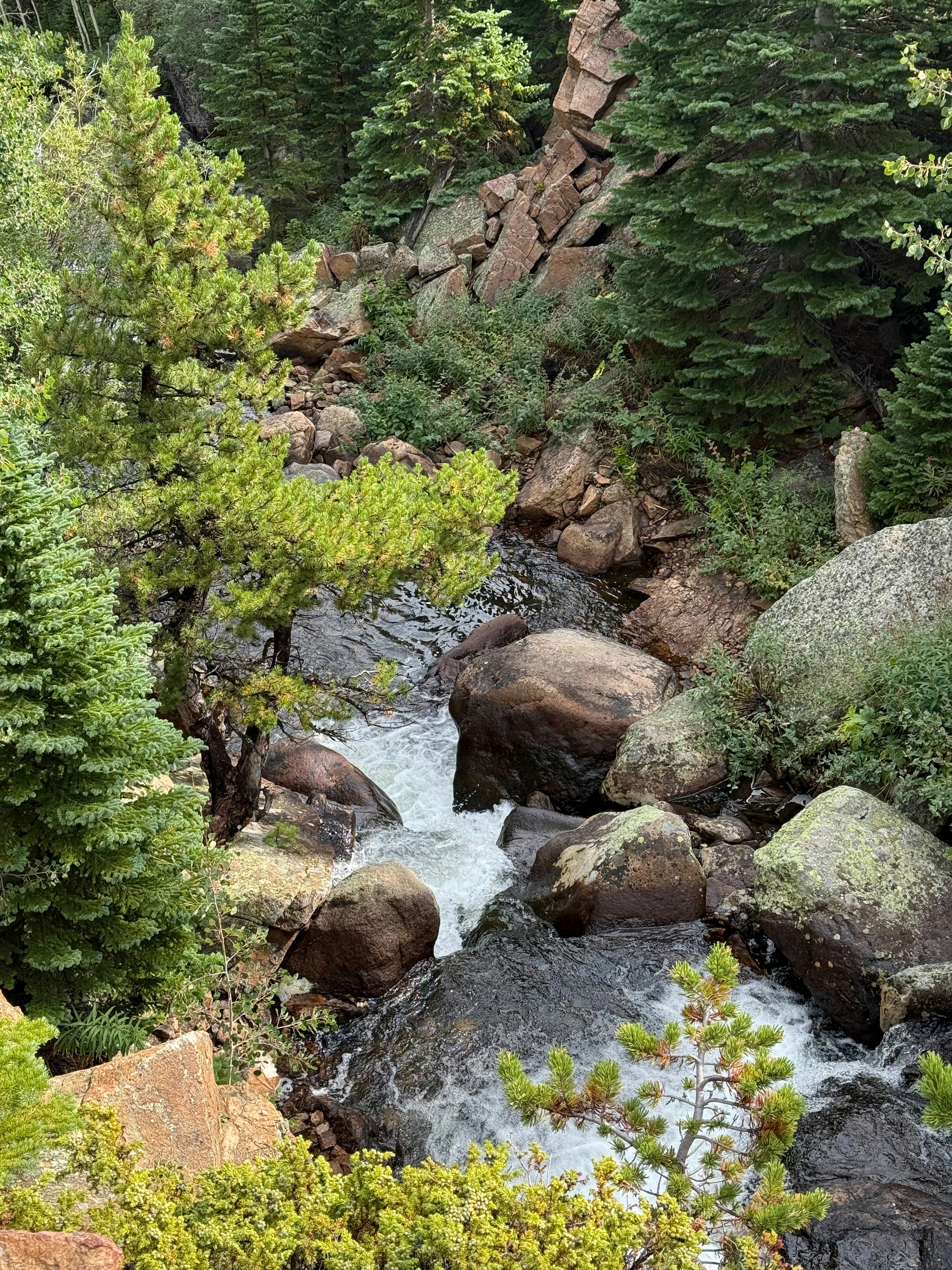
Great Basin National Park has three primary fishable streams, all flowing off the eastern flank of the Snake Range. These are small creeks — pocket water, plunge pools, riffles over cobble, and the occasional deeper bend pool beneath an undercut bank. None of them are wide enough to require a long cast. Most of the fishing is short-range — fifteen to thirty feet, tight to structure, with overhead canopy that punishes a high backcast.
Lehman Creek
Lehman Creek is the most accessible and the most heavily fished stream in the park, though "heavily fished" at Great Basin means you might see one other angler on a busy summer weekend. The creek flows from the upper elevations near Wheeler Peak down through the campground areas, crossing the Wheeler Peak Scenic Drive multiple times.
The upper reaches above Upper Lehman Creek Campground hold primarily brook trout — small fish in small water, willing to eat almost any attractor dry fly that lands without spooking them. These are six- to ten-inch brookies in pockets behind boulders and in the tails of plunge pools. A #14 Elk Hair Caddis or a #16 Parachute Adams drifted through the current seam is usually all the sophistication required.
Below Lower Lehman Creek Campground, the creek widens slightly and brown trout become the dominant species. The browns are warier than the brook trout, holding tighter to cover and feeding more selectively. They are still not large — twelve to fourteen inches is a good fish — but they demand better presentations. Approach from downstream, stay low, and lead with a longer drift. A #16 Pheasant Tail nymph under a small indicator or dropped below a dry fly is effective in the deeper runs.
Rainbow trout are also present throughout Lehman Creek, though less common than the brown and brook trout.
Baker Creek
Baker Creek is the sleeper water in the park. Access points include the Baker Creek Trailhead, Baker Creek Campground, and Grey Cliffs Group Campground, all reached from Baker Creek Road off the main park road. The creek holds brown, brook, and rainbow trout, with some of the largest fish in the park taken from the deeper pools in Baker Creek's lower sections.
The character of Baker Creek is similar to Lehman — small, rocky, shaded by conifers in the upper reaches and more open in the lower stretches — but it receives fewer anglers. On a weekday in July, you can fish Baker Creek from the campground upstream for several hours without seeing another person. The browns in the lower water are the target: they hold in the deeper bends, under overhanging banks, and in the shade of the larger boulders. A #12 Stimulator bounced through a pocket riffle will draw strikes, and a #10 Woolly Bugger stripped through a deeper pool produces the occasional larger brown that has been eating smaller fish.
Snake Creek
Snake Creek is where the Bonneville cutthroat trout restoration story comes alive on the water. The park reintroduced Bonneville cutthroat to Snake Creek in 2019, and the population is growing. Brown and brook trout are also present from the park boundary to the pipe inlet, with some of the better brown trout fishing in the park found in the lower stretches.
Catch and release is strongly encouraged on Snake Creek, particularly for any cutthroat you encounter. These fish are part of an active restoration program, and every individual matters to the genetic health and long-term viability of the population.
Snake Creek is also the least accessible of the three main streams. The banks are brushy, the approach requires some bushwhacking, and the terrain is rougher than the campground-adjacent water on Lehman and Baker. That difficulty is the reason it holds better fish. The browns in the lower sections of Snake Creek are larger than what you will find on the other two creeks — fish that have had time to grow in water that sees very little pressure.
The Alpine Lakes — Fishing at Ten Thousand Feet
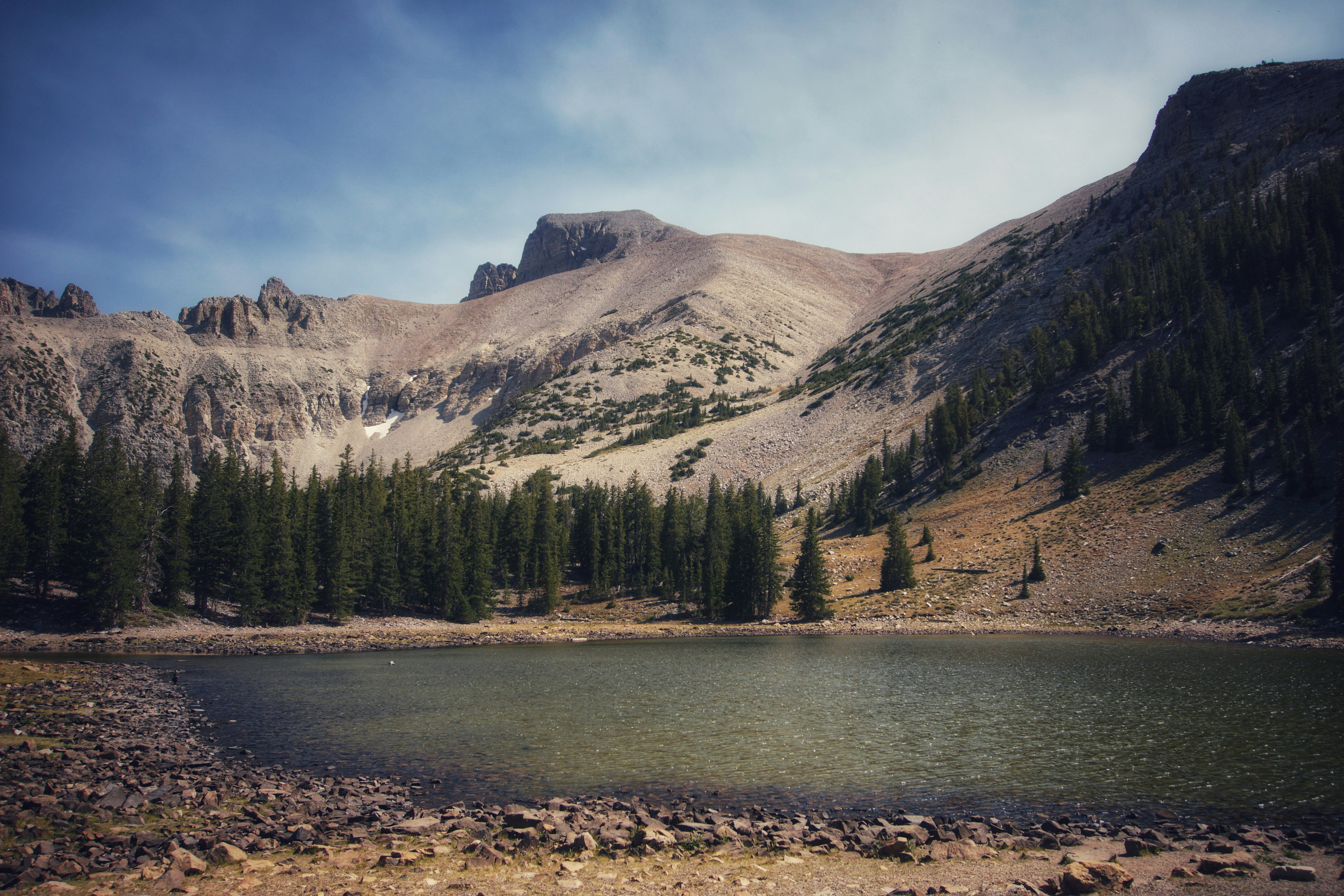
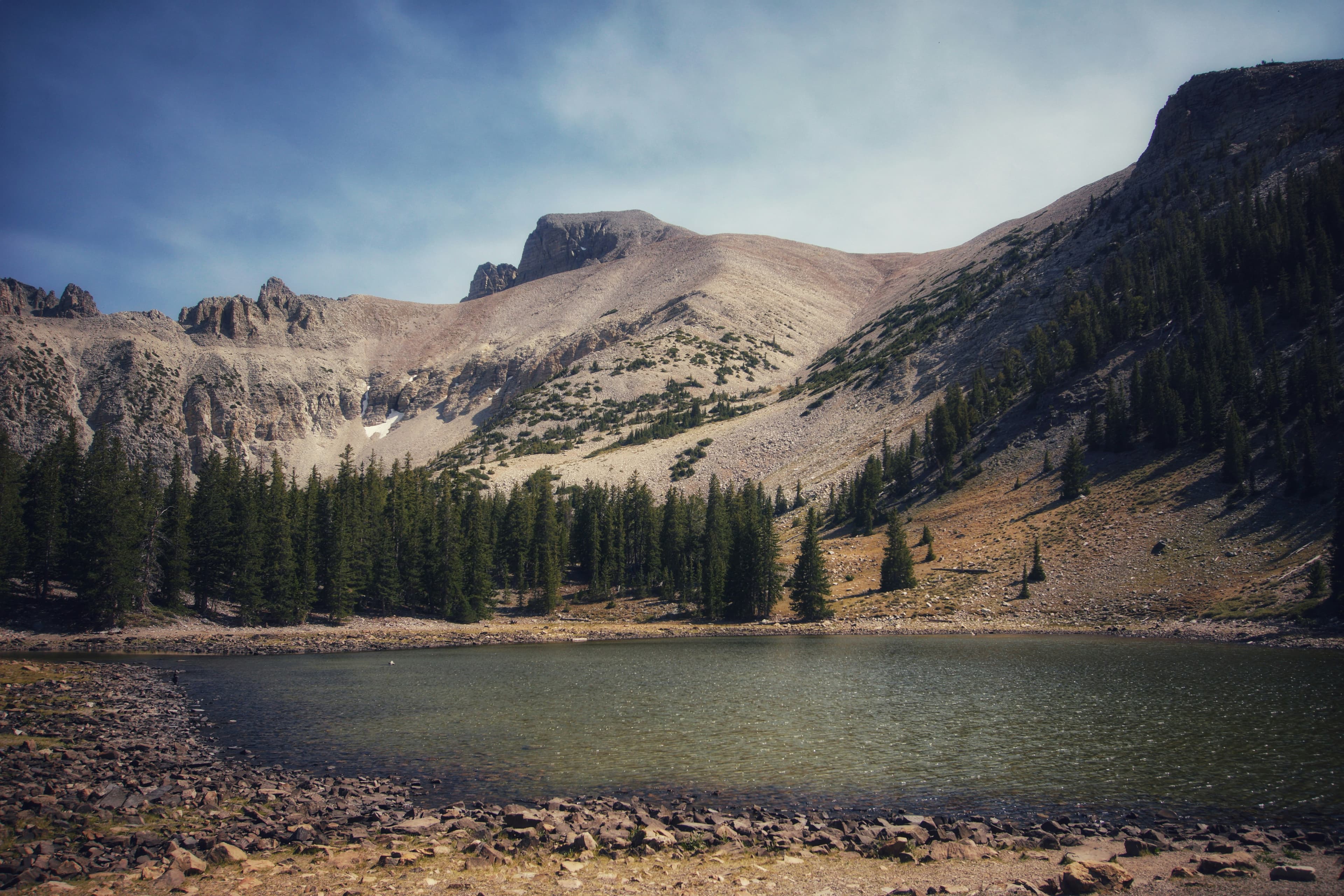
Great Basin National Park holds several alpine lakes — glacial tarns carved during the Pleistocene, sitting in cirque basins beneath Wheeler Peak and the ridgeline of the Snake Range. Stella Lake, Teresa Lake, Baker Lake, and Johnson Lake are the named bodies of water, and all are accessible by hiking trails from the Wheeler Peak Scenic Drive.
Fishing in the park's lakes is governed by strict regulations: catch and release only, artificial lures with single barbless hooks, no bait. These rules exist because the alpine lakes are critical habitat — the park has begun stocking Bonneville cutthroat into Baker Lake and Johnson Lake as high-elevation refugia, and protecting those populations is the priority.
The alpine lake fishing is not the reason you come to Great Basin. These are small, cold, nutrient-poor lakes at high elevation. The fish — where present — are small. But the experience of fishing a glacial tarn at ten thousand feet, with Wheeler Peak towering above and the desert floor visible three thousand feet below, is unlike anything you will find at a tailwater or spring creek.
If you fish the alpine lakes, bring chironomid patterns in black and olive (#16-20), small Woolly Buggers (#10-12, olive and black), and damselfly nymph imitations. A Zebra Midge (#18-20) fished just under the surface is effective when midges are hatching, which is most calm mornings and evenings in July and August. Callibaetis mayflies may be present — carry a few Comparadun or Parachute Adams patterns (#14-16) in case you see rising fish.
A 9-foot 4-weight with a floating line is the right tool. Long leaders — twelve to fifteen feet, tapered to 5X or 6X — help in the clear, still water.
The Fly Box — What to Bring
The fly fishing at Great Basin is small-stream, high-desert, high-elevation fishing. The creeks are narrow and the fish are opportunistic. You do not need a technical arsenal — you need a well-curated selection of attractor patterns, standard nymphs, and terrestrials.
Dry Flies
The Bonneville cutthroat trout in these streams are native fish in pristine water that see very few anglers. They eat with a willingness that pressured fish abandoned long ago. Attractor dry flies are the game.
- Elk Hair Caddis (#12-16) — the single most useful fly in the park. Caddis are the dominant surface insect on all three creeks, and the Elk Hair in tan or olive is the first fly you should tie on. It floats well in broken water, is visible in the dappled light under the canopy, and the fish eat it.
- Parachute Adams (#14-18) — the general mayfly imitation that works everywhere small trout live. In the slower pools and tail-outs where fish can inspect the drift, the Parachute Adams outfishes bushier attractor patterns.
- Royal Wulff (#12-16) — high-floating, visible, and the classic attractor dry for native cutthroat. The white wing is easy to track in fast water, and the peacock herl body triggers strikes from fish that have never seen a #22 emerger delivered on 7X.
- Stimulator (#10-14, yellow and orange) — the big attractor for riffled pocket water. Fish it through the fast heads of plunge pools and along current seams next to boulders.
- Humpy (#12-16) — another high-floating attractor that rides well in broken water. Effective in the faster pocket water on all three creeks.
- Chubby Chernobyl (#10-12) — as an indicator fly for a hopper-dropper rig. The foam body floats indefinitely, the fish eat it, and a Pheasant Tail or Copper John dropped eighteen inches below covers two levels of the water column in every drift.
- Griffith's Gnat (#18-20) — for midge activity on calm mornings and evenings, particularly on the alpine lakes and the slower stretches of the creeks.
Nymphs
Standard small-stream nymphing patterns are all you need. The fish are not keyed to specific insects — they are eating whatever the current delivers.
- Pheasant Tail Nymph (#14-18) — the universal subsurface pattern. Effective in every piece of water in the park.
- Hare's Ear Nymph (#12-16) — the buggy, impressionistic alternative to the Pheasant Tail. The dubbed body suggests a wider range of food items.
- Prince Nymph (#12-16) — the attractor nymph. The white biots and peacock herl body draw attention in faster water where fish have less time to inspect.
- Copper John (#14-18) — a heavy, fast-sinking nymph for the deeper plunge pools and runs. Effective as a dropper below a dry fly.
- Zebra Midge (#18-22) — for the slower water and the alpine lakes where midge activity is constant.
- San Juan Worm (#10-14, red and pink) — it works. In the deeper runs and after rain when the creeks are slightly off-color, the San Juan Worm dead-drifted along the bottom produces fish that ignore everything else.
Terrestrials
Terrestrial patterns are important at Great Basin from July through September. The high desert produces grasshoppers, beetles, and ants that end up in the creeks, and the fish know it.
- Foam ants (#14-18, black and cinnamon) — ants are a primary terrestrial food source on all three creeks. A foam ant fished tight to the bank in the afternoon can be the best pattern of the day.
- Foam beetles (#12-16, black) — effective in the slower stretches and wherever overhanging vegetation drops insects onto the water.
- Small foam hoppers (#10-14) — from late July through September, grasshoppers are active in the meadow sections and along the road cuts. Fish a small hopper tight to the grassy banks.
Streamers
Small streamers have a place on the lower stretches of Baker Creek and Snake Creek, where larger brown trout hold in deeper pools.
- Woolly Bugger (#8-10, olive and black) — stripped or dead-drifted through deeper pools and under cut banks.
- Muddler Minnow (#8-10) — the classic sculpin imitation, effective when fished deep and slow in the lower creek sections.
The Gear
Rod: A 7.5- to 8.5-foot 3-weight is the ideal rod for these creeks. The water is tight — overhead canopy, boulders at your back, narrow casting lanes between willows. A short rod with a delicate tip lets you make the precise roll casts and bow-and-arrow casts that the terrain demands. A 9-foot 4-weight works as a compromise if you are also fishing the alpine lakes, where a longer rod helps with distance on still water.
Reel: Any trout reel with a smooth click drag. These fish do not run into your backing.
Line: Weight-forward floating line. No need for sink tips or specialty lines.
Leader: 9-foot tapered leaders in 4X or 5X for the creeks. Go to 6X for the alpine lakes and the slower, clearer pools on Lehman Creek. Fluorocarbon tippet is unnecessary — the water is not gin-clear spring creek water, and the fish are not leader-shy.
Waders: You do not need chest waders. The creeks are shallow enough to wade in hiking boots during summer, and the approaches involve enough hiking that carrying waders is a burden. Wet-wading sandals or lightweight wading boots are sufficient from July through September. If you fish in June when snowmelt is still running cold, lightweight hip waders or knee-high neoprene boots keep you comfortable.
Other: Sunscreen, a hat, and plenty of water. You are above seven thousand feet in the high desert. The sun is intense, the air is dry, and dehydration happens faster than you expect.
The Seasonal Calendar
June — Snowmelt and Early Season
The Wheeler Peak Scenic Drive typically opens in late May or early June, depending on snowpack. The creeks are running high and cold with snowmelt. Fishing is possible but challenging — the water is off-color, flows are elevated, and the fish are holding tight to the banks and in the slower pockets out of the main current.
Nymphs are the primary approach in June. Hare's Ear and Pheasant Tail nymphs (#14-16) fished deep in the slower runs produce fish. San Juan Worms in red work well when the water is slightly murky. Dry-fly fishing picks up in the last week of June as flows drop and water temperatures climb.
The alpine lakes remain iced over or snow-surrounded through much of June. Do not plan on lake fishing until mid-July at the earliest.
July–August — Prime Time
This is the window. The creeks have dropped to fishable levels, water temperatures are in the optimal range for trout, and insect activity is at its peak. Blue Winged Olives hatch on overcast days and in the mornings and evenings. Caddis are present throughout the day. Terrestrials — ants, beetles, and hoppers — become increasingly important as July progresses into August.
The alpine lakes are ice-free and accessible. The hiking trails are open. The weather is warm — daytime highs in the seventies and low eighties at the campground elevations, cooler in the upper reaches.
This is also the busiest period at the park, though "busy" at Great Basin is relative. Lehman Caves tours sell out. The campgrounds fill on weekends. But the creeks remain lightly fished. You can walk ten minutes upstream from any campground access point and find water that has not been fished in days.
September–October — Fall and Solitude
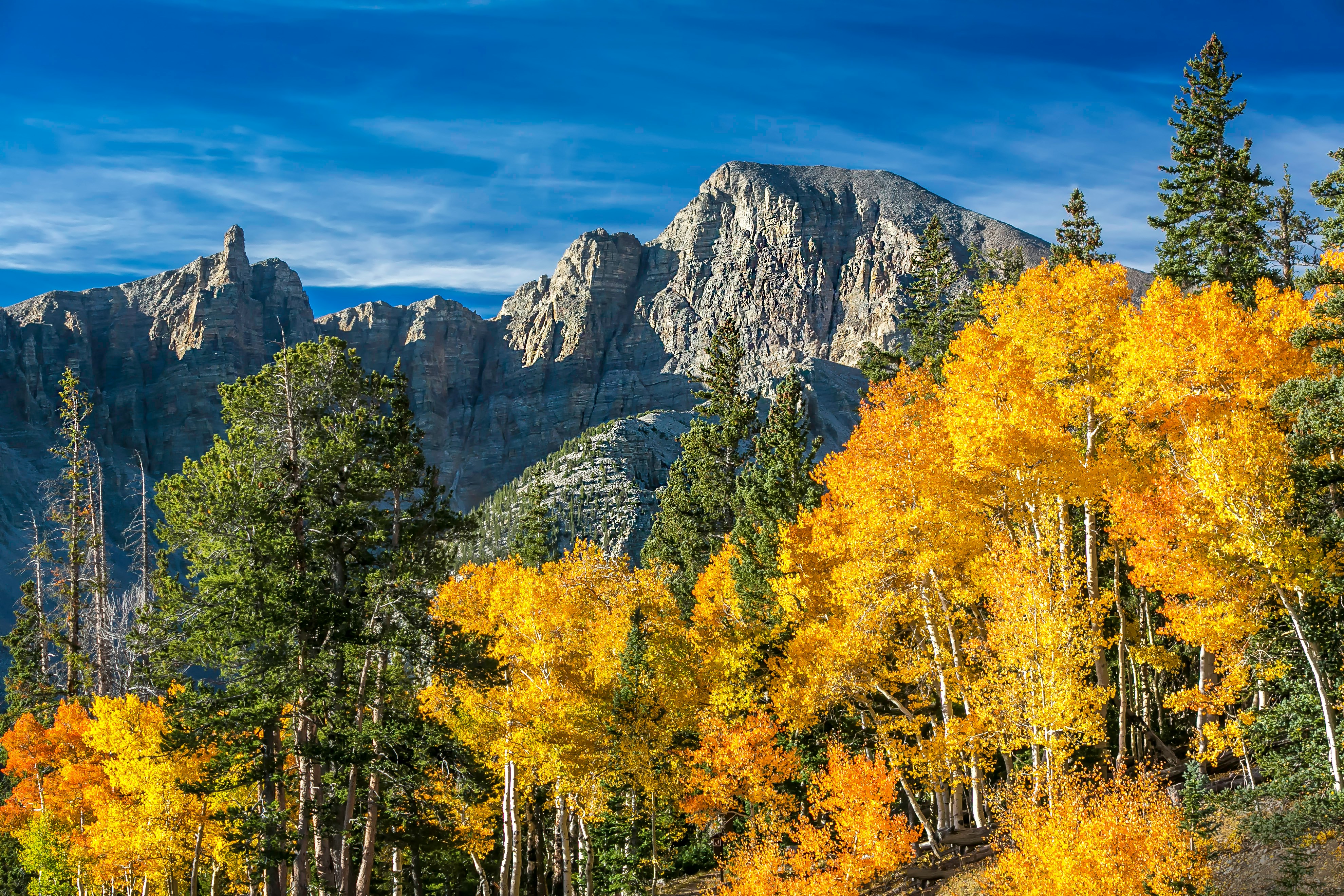
The park quiets dramatically after Labor Day. The campgrounds thin out, Lehman Caves tours have openings, and the creeks are at their lowest and clearest flows of the year. The aspens in the upper elevations turn gold against the grey limestone cliffs, and the fishing can be the best of the season.
Brown trout become more aggressive in September and October as spawning approaches. The larger browns in Baker Creek and Snake Creek move more, feed more actively, and are willing to chase Woolly Buggers and Muddler Minnows that they would have ignored in July. Dry-fly fishing remains productive on the warmer afternoons — BWOs hatch through October on overcast days, and Elk Hair Caddis patterns remain effective.
The Wheeler Peak Scenic Drive closes for winter sometime in October or November, depending on weather. Check with the park before planning a late-season trip.
Lehman Caves — The Other Reason You Came
You did not drive across Nevada only to fish small creeks. Or if you did, you should also tour Lehman Caves. The cave is a half-mile of decorated passage — stalactites, stalagmites, columns, flowstone, and rare shield formations that are found in only a handful of caves worldwide. Guided tours run sixty to ninety minutes and require reservations, which can be made through Recreation.gov.
The combination is part of what makes Great Basin unique in the national park system: world-class cave geology underground, native trout restoration above ground, a thirteen-thousand-foot peak above it all, and a visitor count that would be a slow Tuesday at Yellowstone.
Wheeler Peak and the High Country
Wheeler Peak at 13,065 feet is the centerpiece of the park and the tallest mountain entirely within Nevada. The summit trail gains 3,100 feet over 4.3 miles and passes through bristlecone pine groves — some of the oldest living organisms on earth. The Prometheus bristlecone pine, which was cut down in 1964 and found to be nearly five thousand years old, grew on Wheeler Peak's flanks.
The high country gives context to the fishing. The creeks you are fishing originate in snowfields and alpine cirques near the summit ridge. The water is cold, clean, and fed by the same geology that created Lehman Caves — Cambrian-era limestone and quartzite that filters and mineralizes the flow. The Bonneville cutthroat trout in these streams are living in water that has been running off these peaks since the Pleistocene. The connection between the thirteen-thousand-foot summit and the eight-inch cutthroat in the creek below it is not metaphorical. It is hydrology.
Regulations
Fishing in Great Basin National Park requires a valid Nevada fishing license, available through the Nevada Department of Wildlife. Anglers twelve years of age and older must have a license, and an annual license also requires a trout stamp.
Streams: The daily limit is five trout for licensed anglers. However, catch and release is strongly encouraged on all park waters, particularly Snake Creek and any stream where Bonneville cutthroat trout may be present.
Lakes: All park lakes are catch and release only, with artificial lures and single barbless hooks only. No bait of any kind is permitted in the lakes.
General: Worms may be used as bait in streams but cannot be collected within the park. Live baitfish, amphibians, and eggs are prohibited. Moving live fish between bodies of water is illegal. Chumming is prohibited. Clean and dry your gear for 48 hours or disinfect with a 10% bleach solution to prevent spreading whirling disease and New Zealand mudsnails.
Getting There and Staying There
Great Basin National Park is remote. Accept that before you plan.
From Salt Lake City: 234 miles, roughly four hours via US-50 and US-93. This is the most common approach.
From Las Vegas: 303 miles, roughly five hours via US-93 north.
From Reno: 385 miles, roughly six hours via US-50 east — the full Loneliest Road experience.
Baker, Nevada has limited services. The Stargazer Inn, Hidden Canyon Guest Ranch, and a few other small operations provide lodging. The general store and Lectrolux Cafe provide food and basic supplies. There is no major grocery store, no chain hotel, and no big-box anything. Fuel up in Ely (sixty miles north) before heading south.
Campgrounds: The park has five campgrounds — Lower Lehman Creek, Upper Lehman Creek, Baker Creek, Wheeler Peak, and Grey Cliffs (group site). Sites are first-come, first-served except Wheeler Peak, which takes reservations. Baker Creek Campground puts you closest to the best fishing water while being less crowded than the Lehman Creek sites.
How Great Basin Fits — The National Park Comparison
Great Basin is the most isolated national park in the contiguous United States. It shares that quality of alpine trout fishing at high elevation with Rocky Mountain National Park — small creeks, willing fish, high-country scenery — but without the crowds. Rocky Mountain gets over four million visitors a year. Great Basin gets fewer than two hundred thousand. The fishing quality is comparable. The solitude is not.
The Bonneville cutthroat restoration parallels the native fish work happening at Yellowstone with Yellowstone cutthroat and at other western parks, but the Bonneville cutthroat story is distinctive because the fish is a relict of an ancient lake system, not just a stream-dwelling subspecies. Catching one connects you to a landscape that existed fifteen thousand years ago.
If you are working through the national parks as a fly angler, Great Basin is the one you will remember for the quiet. Not for the biggest fish — that distinction belongs to the tailwaters and the big rivers. Not for the most technical fishing — the spring creeks and Yosemite's educated wild trout have that covered. Not for the most dramatic scenery — the Grand Canyon and Glacier own that category. But for the experience of fishing a small creek at nine thousand feet in a park where you are genuinely alone, where the trout are native and the restoration is working and the nearest city of any consequence is a four-hour drive away — Great Basin is the park.
The Green River in Utah is the nearest big-name trout fishery, three hours to the northeast. If you are making a western road trip, the combination works: fish the Green River for technical tailwater trout, then drive south through the desert to Great Basin for the opposite experience. One is big water with large, selective fish and guide boats. The other is small water with willing native trout and nobody.
Crater Lake, Lassen Volcanic, and Sequoia & Kings Canyon share the high-elevation lake fishing dimension, but Great Basin's alpine lakes are smaller, less accessible, and hold the distinction of being active habitat restoration sites for a native subspecies.
The cave connection is unique in the park system. Mammoth Cave is the other cave park with fishable water, but the combination of subterranean geology and native trout restoration above ground is something only Great Basin offers.
Drive to Baker. Tour the cave. Hike to the bristlecone pines. Then walk down to a creek with a 3-weight and a box of Elk Hair Caddis and Parachute Adams patterns, and fish for a trout whose ancestors swam in an inland sea. You will probably be alone. That is the point.
Top Fishing Guides in Ely
Lehman Creek, Baker Creek, and Snake Creek hold wild Bonneville cutthroat trout — a native subspecies restored from ancient Lake Bonneville stock — plus brown and brook trout in small desert freestone water beneath Wheeler Peak. Fish a 3-weight with Elk Hair Caddis and Parachute Adams, and expect solitude.
BWCA Outfitters
Ely, MN, US
5.0 (123 reviews)
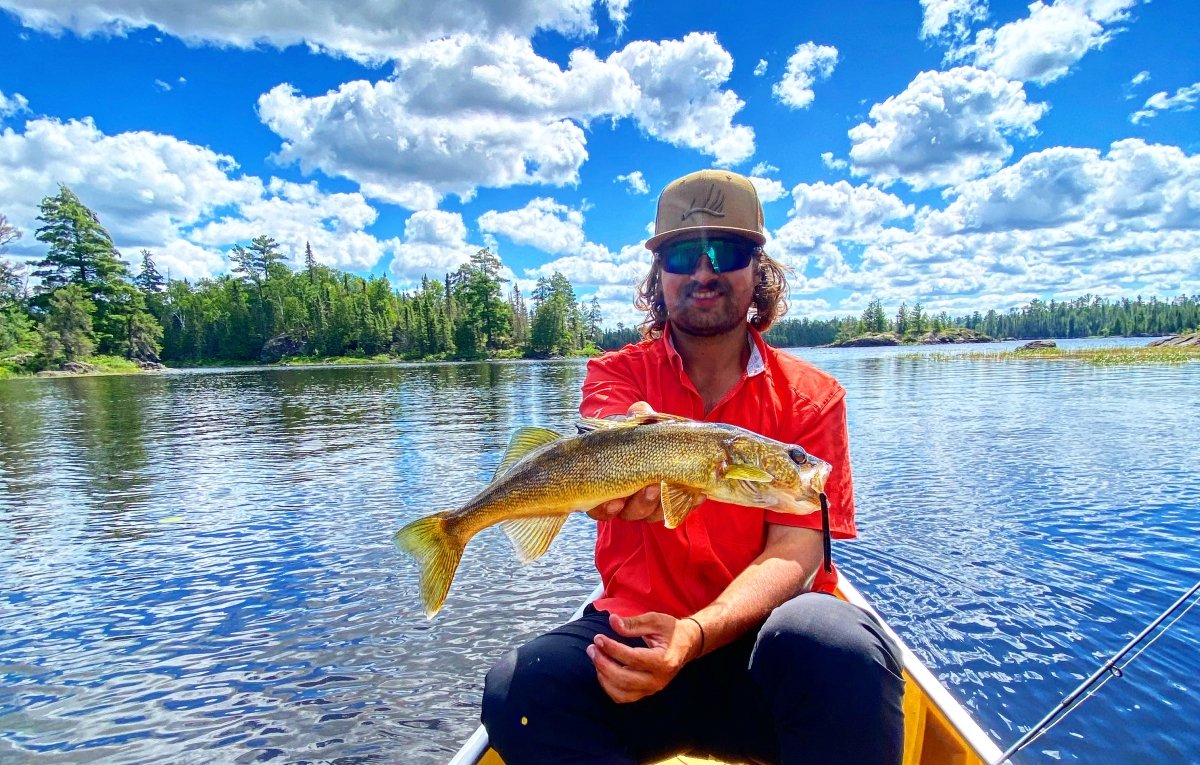
BWCA Outfitters BWCA Outfitters brings years of expertise to the renowned waters of the Boundary Waters region near Ely, Minnesota. Their seasoned guides possess deep local knowledge and a genuine passion for helping anglers succeed, whether pursuing walleye, pike, bass, trout, or crappies across the area's pristine lakes and waterways. The outfitter caters to every angler's preference and schedule, offering half-day, full-day, and multi-day trips tailored to individual skill levels and goals. Guests can fish from motorboats for accessibility and coverage or choose canoe-based expeditions for a more intimate wilderness experience. BWCA Outfitters handles all necessary gear and logistics, allowing anglers to focus on the water, the fish, and the stunning natural surroundings that make the Boundary Waters a destination unto itself.
Lake Vermilion Fishing Guides
Ely, MN, US
5.0 (29 reviews)
Lake Vermilion Fishing Guides brings deep expertise to the waters of northern Minnesota, offering guided fishing experiences across Lake Vermilion, the Ely area, and the Boundary Waters. Their knowledgeable guides specialize in pursuing muskie alongside other regional species, drawing on years of on-water experience to help anglers of all skill levels succeed. The operation accommodates diverse fishing styles and timeframes, from guided ice fishing adventures to extended multi-day expeditions. Whether clients are newcomers looking to develop their skills or seasoned anglers seeking trophy opportunities, Lake Vermilion Fishing Guides tailors each outing to deliver a memorable and rewarding fishing experience in one of Minnesota's most pristine regions.
Boundary Waters Outfitters
Ely, MN, US
5.0 (11 reviews)
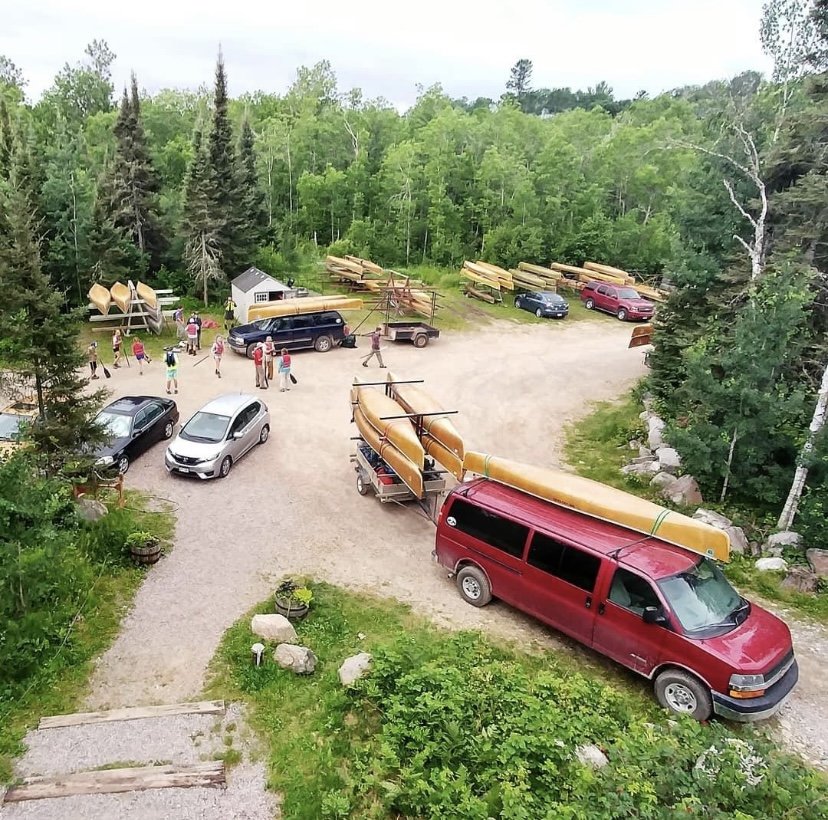
Boundary Waters Outfitters Boundary Waters Outfitters brings over 80 years of wilderness expertise to guided fishing expeditions throughout Minnesota's legendary Boundary Waters Canoe Area. Based in Ely with direct access to pristine waters surrounded by birch and pine forests, this outfitter specializes in fully equipped fishing trips tailored to anglers of all skill levels. The operation distinguishes itself through meticulous attention to quality—from gear and provisions to personalized trip planning. Whether pursuing walleye, northern pike, or lake trout across the BWCA's diverse canoe routes, guests benefit from knowledgeable guides who understand these waters intimately. Boundary Waters Outfitters also accommodates family adventures and custom itineraries, ensuring each expedition matches individual interests and experience levels.
Moose Bay
Ely, MN, US
5.0 (8 reviews)
Moose Bay Based in Ely, Minnesota, Moose Bay brings over 35 years of expertise to guided fishing adventures in the pristine Boundary Waters wilderness. Specializing in smallmouth bass, the service also pursues northern pike, walleye, and lake trout across this remarkable region. Whether guests prefer traditional fishing or fly fishing approaches, Moose Bay tailors each outing to match individual interests and skill levels. The operation distinguishes itself through complete canoe trip outfitting and a well-maintained lodge that serves as home base for expeditions. From equipment to logistics, every detail is handled, allowing anglers to focus entirely on the water and the catch. Moose Bay's reputation for dependable service and thorough preparation makes it an ideal choice for both seasoned fishermen and those new to the sport seeking an authentic wilderness fishing experience.

Canoe Country Outfitters
Ely, MN, US
4.9 (205 reviews)
Canoe Country Outfitters With over 70 years of expertise, Canoe Country Outfitters is a trusted leader in guided wilderness fishing expeditions throughout the Boundary Waters Canoe Area of northeastern Minnesota and Quetico Park in Canada. The company specializes in authentic paddle-and-portage adventures designed for anglers seeking walleye, northern pike, lake trout, and smallmouth bass in pristine, remote waters. What sets Canoe Country Outfitters apart is their deep institutional knowledge of this vast wilderness combined with family-led management that prioritizes personalized service. Clients benefit from expert guidance on navigation, fishing techniques, and wilderness skills, paired with quality equipment including multiple canoe styles and comprehensive camping gear. Whether pursuing a multi-day expedition or exploring backcountry lakes, guests experience the region's natural beauty with the confidence that comes from decades of local knowledge.

Moose Track Adventures
Ely, MN, US
4.9 (194 reviews)
Moose Track Adventures brings decades of professional expertise to guided fishing expeditions throughout Ely, Minnesota, and the renowned Boundary Waters Canoe Area Wilderness. Their licensed guides specialize in pursuing walleye, northern pike, smallmouth bass, lake trout, and crappies across pristine waters, tailoring each outing to match anglers' experience levels and preferences. The operation offers flexible trip formats—from half-day quickgetaways to full-day immersions—with both motorboat and canoe options available. Whether seeking an intimate paddling adventure or covering more distance by boat, guests experience firsthand the region's exceptional natural landscape while pursuing world-class freshwater fishing.
Frequently Asked Questions
Can you fly fish at Great Basin National Park?
Yes. Fly fishing is permitted in Great Basin National Park with a valid Nevada fishing license and trout stamp. The park has three main fishable creeks — Lehman Creek, Baker Creek, and Snake Creek — holding brown, brook, rainbow, and native Bonneville cutthroat trout. Alpine lakes including Johnson Lake and Baker Lake are catch and release only with artificial lures and single barbless hooks.
What is a Bonneville cutthroat trout and where can you catch one?
The Bonneville cutthroat trout is a native subspecies that survived from ancient Lake Bonneville, which covered much of Utah and eastern Nevada during the Pleistocene. It is the only trout native to Great Basin National Park. Restored populations exist in Snake Creek, Strawberry Creek, Mill Creek, and several other park streams. Catch and release is strongly encouraged to support the ongoing restoration.
What flies work best at Great Basin National Park?
Attractor dry flies dominate: Elk Hair Caddis, Parachute Adams, Royal Wulff, and Stimulators in sizes 12-16. For nymphing, Pheasant Tail, Hare's Ear, Prince Nymph, and Copper John in sizes 14-18. Terrestrials — foam ants, beetles, and small hoppers — are important from July through September. The Bonneville cutthroat are native fish in lightly pressured water that eat aggressively on attractor patterns.
When is the best time to fly fish Great Basin National Park?
July and August are prime time. The creeks have dropped from snowmelt, water temperatures are optimal, and insect activity peaks with caddis, BWOs, and terrestrials. September and October offer excellent fall fishing with fewer visitors and aggressive pre-spawn brown trout. June is possible but creeks run high and cold. The alpine lakes are ice-free from mid-July through September.
How do you get to Great Basin National Park for fishing?
Great Basin National Park is near Baker, Nevada — 234 miles from Salt Lake City (four hours), 303 miles from Las Vegas (five hours), and 385 miles from Reno (six hours). Baker has limited services with small lodges and a general store. The park has five campgrounds, with Baker Creek Campground offering the best access to fishing water. Fuel up in Ely, 60 miles north, before heading to the park.
Related Articles
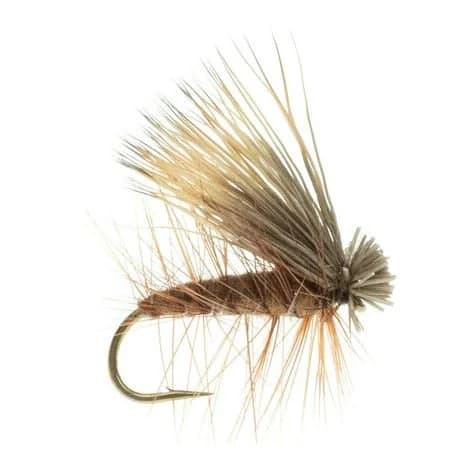
The Elk Hair Caddis: How to Tie the Fly That Works Everywhere, All Season, on Everything
Tuesday, April 21, 2026
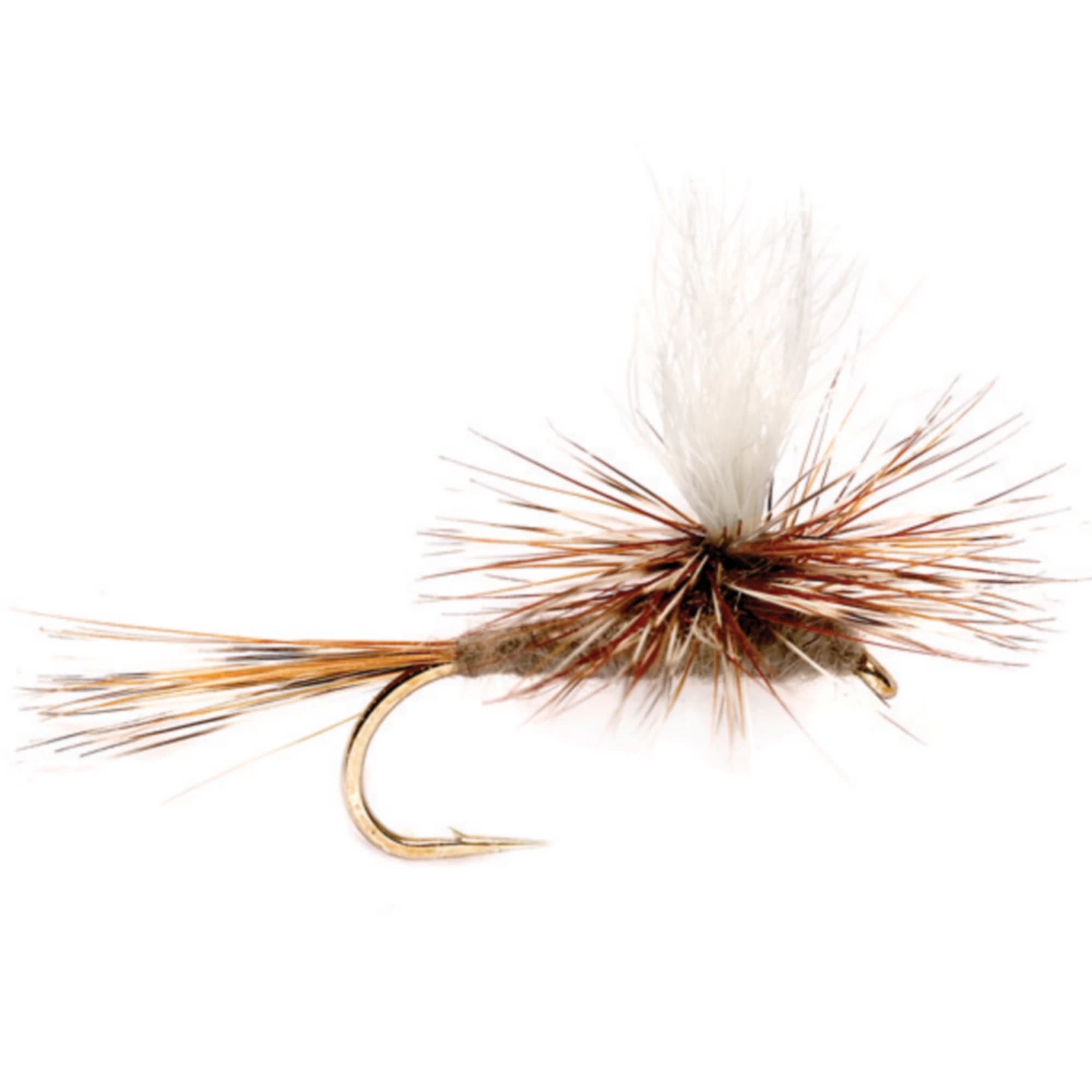
The Parachute Adams: How to Tie the One Fly Every Angler Carries and Why It Fools Everything
Monday, April 13, 2026
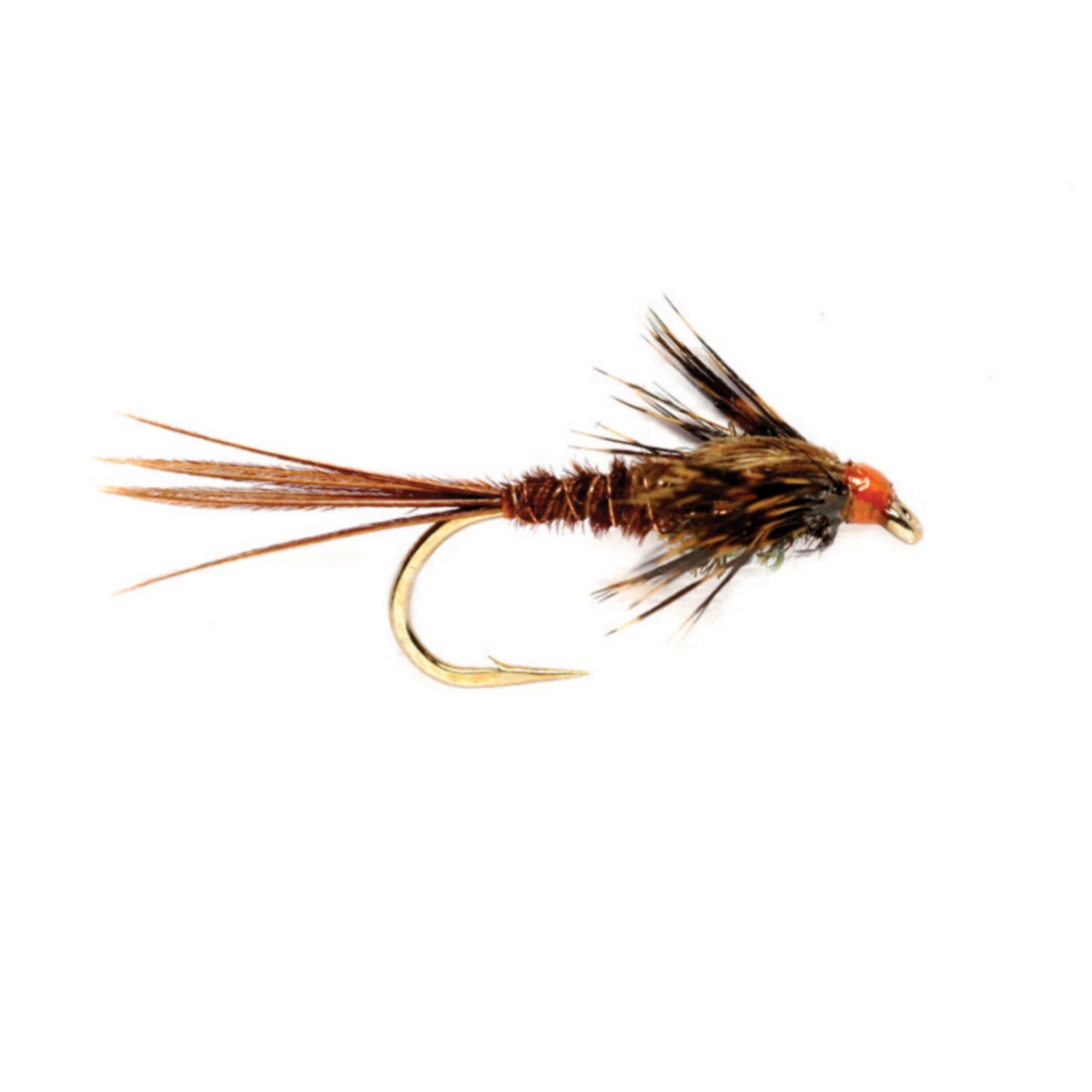
The Pheasant Tail Nymph: Two Materials, No Thread, and the Subsurface Fly That Changed Everything
Thursday, April 9, 2026
 ™
™