
Fly Fishing Great Sand Dunes National Park: Native Cutthroat, Backcountry Creeks, and the Most Surreal Landscape in Colorado
Great Sand Dunes holds 750-foot dunes beneath 14,000-foot peaks — and behind that spectacle, Sand Creek carries native Rio Grande cutthroat trout in one of Colorado's most important restoration waters. Here is the backcountry creek, the famous surge-flow beach, the Conejos River nearby, and the fly box for southern Colorado's most unexpected fishery.
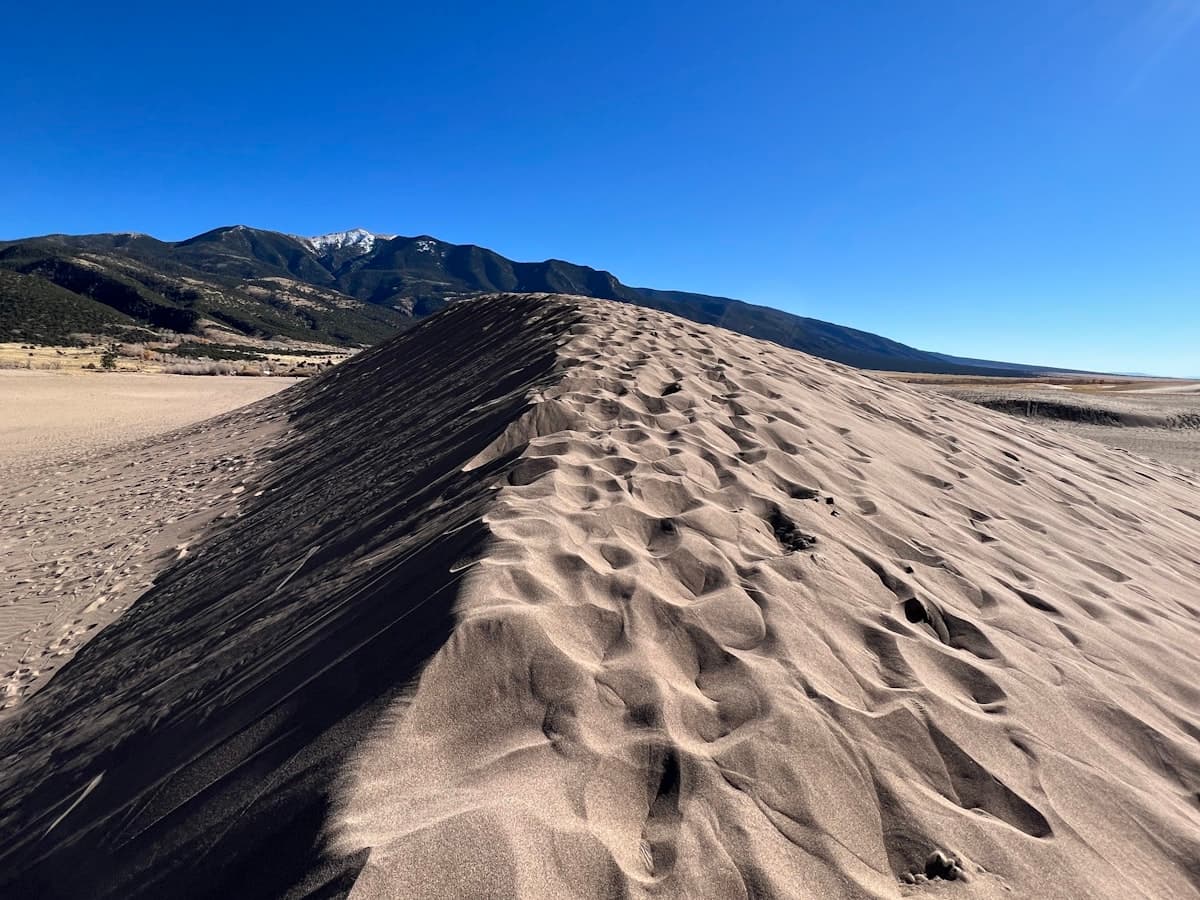
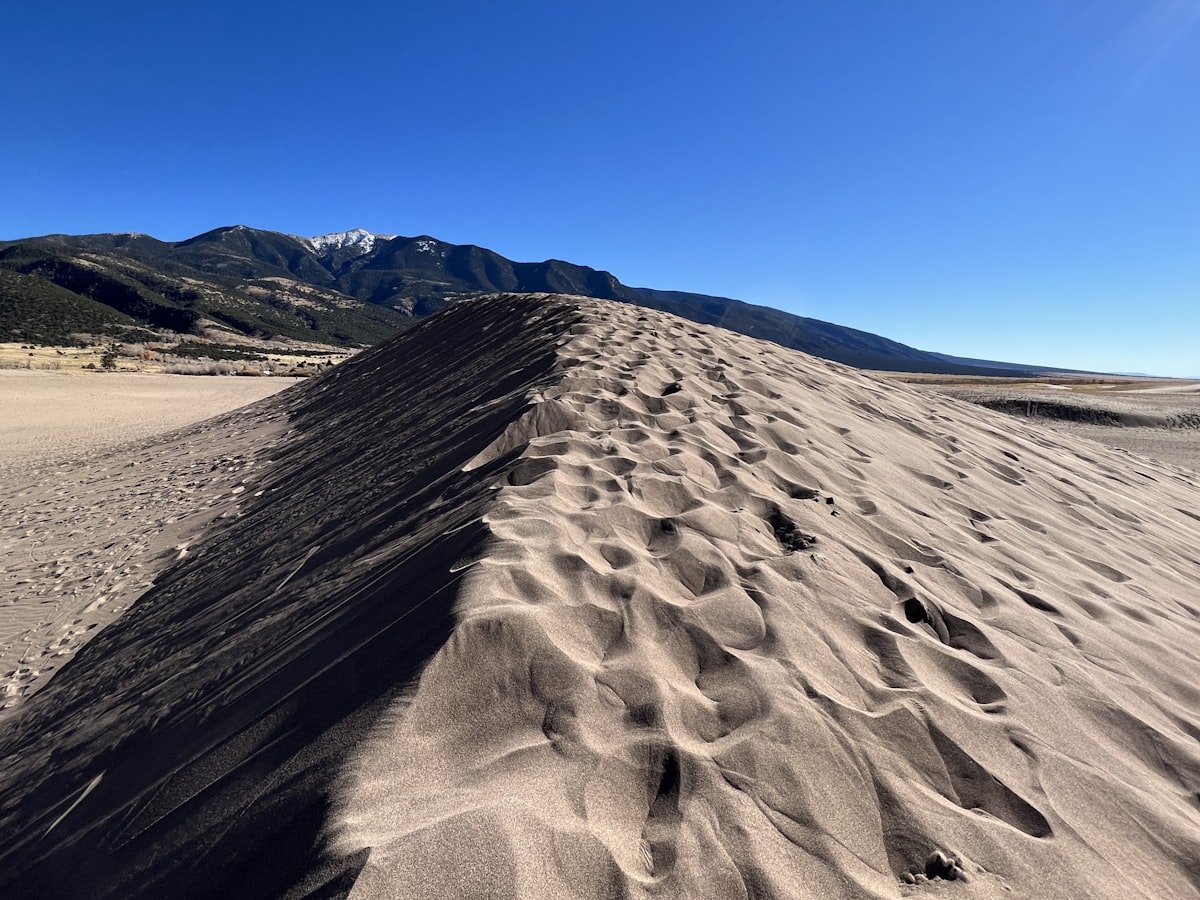
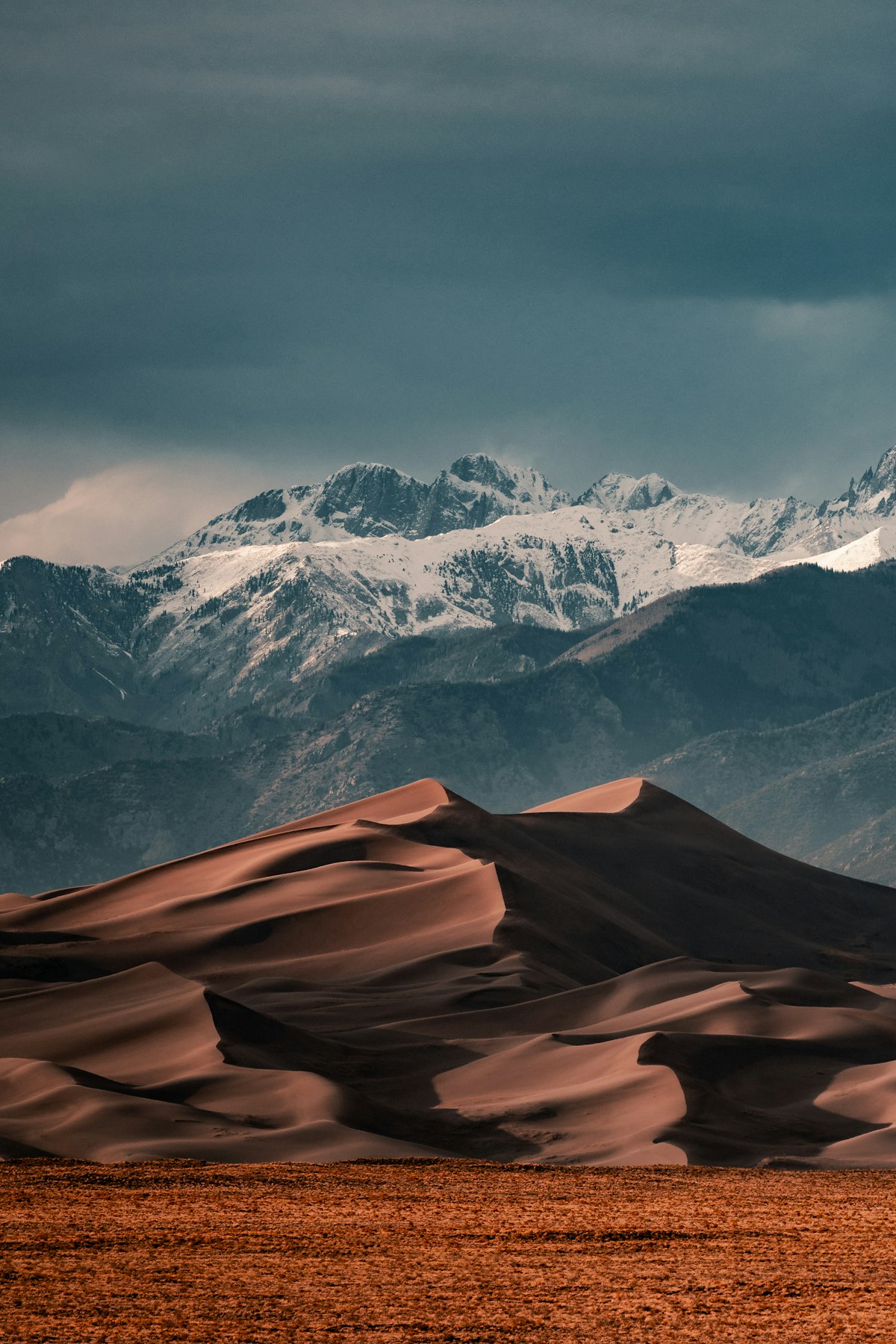
The first time you see Great Sand Dunes National Park, your brain stalls. Thirty square miles of sand — dune ridges, crescent bowls, knife-edge crests — piled 750 feet high against the western face of the Sangre de Cristo Mountains. The tallest dunes in North America, sitting at 8,200 feet in a high-altitude desert valley, backed by peaks that top 14,000 feet and carry snow into July. It looks like someone cut a piece of the Sahara and dropped it at the base of the Rockies. Nothing about the scene makes visual sense.
And then you learn there are trout here.
Not in the dunes themselves — the sand is bone dry. But on the far side of those mountains, and in the creeks that flow from the Sangre de Cristos down through the dunefield, native Rio Grande cutthroat trout hold in cold water that most visitors never see. Sand Creek, a backcountry stream accessible only by a serious hike, carries one of Colorado's most significant populations of this threatened subspecies. Medano Creek, the famous "beach" creek that flows along the base of the dunes and draws thousands of families to splash in its shallow surge-flow waves, technically holds fish in its upper reaches — though the creek's lower section is ankle-deep wading water for toddlers, not a fly-fishing destination. And an hour south, the Conejos River offers some of the best freestone trout fishing in southern Colorado, making the San Luis Valley a legitimate fly-fishing region that happens to contain the most visually surreal national park in America.
This guide is structured around that layered reality. The fishing at Great Sand Dunes is genuine but limited. The fishing near Great Sand Dunes is excellent. And the setting — dunes, mountains, native cutthroat, high desert — is unlike anything else in the national park system.
The Park — Dunes, Mountains, and the San Luis Valley
Great Sand Dunes National Park and Preserve covers roughly 150,000 acres in the San Luis Valley of south-central Colorado, about 35 miles northeast of Alamosa and 250 miles southwest of Denver. The park was designated a national monument in 1932 and upgraded to national park status in 2004, with the adjacent preserve adding backcountry mountain terrain to the original dunefield protection.
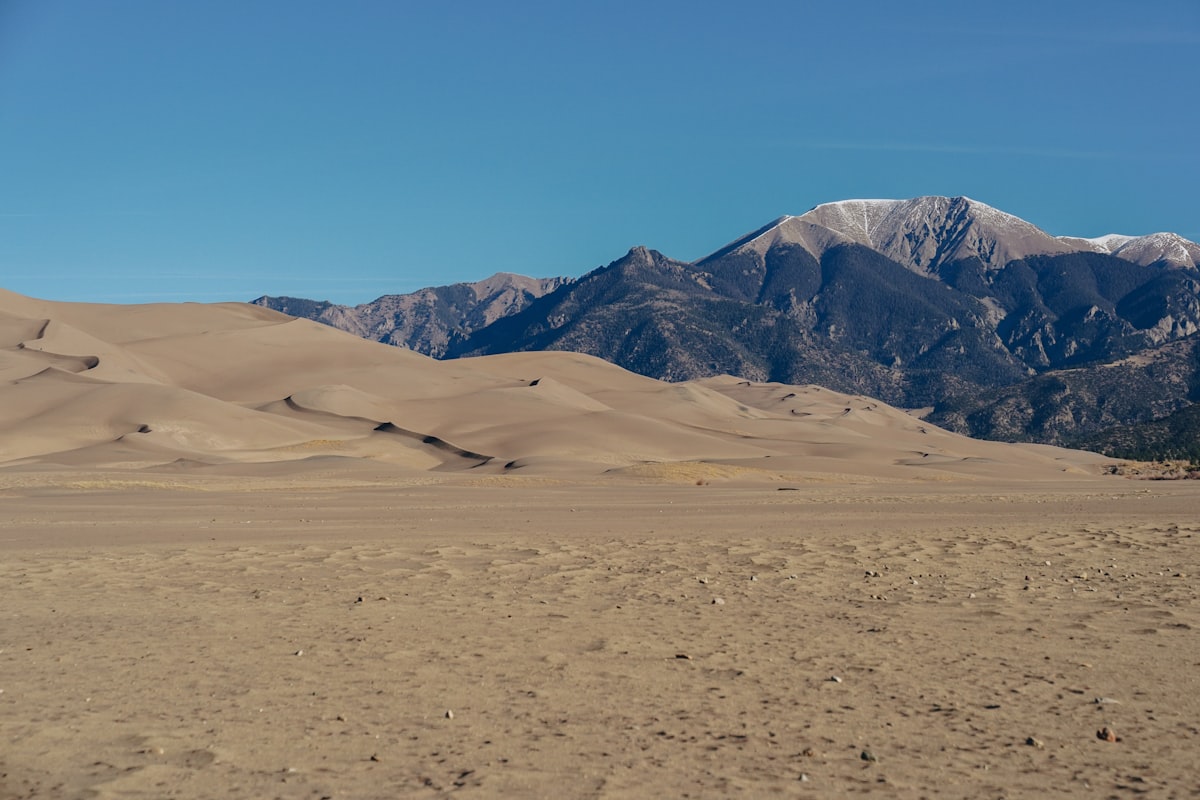
The dunes themselves occupy about 30 square miles and contain Star Dune, which at approximately 750 feet from base to crest is the tallest sand dune in North America. The sand originated from sediments deposited by the Rio Grande and its tributaries in ancient lake beds on the San Luis Valley floor. As those lakes receded over tens of thousands of years, prevailing southwest winds carried the exposed sand northeast toward the Sangre de Cristo Mountains, where the dunes accumulated against the mountain wall like snow drifting against a fence. The mountains act as a barrier, and opposing storm winds from the northeast push sand back toward the center of the dunefield, building the dunes higher rather than letting them migrate. The result is a self-contained sand system that has been growing for at least 440,000 years.
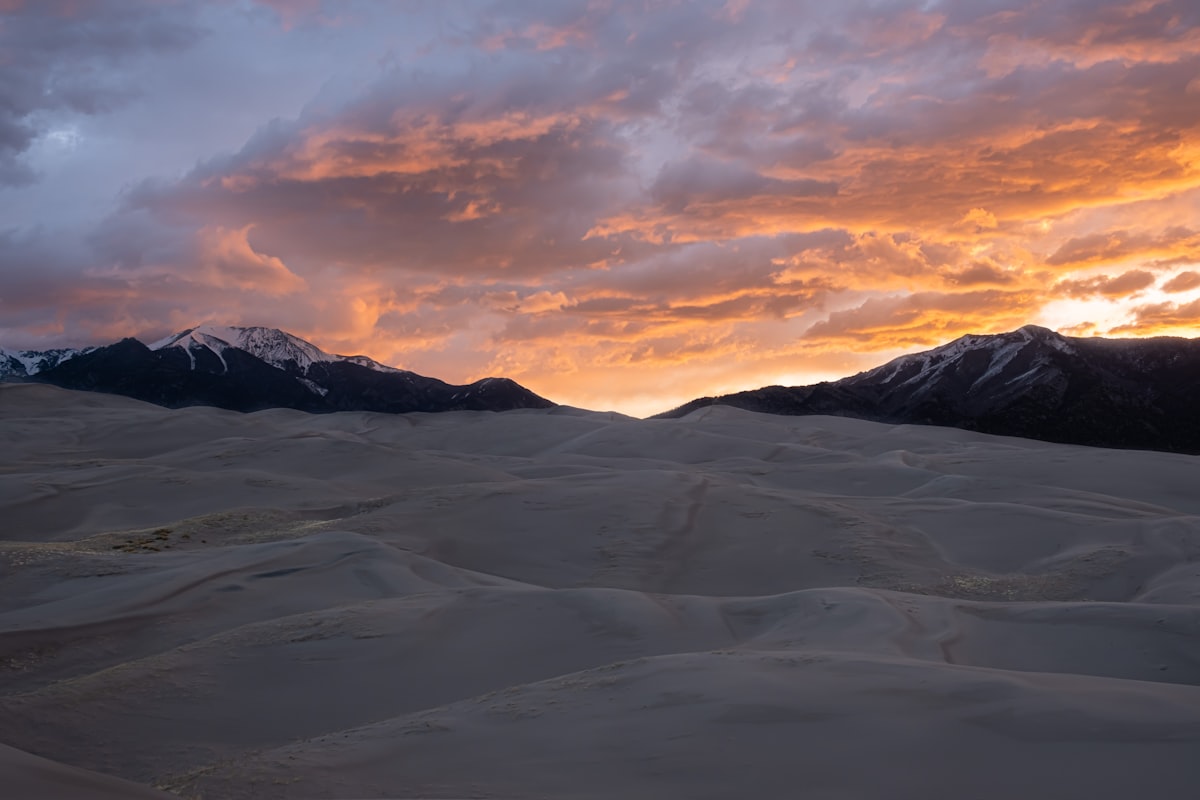
The Sangre de Cristo Mountains rise directly behind the dunes — a wall of peaks exceeding 13,000 and 14,000 feet, with several fourteeners visible from the dunefield. The contrast is the park's defining feature: honey-colored sand in the foreground, dark green forest on the mountain flanks, white snow on the summits, and blue sky above. At sunrise and sunset, the dunes shift through amber, orange, and deep shadow while the peaks glow pink and gold. Photographers and painters have been trying to capture this scene for a century, and the photographs never quite match the reality. The scale is wrong — the dunes look like they should be small, but they are enormous, and the mountains behind them are even more enormous, and the whole thing sits in a valley so wide and flat that the horizon bends.
The San Luis Valley itself is the largest alpine valley in North America — roughly 122 miles long and 74 miles wide, sitting at an average elevation of 7,500 feet, ringed by mountains on every side. It is high desert: dry, sunny, and cold in winter. The town of Alamosa, the valley's largest community at roughly 10,000 people, sits at the junction of the Rio Grande and several tributary streams. Mosca, the nearest community to the park, is barely a town — a post office and a handful of buildings on Highway 150.
Sand Creek — The Backcountry Cutthroat
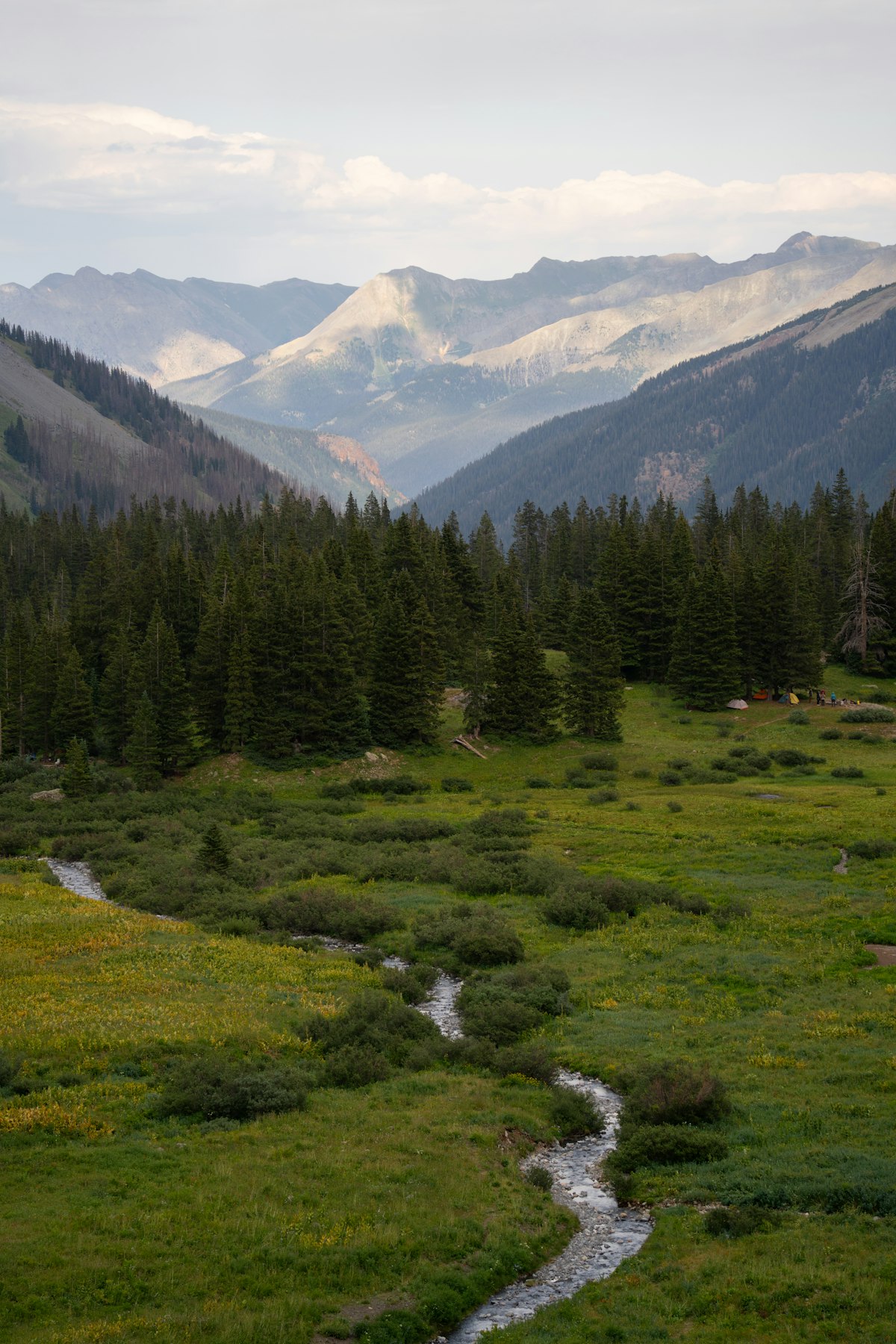
Sand Creek is the real fishing story at Great Sand Dunes, and it requires real effort to reach. The creek flows from Upper and Lower Sand Creek Lakes high in the Sangre de Cristo Mountains, dropping through steep mountain terrain on the preserve side of the park before eventually disappearing into the sand on the valley floor. The upper reaches — from the lakes down through roughly four miles of mountain creek — hold native Rio Grande cutthroat trout in what has become one of Colorado's most important native trout restoration sites.
The Rio Grande Cutthroat
The Rio Grande cutthroat trout (Oncorhynchus clarki virginalis) is the southernmost subspecies of cutthroat trout in North America and the native trout of the entire Rio Grande basin — historically found from southern Colorado through New Mexico and into the headwaters of the Pecos River in Texas. Today, the subspecies occupies roughly 15 percent of its historical range, pushed into small headwater streams by a century of competition from stocked rainbow and brown trout, habitat degradation, and hybridization with other cutthroat subspecies.
Sand Creek is a closed system — bounded by alpine basins at its source and the desert valley floor at its terminus — which makes it a natural biological refuge. Non-native fish cannot migrate upstream into the creek from below because the creek disappears into the sand before reaching any connected waterway. This isolation, which would be a disadvantage for most fish populations, is precisely what makes Sand Creek valuable for native cutthroat conservation. The fish in the upper creek and the lakes are genetically pure Rio Grande cutthroat, uncontaminated by hybridization.
In 2020, Colorado Parks and Wildlife, the National Park Service, and the U.S. Fish and Wildlife Service completed a major restoration project on Sand Creek. Upper and Lower Sand Creek Lakes and the upper four miles of the creek were treated with rotenone to remove non-native brook trout, and after the treatment was verified, the waters were restocked with genetically pure Rio Grande cutthroat trout from broodstock populations. The restoration has been successful — the cutthroat have established reproducing populations in both lakes and the creek, with fish up to 14-15 inches reported in Lower Sand Creek Lake and slightly larger fish in the upper lake.
Getting There
The hike to Sand Creek is not casual. The standard approach from the Music Pass trailhead takes you over Music Pass and down into the Sand Creek drainage. Lower Sand Creek Lake is roughly 5 miles from the trailhead, with Upper Sand Creek Lake another mile beyond. The round trip is 8-10 miles with approximately 2,000-2,400 feet of elevation gain. The trail crosses alpine terrain above 11,000 feet, and the lakes sit above 11,500 feet. This is a day hike for fit, acclimated anglers, or an overnight backpacking trip for those who want to fish properly.
The trailhead is accessed via a rough 4WD road from the south side of the park. A high-clearance vehicle is recommended, and 4WD may be necessary depending on conditions. Check with the park visitor center for current road conditions before driving out.
Fishing Sand Creek
Sand Creek above the valley floor is small mountain water — cold, clear, rocky, flowing through spruce-fir forest and alpine meadow. The creek is three to six feet wide in most places, with small plunge pools, pocket water behind boulders, and short runs between cascades. The lakes are alpine cirque lakes with clear water, rocky shorelines, and limited shoreline vegetation.
The fishing is catch-and-release only for Rio Grande cutthroat trout throughout the park and preserve. Artificial flies and lures only. No bait. These regulations are strict and enforced — the cutthroat are a species of special concern in Colorado, and the Sand Creek restoration represents a significant investment in their recovery.
The fish themselves are beautiful — golden-olive flanks, fine black spots concentrated toward the tail, and the vivid red-orange cutthroat slash marks under the jaw that give the subspecies its name. They are small, wild, and aggressive. Rio Grande cutthroat in streams this size rarely exceed 10-12 inches, with an occasional fish pushing 14 inches in the deeper pools and in the lakes. What they lack in size they make up for in willingness — these are not spring creek trout that inspect your fly for thirty seconds before refusing. They are backcountry cutthroat that eat when food appears.
The fly box for Sand Creek is simple and small:
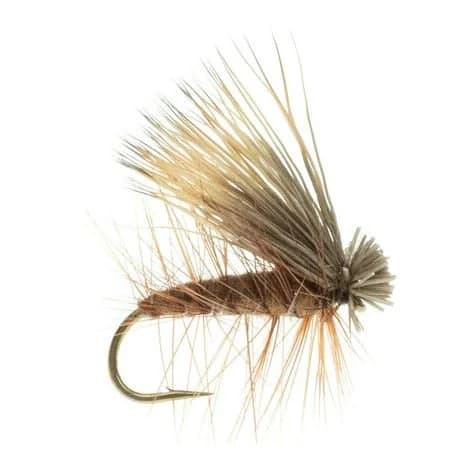
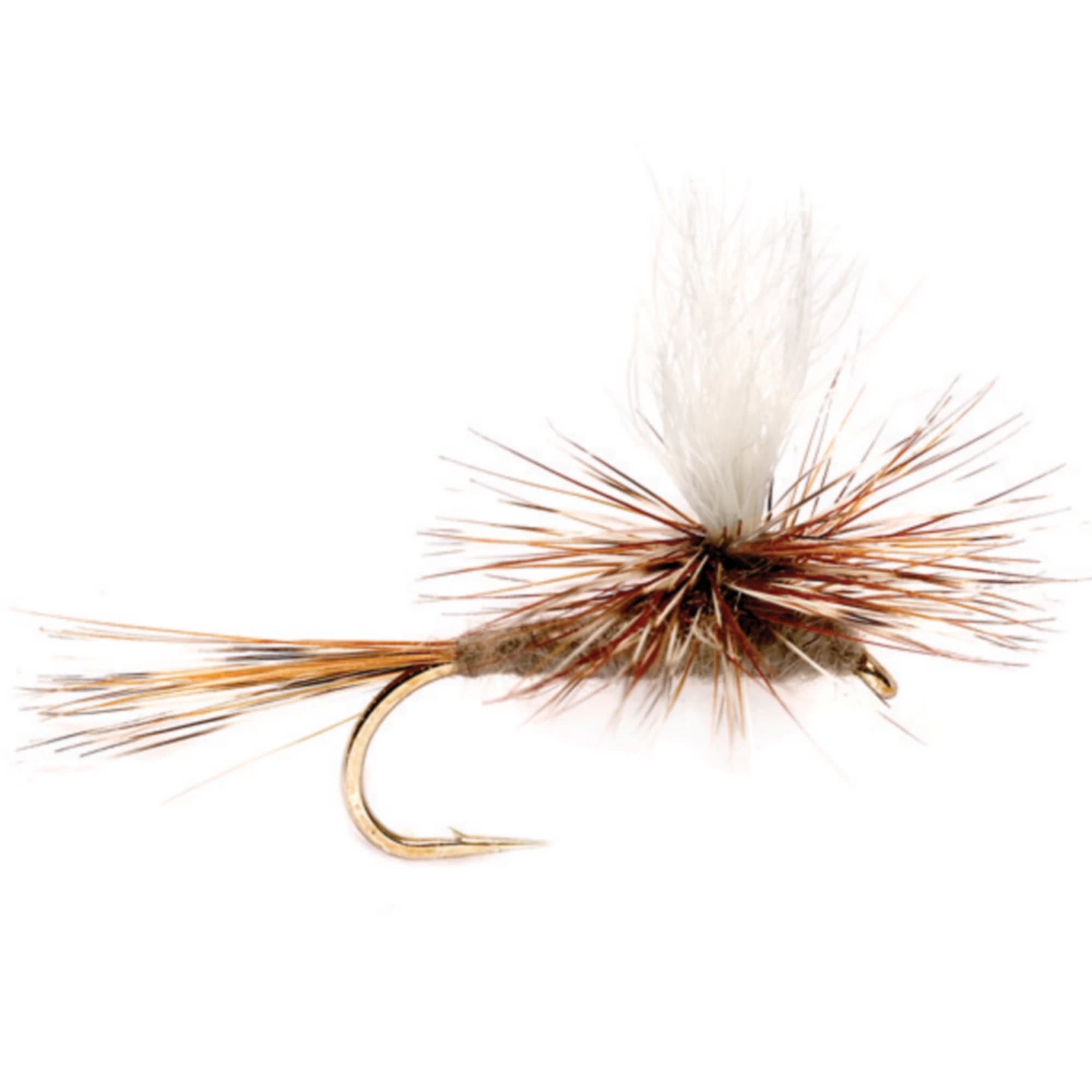
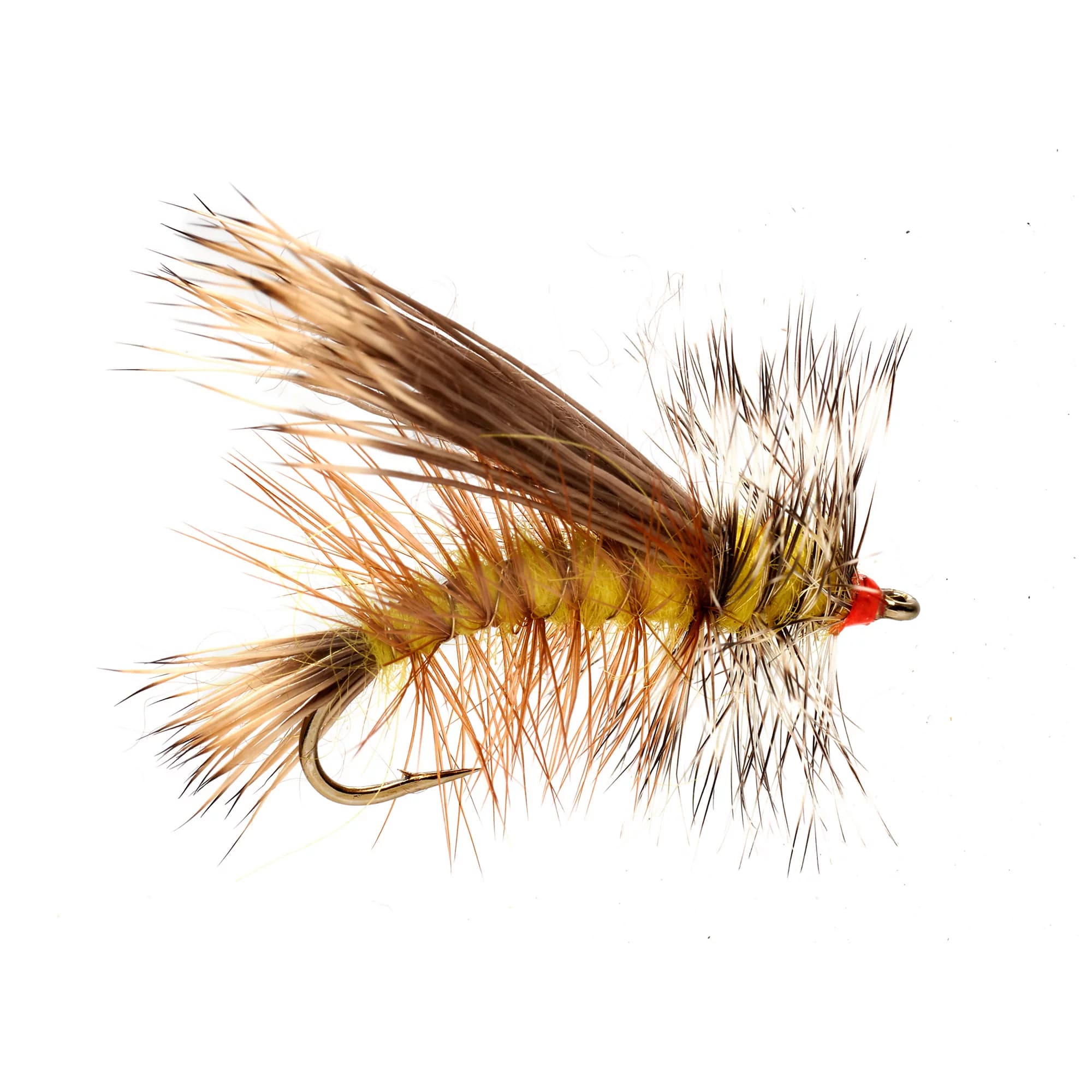
Dry flies — the primary approach: Elk Hair Caddis (#14-18) is the first fly out of the box on any small Colorado mountain stream, and Sand Creek is no exception. Caddis are present throughout the drainage, and a size 16 EHC drifted through pocket water and the pool tailouts will find willing fish. Parachute Adams (#14-18) is the universal searching pattern — when cutthroat are rising and you cannot identify the insect, a size 16 Adams covers the bases. Royal Wulff (#14-16) is the classic attractor dry for small-stream cutthroat — the white wing is easy to track in broken water, and the peacock herl body triggers aggressive takes from fish that eat opportunistically. Stimulator (#14-16) covers stonefly and general attractor duty — the mountain creeks of the Sangre de Cristos have healthy stonefly populations, and a yellow or orange Stimulator skated through the riffles is a proven cutthroat fly.
Nymphs — for the deeper pools: Pheasant Tail (#16-18) is the default subsurface pattern on any small mountain stream. Hare's Ear (#14-16) provides a buggier, more impressionistic profile for prospecting the deeper plunge pools. Prince Nymph (#14-16) works as an attractor nymph in faster water. Copper John (#16-18) sinks fast for the deeper pockets. On a creek this small, a single nymph under a small dry fly is the most practical subsurface rig — true euro-nymphing setups are overkill for three-foot-wide water.
Terrestrials — summer essential: Foam ants (#16-18), small beetles (#16), and Chubby Chernobyl (#14) as a hopper-attractor from July through September. The high-country meadows along Sand Creek produce grasshoppers, ants, and beetles that end up in the water constantly during summer, and the cutthroat eat them with abandon.
The gear: A 7- to 8-foot, 2-weight or 3-weight rod is ideal for Sand Creek — short enough for the tight quarters, light enough for small fish and fine tippet, but with enough backbone to roll-cast in tight timber. Leaders 7.5 feet, tapered to 5X or 6X. You do not need 7X for backcountry cutthroat — they are not leader-shy. You do need stealth: stay low, move slowly, avoid casting a shadow on the pool. The fish spook easily because the water is crystal clear and the stream is narrow. One bad step on the gravel sends every fish in the pool under the nearest rock.
Medano Creek — The Famous Creek That Barely Fishes
Medano Creek is the water feature that most visitors to Great Sand Dunes actually experience, and it deserves an honest treatment in a fishing guide.
The creek flows from the Sangre de Cristo Mountains down through a broad, sandy channel at the base of the dunefield. In late spring and early summer — typically late May through early July — snowmelt fills the creek to a width of 30 to 100 feet, but a depth of only a few inches to a foot in most places. The creek flows over smooth sand, not gravel or rock, and the channel shifts constantly as the sand moves with the current.
Medano Creek's claim to fame is surge flow — a naturally occurring phenomenon where the creek flows in rhythmic waves rather than a steady current. Underwater sand ridges build up and break down rapidly, creating miniature waves that pulse downstream every ten to twenty seconds. The effect looks like tiny ocean waves rolling across a beach, and on good flow days, the surges can reach 6-12 inches high. It is one of only a few places in the world where surge flow occurs in a natural stream, and it draws tens of thousands of visitors annually to wade, splash, and build sand castles at the base of the dunes.
This is not fly-fishing water. The lower creek — the section near the main parking area and dunefield access — is ankle-deep, sand-bottomed, and full of families with kids in swimsuits. There are no fish in the lower creek. The water is too warm, too shallow, and too unstable for trout to hold.
The upper reaches of Medano Creek, above the dunefield and into the Sangre de Cristo foothills, are a different story. Upper Medano Creek carries cold mountain water through forested terrain, and it does hold Rio Grande cutthroat trout — small ones, in the same size range as Sand Creek. The upper creek is accessible via a rough 4WD road (Medano Pass Road) that runs along the creek into the mountains. The fishing is similar in character to Sand Creek: tiny water, small wild cutthroat, catch-and-release only, artificial flies and lures only. The same fly box applies — small attractor dries, a handful of nymphs, terrestrials in summer.
But reaching the fishable sections of upper Medano Creek requires a high-clearance 4WD vehicle and multiple creek crossings on a primitive road. And the trout are small — 6-10 inches is typical. If you have the vehicle and the desire, upper Medano Creek is fishable backcountry cutthroat water with a unique setting. If you are a visiting angler making a plan for the best fishing in the area, your time is better spent on Sand Creek or the Conejos River.
The Conejos River — The Best Trout Water Near the Dunes
The Conejos River is why the Great Sand Dunes region works as a fly-fishing destination. Sand Creek is a meaningful backcountry experience, but the Conejos is a legitimate trout river — 92 miles of freestone water flowing from the San Juan Mountains through the southern San Luis Valley, holding brown, rainbow, and native cutthroat trout in water that fishes well from June through October.
The river is roughly 60 miles southwest of Great Sand Dunes — about an hour and fifteen minutes by car — and it runs from its headwaters above Platoro Reservoir down through a series of canyons and meadow sections to its confluence with the Rio Grande near Antonito. The best fly-fishing sections are in the upper river, above and below Platoro Reservoir, and in the canyon sections between the reservoir and the town of Mogote.
Key Sections
Above Platoro Reservoir: The headwaters and tributaries in the Rio Grande National Forest hold small wild trout in classic mountain freestone — the kind of water where an Elk Hair Caddis and a Pheasant Tail dropper cover ninety percent of situations. The Lake Fork of the Conejos is designated Wild Trout water and holds native cutthroat — catch-and-release only, artificial flies and lures only. Saddle Creek, a tributary, is a designated fly-fishing-only section.
Below Platoro Reservoir (tailwater section): The dam releases cold water that supports excellent trout habitat in the canyon below. Browns and rainbows in the 12-18 inch range, with fish over 20 inches possible. This section fishes like a small tailwater — more consistent flows, more predictable hatches, and slightly more technical fish than the upper freestone sections.
The canyon sections (Pinnacles area): Steep canyon walls, pocket water, plunge pools, and runs that hold good numbers of brown trout. This is the most productive public-access water on the Conejos, with a 4-weight rod, Stimulators (#14-16), and Hare's Ear nymphs (#14-16).
Conejos River Hatches and Flies
The Conejos fishes on standard Colorado freestone patterns:
- May–June: Caddis emerge first. Elk Hair Caddis (#14-18) in tan and olive. Stonefly nymphs become active — Stimulators (#10-14) on top, Pat's Rubber Legs (#6-8) below.
- June–July: Stonefly hatches — the Conejos has a strong golden stonefly hatch that brings big fish to the surface. Stimulators (#10-14), Chubby Chernobyl (#10-12).
- July–August: PMDs (#16-18) and caddis continue. Terrestrials become important — hoppers, ants, beetles. A Chubby Chernobyl (#10-12) with a Pheasant Tail (#16) dropper is the summer standard.
- August–September: Hopper season peaks. The meadow sections fish best with foam hoppers, and the canyon sections produce on Elk Hair Caddis and Blue Winged Olives as fall approaches.
- September–October: BWO hatches (#18-20) on overcast days. Parachute Adams (#18) and Comparadun patterns. The browns start moving and feeding aggressively before the spawn. Woolly Buggers (#8-10) and Muddler Minnows (#6-8) swung through deeper runs produce the largest fish of the year.
Year-round subsurface: Pheasant Tail (#16-18), Hare's Ear (#14-16), Prince Nymph (#14-16), Copper John (#14-18), Zebra Midge (#18-22) — the standard Colorado nymph rotation.
The Rio Grande Headwaters — Gold Medal Water an Hour Away
The Rio Grande itself flows through the San Luis Valley, and the upper river between South Fork and Del Norte — roughly 45 minutes to an hour northwest of the park — carries Gold Medal designation from Colorado Parks and Wildlife. This means the highest quality aquatic habitat in the state, with trophy-class brown and rainbow trout in the 16-20 inch range and the density to match.
The Gold Medal stretch fishes on standard Rio Grande headwater patterns: Stimulators (#10-14) during the stonefly hatch in June, PMDs in July, hoppers in August, BWOs in September and October. Late June brings a salmonfly hatch that pulls the biggest browns to the surface — if your timing is right, a #4 stonefly dry fished tight to the banks on the upper Rio Grande is one of the great dry-fly experiences in Colorado. Nymphing with Pheasant Tails, Hare's Ears, and San Juan Worms (#12-14, red) produces year-round.
The upper Rio Grande is bigger water than anything at Sand Dunes — a 5-weight or 6-weight rod, 9 feet, with the option to float certain sections with a guide. For anglers visiting Great Sand Dunes who want a half-day of serious trout fishing on quality water, the Gold Medal Rio Grande is the most accessible option with the highest reward.
Other San Luis Valley streams worth noting: the Alamosa River, La Garita Creek, and numerous small tributaries flowing from the Sangre de Cristos and the San Juan Mountains carry trout in varying densities. Most are small freestone creeks that fish on the same attractor-dry-and-nymph approach that works on Sand Creek. A local guide in Alamosa can point you to the best current options — these small streams fish differently year to year depending on snowpack, flows, and access conditions.
The Seasonal Calendar
Late May–June (Snowmelt and Surge Flow): Medano Creek runs at its peak as snowmelt fills the channel, and surge flow is most likely during this window. The dunefield is accessible but hot in the afternoon. Sand Creek and the upper mountain trails may still have snow at the highest elevations — check conditions before planning a hike to the lakes. The Conejos River is running high from runoff, with the best fishing below Platoro Reservoir where dam releases moderate the flow. The Rio Grande headwaters are clearing from runoff by late June, and the salmonfly hatch arrives on the upper river.
July–August (Peak Season): The best window for Sand Creek fishing — the snow is gone, the trail is clear, and the cutthroat are actively feeding in the lakes and creek. Terrestrial patterns dominate. Medano Creek drops through July and may be dry or minimal by August in low-snow years. The Conejos River fishes at its best — hopper-dropper season, stonefly and caddis activity, warm water temperatures that keep trout feeding all day. The Rio Grande headwaters fish on PMDs and hoppers. Afternoon thunderstorms are common throughout the valley — plan your hiking for mornings and carry rain gear.
September–October (Fall): The best time for the Conejos River — brown trout move and feed aggressively before the October spawn, BWO hatches produce technical dry-fly fishing on overcast days, and the Woolly Bugger and streamer bite is at its annual peak. Sand Creek remains fishable through September but gets cold at elevation in October. Medano Creek is typically dry or very low. The dunefield is spectacular in autumn light — cooler temperatures make hiking more comfortable, and the cottonwoods along the valley streams turn gold. The Rio Grande headwaters fish into October in what Creede locals call the "secret season" — few anglers, hungry trout, and dry-fly fishing that rivals the summer peak.
November–April (Off-Season): The dunes are accessible year-round, and winter visits offer solitude and dramatic snow-on-sand photography. But the fishing is dormant. Sand Creek and the high mountain trails are buried in snow. Medano Creek is dry. The Conejos fishes on midges and Griffith's Gnats (#18-22) in the tailwater sections below Platoro, but access is limited by snow on the forest roads. The Rio Grande near Del Norte fishes on winter midges and Zebra Midges (#20-22) through the coldest months for dedicated winter anglers.
The Gear Summary
For Sand Creek and upper Medano Creek (backcountry cutthroat):
- Rod: 7- to 8-foot, 2-weight or 3-weight — small stream water that demands a short, light rod.
- Leader: 7.5 feet, tapered to 5X or 6X. Fluorocarbon tippet optional — the cutthroat are not leader-shy, but the water is clear.
- Line: Weight-forward floating. No sink tips, no sinking lines. This is all dry-fly and shallow-nymph water.
- Pack considerations: You are hiking 5-10 miles round trip at elevation. Bring a rod tube or rod sock that fits in or straps to a daypack. Collapsible wading staff optional. Wet-wading in approach shoes is fine from July through September — the water is cold but wadeable in warm weather without waders.
For the Conejos River and Rio Grande headwaters:
- Rod: 9-foot, 4-weight or 5-weight — standard Colorado freestone gear. The 4-weight is the sweet spot for dry-fly and light nymph work on the Conejos. Bring a 5-weight or 6-weight for the Rio Grande if you plan to nymph heavier water or fish streamers.
- Leader: 9 feet, tapered to 4X or 5X. Go to 6X for BWO and midge fishing in fall.
- Waders: Chest waders or hip waders depending on the season and section. The Conejos is wadeable in most sections, but the Rio Grande has deeper runs that require chest waders for access.
Regulations
Colorado Fishing License: Required for all fishing within the park, preserve, and on the Conejos River and Rio Grande. Available online from Colorado Parks and Wildlife or at retail outlets in Alamosa. A nonresident annual license or a 1-day or 5-day license covers all species.
Rio Grande Cutthroat Trout: Catch-and-release only throughout Great Sand Dunes National Park and Preserve. This applies to all cutthroat trout in Medano Creek, Sand Creek, and Sand Creek Lakes. Artificial flies and lures only — no bait. Single barbless hooks are strongly recommended and may be required on specific waters — check current regulations.
Sand Creek Lakes: Open for fishing with artificial flies and lures only. Catch-and-release only for all trout species. The restoration project has established new regulations that are posted at the trailhead and at the lakes — verify current rules before fishing.
Conejos River: Standard Colorado regulations apply on most sections. The Lake Fork of the Conejos is designated Wild Trout water with catch-and-release only and artificial flies and lures only. Saddle Creek is fly-fishing only. Check the current Colorado fishing regulations brochure for specific section rules, as they vary by stretch.
Rio Grande (Gold Medal section): Special regulations apply on the Gold Medal stretch between South Fork and Del Norte — typically artificial flies and lures only, with reduced bag limits. Check current Colorado Parks and Wildlife regulations for exact boundaries and rules.
Park Entry: Great Sand Dunes charges a $25 per vehicle entrance fee, valid for seven days. Annual passes and America the Beautiful passes are accepted.
Getting There
From Denver: 250 miles southwest, approximately 4 hours via I-25 south to US-160 west through Walsenburg and over La Veta Pass, then north on Highway 150 to the park entrance. Alternatively, take US-285 south through Fairplay and over Poncha Pass to the San Luis Valley.
From Colorado Springs: 190 miles southwest, approximately 3.5 hours via I-25 south and US-160 west.
From Alamosa: 35 miles northeast on Highway 150. Alamosa is the gateway town with the most services — hotels, restaurants, gas stations, a Walmart, and the nearest commercial airport (San Luis Valley Regional Airport with limited service).
From Mosca: 18 miles north on Highway 150 to the park entrance. Mosca is the closest community but has minimal services.
Lodging: The Pinon Flats Campground inside the park has 88 sites (tents and RVs, no hookups), available on a first-come, first-served basis and by reservation. Backcountry camping is available in the dunefield and in the preserve by permit. The nearest motels and hotels are in Alamosa, 35 miles south, and in the small communities along Highway 17 and US-160.
Fly shops and guides: There is no fly shop at the park. The nearest fly-fishing outfitters are in Alamosa and in South Fork (about 50 miles west), which serves the Rio Grande headwaters. For the Conejos River, outfitters in Antonito and Conejos provide guided trips and local information. Find a fishing guide in Alamosa for professional outfitters who know the San Luis Valley waters, the Conejos, and the Rio Grande headwaters.
The Honest Assessment
Great Sand Dunes National Park is not a top-tier fishing destination in the way that Rocky Mountain National Park or Yellowstone command an angler's attention. You do not plan a weeklong fishing trip around the dunes. But you might plan a weeklong trip around the San Luis Valley — three days on the Conejos River, a day on the Gold Medal Rio Grande, a day hiking into Sand Creek for native cutthroat — and spend your evenings standing at the base of the tallest sand dunes in North America watching the Sangre de Cristo peaks turn pink at sunset.
The fishing that exists within the park boundaries is meaningful precisely because of what it represents. Sand Creek's Rio Grande cutthroat trout are not stocked entertainment — they are the result of a multi-agency, multi-year restoration effort to bring a threatened native subspecies back to ancestral water. Catching one on a #16 Royal Wulff at 11,000 feet, in a creek backed by alpine cirques and bounded by the largest dunefield in the hemisphere, is a different kind of fishing than catching a 20-inch brown on the Conejos. Both are worth doing. They are not the same experience.
The park shares something with Great Basin National Park in Nevada and Capitol Reef National Park in Utah — isolated parks in remote landscapes where the fishing is modest but the setting is extraordinary, where the trout are small and wild and native, and where the absence of crowds means you fish in genuine solitude. It also shares Colorado mountain-stream DNA with Black Canyon of the Gunnison, where the fishing requires a serious hike and the reward is wild trout in a place most anglers never reach. And the Conejos River puts the region in the same conversation as Telluride and the San Miguel River — small-town Colorado, uncrowded mountain water, and the kind of fishing that reminds you why you started fly fishing in the first place.
The dunes are the spectacle. The cutthroat are the substance. The Conejos and the Rio Grande are the fishing. Combined, they make the San Luis Valley one of the most underrated fly-fishing regions in Colorado — a place where the landscape is impossible and the trout are native and the water is cold and clear and very, very far from anywhere that feels like the rest of the world.
Top Fishing Guides Nearby
Sand Creek's restored Rio Grande cutthroat trout eat Royal Wulffs at 11,000 feet in water backed by alpine cirques and the largest dunefield in North America. Below the park, the Conejos River and upper Rio Grande offer uncrowded mountain-stream fishing for wild trout in the San Luis Valley.
Palmer Outfitters
San Luis Valley, CO, US
3.9 (14 reviews)
Ultimate Elk Hunting Palmer Outfitters operates from Moffat, Colorado, specializing in elk hunting expeditions across some of the state's most scenic and productive terrain. With extensive field experience, the outfitter offers both fully guided and self-guided archery camps tailored to hunters of all skill levels. Known for personalized service and attention to detail, Palmer Outfitters is committed to creating memorable hunts in game-rich areas of Colorado. Whether seeking a fully supported experience or greater independence in the field, hunters will find a dedicated partner focused on delivering authentic and rewarding time pursuing elk in the mountains.
Jackalope Anglers
Del Norte, CO, US
5.0 (27 reviews)
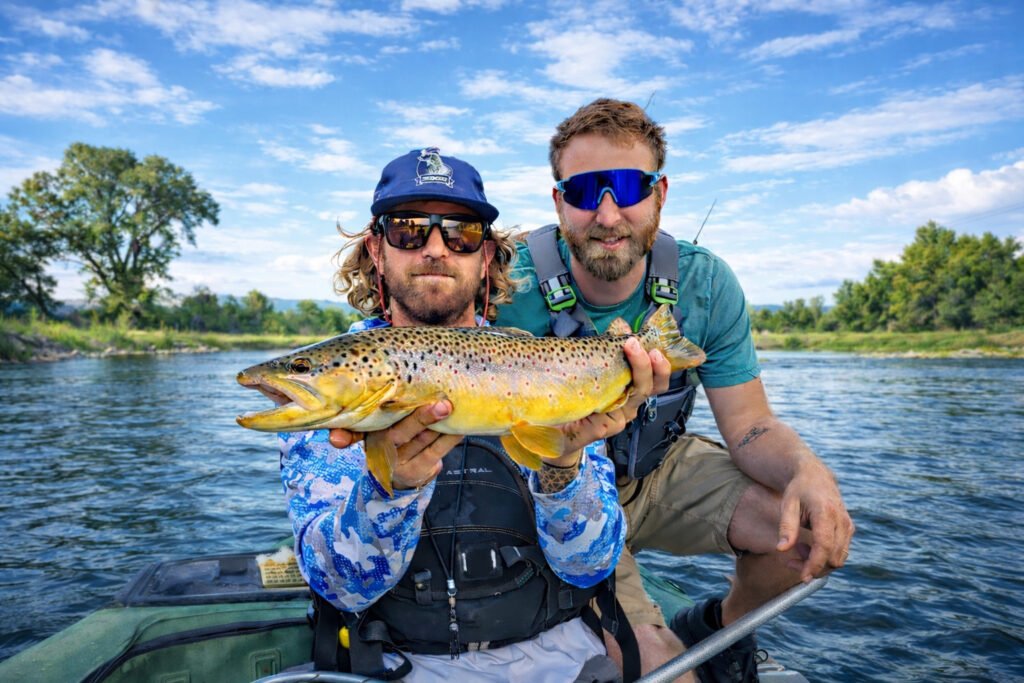
Jackalope Anglers offers premier guided fly fishing on the Rio Grande in Del Norte, Colorado, where anglers access some of the region's finest Gold Medal waters. Founded by Jack, a professional guide with over a decade of experience, the service specializes in drift boat float trips tailored to both novice and seasoned fishermen. Clients can expect to pursue wild Rio Grande Cutthroat, Rainbow, and Brown Trout in pristine, uncrowded waters abundant with diverse hatches. Each expedition is customized to match individual skill levels and preferences, reflecting a genuine commitment to conservation and personalized service. The combination of expert guidance, quality drift boat access, and a deep knowledge of these exceptional waters ensures an unforgettable day on one of Colorado's most rewarding fisheries.
Cherokee T.P. Outfitters
Jasper, CO, US
4.7 (6 reviews)
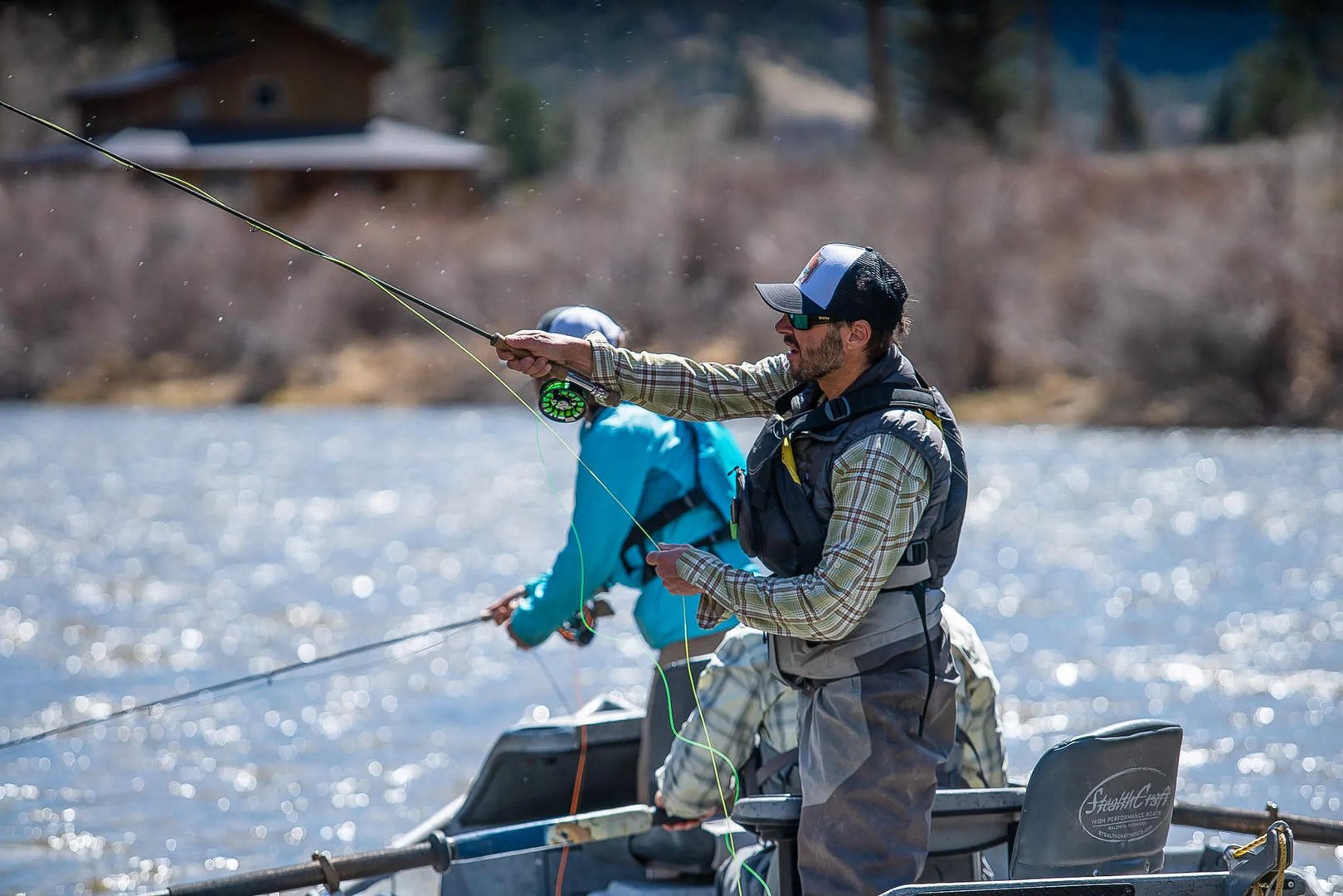
Cherokee TP Outfitters Since 1989, Cherokee TP Outfitters has been welcoming anglers to the pristine waters of Southern Colorado. This family-owned operation specializes in guided fishing adventures throughout the Rio Grande National Forest and San Juan Wilderness, where experienced guides share their deep knowledge of the region's premier fisheries. The team's commitment to quality and safety is evident in every detail of their trips. Whether exploring remote mountain streams or scenic river sections, clients benefit from seasoned expertise and professional service. Fully bonded and insured, Cherokee TP Outfitters creates the foundation for focused, memorable days on the water in one of Colorado's most beautiful landscapes.
Wolf Creek Anglers
South Fork, CO, US
5.0 (23 reviews)
Wolf Creek Anglers specializes in guided fly fishing along the pristine upper Rio Grande River near South Fork, Colorado. Their team of experienced guides works with anglers of all skill levels—from first-time casters to seasoned professionals—to create personalized trips tailored to individual goals and abilities. Whether exploring the water by float, wade, or specialized multi-day packages, clients benefit from expert instruction and insider knowledge of the region's premier fishing grounds. The operation's reputation rests on deep local expertise and genuine commitment to each angler's success. With access to some of Colorado's most productive waters and a flexible approach to trip styles, Wolf Creek Anglers delivers memorable fly fishing experiences that respect both the craft and the landscape.

Wolf Creek Anglers
South Fork, CO, US
5.0 (23 reviews)
Wolf Creek Anglers has been a trusted fly fishing guide service since 2013, offering expert instruction and guided trips on the Rio Grande and Conejos rivers in South Fork, Colorado. With over 75 years of combined guiding experience, their team works with anglers of all skill levels—from those taking their first cast to accomplished fly fishers seeking new waters. The outfitter specializes in both half-day beginner packages and full-day excursions, providing all necessary tackle and equipment for a productive day on the water. Wolf Creek Anglers is committed to catch-and-release practices that preserve the region's fishery for future generations, making each trip both rewarding and sustainable.

Chama Trout Stalkers
Chama, NM, US
3.9 (7 reviews)
Chama Trout Stalkers Chama Trout Stalkers specializes in guided fly fishing on over a mile of pristine private water along New Mexico's Rio Chama. The operation maintains exclusive access to carefully managed waters and stocked ponds, where anglers can pursue healthy populations of rainbow, brown, and Tiger Trout in a catch-and-release environment. Committed to personalized instruction and quality experiences, the guide limits trips to two anglers per guide, ensuring focused attention and excellent fishing opportunities. All necessary fly fishing equipment is provided, allowing both seasoned anglers and newcomers to focus on what matters most—connecting with the water and enjoying a memorable day on the river.
Frequently Asked Questions
Can you fish at Great Sand Dunes National Park?
Yes. Fishing is permitted in the Medano Creek and Sand Creek drainages within the park and preserve. Sand Creek and Sand Creek Lakes hold native Rio Grande cutthroat trout and are open for catch-and-release fishing with artificial flies and lures only. Upper Medano Creek also holds cutthroat. A Colorado fishing license is required.
What fish are in Great Sand Dunes National Park?
The primary species is the Rio Grande cutthroat trout, a native subspecies that is a Colorado Species of Special Concern. Sand Creek and its lakes hold genetically pure populations restored through a 2020 conservation project. Upper Medano Creek also holds cutthroat. The park's Rio Grande sucker, an endangered Colorado species, has been reintroduced to Medano Creek.
How do you get to Sand Creek Lakes at Great Sand Dunes?
Sand Creek Lakes are accessed via a hike from the Music Pass trailhead on the south side of the park. Lower Sand Creek Lake is roughly 5 miles from the trailhead, with Upper Sand Creek Lake another mile beyond. The round trip is 8-10 miles with 2,000-2,400 feet of elevation gain at altitudes above 11,000 feet. A high-clearance 4WD vehicle may be needed for the trailhead road.
What is Medano Creek surge flow?
Surge flow is a rare natural phenomenon where Medano Creek flows in rhythmic waves rather than a steady current. Underwater sand ridges build up and break down rapidly, creating miniature waves that pulse downstream every 10-20 seconds. It occurs during peak snowmelt in late May and early June. The lower creek is popular for wading and splashing but is not fishable — it is ankle-deep over sand.
Where is the best fly fishing near Great Sand Dunes?
The Conejos River, about 60 miles southwest, is the best trout water near the park — 92 miles of freestone holding brown, rainbow, and cutthroat trout. The Rio Grande headwaters between South Fork and Del Norte, about 45-60 minutes northwest, carry Gold Medal designation with trophy brown and rainbow trout. Both waters fish well from June through October.
Related Articles
The Elk Hair Caddis: How to Tie the Fly That Works Everywhere, All Season, on Everything
Tuesday, April 21, 2026
The Parachute Adams: How to Tie the One Fly Every Angler Carries and Why It Fools Everything
Monday, April 13, 2026
The Stimulator: The Stonefly-Caddis-Hopper-Attractor That Floats Through Anything
Thursday, March 12, 2026
 ™
™