
Fly Fishing Lake Clark National Park: Bush Planes, Leopard Rainbows, and the Rivers Nobody Else Is On
Lake Clark National Park is Alaska's fly-out fishing frontier — four million acres of wilderness where bush planes deliver you to rivers holding 20-inch wild rainbow trout, all five Pacific salmon species, and not another angler in sight. This is the trip that ruins you for all other fishing.

Lake Clark National Park sits 100 miles southwest of Anchorage on the western shore of Cook Inlet, holding four million acres of volcanic peaks, turquoise lakes, boreal forest, and glacial rivers that drain into the most productive salmon watershed on the planet. It is one of the least-visited national parks in America — fewer than 18,000 people come through in a given year — and that obscurity is exactly the point for anglers who know about it.
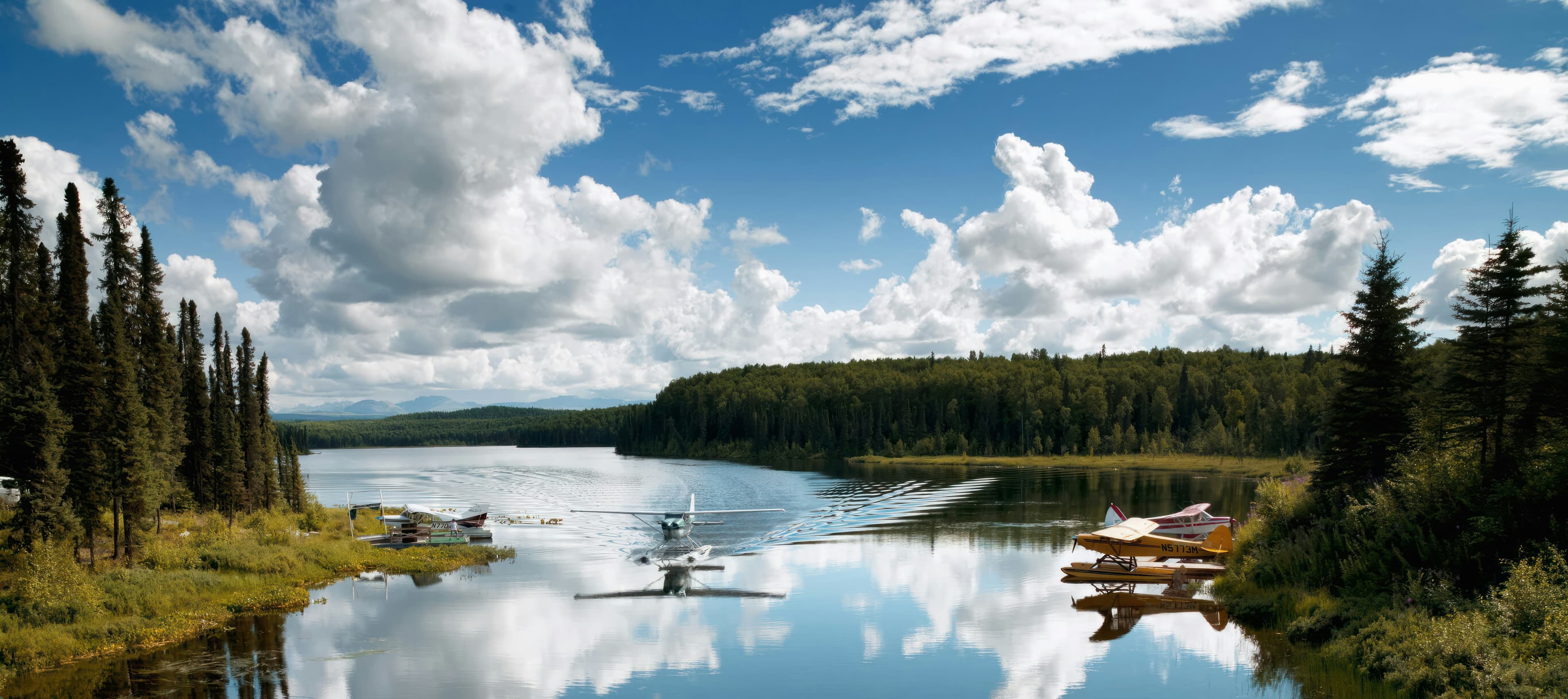
This is not road-accessible fishing. There are no highways into Lake Clark, no parking lots at trailheads, no campgrounds with pull-through sites. You get here on a bush plane — a de Havilland Beaver or a Cessna 206 on floats, launched from Anchorage, Kenai, or Homer, touching down on the glassy surface of Lake Clark near the tiny settlement of Port Alsworth. From there, you fly out again — in smaller planes, to rivers that don't have names on most maps, to gravel bars where your guide lands the floats and you step out with a 7-weight into water that hasn't seen another angler in days. Maybe weeks.
The fishing model here is fundamentally different from anything in the Lower 48 and even different from its more famous neighbor, Katmai National Park. Katmai's identity is Brooks Falls, the bear-cam rivers, the day-trip lodges. It's spectacular fishing, but it's concentrated — everybody goes to the same handful of rivers, and during peak season you share water. Lake Clark's identity is dispersion. The park's watershed drains into Bristol Bay through dozens of rivers and hundreds of tributary streams, and the lodges here use float planes to spread their guests across that entire system. On a typical day at a Lake Clark lodge, you might be the only two anglers on a 15-mile stretch of river. That's not a marketing line. That's Tuesday.
Why Lake Clark — The Case for the Fly-Out Model
The fly-out lodge model is what makes Lake Clark fishing distinct from nearly every other destination in this series. At a typical Lower 48 lodge — even a great one on the Madison or the Bighorn — you're fishing public water that other anglers can access. At Lake Clark, your guide assesses the weather, the water conditions, the salmon migration timing, and the current location of the best fish, then selects a river from a portfolio of options and flies you there. If the Tanalian is fishing well, you go to the Tanalian. If the silvers are stacked in the Crescent, you fly to the Crescent. If the weather closes one drainage, there's another drainage on the other side of the mountains.
This flexibility means that over a week at a Lake Clark lodge, you might fish six or seven different rivers — each with its own character, its own fish populations, its own hatches and holding water. Some are wide, braided glacial rivers with big runs and deep pools. Some are clear spring-fed creeks with technical sight-fishing to individual rainbows holding behind spawning salmon. Some are tundra streams where arctic grayling rise to dry flies on every cast. The variety is staggering, and it's all accessible because you have a bush plane and a pilot who knows every gravel bar and every lake within a hundred miles.
The cost reflects the logistics. A week at a Lake Clark fly-out lodge runs $8,000 to $16,500 per person, all-inclusive — lodge, meals, guides, fly-outs, gear. That's real money, and it's worth understanding what you're paying for: not just the fishing, but the planes, the fuel (aviation gas in the Alaska bush is expensive), the pilots, the remote infrastructure, and the exclusivity. You're buying the absence of other anglers on your water, and in fishing, that absence is priceless.
Port Alsworth — The Hub
Port Alsworth is the gateway to Lake Clark and the closest thing to a town in the park's orbit. It sits on the southeast shore of Lake Clark, population roughly 100, founded by bush pilot Leon "Babe" Alsworth in the 1940s. The Alsworth family still operates one of the lodges. There is no road to Port Alsworth. The "downtown" is a gravel airstrip, a National Park Service ranger station, a few lodges, and the kind of quiet that a person from the Lower 48 might initially mistake for loneliness before realizing it's actually peace.
You arrive by air taxi from Anchorage (about an hour), Kenai, or Homer. Lake Clark Air and several other operators run scheduled and charter flights. From Port Alsworth, your lodge handles everything — meals, guides, fly-outs to fishing locations, bear-viewing excursions if you want them. This is full-service wilderness. You don't need to bring anything except your personal gear, your flies, and an understanding that the weather, not your itinerary, determines each day's plan.
The Fish — What Swims Here
Rainbow Trout — The Leopard Bows
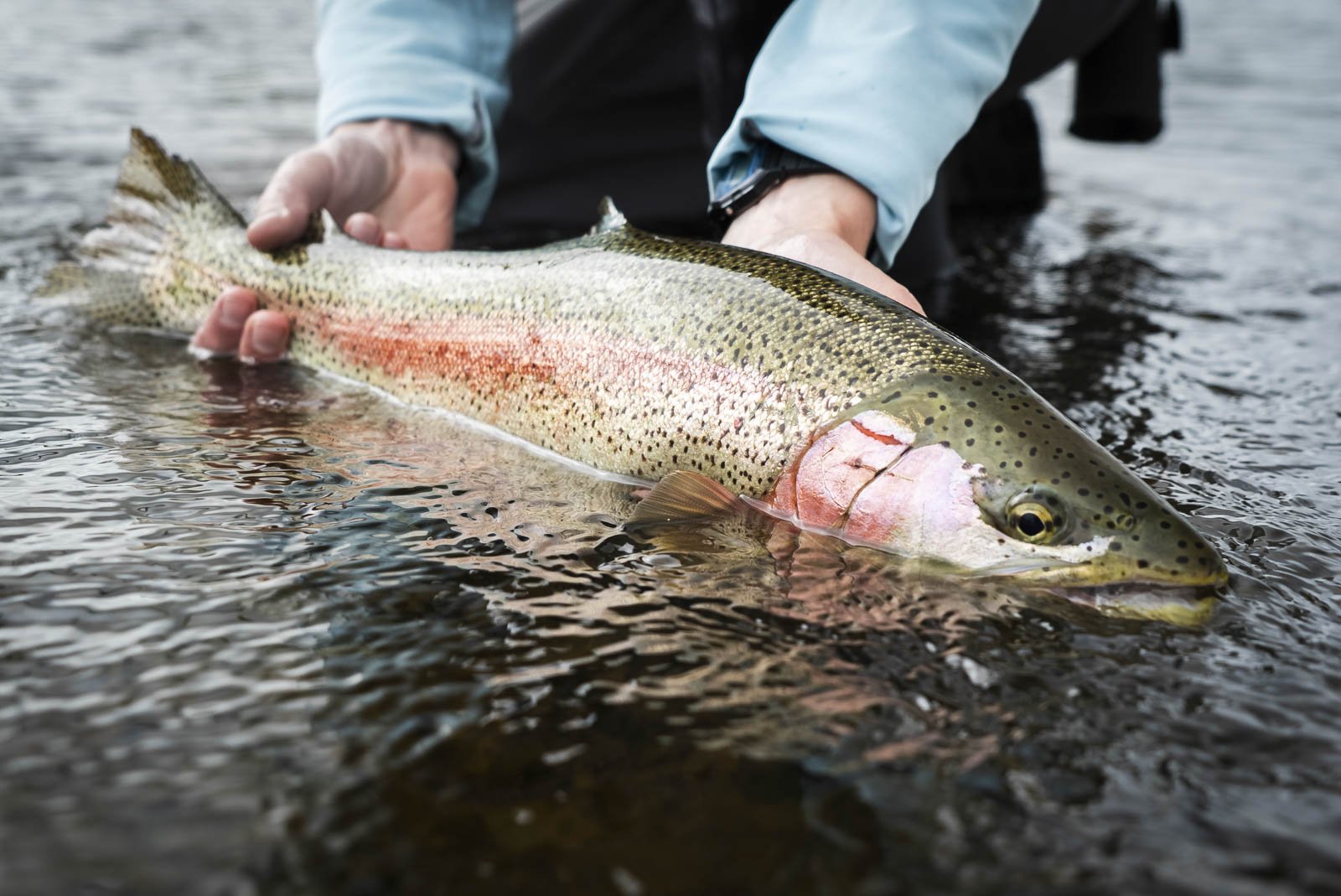
The rainbow trout are why most serious fly anglers come to Lake Clark, and these fish deserve their reputation. Lake Clark's rainbows are wild, resident fish that have never been stocked — they've evolved in this watershed for thousands of years, feeding on a diet of salmon eggs, salmon flesh, aquatic insects, mice, leeches, and sculpin that no hatchery fish has ever seen. They are thick, heavily spotted fish with the distinctive "leopard" markings that give Bristol Bay rainbows their nickname — dark, dense spots over a chrome-and-rose body that photographs like a magazine cover.
The average rainbow in Lake Clark's rivers runs 16 to 20 inches, with fish over 24 inches caught regularly and genuine trophies pushing 28 to 30 inches. These are not the slender, stream-reared trout of a Montana spring creek — they're deep-bellied, broad-shouldered predators built on a diet of pure protein. A 22-inch Lake Clark rainbow fights like a 26-inch fish from anywhere else because it's been eating salmon eggs since July and packing on weight at a rate that Lower 48 trout can't match.
The rainbow fishing follows the salmon cycle, just as it does at Katmai:
-
June: Pre-salmon. Rainbows are hungry after winter, feeding on out-migrating salmon smolt, aquatic insects, mice, and leeches. This is streamer and mouse-fly season — big patterns fished aggressively. The trout are spread through the rivers and willing to chase.
-
July: Sockeye salmon pour into the rivers by the hundreds of thousands. As they begin staging and spawning, the first eggs hit the drift and the rainbows key in. Egg patterns start producing. The transition from streamers to eggs happens fast, sometimes within days.
-
August: Peak spawn. This is the month that defines Lake Clark fly fishing. Rainbows stack behind spawning salmon, faces into the current, inhaling every egg that comes past. Sight-fishing to individual trout holding behind redds is the game — you can see the fish, see the egg drift, see the eat. It's visual, technical, and absurdly productive. This is also when silver (coho) salmon arrive, adding another aggressive, fly-eating species to the mix.
-
September: Post-spawn. Dead salmon decompose in the rivers, and their flesh drifts downstream in pale pink and white chunks. The rainbows — already fat from weeks of egg-gorging — switch to flesh flies. September produces the largest rainbows of the year, at peak body weight, in rivers colored by the last act of the salmon cycle. The fishing pressure drops to almost nothing because most lodges close by mid-September.
Pacific Salmon — All Five Species
Lake Clark's watershed is part of the Bristol Bay drainage, which produces the largest wild sockeye salmon run on Earth — some years, 50 million fish or more. All five species of Pacific salmon spawn in the park's rivers:
-
King (Chinook) salmon — The largest, running 20-50 lbs, arriving in June and July. Kings are typically targeted with heavy gear (8-10 weight rods), big streamers and Clouser Minnows, swung through deep runs. They're the most powerful fish in the river and a legitimate test of tackle.
-
Sockeye (Red) salmon — The engine of the ecosystem, arriving by the millions in July. Sockeye are famously reluctant fly-eaters in fresh water, but they can be caught on small, bright patterns (chartreuse or pink) swung through their staging lanes. Their real value to anglers is what they do to the rainbows — every spawning sockeye is a feeding station for the trout below it.
-
Silver (Coho) salmon — The fly angler's favorite salmon, arriving late July through September. Silvers hit flies aggressively — streamers, Woolly Buggers, Egg-Sucking Leeches, Muddler Minnows — and fight with explosive runs and acrobatic jumps. A fresh 12-pound silver on an 8-weight is one of the best fights in freshwater fly fishing.
-
Pink (Humpy) salmon — Running in odd-numbered years, Pinks are the most willing fly-eaters of all Pacific salmon. They'll hit small pink or chartreuse flies swung through runs. They average 4-6 lbs and fight well for their size.
-
Chum (Dog) salmon — Big, aggressive, and underrated. Chums average 8-15 lbs and hit chartreuse or cerise flies with conviction. They fight like demons and are increasingly popular with fly anglers who've discovered them.
The Supporting Cast
-
Dolly Varden — These char are omnipresent in Lake Clark's rivers, feeding alongside rainbows behind spawning salmon. They eat the same egg and flesh patterns, average 14-18 inches, and are beautiful fish — olive backs, pink spots, white-edged fins. They're often caught incidentally while targeting rainbows, but they deserve attention in their own right.
-
Arctic Char — Close relatives of Dollies, found in the deeper lakes and certain river systems. Some lodges offer dedicated char fly-outs to specific waters during peak weeks.
-
Arctic Grayling — The dry-fly fish. Grayling inhabit the smaller tributaries and clear-water streams, rising to Parachute Adams, Elk Hair Caddis, Stimulators, and basically any well-presented dry fly. They average 12-16 inches, with fish over 18 inches in the less-pressured streams. A 4-weight and a box of dries on a grayling creek is one of the purest pleasures in fly fishing — the same magic described in the Denali guide, but with bigger fish in more remote water.
-
Lake Trout — Found in the deep, cold lakes — Lake Clark itself, Turquoise Lake, Twin Lakes, Telaquana Lake. Lake trout can reach 20-30 lbs and are targeted with sinking lines and big streamers in early summer when they're shallow. By midsummer they drop into deep water and become harder to reach on a fly rod.
-
Northern Pike — Lake Clark's pike fishery is world-class but underappreciated. Pike over 40 inches (some pushing 50) inhabit the shallow, weedy bays and lake margins. They attack topwater flies, big articulated streamers, and anything that moves. Pike fishing is often offered as a half-day alternative when weather grounds the fly-outs or as a change of pace from trout and salmon. A 45-inch pike on a 9-weight with a wire leader and a rabbit-strip fly the size of your hand is controlled chaos.
The Rivers — Where You Actually Fish
Tanalian River
The Tanalian flows into Lake Clark near Port Alsworth and is one of the most accessible rivers in the system — you can reach it without a fly-out, hiking from town. It's a small river with clear water, good structure, and resident rainbow trout and Dolly Varden. The Tanalian Falls, a short hike from Port Alsworth, are spectacular and block upstream salmon migration, which concentrates fish below the falls. It's a solid option for a half-day when weather prevents fly-outs, and it fishes well with Pheasant Tail Nymphs, Prince Nymphs, and small streamers.
Crescent River and Crescent Lake
The Crescent River system is one of Lake Clark's premier fisheries. The river drains Crescent Lake and flows into Lake Clark, and it hosts strong runs of all five salmon species plus resident rainbow trout, Dolly Varden, and grayling. The Crescent is classic Alaska fly-out water — wide enough to swing streamers, with deep bends that hold big trout behind spawning salmon in August. Silver salmon stack in the lower river in late July and August, and the combination of fresh silvers and egg-drunk rainbows makes this one of the most productive days you can have in the park.
Tlikakila River
The Tlikakila is a designated Wild and Scenic River that flows down from Lake Clark Pass into the head of Lake Clark. It's a glacially-influenced river — bigger, more powerful, with more color than the spring-fed streams. The Tlikakila produces roughly 20% of all sockeye salmon spawning in Lake Clark, which means the rainbow trout fishing behind those spawners can be extraordinary in August and September. The river is more remote and less frequently fished than the Crescent, which means larger average fish and zero competition.
Gibraltar River and Gibraltar Lake
Gibraltar Lake sits in a volcanic valley south of Lake Clark, and its outlet river is classic trophy rainbow water. The river is shorter than the Crescent or Tlikakila but holds excellent fish in concentrated water. When the salmon are in, the rainbows behind them in the Gibraltar are as big as anything in the system. This is a river that lodges save for their best days — when conditions are right, it produces the kind of fishing stories that guests tell for years.
Copper River
Not to be confused with the famous Copper River of Cordova, this smaller Copper River flows through the Lake Clark watershed and offers excellent grayling and Dolly Varden fishing in addition to rainbow trout. It's a quieter river — a good change of pace from the high-intensity salmon-and-rainbow rivers — and the grayling fishing on dry flies can be genuinely outstanding.
Chilikadrotna and Mulchatna Rivers
Both are Wild and Scenic Rivers on the western side of the park, flowing into the Nushagak drainage. These are multi-day float-trip rivers for anglers who want the expedition version of Lake Clark fishing — camping on gravel bars, floating remote water that sees a handful of parties per season, fishing for rainbows, grayling, and salmon in water that feels genuinely unexplored. A guided float on the Chilikadrotna is a 5-7 day commitment and one of the great wilderness fishing experiences in North America.
Silver Salmon Creek
On the Cook Inlet side of the park, Silver Salmon Creek is famous for its combination of silver salmon fishing and brown bear viewing. The lodge at Silver Salmon Creek has operated since the 1980s, and the bears here have become habituated to human presence — they fish the creek alongside you, within camera range, unbothered. Fishing for silvers while brown bears wade the same creek, 30 yards away, is a uniquely Alaskan experience that blends fishing and wildlife in a way no other destination can match. The creek also offers Dolly Varden and halibut fishing in the nearby salt water.
The Fly Box — What to Bring
Alaska fly selection is not like a Lower 48 hatch chart. You're not matching specific insects on specific dates — you're matching the food chain of the salmon cycle, with a few specialty patterns mixed in. Here's what your box needs:
Egg Patterns (The Foundation)
Egg patterns are the single most important category in your Lake Clark fly box. When salmon are spawning — July through September — the rainbows eat eggs above everything else.
- Beads: 8mm-10mm in peach, orange, pink, and cream, pegged above a bare hook. Beads are controversial (some purists resist them) but devastatingly effective. They drift and tumble like real eggs in a way that no tied fly can match.
- Glo Bugs: #6-10 in peach, chartreuse, Oregon cheese, and pink. The classic tied egg pattern, still effective, especially in sizes smaller than what the beads can imitate.
- Scrambled Eggs / Egg Clusters: For when the salmon are actively spawning and clusters of eggs drift through the current.
Flesh Flies (September Essential)
- Flesh Flies: #4-8 in white, cream, pale pink, and light peach. Tied with rabbit strips or synthetic fibers to create a ragged, decomposing appearance. Dead-drifted through runs where salmon carcasses line the banks. These catch the biggest rainbows of the season — the fish that have been eating protein for three months and are at maximum weight.
Mouse Patterns (June Spectacular)
- Mouse flies: #2-4 in natural deer hair, black, or tan. Fished on the surface with a wake — cast to the bank, let it sit, then strip it across the current. When a 22-inch rainbow eats a mouse off the surface, the explosion is the most violent strike in freshwater fly fishing. Mouse fishing is best in June before the salmon arrive, and again on overcast days throughout the season. The Chubby Chernobyl can substitute as a big attractor in a pinch.
Streamers
- Dolly Llama: #2-6 in black/white, olive/white, and pink/white. This is the Alaska streamer — big profile, lots of movement, designed for aggressive stripping through deep runs and pools. It catches everything: rainbows, Dollies, silvers, char.
- Egg-Sucking Leech: #2-6 in black, purple, and olive with a fluorescent egg head. A Woolly Bugger on steroids — the egg head adds a visual trigger that Alaska trout can't resist.
- Woolly Bugger: #4-8 in olive, black, and white. The universal streamer, effective everywhere including Alaska.
- Sculpins: #2-6 in olive and tan. Sculpin patterns worked along the bottom through deep pools produce big rainbows that are feeding on baitfish rather than eggs.
- Battle Creek: A classic Alaska streamer pattern — sparse, heavy, designed to get down fast in heavy current. Effective for rainbows and silvers.
- Alaska Mary Ann: A traditional Bristol Bay pattern that still produces, especially for Dolly Varden and char.
- Muddler Minnow: #4-8, the original sculpin imitation. Fished dead-drift, swung, or stripped — versatile in Alaska water.
- Clouser Minnow: #2-6 in chartreuse/white for salmon and big trout in deeper water.
Nymphs
- Pheasant Tail: #12-16, effective during the pre-salmon insect season in June.
- Hare's Ear: #10-14, a reliable general-purpose nymph for early season.
- Prince Nymph: #10-14, an attractor nymph that works well when nothing specific is hatching.
- Copper John: #12-16, gets deep fast in Alaska's bigger rivers.
- Stonefly nymphs: #6-10, for the larger rivers with cobble bottoms.
- San Juan Worm: #10-14, surprisingly effective year-round in Alaska — trout eat aquatic worms the same way they eat them everywhere.
Dry Flies (Grayling and Early Season)
- Parachute Adams: #12-18 — the one dry fly that works everywhere, including Alaska. Essential for grayling.
- Elk Hair Caddis: #12-16 — caddis hatches are the most significant dry-fly event in Lake Clark's rivers, and grayling eat them with abandon.
- Stimulator: #8-14 — a big, visible attractor that pulls grayling from depth. Also works as a hopper imitation in late summer.
- Griffith's Gnat: #16-20 — for the midge clusters that grayling feed on in the calmer tributary pools.
- Chubby Chernobyl: #8-12 — doubles as a dry fly and an indicator for a dropper rig. Grayling smash them.
The Gear
Rods: Bring at least two, ideally three:
- 7-weight, 9-foot: Your primary rod for rainbows and silvers. Strong enough for big fish in heavy current, light enough for all-day casting. Fast action for punching casts into Alaska wind.
- 8-weight, 9-foot: For king salmon, pike, and big streamer work. Also your backup rainbow rod if the 7-weight breaks (and you're a long way from a fly shop).
- 5-weight, 9-foot: For grayling on dry flies and lighter nymph work on the smaller tributaries. Not essential, but if you have a day on a grayling creek, you'll wish you had it.
Reels: Large-arbor reels with sealed disc drag systems. Your reel needs to handle 100-yard runs from silvers and kings — this is not spring creek fishing where the reel is a line holder. Bring at least 100 yards of 20-lb backing.
Lines: Weight-forward floating lines for most fishing. A sink-tip or full-sinking line for the 8-weight when fishing deep runs for kings or lake trout. Bring a spare floating line — Alaska's silty water is hard on fly lines.
Leaders: 7.5-foot tapered leaders in 0X, 1X, and 2X for streamers and egg patterns. 9-foot leaders in 3X and 4X for nymphing. 9-foot leaders in 4X and 5X for grayling dry flies. Fluorocarbon tippet for everything subsurface — these fish are in clear water and they can see monofilament.
Waders: Breathable chest waders with felt-soled or studded boots. The river bottoms are slick cobble and you will fall without good traction. Bring wader repair patches — Alaska brush and gravel eat through neoprene booties fast.
Lake Clark vs. Katmai — Why Choose This Over the Famous One?
If you're planning your first Alaska fly-fishing trip, the question is inevitable: why Lake Clark instead of Katmai?
Both parks sit in the Bristol Bay watershed. Both have world-class rainbow trout and massive salmon runs. Both require bush planes. But the experience is different in ways that matter:
Diversity of water. Katmai's fishing is concentrated on a handful of well-known rivers — the Brooks, the Kulik, American Creek. Lake Clark's lodges have access to dozens of rivers across multiple drainages — glacial rivers, spring creeks, tundra streams, big lakes. You fish different water every day.
Crowding. Katmai gets over 60,000 visitors a year, concentrated on Brooks Camp and a few other sites. Lake Clark gets fewer than 18,000. On the rivers, the difference is dramatic — at Lake Clark, your guide is choosing rivers specifically to avoid other parties, and the bush-plane model means the fish see far fewer presentations per season.
Lodge culture. Katmai's most famous option — Brooks Lodge — is rustic and focused on the bear-viewing experience as much as the fishing. Lake Clark's lodges tend toward the full-service fly-fishing lodge model: guided fly-outs, gourmet meals, rod storage, fly-tying benches, the whole infrastructure built around making anglers fish as effectively as possible.
Species diversity. Both have rainbows and all five salmon species, but Lake Clark adds serious pike fishing, lake trout, and more diverse grayling water than Katmai offers.
The bear experience. Katmai wins for sheer bear density and the spectacle of Brooks Falls. Lake Clark's bears are present — you'll see them on every trip — but the experience is more dispersed. Silver Salmon Creek on the Cook Inlet side offers bear viewing that rivals anything at Katmai, but it's a separate trip from the inland fishing.
The honest answer: if you want the iconic Alaska experience — bears catching salmon, rainbows behind spawning reds, the nature-documentary version — Katmai delivers that with maximum intensity. If you want the best fishing, with the most variety, the least crowding, and the freedom of the fly-out model, Lake Clark is the choice.
Regulations and Logistics
Licenses: You need an Alaska state sport fishing license — available online through the Alaska Department of Fish and Game. Non-resident licenses are $25/day, $70/week, or $145/year. A king salmon stamp ($30) is required if you plan to target kings. Your lodge will remind you to purchase these before your trip, but do it early.
Catch-and-release: Most Lake Clark lodges practice catch-and-release for rainbow trout and encourage it for all species. Single barbless hooks are standard — if your lodge doesn't require them, use them anyway. These fish are too valuable to handle roughly.
Bear protocols: You're fishing in bear country, always. Surrender your catch if a bear approaches — no fish is worth a bear encounter. Clean fish at the water's edge, dispose of remains in the current, never in camp. Secure all food and fish in bear-resistant containers. Your guide will manage the bear situation, but understand: the bears have priority. If a brown bear decides it wants to fish the run you're in, you leave. Period.
Weather: Alaska weather is the single biggest variable in your trip. Fog, rain, and wind can ground the float planes, and when the planes don't fly, you don't fish (or you fish the Tanalian near town). Build flexibility into your expectations — a seven-day trip might have one or two weather days. The lodges know this and plan accordingly.
When to go:
- June: Fewest anglers, best streamer and mouse fishing, longest days, but coldest water and latest ice-out. Some rivers may still be running high with snowmelt.
- July: Salmon arrival, the transition month. Sockeye pour in, egg fishing starts, silvers begin showing late in the month. This is when the season shifts from searching to feeding.
- August: The prime month. Peak salmon spawn, best rainbow fishing, silver salmon in full run, warmest weather. This is when every lodge is fully booked and for good reason — the fishing is at its absolute peak.
- September: Trophy rainbows on flesh flies, fresh late-run silvers, the most dramatic fall colors you've ever seen, and almost no other anglers. September is the connoisseur's month — the anglers who know what they're doing come in September.
The Experience — What a Day Looks Like
You wake up at 6:00 AM in your lodge on the shore of Lake Clark. The morning light on the water is the color of pewter and salmon. Breakfast is eggs, bacon, sourdough pancakes, and coffee — lodge food, proper fuel for a long day on the water.
Your guide has checked the weather, talked to the pilot, and chosen today's river — the Crescent, because the silvers have been pushing upstream and the water level dropped overnight. You gear up: waders, layers, rain jacket (always the rain jacket), your 7-weight rigged with a peach Glo Bug trailing 18 inches behind a small split shot.
The Beaver fires up on the lake — the sound of a radial engine over water is the soundtrack of Alaska fishing — and you're airborne for 25 minutes, flying over spruce forest and tundra and rivers that glint below like veins of silver in the landscape. The pilot banks, descends, and puts the floats down on a lake at the head of the river. You climb out onto a gravel bar and the plane lifts off behind you, climbing back toward the lodge. For the next eight hours, you and your guide are alone on this river.
The fishing starts immediately. Your guide spots a pod of spawning sockeye in a broad, shallow riffle — four hens on their redds, tails pumping, eggs drifting downstream. Behind them, three shadows — rainbows, holding in the feeding lane, inhaling eggs as they tumble past. You wade into position, make a 30-foot cast upstream, and the Glo Bug drifts through the lane. The indicator ticks. You set the hook and a 20-inch leopard rainbow goes airborne, shaking the fly in a spray of water and light.
That's the first fish. By lunch you've landed a dozen rainbows, four Dollies, and a fresh silver that took an Egg-Sucking Leech swung through a deep bend and ran 70 yards downstream before you could turn it. You eat lunch on a gravel bar — lodge-packed sandwiches, fruit, cookies — and watch a brown bear sow with two cubs work the far bank, flipping salmon out of the shallows.
The afternoon is more of the same, but different water — you hike upstream to a spring-fed tributary where grayling rise to Elk Hair Caddis in a pool so clear you can count the pebbles on the bottom. You switch to the 5-weight and catch grayling until the dorsal fins start to blur together, each fish flashing that absurd sail-fin as it fights.
The plane comes back at 6:00 PM. You're on the lake by 6:30, at the lodge by 7:00, cleaned up and at dinner by 7:30. The food is king crab legs tonight, because this is Alaska and the lodge doesn't mess around. After dinner, you sit on the dock and tie flesh flies for tomorrow — your guide mentioned September fish are already starting to key on the first decomposing carcasses — and the light doesn't really go away. It just gets softer, and warmer, and the lake turns from pewter to gold, and you understand why people spend $10,000 to be here and then immediately start planning their next trip.
Planning Your Trip
Book early. The best Lake Clark lodges sell out 6 to 12 months in advance, especially for August weeks. If you have specific dates, book a year ahead.
What to bring: The lodge will provide a gear list, but essentials include: rain gear (Gore-Tex, not cheap stuff — you'll wear it every day), multiple layers (Alaska temperatures can swing 30 degrees in a day), polarized sunglasses (essential for sight-fishing), sunscreen (20 hours of daylight at midsummer), insect repellent, and your own fly rod and reel. Most lodges have loaner rods, but bring your own.
Physical fitness: You don't need to be an athlete, but you should be comfortable wading in moderate current over uneven cobble for 6-8 hours. The fishing involves some hiking, and the terrain is uneven — ankle strength and balance matter.
Photography: Bring a waterproof camera or a good phone in a waterproof case. The scenery and the fish are equally photogenic, and the bears will give you photos that make your Instagram account look like a nature documentary.
Guided vs. independent: Unlike Yellowstone or Glacier, where independent fishing is straightforward, Lake Clark is overwhelmingly a guided destination. The logistics of bush-plane access, bear safety, river navigation, and finding fish in a roadless wilderness make professional guides essential. A few experienced Alaska hands do independent float trips on the Chilikadrotna and Mulchatna, but for most anglers, the lodge model is how you experience Lake Clark.
This is the trip that recalibrates your expectations. After a week of 20-inch wild rainbows in water with no one else on it, of silver salmon that eat streamers and fight like saltwater fish, of grayling rising to dry flies in streams you reached by bush plane, of bears fishing alongside you and mountains that haven't been named — after that, every other fishing trip feels a little smaller. Lake Clark doesn't just deliver Alaska fishing. It delivers the version of Alaska fishing that you imagined before you knew what was real and what was marketing. At Lake Clark, the marketing undersells it.
Top Fishing Guides Nearby
Lake Clark's fly-out rivers hold leopard rainbow trout that average 20 inches and fight like fish twice their size, fattened on salmon eggs in water reached only by bush plane. Guides operate from remote lodges, flying you to a different river each day where the only tracks on the gravel bars belong to bears.
Lake Clark Lodge Alaska
Port Alsworth, AK, US
4.8 (44 reviews)
Lake Clark Lodge Alaska offers premier guided fishing experiences in one of Alaska's most spectacular and productive fisheries. Located near Lake Clark National Park, the lodge provides access to world-renowned salmon runs and diverse waters teeming with sockeye salmon, silver salmon, northern pike, and trophy rainbow trout. The operation's experienced guides are dedicated to matching anglers of all skill levels—from beginners to seasoned fishermen—with the right techniques and prime fishing locations for their target species. Each trip is customized to showcase the region's pristine waters and abundant wildlife. The knowledgeable team ensures that whether guests are pursuing hard-fighting reds or casting for massive rainbows, they receive expert guidance and insight that transforms a fishing adventure into an unforgettable Alaskan experience.
Bushwhack Alaska
Iliamna, AK, US
5.0 (5 reviews)
Bushwhack Alaska Bushwhack Alaska offers expert-guided salmon fishing in the pristine Bristol Bay watershed, headquartered in Iliamna. Specializing in the legendary Sockeye salmon run from July through mid-August, the lodge welcomes anglers of all skill levels to experience some of Alaska's most productive waters. Guests consistently enjoy frequent catches, with the potential for action on nearly every cast. This luxury operation combines world-class fishing with seamless logistics, featuring diverse transportation options including boats and aircraft to access prime fishing grounds. Whether planning a family adventure or a serious angling expedition, Bushwhack Alaska's knowledgeable guides craft personalized trips that deliver both memorable catches and the authentic Alaskan wilderness experience anglers seek.

Intricate Bay Lodge
Iliamna, AK, US
5.0 (15 reviews)
Intricate Bay Lodge stands as a premier fly fishing destination on Alaska's legendary Lake Iliamna, offering unparalleled access to the world's largest sockeye salmon run. The lodge specializes in guiding anglers to trophy rainbow trout in the pristine Copper and Gibraltar Rivers, where world-class fishing and pristine wilderness converge. The experienced guide team curates tailored experiences for every angler, from guided float trips that showcase the region's most productive waters to independent adventures for those seeking self-directed exploration. Guests enjoy exceptional accommodations and meals between days on the water, making Intricate Bay Lodge an ideal base for serious fly fishers looking to pursue Alaska's most prized species in one of the continent's most spectacular settings.
Rainbow King Lodge
Iliamna, AK, US
4.7 (23 reviews)
Rainbow King Lodge Rainbow King Lodge stands as Alaska's premier fishing destination, welcoming anglers to the remote and pristine waters surrounding Iliamna. The lodge provides exclusive access to 110 square miles of carefully managed fishing grounds, where guests pursue trophy Rainbow Trout, King Salmon, Sockeye Salmon, and Pacific Halibut in an environment designed for both exceptional catches and sustainable stewardship. The operation maintains an intimate two-to-one guest-to-guide ratio, ensuring personalized attention and expert instruction throughout each outing. This commitment to quality service, combined with a steadfast catch-and-release philosophy, reflects the lodge's dedication to preserving Alaska's fishery while delivering an unforgettable angling experience. Safety and guest satisfaction remain central to every aspect of the operation.
Guth's Lodge
Iliamna, AK, US
5.0 (3 reviews)
Guth's Lodge Guth's Lodge is a family-owned fishing guide service with over 60 years of experience in Alaska's prestigious Iliamna-Bristol Bay region. The lodge specializes in guided trips for all five species of Pacific salmon—King, Silver, and Sockeye—alongside trout and other freshwater species, ensuring anglers of all skill levels find their ideal adventure. Guests enjoy a full-service experience with personalized attention and comfortable accommodations, with no DIY rentals to manage. Beyond world-class fishing, Guth's Lodge enriches each trip with flightseeing and bear watching opportunities, creating immersive experiences in one of Alaska's most stunning wilderness destinations.
Legend Lodge
Iliamna, AK, US
3.8 (5 reviews)
Legend Lodge is a premier fly fishing destination on Alaska's Lake Iliamna, just 250 miles from Anchorage. With 25 years of guiding experience, the lodge welcomes both beginner and seasoned anglers to pursue salmon, rainbow trout, and steelhead in one of Alaska's most pristine waters. Guests arrive via float plane for an unforgettable fly-in experience, setting the tone for an immersive wilderness adventure. The lodge combines world-class fishing with genuine hospitality. Anglers enjoy comfortable accommodations, home-cooked meals, and the guidance of knowledgeable professionals who understand these waters intimately. The breathtaking landscape of Alaska's interior provides the perfect backdrop for a transformative fishing experience. For those seeking additional pursuits, duck hunting opportunities are also available after September 1st, making Legend Lodge a versatile choice for outdoor enthusiasts.
Find a fly fishing guide in Port Alsworth who knows these rivers, these fish, and the bush-plane logistics that make Lake Clark fishing possible.
Frequently Asked Questions
How much does a fly fishing trip to Lake Clark National Park cost?
A week at a Lake Clark fly-out lodge typically runs $8,000 to $16,500 per person, all-inclusive — covering lodge accommodations, meals, professional guides, daily float-plane fly-outs to remote rivers, and gear. This reflects the cost of bush-plane operations in remote Alaska (aviation fuel, pilot services, float-plane maintenance) and the exclusivity of fishing water that sees very few other anglers. You'll also need an Alaska sport fishing license ($25/day, $70/week, or $145/year for non-residents) and a king salmon stamp ($30) if targeting kings.
What is the best month to fly fish at Lake Clark National Park?
August is the prime month — peak salmon spawning means rainbow trout are gorging on eggs behind spawning reds, silver salmon are running aggressively, weather is warmest, and the fishing is at maximum intensity. September is the connoisseur's choice for trophy rainbows on flesh flies at peak body weight with almost no other anglers on the water. June offers streamer and mouse-fly fishing before the salmon arrive, and July is the transition month as sockeye pour into the rivers.
How do you get to Lake Clark National Park for fishing?
Lake Clark is not road-accessible. You fly commercially to Anchorage, then take an air taxi (about one hour) to Port Alsworth on Lake Clark via operators like Lake Clark Air. Flights also depart from Kenai and Homer. From Port Alsworth, your lodge handles daily float-plane fly-outs to remote fishing rivers. There are no roads, no parking lots, and no drive-in access — bush planes are the only way in and out.
What fish species can you catch at Lake Clark National Park?
Lake Clark's waters hold rainbow trout (the star attraction, with trophy 'leopard bows' reaching 24-30 inches), all five species of Pacific salmon (king, sockeye, silver, pink, and chum), Dolly Varden, arctic char, arctic grayling, lake trout, and northern pike. The pike fishery is world-class, with fish over 40 inches in the weedy lake bays. The rainbow trout fishing is driven by the salmon cycle — trout feed on salmon eggs and flesh from July through September.
How does Lake Clark compare to Katmai for fly fishing?
Lake Clark offers more diverse water (dozens of rivers vs. Katmai's handful), significantly less crowding (18,000 visitors vs. 60,000+), more species diversity (including serious pike, lake trout, and broader grayling water), and a full-service fly-out lodge model that puts you on different rivers each day. Katmai offers the iconic bear-viewing spectacle at Brooks Falls and concentrated, high-intensity rainbow fishing on well-known rivers. Lake Clark is the choice for anglers prioritizing the best fishing with maximum variety and minimum crowding.
Related Articles
Fly Fishing Katmai National Park: 30-Inch Rainbow Trout, Million-Fish Salmon Runs, and Bears at Your Feet
Sunday, August 10, 2025
Fly Fishing the Madison River: The 50-Mile Riffle, the Salmonfly Hatch, and the River That Defined Western Fly Fishing
Tuesday, February 24, 2026
Fly Fishing the Bighorn River: The Technical Tailwater, the Trico Dawn, and the 13 Miles That Reward Patience
Friday, February 20, 2026
 ™
™