
Fly Fishing Congaree National Park: Redbreast Sunfish, Bowfin, and Blackwater Bass in America's Tallest Bottomland Forest
Congaree National Park protects the largest intact old-growth bottomland hardwood forest in the United States — 27,000 acres of bald cypress, tupelo, and champion trees standing in tannin-dark water that floods ten times a year. You paddle a canoe through Cedar Creek under a cathedral canopy, casting poppers to redbreast sunfish and Woolly Buggers to bowfin. Nobody comes here for the fishing. That is exactly what makes it worth the trip.

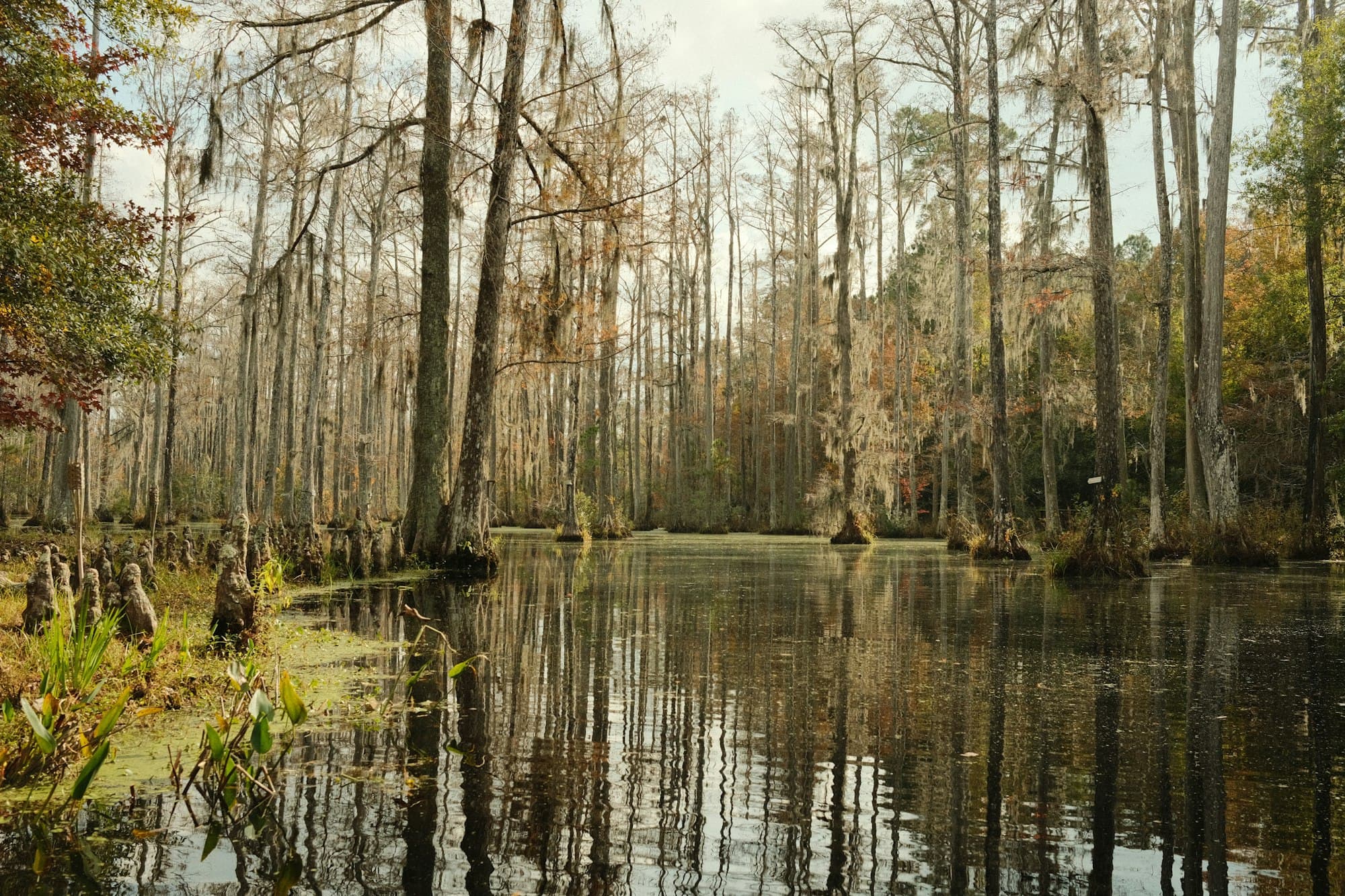
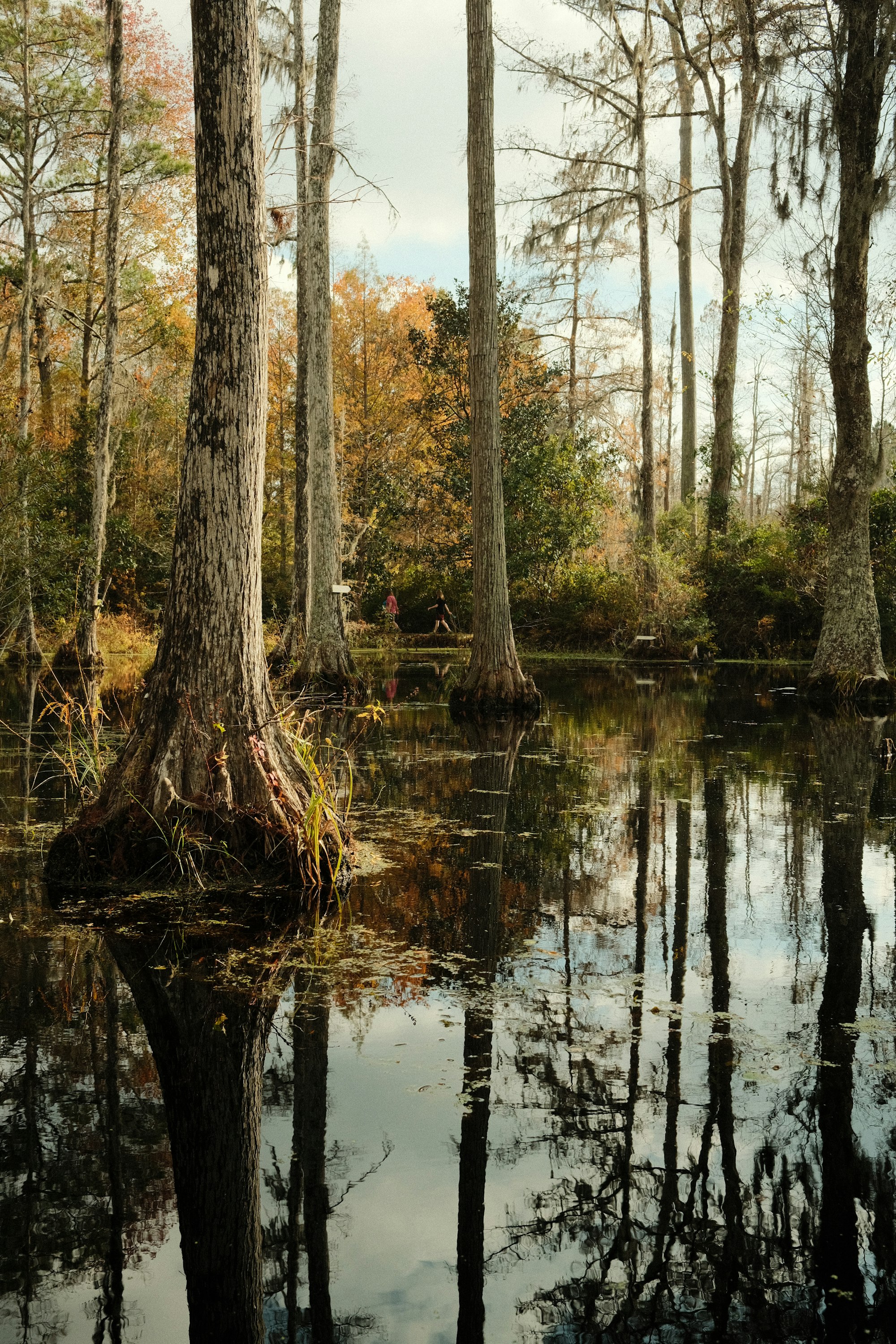
The water in Congaree is the color of sweet tea. Not the clear amber of a mountain freestone, not the milky jade of a glacier-fed river, but the deep red-brown of tannins leached from a hundred thousand years of decaying leaves. Cypress trunks wider than your canoe rise from it. Their knees — knotted, gnarled, ancient — poke through the surface like fists. Spanish moss hangs from every branch in long grey curtains that brush your shoulders as you paddle beneath them. And somewhere under that dark water, in the root tangles and deadfall and flooded understory of the largest intact old-growth bottomland hardwood forest in America, a redbreast sunfish is about to eat your popper.
Congaree National Park sits twenty miles southeast of Columbia, South Carolina, in the flat Coastal Plain where the Congaree River has been flooding its floodplain for millennia. The park protects 27,000 acres of bottomland hardwood forest — bald cypress, water tupelo, loblolly pine, sweetgum, laurel oak, and a dozen other species growing in soil that spends a significant portion of the year underwater. The Congaree River floods an average of ten times annually, pushing water across the floodplain, filling the sloughs and oxbow lakes, connecting the backwater channels, and turning the forest floor into a shallow, slow-moving sheet of dark water that is, for a brief window, one of the most productive warm-water fisheries in any national park.
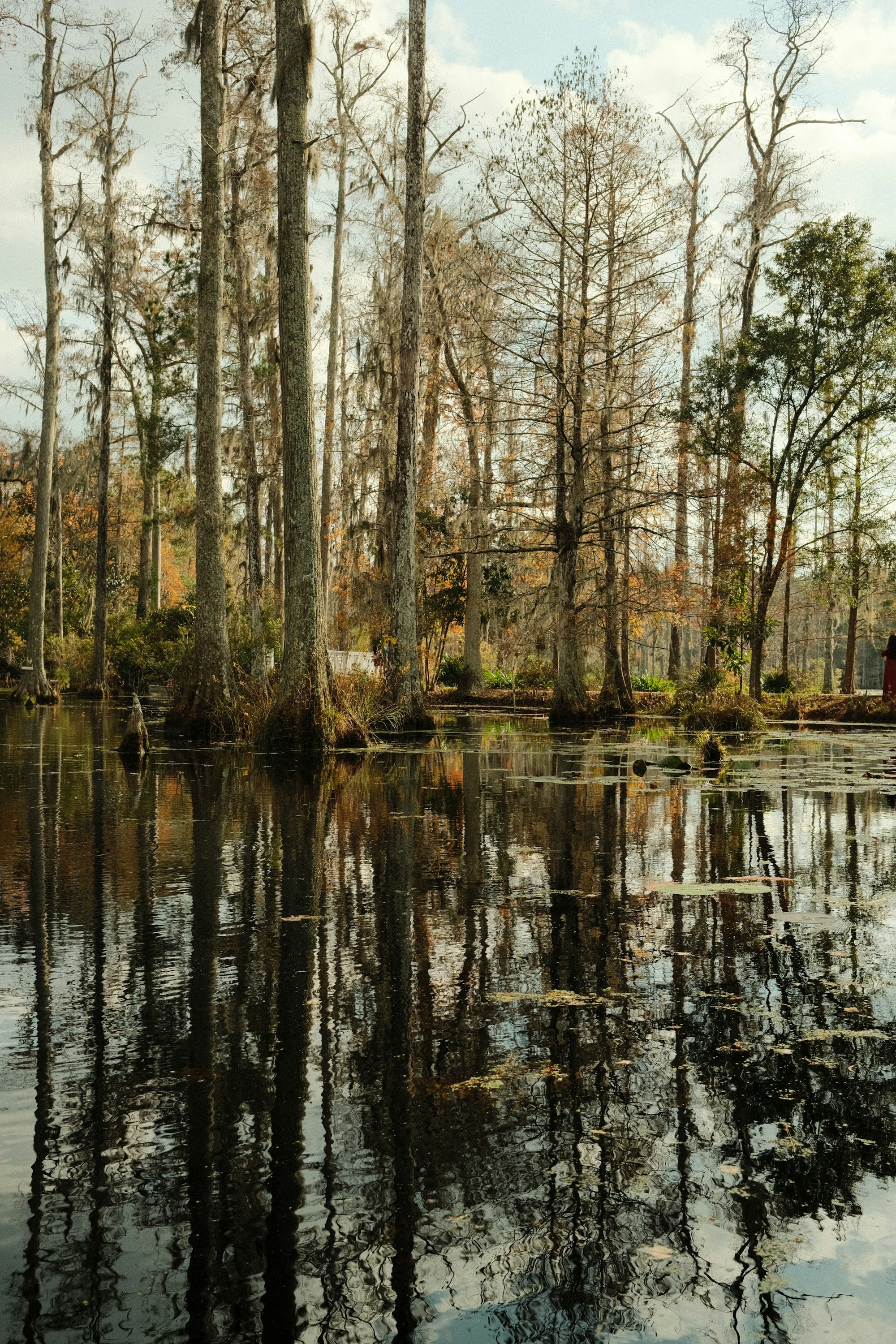
Nobody comes to Congaree to fish. The 170,000 annual visitors come for the Boardwalk Loop Trail, the champion trees — Congaree holds the tallest known specimens of at least fifteen tree species, with loblolly pines reaching 170 feet — and the synchronous fireflies that blink in coordinated waves through the forest on warm May and June evenings. Fishing is an afterthought in the park brochure, a line item on the "things you can do" page. But for a fly angler willing to drag a canoe down to Bannister Bridge and paddle into the flooded forest with a 5-weight and a box of panfish poppers, Congaree offers something no other national park can: the chance to catch wild warm-water fish in a primordial Southern swamp where the trees are older than the Republic and the only sounds are birdsong, your paddle, and the soft pop of a bream bug landing next to a cypress knee.
This is not mountain trout fishing. This is not technical dry-fly work. This is slow, humid, swamp fishing — the kind where you sweat through your shirt by 9 AM, where mosquitoes are a legitimate tactical concern, where you navigate by moss-draped landmarks because every channel looks the same, and where the fish are a bonus on top of an experience that would be worth the paddle even if you never got a strike. But you will get strikes. The fish are here, and they are hungry.
The Water — Cedar Creek and the Floodplain
Cedar Creek — The Main Event
Cedar Creek is the fishable heart of Congaree National Park. This narrow blackwater creek winds through the center of the park, flowing generally southeast through the old-growth forest before emptying into the Congaree River at the park's southern boundary. The NPS maintains a marked canoe trail along Cedar Creek — roughly fifteen miles from the Bannister Bridge put-in to the Congaree River — and this trail is where nearly all of the park's fishing happens.
The creek itself is small. In normal water, it is twenty to forty feet wide, three to six feet deep in the main channel, with a slow current that barely qualifies as current at all. The bottom is soft mud and leaf litter. The banks are a tangle of cypress knees, tupelo roots, and fallen timber. Deadfall blocks the channel in places, requiring portages or limbo-style maneuvering under half-submerged trunks. The water is dark — visibility ranges from a foot to nothing depending on recent rain — and the overhead canopy is so thick that the creek feels like a green tunnel, cathedral-lit where gaps in the leaves let shafts of light through to the water surface.
When the Congaree River floods, everything changes. Water backs up through Cedar Creek, filling the sloughs and side channels, spreading across the forest floor, and connecting isolated pools that hold concentrated fish populations during low water. Post-flood is prime time. The fish are spread across more water but they are actively feeding, and the flooded forest creates structure everywhere — every cypress knee, every root wad, every patch of buttonbush becomes a holding spot.
The Congaree River
The Congaree River forms the southern boundary of the park. It is a different fishery entirely — big, silty, powerful water formed by the confluence of the Broad and Saluda Rivers in Columbia. Striped bass run the Congaree in spring, with fish over twenty pounds migrating upstream to spawn. Channel catfish, blue catfish, and flathead catfish hold in the deeper holes and current breaks. Largemouth bass and crappie inhabit the calmer backwaters and oxbow lakes along the river's course.
Fly fishing the Congaree River is possible but limited. The river is wide, often stained, and best fished from a boat. The spring striper run draws conventional anglers with heavy tackle. For fly anglers visiting the park, Cedar Creek and the floodplain backwaters are where the action is.
Sloughs and Oxbow Lakes
Scattered through the floodplain are oxbow lakes and sloughs — remnant channels left behind as the river meandered over centuries. Weston Lake, accessible via the Boardwalk Loop Trail, is the most well-known. These stillwater features hold largemouth bass, bluegill, redbreast sunfish, warmouth, and the occasional bowfin. During high water they connect to Cedar Creek and the river. During low water they become isolated pools with concentrated fish populations — small, manageable targets for a fly angler willing to bushwhack through the forest to reach them.
The Fish — What Swims in the Dark Water
A 1999-2002 SCDNR electrofishing survey of Congaree's floodplain waters collected over 10,000 fish representing 56 species from 33 locations. That biodiversity rivals any freshwater park in the system. You will not catch 56 species on a fly rod, but the ones you will catch are worth knowing.
Redbreast Sunfish — The Star of Southern Blackwater
The redbreast sunfish (Lepomis auritus) is the fish that makes Congaree fly fishing worth the paddle. This is the signature panfish of Southern blackwater rivers and creeks — the one that Carolina anglers specifically target, the one that locals call "yellowbelly" or "robin" for its vivid orange-red breast. Redbreasts are not bluegill. They are longer, more slender, more stream-adapted, and more willing to eat a surface fly. A big redbreast — nine inches, maybe ten — on a 3 or 4-weight rod is a genuine fight, with quick runs and head shakes that telegraph up the line.
Redbreasts hold in current breaks in Cedar Creek — behind cypress knees, under overhanging branches, in the eddies behind deadfall. They eat insects, crawdads, and small minnows. They eat them aggressively. A #10 bream bug — the classic Southern panfish fly, a small cork or foam popper with rubber legs — landed tight to a cypress knee and twitched twice is the most reliable way to catch a redbreast on a fly in Congaree. The eat is a sharp, confident pop. Not a sip, not a swirl — a pop.
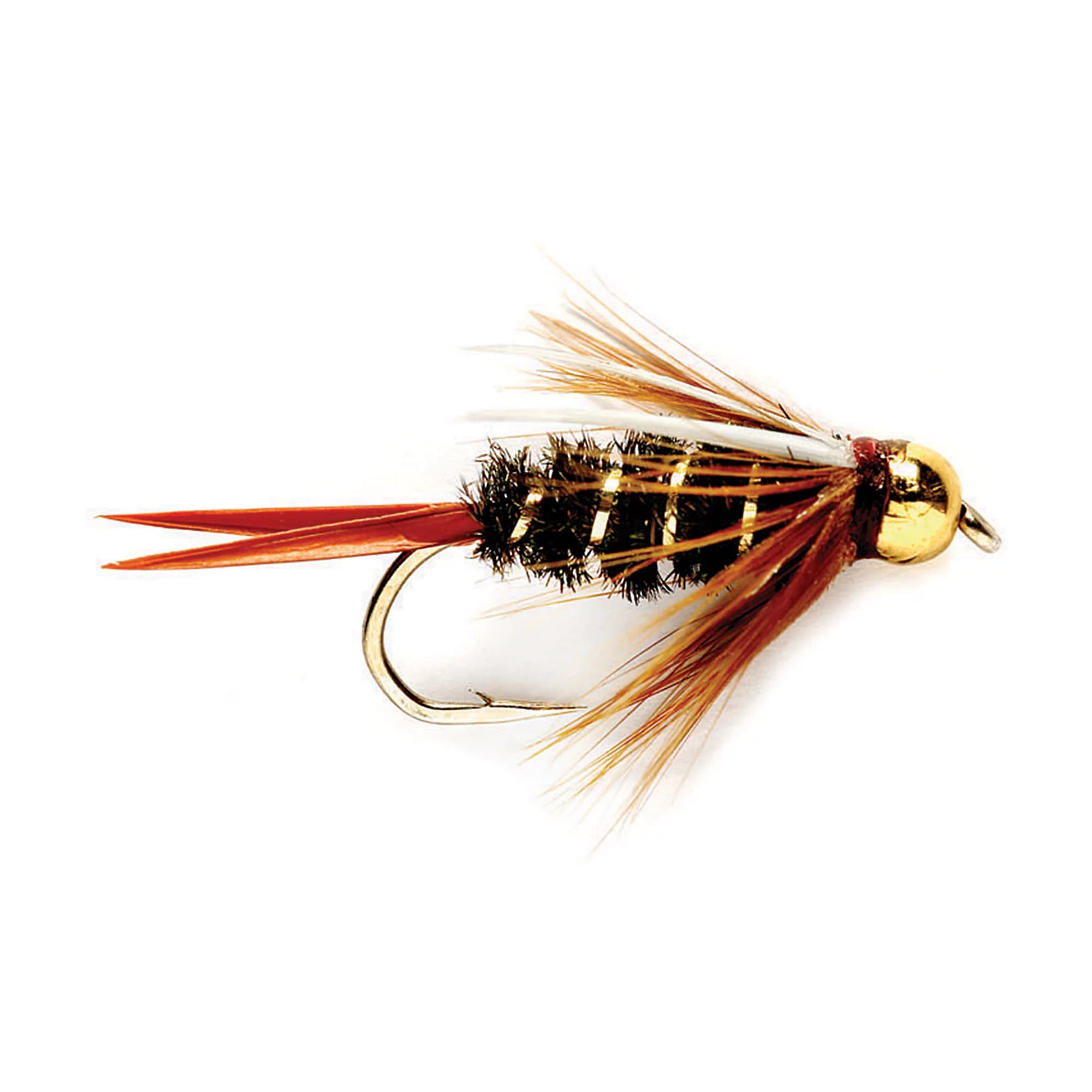
The best redbreast fishing in Congaree happens from late April through June, when the fish are on their spawning beds in the sandy patches of Cedar Creek. Males fan out circular nests in the creek bottom, guard them aggressively, and eat anything that comes near. This is sight-fishing when the water is clear enough — polarized glasses, spot the pale nest on the dark bottom, drop a small Prince Nymph or wet fly at the edge, and watch the male rush it.
Largemouth Bass
Largemouth bass are distributed throughout Congaree's waters — Cedar Creek, the sloughs, the oxbow lakes, and the flooded forest. These are not trophy fish. The average largemouth in Congaree is twelve to fifteen inches, with the occasional two to three-pounder from the deeper sloughs. But they are wild fish in wild water, and a largemouth exploding on a deer hair bug next to a cypress trunk in a flooded swamp forest is a different experience than catching one off a suburban dock.
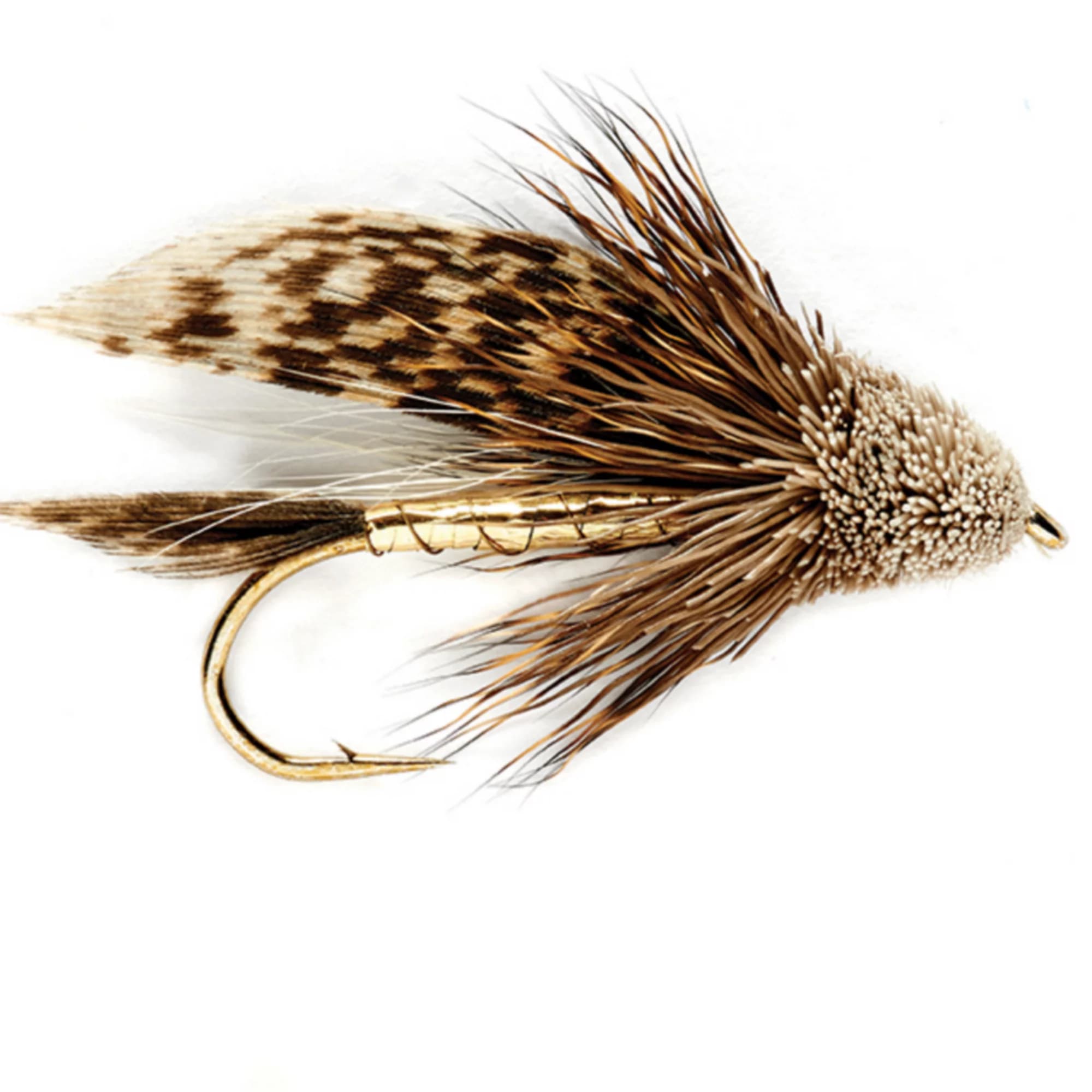
Bass in Congaree hold tight to structure — submerged logs, root wads, cypress knees, the edges of buttonbush thickets. The dark water means they rely on vibration and silhouette more than sight. Big, dark flies that push water work better than small, subtle ones. A #4 black Woolly Bugger stripped through a root tangle, or a Dahlberg Diver chugged along the edge of a fallen tree, is the approach. A dark Muddler Minnow fished on a floating line — stripped so it dives and pops back to the surface — can trigger explosive strikes from bass holding under overhanging timber. Bendback patterns — tied so the hook point rides up, making them weedless — are essential for fishing the heavy structure without losing a fly on every cast.
Bowfin — The Ancient One
The bowfin (Amia calva) is the fish that makes Congaree different from every other national park fishery. This is a living fossil — the last surviving member of the Amiidae family, a lineage that dates back 150 million years to the Jurassic. Bowfin have a long, sinuous body, a mouthful of teeth, a primitive lung-like swim bladder that lets them breathe air in oxygen-depleted swamp water, and a disposition that can only be described as angry. They fight like nothing else in freshwater — long, dogged, head-shaking battles that test light tackle to its limit.
In Congaree, bowfin inhabit the sloughs, oxbow lakes, and flooded backwaters — anywhere with slow or still water, heavy vegetation, and soft bottom. They are ambush predators. They sit motionless in the weeds, waiting for a minnow or crawdad to wander within striking distance, then lunge. On a fly rod, the technique is sight-fishing when conditions allow — polarized glasses, slow paddle through the shallows, spot the dark torpedo shape holding near cover, then dap a heavy fly right on its nose. Bowfin have a short strike radius. They do not chase. You bring the fly to them.
The flies are dark and heavy. A #4 black or olive Woolly Bugger with lead eyes, jigged slowly in front of a bowfin, is the standard. Clouser Minnows in dark colors — black, olive, brown — fished on a short leader and twitched along the bottom work well in the deeper sloughs. The key is getting the fly down and moving it slowly. Bowfin are not chasing fast-stripped streamers. They want something that drops into their zone and looks like an easy meal.
A word of caution: bowfin have teeth. Not piranha teeth, but serious enough to cut through light tippet and remove skin from fingers. Use a short bite tippet of 20-pound fluorocarbon or light wire, and handle them with care. They are tough fish that survive catch-and-release well — their air-breathing ability means they tolerate being out of water better than most species — but they will thrash, bite, and make you earn the release.
Longnose Gar
Longnose gar cruise the sloughs and river edges of Congaree — long, narrow, prehistoric fish armored in ganoid scales that a hook cannot penetrate. Conventional fly patterns slide off a gar's bony snout. The solution is the rope fly — literally a fly tied with frayed nylon rope instead of traditional materials. The rope fibers tangle in the gar's teeth when it strikes, holding long enough to set the hook in the soft tissue at the corner of the mouth. Long, slim Deceivers in white or chartreuse also work if you can time the strip-set to catch the corner of the jaw. Some anglers tie elongated Clouser Minnows with bead chain eyes and sparse bucktail — the slim profile matches the gar's preferred prey and the hook-up design gives a better angle at the jaw.
Gar fishing in Congaree is an oddity — a side quest for anglers who enjoy the absurdity of targeting a fish that requires a fly made from hardware-store rope. But watching a three-foot gar roll on a fly at the surface of a cypress slough, in water the color of root beer, is one of those fishing moments you remember.
The Supporting Cast
Bluegill are everywhere in Congaree. They are smaller and less stream-oriented than redbreasts, holding in the calmer backwaters and sloughs. Small poppers and foam spiders produce all day. A Griffith's Gnat in #16 fished in the surface film during calm evenings will pick up bluegill after bluegill when they are sipping insects off the still water of the oxbow lakes.
Warmouth — the dark, stocky, big-mouthed sunfish of the swamp — hold in the heaviest cover and eat aggressively. A warmouth on a small Woolly Bugger stripped through submerged timber is a fish that fights above its weight class. A Hare's Ear Nymph bounced along the bottom of a cypress-root pocket will also draw strikes from warmouth that are holding deep.
Spotted sunfish (stumpknockers) hug the cypress roots and fallen timber, picking insects and crustaceans from the bark. They are small but plentiful and beautifully marked. A Comparadun in #14-16 fished tight to cypress bark, where stumpknockers pick at the growth on the wood, is a sneaky way to target them specifically.
Channel catfish inhabit Cedar Creek and the river. They will eat a San Juan Worm drifted along the bottom, particularly after rain pushes food into the creek. A Pheasant Tail Nymph weighted with a bead head works too — catfish are not picky when they are scavenging the creek bottom after a rain event.
Yellow perch appear in the cooler months, an unexpected find in a Southern swamp that adds variety to the winter fly box. Small Zebra Midges and Pheasant Tail Nymphs dead-drifted through the deeper pools of Cedar Creek will pick up perch during the cooler months when other species have slowed.
The Fly Box — Dark Flies for Dark Water
The cardinal rule of blackwater fly fishing: dark flies in dark water. The tannin stain that colors Congaree's water absorbs light. Bright, flashy patterns that work in clear mountain streams disappear in this water. What the fish see is silhouette — the dark outline of a fly against the slightly lighter surface or background. Black, olive, purple, and brown are the colors that produce. Save the chartreuse and the flash for somewhere else.
Surface Flies — The Primary Arsenal
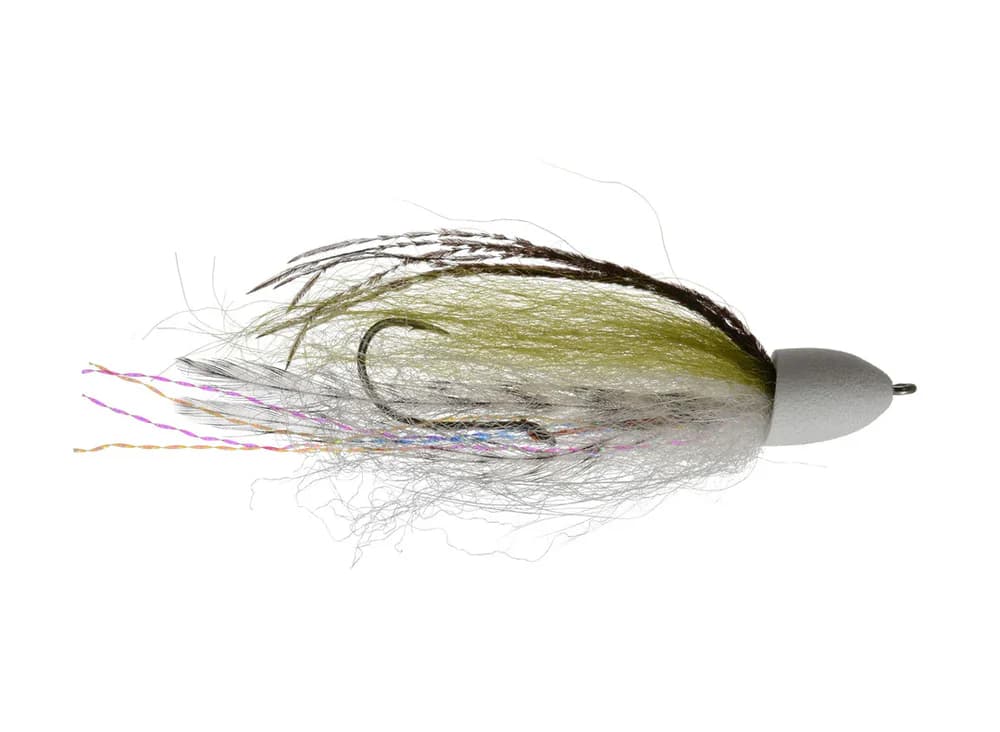
Bream bugs and small poppers (#10-12): The workhorse fly at Congaree. Cork-bodied or foam-bodied poppers with rubber legs, tied on #10 or #12 hooks small enough for a redbreast's mouth — think smaller versions of the Miyawaki Beach Popper concept, scaled down with lighter hooks. Black, olive, or natural cork color. Twitch them with short strips and long pauses next to structure. The pause is when the eat comes.
Foam spiders and beetles (#10-14): Low-riding foam patterns with splayed rubber legs that sit in the surface film rather than popping. These are the subtle option for pressured fish or calm conditions — similar in concept to the topwater flies used in saltwater, but scaled down for panfish mouths. Let them sit, twitch once, let them sit again. A Parachute Adams in #12-14 also works in the calmer backwaters as a general attractor — the white post makes it visible on the dark water.
Cricket and ant patterns (#10-12): Terrestrial imitations that are standard on Southern blackwater from June through October. A black foam cricket dropped against an overhanging branch, where real crickets fall into the water, is as natural a presentation as you can make in this ecosystem. The Elk Hair Caddis in #12-14, normally a trout fly, works surprisingly well as a generic terrestrial imitation on blackwater — the deer hair wing floats it high and the profile is close enough to a beetle or moth to draw strikes from redbreasts. A Stimulator in #10-12 in tan or orange fills a similar role as a large stonefly or hopper silhouette that sits high on the dark surface.
Subsurface Flies
Woolly Bugger (#4-8, black, olive, brown): The universal subsurface fly for Congaree. Woolly Buggers in crawdad colors — brown and orange, olive and rust — produce for bass and bowfin. In black, they catch everything. Weight them with bead heads or lead wraps to get them down in the current.
Clouser Minnow (#4-6, dark olive/white, black/chartreuse): Clousers get deep and ride hook-point-up, making them relatively weedless in the heavy structure. Dark olive over white imitates the shiners and minnows that populate Cedar Creek. The Clouser is the bowfin fly.
Rubber-legged nymphs (#8-12): Bead-head nymphs with rubber legs that undulate on the drift — a Copper John in copper or red with added rubber legs is a good option, as is a Hare's Ear tied heavy with a tungsten bead. These imitate the various crawdads, hellgrammites, and aquatic invertebrates that populate the creek bottom. Dead-drift them through the deeper runs of Cedar Creek or twitch them through the sloughs.
San Juan Worm (#10-12, red, brown): After rain, worms wash into Cedar Creek from the forest floor. A red or brown San Juan Worm drifted through the deeper pools catches everything from redbreasts to catfish.
Bendback minnows (#4-6, baitfish colors): Weedless streamer patterns tied on bent-shank hooks so the point rides up — the freshwater cousin of the bendback concept used for saltwater structure fishing. Essential for fishing the heavy structure — root tangles, submerged timber, flooded brush — without snagging. Dark colors in black or olive.
Rope flies (for gar): Frayed nylon rope tied to a long-shank hook. Not elegant. Not pretty. Effective, because the rope fibers tangle in the gar's teeth in a way that feathers and synthetic materials cannot.
The Gear — Light, Simple, Swamp-Ready
Rods
Primary: 9-foot 5-weight. This rod handles everything at Congaree — casting poppers to panfish, throwing Woolly Buggers to bass, and fighting bowfin with enough backbone to keep them out of the roots. A 5-weight is the sweet spot between the delicacy needed for bream bugs and the power needed for bowfin.
Optional: 7.5-foot 3-weight. If your primary interest is panfish — redbreast sunfish and bluegill on small poppers — a short, light rod maximizes the fight and improves accuracy in the tight quarters of Cedar Creek, where overhanging branches limit your backcast.
Bowfin rod: 9-foot 7 or 8-weight. If you are specifically targeting bowfin in the sloughs, step up in rod weight. Bowfin fight hard and dirty, diving into structure the moment they feel the hook. An 8-weight gives you the power to turn them before they wrap you around a cypress knee. This rod also handles gar.
Line and Leader
Line: Weight-forward floating for everything. There is no need for sinking lines in Congaree — the water is rarely deeper than six feet, and weighted flies get down fast enough. A bass-taper line with a short, powerful front taper helps turn over the wind-resistant poppers and buggy flies that dominate the fly box.
Leader: Keep it short and stout. Seven to nine feet tapered to 2X or 3X for most fishing. The fish are not leader-shy in this dark water, and you need the strength to pull flies out of structure and turn bowfin away from cover. For bream bug fishing with the 3-weight, lengthen to nine feet and taper to 4X.
Tippet: Fluorocarbon in 2X-4X. The abrasion resistance matters when your leader is rubbing against cypress bark and submerged wood on every drift.
The Canoe
You cannot fish Congaree without a boat. The fishable water is accessed by paddling, and the tight, winding, deadfall-choked channels of Cedar Creek demand a canoe or kayak — no motorized boats are allowed in the park.
A canoe is the traditional choice and the better fishing platform. You can stand in a canoe to sight-fish the sloughs (carefully), you have room for two anglers and gear, and the higher seating position gives you a better view of the dark water. A sit-on-top kayak works for solo anglers and is easier to maneuver through tight spots, but the lower seating position limits your casting angles and visibility.
The park does not rent boats. Bring your own or rent from an outfitter in Columbia. Bannister Bridge Canoe Launch on Old Bluff Road, 1.9 miles west of the park entrance, is the primary put-in for Cedar Creek. The carry from the parking area to the water is about 130 yards. The South Cedar Creek Canoe Launch, accessed from South Cedar Creek Road east of the visitor center, provides an alternative starting point.
Navigation matters. Cedar Creek winds through dense forest that looks the same in every direction. During high water, the marked canoe trail can be submerged, and side channels that look like the main creek lead into dead-end sloughs. Bring a GPS, a compass, and a waterproof map. Tell the rangers at the Harry Hampton Visitor Center that you are paddling, and give them your planned route and return time. Getting lost in Congaree at dusk, with mosquitoes descending and no cell signal, is not the adventure you want.
The Seasonal Calendar
Spring (March–May) — Prime Time
Spring is the best season at Congaree. The Congaree River floods regularly, pushing water across the floodplain and filling Cedar Creek and the sloughs. Redbreast sunfish move onto spawning beds in April and May, making them aggressive and accessible. Largemouth bass are active in the warming water. Bowfin move into the shallows to spawn in April, building nests in flooded vegetation where males guard the eggs and young — and eat anything that approaches.
The forest is green but not yet at full canopy, so light reaches the water and visibility improves. Temperatures are warm but not brutal — highs in the 70s and low 80s. Mosquitoes are present but not yet at peak density. Late April through May is the window: warm water, active fish, tolerable bugs, and a forest so green and alive it hums.
The synchronous fireflies display in late May and early June. If your fishing trip coincides with the firefly season, stay until dark. Watching Photuris frontalis synchronize their flashes through the old-growth forest while you sit in a canoe on Cedar Creek is one of the most extraordinary natural spectacles in any national park — and you might be the only person seeing it from the water.
Summer (June–August) — For the Committed
Summer fishing at Congaree is an endurance test. Temperatures hit the mid-90s with humidity to match. The heat index regularly exceeds 105. Mosquitoes are ferocious — Congaree's swamp ecology produces mosquito populations that are legendary even by Lowcountry standards. The NPS recommends long sleeves, long pants, head nets, and DEET-based repellent. They are not exaggerating.
But the fishing is productive. Panfish are active all summer, feeding early and late in the day. Bass push into deeper, shaded water during the midday heat and feed aggressively at dawn and dusk. Bowfin are catchable all summer in the sloughs. The key is timing: launch at dawn, fish hard until 10 AM, find shade and hydrate through the worst of the midday heat, then fish again from 4 PM until dark. Bring twice as much water as you think you need.
Fall (September–November) — The Second Window
Fall is the second-best season and arguably the most comfortable. Temperatures drop into the 70s and 80s, mosquitoes decline after the first cold fronts, and the fish feed aggressively ahead of winter. The forest canopy turns — sweetgum going red, tupelo going orange, cypress needles going copper before they drop — and the colors reflected in the dark water are something a camera cannot adequately capture.
Bass fishing improves as the water cools. Redbreasts remain active until water temperatures drop below 55. The fall floods, if they come, push fresh water through the system and reset the fishing. October is the single best month for an angler who wants good fishing and comfortable conditions.
Winter (December–February) — Quiet Season
Winter is quiet at Congaree. The deciduous canopy is bare, revealing the architecture of the forest — the massive trunks, the buttressed bases, the scale of these trees becomes apparent when the leaves are gone. Water temperatures drop into the 40s and 50s. Panfish slow down. Bass become lethargic. The fishing is limited to warmer afternoons when the sun heats the shallow backwaters and triggers brief feeding windows.
But the forest is beautiful in winter — stark, open, dramatic — and the solitude is absolute. If you are an angler who values the experience over the catch count, a winter paddle through Congaree's bare cypress forest has a melancholy beauty that the other seasons cannot match.
Access, Logistics, and the Columbia Connection
Getting There
Congaree National Park is located in Hopkins, South Carolina, approximately twenty miles southeast of downtown Columbia. The park has one entrance, accessed from Old Bluff Road off SC Highway 48 (Bluff Road). From Interstate 77 at Exit 5, follow SC-48 East for approximately eight miles, then turn right onto Old Bluff Road and continue 4.5 miles to the park entrance. The Harry Hampton Visitor Center is one mile from the entrance gate.
The address is 100 National Park Road, Hopkins, SC 29061. The park is free — no entrance fee.
Columbia as Gateway
Columbia, South Carolina is the staging city. It is the state capital, with a commercial airport (Columbia Metropolitan, CAE), hotels, restaurants, outfitters, and everything you need for a trip. The city sits at the confluence of the Broad and Saluda Rivers, which merge to form the Congaree River that defines the park's southern boundary.
For fly anglers, Columbia offers more than logistics. The Saluda River below the Lake Murray dam is a tailwater fishery that holds stocked trout in cold releases — a jarring contrast to the warm blackwater of Congaree, but a legitimate option for extending a trip. If you are driving from the mountains, the Great Smoky Mountains are five hours north on I-26, and the brook trout streams there are the Appalachian complement to Congaree's Coastal Plain swamp — cold versus warm, small versus wide, trout versus panfish, but both wild and both worth the drive. The Broad River and its tributaries hold smallmouth bass in their rocky upper reaches.
If you are looking for a guide who knows the Midlands waters — the Congaree River stripers, the Saluda tailwater, the blackwater creeks — find fishing guides based in Columbia, SC who can put you on the right water for the season.
Regulations
Fishing is permitted in all areas of Congaree National Park with closely attended hook and line, including fly rods. No additional permit is required from the NPS beyond a valid South Carolina fishing license, which can be purchased online from SCDNR. All South Carolina fishing regulations — species limits, size limits, seasonal closures — apply within the park.
Prohibited: motorized boats, inboard or outboard motors, bait digging, chumming, use of minnows or amphibians or fish eggs as bait, and any unattended lines. The bait restriction is worth noting — artificial flies only is not the regulation, but the prohibition on live minnows and amphibians means fly anglers are already in compliance while many conventional anglers are limited.
Catch-and-release is strongly encouraged by the NPS. The park's fish populations are wild and self-sustaining. DHEC fish consumption advisories apply to some species in the Congaree River, particularly bowfin and certain catfish, due to mercury and other contaminants. Check current advisories before keeping any fish.
The Comparison — How Congaree Fits
Congaree is unlike any other national park fishery in this series. It is not Shenandoah's mountain brook trout streams. It is not the Everglades' saltwater backcountry, though the two parks share a swamp-wilderness DNA — both are flat, wet, buggy, and best explored by small boat. It is not New River Gorge's warmwater river fishing, though the species overlap — bass and sunfish in both parks, but in completely different environments. And it is not Voyageurs' canoe-country fishing, though the canoe-as-fishing-platform approach is similar — different species, different water, different forest. It shares some warmwater DNA with Big Bend — both are parks where the fishing is overshadowed by the landscape and the warm-water species are the draw — but the ecosystems could not be more different. Desert river versus flooded swamp forest.
Congaree is Southern swamp fishing in old-growth forest. The fishing is secondary to the place. The trees are the reason this land was protected — champion specimens of bald cypress, loblolly pine, sweetgum, and cherrybark oak that survived the logging that cleared ninety percent of the South's bottomland hardwood forests. The fish are a bonus. But what a bonus they are: fifty-six species of fish in water that floods and drains and floods again, creating a dynamic, living system that rewards the angler who brings a canoe, a fly rod, and the patience to read water the color of black coffee.
The paddling is the fishing. Every stroke takes you deeper into the forest, past another cypress trunk, around another bend in the creek, into another pool where the water smooths out and the cypress knees cluster and the surface is dimpled by feeding panfish. You stop paddling. You pick up the rod. You lay a bream bug against the upstream side of a knee, let the current swing it into the eddy, twitch it once, and wait. The pop comes. You strip-set, and a flash of orange-red flares in the dark water as the redbreast fights for the roots.
This is fly fishing at Congaree. Quiet, sweaty, beautiful, and entirely its own thing.
If you want help navigating the blackwater and finding the fish, find fishing guides near Columbia, SC who know these waters and can put you in the right slough at the right stage of the flood.
Top Fishing Guides in Columbia
Cedar Creek's blackwater holds redbreast sunfish that eat bream bugs with authority, bowfin that fight like something from the Cretaceous, and largemouth bass stacked against cypress knees in the floodplain. Paddle a canoe through the largest old-growth bottomland hardwood forest in America and cast to fish most fly anglers never target.
The SC River Guide
Columbia, SC, US
5.0 (17 reviews)
The SC River Guide brings two decades of expertise to South Carolina's premier river fisheries, specializing in catch-and-release experiences for discerning anglers. The captain's deep knowledge of local waters and seasonal patterns ensures productive outings targeting Stripers and Smallmouth Bass throughout the March-to-October season. Whether pursuing fish on conventional tackle or fly rod, guests enjoy fully equipped trips with all necessary gear provided. Half-day excursions accommodate various schedules and skill levels, allowing anglers to experience the scenic beauty and abundant fishing opportunities South Carolina's rivers offer without the commitment of a full day on the water.
Tims Catching Crappie
Columbia, KY, US
4.5 (8 reviews)
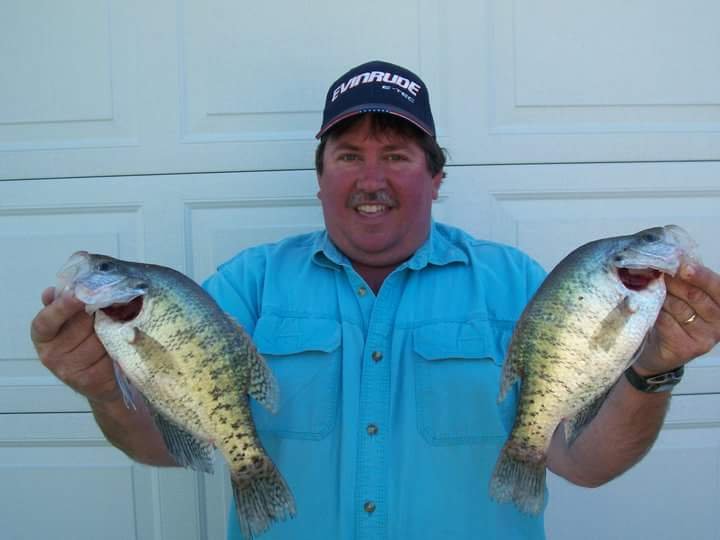
Tim's Catching Crappie specializes in crappie fishing on Green River Lake, consistently ranked among America's top 10 crappie destinations. With a lifetime passion for the sport, Tim Marple guides anglers of all skill levels through productive waters, providing boats, tackle, and poles for up to two guests per trip. His full-service approach removes the guesswork from planning, allowing anglers to focus entirely on the experience. The operation caters to families and groups seeking a complete getaway. Beyond guided fishing, Tim offers lodging at his cabin, The Getaway, creating an ideal base for multi-day trips. Whether visiting for a single outing or an extended stay, guests can expect personalized attention and access to some of the finest crappie fishing waters in the region.
Green River Lake Crappie Trips with Guide David Jones
Columbia, KY, US
4.5 (8 reviews)
The Crappie Blog is led by David Jones, a full-time fishing guide with over twenty-one years of dedicated experience on Green River Lake in south-central Kentucky. Specializing in crappie fishing, David has built a reputation for consistently putting clients on healthy fish, typically ranging from ten to twelve inches. His full-day trips, lasting seven to eight hours and beginning at daylight, are designed to maximize fishing time and success. David's commitment to client satisfaction sets him apart, backed by a catch guarantee that reflects his confidence in the fishery and his expertise. Anglers enjoy the added convenience of nearby Holmes Bend Marina, which offers quality accommodations for those planning multi-day excursions. Whether you're an experienced angler or exploring crappie fishing for the first time, The Crappie Blog delivers a professional, memorable experience on one of Kentucky's premier fishing waters.
Reel Kaos Striper Guide
Columbia, SC, US
Reel Kaos Striper Guide offers specialized striped bass fishing charters on the pristine waters of Lake Murray in South Carolina. Led by Steve, a retired military veteran and licensed U.S. Coast Guard Master Captain, the service combines expert knowledge with an unwavering commitment to safety and enjoyment. Whether anglers are novices or seasoned professionals, each fully guided private experience is tailored to deliver memorable time on the water. The operation provides everything needed for a successful day, including all rods, reels, live bait, and tackle. Trips are conducted aboard a well-maintained 22.4-foot Sea Fox Viper boat, designed for comfort and performance on Lake Murray's waters. Charters run year-round, with optimal conditions during spring and early summer months.
Landlocked Guide Service
Columbia, SC, US
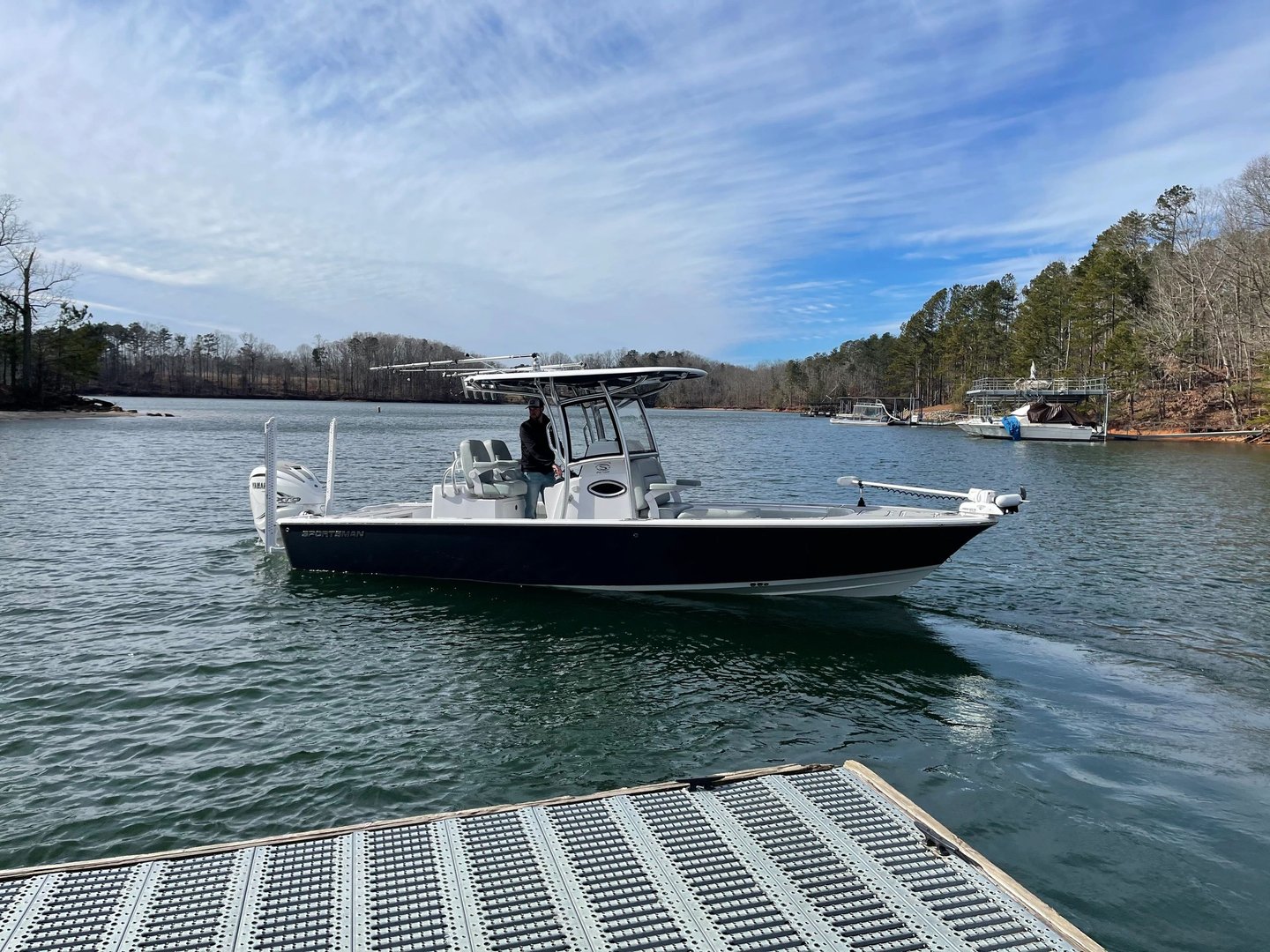
Landlocked Striper Guide Captain Richy brings 15 years of expertise to Lake Murray fishing, specializing in Striped Bass charters across South Carolina's premier freshwater destination. His well-equipped boat and deep knowledge of the lake's fish behavior and history create an engaging experience that goes beyond typical fishing outings. Whether hosting families, groups of friends, or corporate teams, Captain Richy tailors each charter to deliver both productive fishing and memorable moments on the water. His storytelling approach weaves together the lake's natural history with practical fishing instruction, making every trip educational and entertaining for anglers of all skill levels.
Frequently Asked Questions
Can you fly fish in Congaree National Park?
Yes. Fishing is permitted in all areas of the park with closely attended hook and line, including fly rods. Cedar Creek, the park's main canoe trail, holds redbreast sunfish, largemouth bass, bluegill, warmouth, bowfin, and other warm-water species. A valid South Carolina fishing license is required. No additional NPS permit is needed.
What fish species can you catch at Congaree National Park?
Congaree holds 56 documented fish species. Fly rod targets include redbreast sunfish (the signature Southern blackwater panfish), largemouth bass, bluegill, warmouth, spotted sunfish, bowfin (an ancient predator that fights exceptionally hard), longnose gar, channel catfish, and yellow perch. The Congaree River along the park boundary holds striped bass during the spring spawning run.
When is the best time to fly fish Congaree National Park?
Late April through May is the prime window. Redbreast sunfish are on spawning beds and aggressive, bass are active in warming water, bowfin move into shallows, and temperatures are warm but not yet brutal. Fall (October-November) is the second-best season with comfortable temperatures and declining mosquitoes. Summer fishing is productive but extreme heat and mosquitoes make it challenging.
What flies work best for fishing Congaree National Park?
Dark flies for dark water is the rule. Small poppers and bream bugs (#10-12) in black or olive are the primary panfish flies. Woolly Buggers (#4-8) in black, olive, and crawdad colors cover bass and bowfin. Clouser Minnows in dark olive get deep for bowfin in the sloughs. Foam spiders, cricket patterns, and rubber-legged nymphs round out the box. Avoid bright, flashy patterns — the tannin-stained water absorbs light and fish key on silhouette.
Do you need a canoe or kayak to fish Congaree National Park?
Yes. Nearly all fishable water in Congaree is accessed by paddling Cedar Creek or the floodplain backwaters. No motorized boats are allowed. The park does not rent boats — bring your own or rent from an outfitter in Columbia, SC. The Bannister Bridge Canoe Launch on Old Bluff Road is the primary put-in, with a 130-yard carry from parking to water.
Related Articles
The Miyawaki Beach Popper: How to Tie the Fly That Put Puget Sound Topwater Fishing on the Map
Thursday, October 30, 2025
The Prince Nymph: How to Tie the Attractor That Outfishes Everything When Nothing's Hatching
Friday, November 14, 2025
The Muddler Minnow: How to Tie the Fly That Imitates a Sculpin, a Grasshopper, a Stonefly, and Whatever Else You Need It to Be
Sunday, November 9, 2025
 ™
™