
Fly Fishing Redwood National Park: Steelhead Under Cathedral Groves, the Smith River, and Why Intact Forests Make Wild Fish
Redwood National and State Parks hold the tallest trees on Earth — and the rivers that flow through them hold wild steelhead, chinook salmon, and coastal cutthroat trout in some of the last undammed watersheds in California. The Smith River is the crown jewel: the largest free-flowing river in the state, with winter steelhead that average twelve pounds and occasionally break twenty.

The first thing you notice isn't the river. It's the light. Filtered through three hundred feet of coast redwood canopy, the light in these forests arrives green and diffuse, as if the air itself has been stained by centuries of moss and fern and bark. You walk a trail toward water, and the trees are so large that your sense of scale breaks — trunks wider than your car, bark furrowed into channels deep enough to lose your hand in, branches that don't begin until a hundred feet above your head. The forest floor is silent except for the sound of moving water somewhere ahead.
Then you reach the river, and the second thing hits you: these trees made this water. The old-growth canopy shades the creek to keep it cold. The fallen giants create the pools and riffles where fish hold. The intact root systems prevent the hillsides from sliding into the channel. The duff on the forest floor absorbs rainfall and releases it slowly, maintaining base flows through the dry season. Every steelhead swimming through this cathedral grove exists because the cathedral grove exists. The forest and the fish are the same story.
That story is what makes fly fishing in Redwood National and State Parks different from anywhere else in the country. You're not just fishing good water — you're fishing water that demonstrates, in the most visceral way possible, what happens when a watershed is left intact. And you're fishing it under the tallest living things on Earth.
The Geography — Four Parks, Two Rivers, and a Coast
Redwood National and State Parks is actually four parks managed cooperatively: Redwood National Park (federal) and three California state parks — Del Norte Coast Redwoods, Jedediah Smith Redwoods, and Prairie Creek Redwoods. Together they protect 139,000 acres of old-growth and second-growth coast redwood forest along forty miles of Northern California coastline, from Orick in the south to Crescent City in the north.
The fishing geography centers on two major river systems and several smaller creeks:
The Smith River — the crown jewel. California's largest undammed river, flowing free from the Siskiyou Mountains through Jedediah Smith Redwoods State Park to the Pacific. This is the steelhead river. The Smith holds the California state record for steelhead (27 pounds, 4 ounces, caught in 1976), and fish over twenty pounds are caught every winter season. The river's emerald-green water, running through groves of old-growth redwood and cedar, is among the most beautiful steelhead water on the planet.
Redwood Creek — a sixty-mile free-flowing river that enters the Pacific at Orick, running through the heart of Redwood National Park. The lower eighteen miles flow through old-growth groves that include some of the tallest trees ever measured. Redwood Creek supports chinook and coho salmon, steelhead, and coastal cutthroat trout. The fishing is more limited than the Smith, but the setting is unmatched.
The Klamath River — the second-largest river in California, entering the Pacific just south of the park boundary. The lower Klamath runs through Yurok tribal lands and redwood forests, with strong fall chinook runs and winter steelhead. The Klamath's estuary is a critical nursery for juvenile salmonids, and the lower river's steelhead fishing is within easy reach of park visitors.
Prairie Creek and Mill Creek — smaller tributaries that flow through the densest old-growth groves in the park system. These are not destination fisheries, but they hold coastal cutthroat trout and provide spawning habitat for coho and chinook salmon. Walking along Prairie Creek during November and watching coho salmon spawn in water shaded by three-hundred-foot redwoods is one of those experiences that rearranges your understanding of what a healthy ecosystem looks like.
The Smith River — California's Last Wild River
The Smith River deserves its own section because it is, without exaggeration, one of the finest steelhead rivers in the lower forty-eight states. It's also one of the most difficult.
The Smith is the largest river in California without a single dam anywhere on its entire drainage. No diversions. No impoundments. No hatchery water pumped in to dilute the gene pool. The river rises in the Siskiyou Wilderness, gathers its forks — North, Middle, South — and merges at a place called The Forks before flowing eight miles through Jedediah Smith Redwoods State Park and another eight miles to tidewater and the Pacific.
What makes the Smith extraordinary for fly fishing is the water itself. The watershed was never clearcut — the old-growth forest of cedar, spruce, and redwood that blankets the drainage keeps the hillsides intact. Unlike every other North Coast river in California, which can take a week or more to clear after a winter storm, the Smith drops back into shape within days. The bedrock canyon holds no grudge. One day the river runs at 50,000 cubic feet per second, brown and unfishable. Two days later it's back to 3,000 cfs and that distinctive emerald green, and the steelhead are there, holding in the tailouts and seams, waiting.
The Steelhead
Smith River winter steelhead are the largest in California. They average ten to fifteen pounds, with fish in the high teens common and twenty-pound steelhead caught every season. In 2007, a fly angler released a fish measuring forty-two inches with a twenty-three-inch girth — estimated at thirty pounds. These are not hatchery fish supplementing a declining wild run (though some hatchery influence exists, with 17-34% hatchery fish depending on the sub-basin). The wild fish are genuinely large because the river is genuinely healthy.
The run timing follows the rain. The first significant storms in late November or December bring the first fish over the bar at the river's mouth. The run builds through December and peaks in January and February, with fish continuing to arrive into March. The window is narrow and weather-dependent — you need rain to bring fish in, but you need the river to drop and clear before you can fish for them. The ideal scenario is a good storm followed by three or four days of clearing weather, which brings the river to that magic window: dropping, greening up, fishable.
The USGS gauge at Jedediah Smith Redwoods State Park is your planning tool. Ideal wade-fishing flows are between 1,500 and 4,000 cfs, and — critically — dropping. Rising water pushes fish to travel. Dropping water makes them hold, and holding fish are fish you can swing a fly to.
Techniques on the Smith
The Smith is big water — wider and more powerful than most Northwest steelhead rivers — and the classic approaches are Spey casting and nymphing.
Swinging flies is the purist's method and the Smith's signature technique. You wade into position at the head of a tailout or the inside seam of a long run, cast across and slightly downstream at a forty-five-degree angle, execute an upstream mend, and let the fly sink and swing in a controlled arc across the current. The fly — a Hoh Bo Spey, a Green Butt Skunk, an Intruder — swims broadside through the strike zone, pulsing and breathing in the current. The take, when it comes, is a violent pull that tries to rip the rod from your hands. Steelhead don't sip flies.
The best pools for swinging are the seven miles of water between the Highway 101 bridge and the hamlet of Hiouchi. This stretch runs through the heart of Jedediah Smith Redwoods State Park, and more large winter steelhead are hooked in these redwood pools than in any comparable stretch of river in California. You're casting under trees that were old when Columbus sailed. The green light filtering through the canopy, the emerald water sliding over boulders, the occasional crash of a steelhead taking your fly — this is as good as winter steelhead fishing gets.
Nymphing is the more productive method, particularly from a drift boat. Dead-drifting egg patterns, stonefly nymphs, or marabou-style Popsicle flies under an indicator covers water that swinging can't reach — the deeper slots, the boulder pockets, the heavy runs where steelhead stack during high water. An eleven-foot 7-weight switch rod is ideal for this work, giving you the reach to mend effectively and the backbone to fight big fish in heavy current.
The Fly Box for the Smith
The Smith River fly box is a steelhead fly box, and it's built around patterns that have proven themselves in this specific water over decades.
Swinging flies:
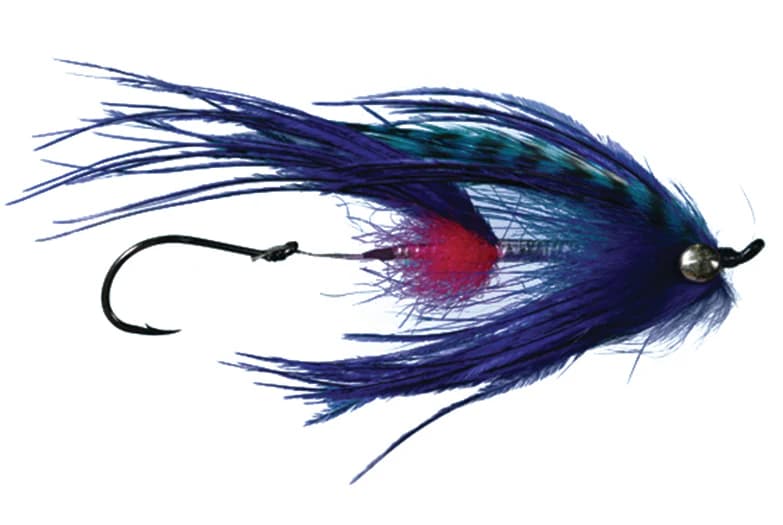
- Hoh Bo Spey (#2-6, black/blue, orange/purple) — the modern marabou-based spey fly that has become a standard on every winter steelhead river in the West. The pulsing marabou profile and flowing hackle create the movement that triggers strikes in cold water.
- Classic steelhead wet flies — the Green Butt Skunk (black body, bright green butt, white calf-tail wing) is the single most productive traditional wet fly on the Smith. The Skykomish Sunrise (orange/red body, fluffy wing) excels in slightly colored water after a storm.
- Intruders (#1/0-2, black/blue, pink/orange) — large tube flies with flowing marabou and rubber legs that push serious water. These are the big-water patterns for when the Smith is running high and colored and you need a fly that a steelhead can find.
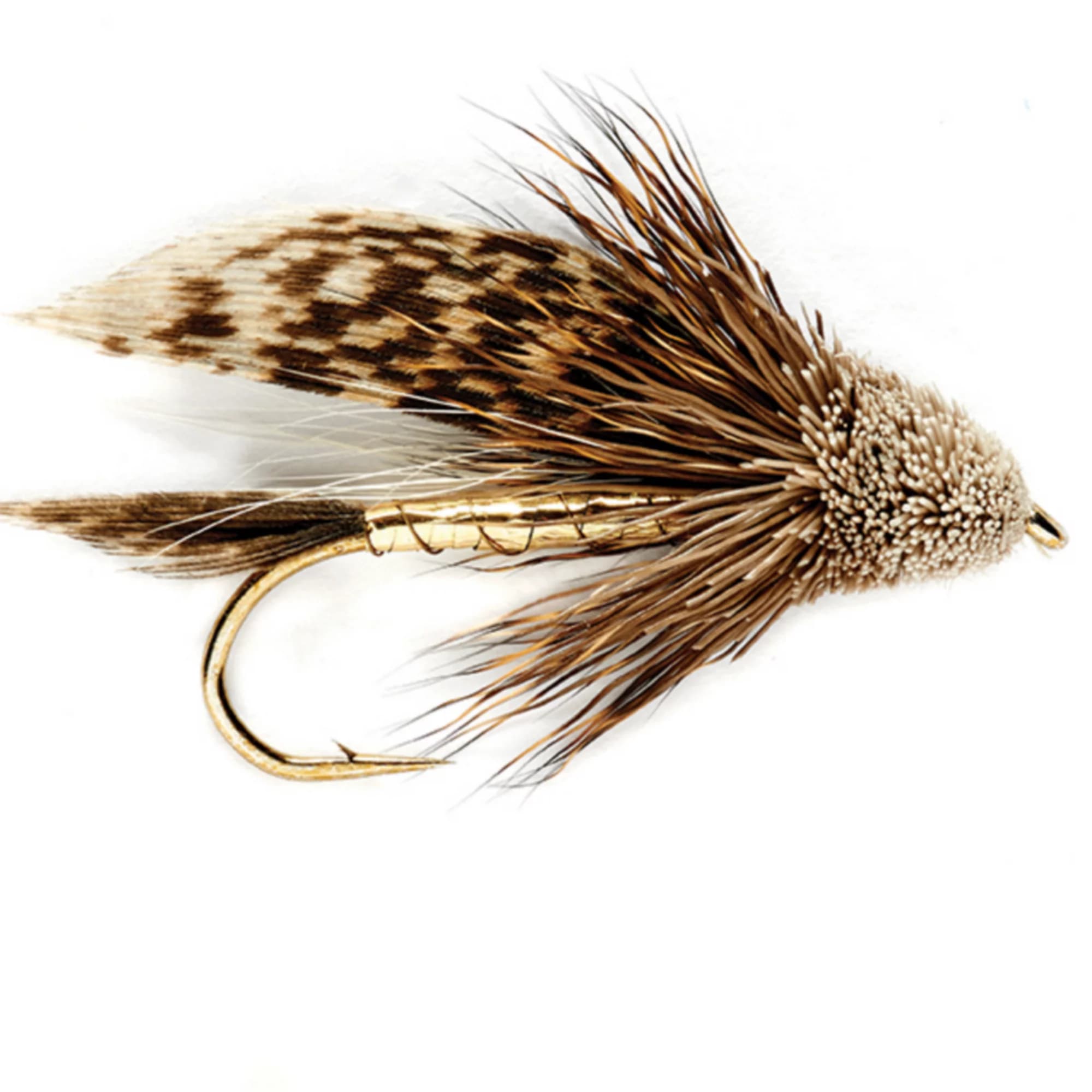
- Muddler Minnow (#2-6) — the spun deer-hair head pushes water and creates a sculpin profile that steelhead eat year after year.
- Polar Shrimp (#4-8) — orange tail, ginger hackle, the classic egg-and-shrimp imitator.
Nymphing patterns:
- Glo Bugs (#6-10, orange, chartreuse, peach) — egg patterns are the bread and butter of Smith River nymphing. When salmon are spawning, steelhead key on drifting eggs, and a dead-drifted Glo Bug under an indicator is the most effective presentation.
- Stonefly nymphs (#4-8) — Prince Nymph, Copper John, and Rubber Legs patterns imitating the large stoneflies that populate the Smith's rocky substrate.
- Pheasant Tail Nymph (#10-14) — for lower, clearer conditions when steelhead are holding in tailouts and responding to smaller presentations.
- San Juan Worm (#8-12, red, wine) — simple and effective when drifted through soft water.
- Popsicle flies (#4-6, pink/orange marabou) — a Smith River specialty, fished under an indicator with enough weight to tick the bottom.
Trout patterns for smaller creeks:
- Elk Hair Caddis (#14-18) — for coastal cutthroat on Prairie Creek and Mill Creek.
- Parachute Adams (#14-20) — the universal dry fly that works on every small stream in the park.
- Hare's Ear Nymph (#12-16) — dead-drifted through pocket water for cutthroat and resident rainbow.
- Woolly Bugger (#8-12, olive/black) — stripped through the deeper pools of Redwood Creek for larger resident trout. A Clouser Minnow (#6-8, olive/white) works similarly in the deeper runs where cutthroat and juvenile steelhead hold.
- Stimulator (#10-14) — the attractor dry fly for summer fishing on the smaller creeks.
- Zebra Midge (#18-22) — for slow, clear tailouts where cutthroat are sipping.
- Chubby Chernobyl (#10-14) — hopper-dropper anchor fly for summer creek fishing.
Redwood Creek — Fishing Through the Tallest Trees
Redwood Creek is not the Smith River. It doesn't produce twenty-pound steelhead or draw anglers from across the country. What it offers is something the Smith can't: the experience of fishing through the tallest trees on Earth.
The lower eighteen miles of Redwood Creek flow through the core of Redwood National Park, passing through groves that include Hyperion (380 feet, the tallest known living tree) and dozens of other trees exceeding 350 feet. The creek is a free-flowing, undammed waterway — one of the increasingly rare coastal California rivers with no impoundment anywhere on its sixty-mile length.
Redwood Creek supports chinook salmon, coho salmon, steelhead, and coastal cutthroat trout. The steelhead are smaller than Smith River fish — averaging five to eight pounds — but they're wild, and the creek's intimate scale makes for a different kind of fishing. You're wading a creek, not a river. The water is wadeable in most conditions, the casts are shorter, and the fish are closer. A nine-foot 6-weight handles everything.
The catch-and-release regulations on parts of Redwood Creek reflect its conservation importance: from Prairie Creek upstream to Bond Creek, fishing is open year-round with artificial lures and barbless hooks only, catch and release. This is wild-fish water managed for wild fish, and the regulations deserve respect.
The best fishing on Redwood Creek is during the fall and spring shoulder seasons. Fall brings returning chinook and early steelhead, and the creek's flows are still manageable for wading. Spring offers steelhead that have been in the system through winter, plus the first cutthroat trout activity as water temperatures climb. Summer can be productive for resident trout and cutthroat in the upper sections, though low flows and warm temperatures concentrate fish in deeper pools.
The access is the challenge. Much of Redwood Creek's best water requires hiking — the Tall Trees Trail drops you into the heart of the old-growth groves, but it's a 3.5-mile hike each way with 800 feet of elevation change. A limited number of permits are required for vehicle access to the Tall Trees trailhead. This remoteness is both the difficulty and the point: you earn the fishing, and when you're standing in the creek under trees that were saplings when Rome fell, you understand why the effort matters.
The Klamath River — The Big Water Option
The Klamath enters the Pacific about twenty miles south of Crescent City, and its lower reaches run through Yurok tribal lands and redwood forests within easy reach of park visitors. The Klamath is a different beast from the Smith — bigger, wider, more powerful, with a longer season and a different cast of characters.
Fall chinook salmon are the Klamath's signature fishery. Kings averaging twenty pounds push into the lower river beginning in mid-to-late summer, with the run building through September and October. These are big, powerful fish in big, powerful water, and they're available to fly anglers swinging large streamers and egg-sucking leeches on heavy sink-tip lines with 7- and 8-weight rods.
Half-pounders — immature steelhead that return to freshwater after only a few months in the ocean — are a Klamath specialty. They follow the salmon runs in November, feeding heavily on salmon eggs during the spawn. Half-pounders average sixteen to twenty inches and fight with an energy that belies their size. A 5- or 6-weight rod with a floating line and a dead-drifted egg pattern is the setup — essentially oversized trout fishing with the added excitement of fish that jump like steelhead because they are steelhead.
Winter steelhead arrive in the lower Klamath from January through March, overlapping with the Smith River run. The lower Klamath's steelhead don't match the Smith's in average size, but the river holds more fish and the water is more accessible for wading. Swinging classic steelhead wet flies through the lower Klamath's long runs and tailouts is productive and beautiful — the river passes through forests of redwood and Sitka spruce that rival anything in the park system.
Access on the lower Klamath is limited, and much of the river passes through Yurok tribal lands where specific regulations apply. Check current access and tribal fishing regulations before planning a trip. A guided drift-boat trip is the most practical way to fish the lower Klamath and covers water that wade anglers can't reach.
The Creeks — Small Water, Big Trees
Prairie Creek, Mill Creek, and Lost Man Creek are not destination fisheries. They're small streams — ten to twenty feet wide in most places — that hold coastal cutthroat trout and provide critical spawning habitat for coho and chinook salmon. You won't plan a trip around them. But if you're in the park and you have a light rod and a box of small dries and nymphs, they offer some of the most beautiful small-stream fishing in America.
Coastal cutthroat trout are the target. These are small fish — six to twelve inches — identified by the red-orange slash marks on their lower jaw and a willingness to eat dry flies that makes them a joy on a 3- or 4-weight rod. They hold in the pocket water behind boulders, in the small plunge pools below root wads, and in the slow glides where the creek bends through the old-growth groves.
The fishing is intimate. You're casting ten to twenty feet, usually roll-casting or bow-and-arrow casting because the canopy overhead makes a conventional backcast impossible. A #14 Elk Hair Caddis or a #16 Parachute Adams dropped into a pocket the size of a bathtub will bring a cutthroat to the surface if one is home. Subsurface, a #14 Hare's Ear Nymph or #16 Pheasant Tail dead-drifted through the deeper slots produces consistently.
The experience of fishing these creeks is the experience of the old-growth forest at its most immersive. You're wading through water that flows over stones covered in thick green moss, under logs that fell centuries ago and now serve as nurse logs for new trees, in light so green and filtered that it feels like being underwater. Roosevelt elk graze in the meadows along Prairie Creek. Banana slugs the size of your hand cross the trail. The trees tower so high that you can't see the tops without leaning back until you nearly fall over.
November through February is the window for watching salmon spawn in these creeks — coho salmon, their bodies transformed from ocean silver to deep crimson, building redds in the gravel while dappled light falls through the canopy above. Fishing during spawning season means staying well away from active redds and targeting cutthroat that hold downstream of spawning fish, feeding on the drifting eggs.
The Gear
Steelhead Rods (Smith River and Klamath)
Spey rod: 12.5- to 13.5-foot, 7- or 8-weight, two-handed. This is the primary steelhead tool on the Smith. The river is wide enough to demand Spey casting, and the fish are strong enough to demand a rod with backbone. A Skagit-style shooting head with interchangeable sink tips (T-8 through T-14, depending on water depth and speed) is the standard line setup.
Switch rod: 11-foot, 7-weight. The versatility tool — you can overhead cast it for nymphing, Spey cast it for swinging, and it handles the tight quarters above The Forks where a full Spey rod is unwieldy. This is the rod for indicator nymphing from a drift boat and for fishing the smaller runs and pocket water that a 13-foot rod can't access.
Single-hand rod: 9-foot 7- or 8-weight for the Klamath's fall chinook and for stripping streamers through deeper water on the Smith.
Trout Rods (Redwood Creek and Park Creeks)
Primary: 9-foot 5- or 6-weight for Redwood Creek — enough rod for the occasional steelhead encounter while still being pleasant for trout-sized fish.
Small stream: 7- to 8-foot 3- or 4-weight for Prairie Creek, Mill Creek, and Lost Man Creek cutthroat fishing. Short enough for the tight quarters, light enough to feel a six-inch cutthroat fight.
Lines and Leaders
Steelhead swinging: Skagit head with T-8 to T-14 sink tips. Carry multiple tip weights — you'll need lighter tips for tailouts and shallower runs, heavier tips for deep slots and high-water conditions.
Steelhead nymphing: Weight-forward floating line with a long leader (12-15 feet) and indicator. The indicator rig needs enough weight to get your fly down quickly — split shot or weighted flies — and a leader long enough to reach fish holding near the bottom in six to eight feet of water.
Trout: Weight-forward floating line, 9-foot leader tapered to 4X or 5X for Redwood Creek, 5X or 6X for the smaller creeks.
Tippet: 12- to 15-pound fluorocarbon for steelhead (minimum 12-pound — these fish will destroy lighter tippet in the Smith's heavy water). 4X to 6X for trout.
Wading Gear
Waders: Breathable stockingfoot chest waders. You will get wet — winter steelhead fishing in the redwoods means rain, and the Smith can be waist-deep in the runs you need to fish.
Boots: Studded felt or rubber soles with studs. The Smith's boulders are slick, and the current is powerful. Good footing isn't optional — it's the difference between fishing and swimming.
Wading staff: Highly recommended on the Smith, especially in higher flows. The river's cobble bottom shifts, and the current can push you off balance in water that looked manageable from the bank.
Rain gear: This is the wettest corner of California. Annual rainfall runs sixty to eighty inches, and most of it falls between November and March — exactly when the steelhead are in. A high-quality waterproof jacket and waterproof pack cover are essential, not backup.
The Seasonal Calendar
Late Fall (November – Early December)
The first winter storms bring the first steelhead into the Smith River and the first chinook salmon into Redwood Creek. River levels are often high and turbid — fishable days are limited, and you spend as much time watching the gauge as fishing. When the Smith drops below eight feet at the Jed Smith gauge and starts to green up, be ready. The early fish are often the largest.
Coho salmon begin spawning in Prairie Creek and Mill Creek. Cutthroat trout feed on drifting eggs below the redds.
Winter (December – February)
This is the main event. Smith River steelhead fishing peaks in January and February, with the best fishing occurring during windows of dropping, clearing water between storm systems. Expect rain. Expect days when the river is blown out and unfishable. Expect days when you stand in the rain for eight hours and don't touch a fish. And expect the occasional day when everything aligns — the water is green and dropping, the fish are holding, and you hook a fifteen-pound wild steelhead that runs downstream through a pool shaded by three-hundred-year-old redwoods and jumps three times before you can even think about what to do next.
The Klamath's winter steelhead arrive in January, offering an alternative when the Smith is too high. Redwood Creek receives its steelhead run during this period, though fishing pressure and access are both limited.
Spring (March – April)
The steelhead runs wind down on the Smith and Klamath, with late-arriving fish and kelts (spawned-out steelhead returning to the ocean) still present. Spring steelhead are often smaller than the peak winter fish but can be more willing to take a swung fly in the warming water.
Redwood Creek's spring fishing improves as flows moderate. Cutthroat trout become more active throughout the park's smaller creeks. This is the transition season — steelhead gear gives way to trout gear, Spey rods give way to single-hand rods, and the fishing shifts from power to finesse.
Summer (May – September)
The steelhead rivers are closed or unfishable (low flows, warm water). But the park doesn't stop being worth visiting. Redwood Creek's upper sections and the smaller park creeks offer cutthroat trout fishing through the summer, with Elk Hair Caddis, Stimulators, and Parachute Adams producing on warm evenings. Surf fishing for perch along the park's beaches is available year-round.
Summer is also when the Klamath's half-pounder run begins, with immature steelhead entering the lower river from July onward. If you want to fish the redwood coast without the rain and the commitment of winter steelhead, summer cutthroat and fall half-pounders are the way.
Early Fall (September – October)
Fall chinook salmon enter the Klamath, and the lower river comes alive with guides and drift boats targeting kings. The Klamath's fall run is one of the great salmon events in the West, and the lower river's setting — through redwood forests and Yurok tribal lands — makes it more than just a fishing trip.
Half-pounders hit their peak in the Klamath through October and November. Chinook begin appearing in Redwood Creek.
Why the Forest Makes the Fish
This is the part that matters most, and the reason a fly-fishing article about Redwood National Park has to be about more than just fishing.
Every salmonid species in these rivers — steelhead, chinook, coho, cutthroat — requires cold, clean water with complex in-stream structure and stable gravel for spawning. Every one of those requirements is provided, directly, by the old-growth forest.
Temperature: Steelhead need water between 45 and 58 degrees Fahrenheit. The old-growth canopy shades the creek surface, keeping summer temperatures viable in streams that would otherwise warm to lethal levels. When logging removed the streamside vegetation along Redwood Creek in the mid-twentieth century, water temperatures climbed and fish populations crashed. Restoration of the riparian forest brought temperatures back down and fish populations began recovering.
Structure: The pools and riffles that salmonids need for holding, feeding, and spawning are created and maintained by large woody debris — fallen trees, root wads, log jams. An old-growth redwood that falls into a creek creates habitat that persists for centuries. The massive trunk forces the current to scour a deep pool upstream and deposit gravel downstream. The root wad provides cover from predators. The log itself becomes substrate for aquatic insects. A single fallen redwood can create an entire micro-ecosystem that supports fish for two hundred years.
Watershed stability: Old-growth forest floors absorb rainfall like a sponge. The deep duff layer, the root networks, the moss and fern understory — all of it slows runoff and prevents the catastrophic erosion events that fill spawning gravel with fine sediment. When the hillsides above Redwood Creek were logged in the 1950s and 1960s, severe floods transported massive amounts of soil and sediment into the channel, burying spawning habitat and smothering eggs. The park's watershed restoration program has spent decades removing old logging roads and allowing the forest to recover.
The Smith River is the proof. The Smith's watershed was never clearcut. The old-growth forest of cedar, spruce, and redwood that blankets the drainage is essentially intact. As a result, the Smith clears faster after storms than any other North Coast river, its spawning gravel stays clean, its water stays cold, and its steelhead grow to sizes that other rivers can only remember from a century ago. The Smith's steelhead are large because the Smith's forest is intact. That's not poetry — it's hydrology.
If you fish the Olympic Peninsula steelhead rivers or the Skagit or the Skykomish, you've seen what old-growth and steelhead look like together in the Pacific Northwest. The Smith River is the California version of that relationship — the same story, told in even bigger trees.
Regulations and Logistics
Licenses and Regulations
You need a California sport fishing license with a steelhead report card to fish for steelhead anywhere in the park or surrounding rivers. Regulations vary by water body and season — the California Department of Fish and Wildlife publishes detailed regulations that change frequently, and you must check them before your trip.
Key regulatory notes:
- Redwood Creek (Prairie Creek to Bond Creek): Open year-round, artificial lures with barbless hooks only, catch and release.
- Smith River: Season, bag limits, and gear restrictions vary by section and species. Barbless hooks are required for steelhead. Check CDFW regulations for current details.
- Klamath River: Complex regulations that vary by section, species, and season. Tribal fishing regulations may apply on portions of the lower river. Some sections have been subject to emergency closures in recent years.
- Park creeks (Prairie Creek, Mill Creek, Lost Man Creek): Limited fishing allowed with artificial lures and barbless hooks. Some sections may be closed seasonally to protect spawning fish.
Getting There
Crescent City is the northern gateway — a small coastal town with basic services, hotels, and fishing shops. It's the closest town to Jedediah Smith Redwoods State Park and the Smith River. Crescent City is about 350 miles north of San Francisco (a 6-hour drive) or 85 miles south of Brookings, Oregon.
Orick is the southern gateway — a tiny hamlet at the mouth of Redwood Creek, near the Tall Trees Grove and Prairie Creek Redwoods. Orick has minimal services.
Arcata/Eureka — the largest towns in the region, about 45 miles south of Orick — offer more lodging, gear shops, and services. The fly shops in Redding (further south) are the major outfitting resource for Northern California steelhead.
Del Norte County Airport in Crescent City has limited commercial service. The nearest major airports are Arcata-Eureka (ACV), about 80 miles south, and Medford, Oregon (MFR), about 90 miles northeast.
Guides
Smith River steelhead fishing is specialized water that benefits enormously from local knowledge — knowing which pools are fishing, reading the gauge, understanding the timing of the run. Several guide services operate on the Smith, offering both drift-boat and walk-and-wade trips. On the Klamath River, local guides offer drift-boat trips for salmon and steelhead on the lower river.
If you're a first-time visitor to the Smith, a guided day is worth the investment. The river is big, the fish are few relative to the water volume, and a guide who knows where the fish are holding today — not last week, not in general, but right now with this water level — dramatically improves your odds.
What Else to Do
When the river is blown out (and it will be), you're in one of the most spectacular natural areas on Earth:
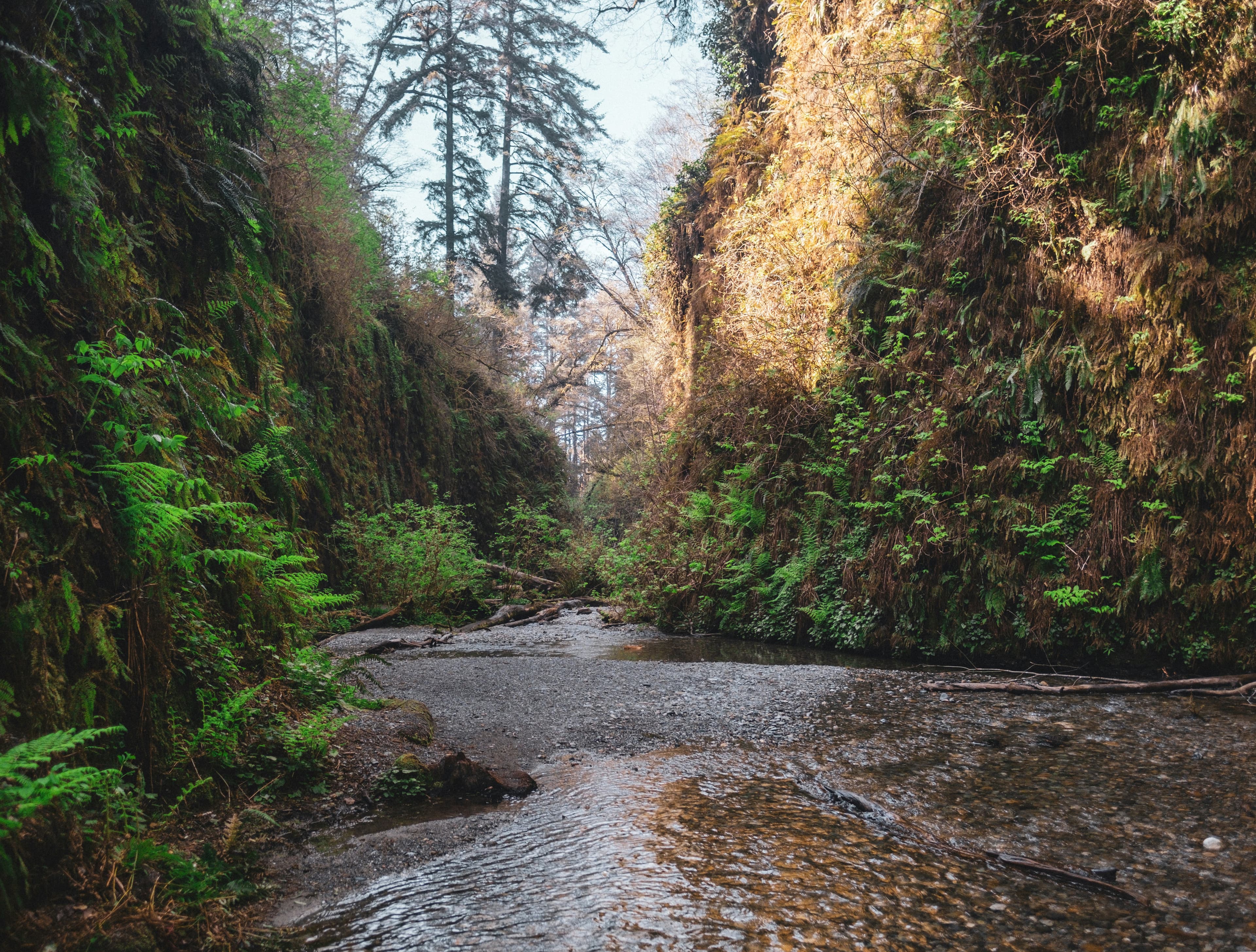
- Fern Canyon — a fifty-foot-deep canyon with walls covered entirely in ferns, with a creek flowing through the bottom. Filming location for Jurassic Park 2. Worth visiting even in the rain.
- Tall Trees Grove — the grove that prompted creation of the national park. Permit required. The hike down is easy; the hike back up reminds you that you're not twenty anymore.
- Stout Memorial Grove — the most accessible old-growth grove in Jedediah Smith Redwoods, right along the Smith River. Walk among the largest trees in the park system without a long hike.
- Howland Hill Road — a narrow, unpaved road through old-growth forest so dense that the canopy closes overhead. Drive it slowly.
- Elk viewing — Roosevelt elk herds graze openly in the Prairie Creek meadows, on the Gold Bluffs Beach, and along the Newton B. Drury Scenic Parkway.
Why Redwood Belongs on the List
Most fly anglers build their steelhead bucket list around rivers: the Deschutes, the Olympic Peninsula, the Skagit, the Skykomish, the Dean, the Skeena. And most national park fly-fishing trips gravitate toward the trout parks — Yosemite, Sequoia & Kings Canyon, Yellowstone, Glacier. The Smith River should be on every version of the steelhead list. The steelhead are among the largest in the lower forty-eight. The water is among the most beautiful. And the setting — swinging flies through pools shaded by trees that were growing when the Magna Carta was signed — exists nowhere else.
But Redwood National Park earns a place on the list for a reason beyond the fishing. This is the place where the connection between healthy forests and healthy fisheries is most visible, most tangible, most impossible to ignore. You stand in the Smith River and look up at three hundred feet of old-growth redwood and you understand, in your bones, that the fish under your feet exist because those trees exist. Remove the trees, and the water warms, the sediment fills the gravel, the pools fill in, and the steelhead disappear. It's happened on every other river on the North Coast where the forest was cut. The Smith is the proof of what's possible when you leave the forest alone.
That's worth a trip. That's worth getting rained on for a week. That's worth the blank days and the blown-out rivers and the long drive to a corner of California that most Californians have never visited. Because when you hook a winter steelhead in the Smith River and it runs downstream through a cathedral of the tallest trees on Earth, you are participating in something ancient and whole and increasingly rare — a wild fish, in a wild river, in a wild forest, doing what it has done for ten thousand years.
Looking for a guide in Crescent City?
We don't have specific guides listed in Crescent Cityyet, but we're growing fast.
Browse All GuidesFrequently Asked Questions
What fish species can you catch fly fishing in Redwood National Park?
The primary fly-rod target is winter steelhead, particularly on the Smith River where fish average 10-15 pounds with trophy fish exceeding 20 pounds. The park's waters also hold chinook (king) salmon, coho (silver) salmon, and coastal cutthroat trout. The Klamath River adds fall chinook and half-pounder steelhead to the mix. Smaller park creeks like Prairie Creek and Mill Creek hold cutthroat trout and provide spawning habitat for coho and chinook salmon.
What flies work best for steelhead on the Smith River?
For swinging, the Hoh Bo Spey, Green Butt Skunk, Skykomish Sunrise, and Intruder patterns in sizes 1/0 to 6 are the standards. The Green Butt Skunk is considered the single most productive traditional wet fly on the Smith. For nymphing, Glo Bugs in orange and chartreuse, stonefly nymphs, Popsicle flies, and San Juan Worms are effective. A 12.5- to 13.5-foot Spey rod (7-8 weight) with Skagit head and interchangeable sink tips is the standard setup.
When is the best time to fly fish for steelhead near Redwood National Park?
Winter steelhead fishing peaks January through February on the Smith River, with fish entering the system from late November through March. The ideal conditions are a dropping, clearing river after a storm — check the USGS gauge at Jedediah Smith Redwoods State Park for flows between 1,500 and 4,000 cfs. The Klamath River offers fall chinook (September-October) and half-pounder steelhead (October-November) as shoulder-season alternatives.
Is the Smith River really the largest undammed river in California?
Yes, the Smith River is California's largest river without a single dam anywhere on its entire drainage. No diversions, no impoundments, and an essentially intact old-growth watershed that was never clearcut. This is why the Smith produces California's largest steelhead — the intact forest keeps water cold, clears sediment quickly after storms, and maintains the spawning habitat that wild fish require. The California state record steelhead (27 lbs, 4 oz) came from the Smith in 1976.
How do you access fishing spots in Redwood National Park?
Crescent City is the northern gateway, providing access to the Smith River and Jedediah Smith Redwoods State Park. Orick is the southern gateway near Redwood Creek and Prairie Creek Redwoods. The Smith River is accessible by road along Highway 199 through Jedediah Smith Redwoods. Redwood Creek's best water requires hiking the Tall Trees Trail (3.5 miles each way, permit required). Park creeks are accessible from various trailheads along the Newton B. Drury Scenic Parkway and Highway 101.
Related Articles
The Hoh Bo Spey: How to Tie the #1 Steelhead Fly on the Olympic Peninsula
Monday, September 22, 2025
Classic Steelhead Wet Flies: How to Tie the Green Butt Skunk, Purple Peril, and the Patterns That Built the Sport
Thursday, September 18, 2025
The Muddler Minnow: How to Tie the Fly That Imitates a Sculpin, a Grasshopper, a Stonefly, and Whatever Else You Need It to Be
Sunday, November 9, 2025
 ™
™